The Manual provides drawings and descriptions showing the function of the various parts and their locations. The work is described and photographed in a step-by-step sequence, so that even a beginner can do it.
The Manual consists of 12 Sections. Sections are divided into Parts and Chapters.
There are many illustrations, especially in those sections that give a detailed sequence of operations to be carried out. There are two types of illustrations: drawings and photographs. The drawings are numbered sequentially with decimal numbers, according to their position in the Section - for example, Figure 6.4 is the fourth illustration in Section 6. The photographs will have the same number (either individually or in related groups), as well as the Chapter number and the paragraph in the chapter to which they relate. At the beginning of the Guide there is a detailed Table of Contents, which will help you easily find the question you are interested in.
The "left" or "right" of a car is considered relative to the person sitting in the driver's seat facing forward.
Unless otherwise stated, nuts and bolts are loosened by turning counterclockwise and tightened by turning clockwise.
Vehicle manufacturers are constantly making changes to specifications, specifications and recommendations, and when notified, we incorporate them into our Guide as early as possible.
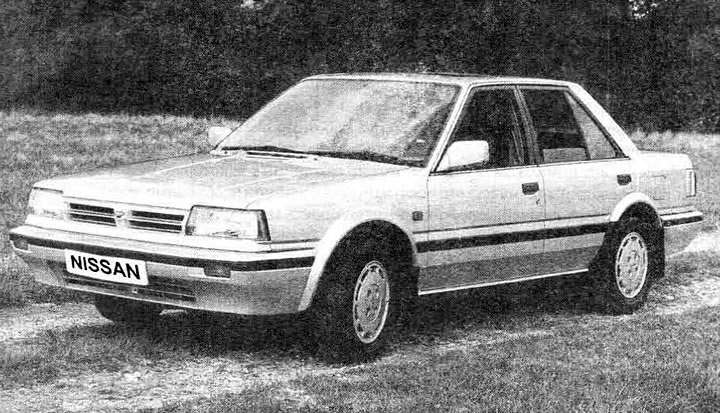
The vehicle used in preparing this manual was primarily a 1989 Nissan Bluebird 2.Oi GSX Saloon. Additional work was done on a 1989 Nissan Bluebird Turbo ZX Hatchback, a Nissan Bluebird 1.6 Premium Hatchback and a Bluebird T12 Diesel.
As a rule, Japanese companies do not develop engines for a specific model, but use the developed engine for several models of cars. Engines can be divided into series, each of which has a basic engine, modifications of which have their own design features and other technical characteristics.
A wide range of models with Saloon and Hatchback bodies is offered. All versions of the designed cars are characterized by a high level of standard equipment.
The team of creators of this Manual thanks you for purchasing the book and wishes you success in servicing and repairing your car. We are convinced that the book will be useful to you.
The source of the article is on the website (NissanBook.ru)