The main competitors and classmates of the Nissan Maxima are the following cars of other brands: Audi A4, BMW 3, Chevrolet Malibu, Citroen C6, Ford Mondeo, Ifiniti Q50, Honda Inspire, Hyundai Sonata, Infiniti G, Kia Optima, Mazda 6, Mitsubishi Galant, Opel Omega, Peugeot 408, Renault Laguna, Skoda Superb, Subaru Legacy, Toyota Camry, Volkswagen Passat.
First generation (G910, 1981−1984)
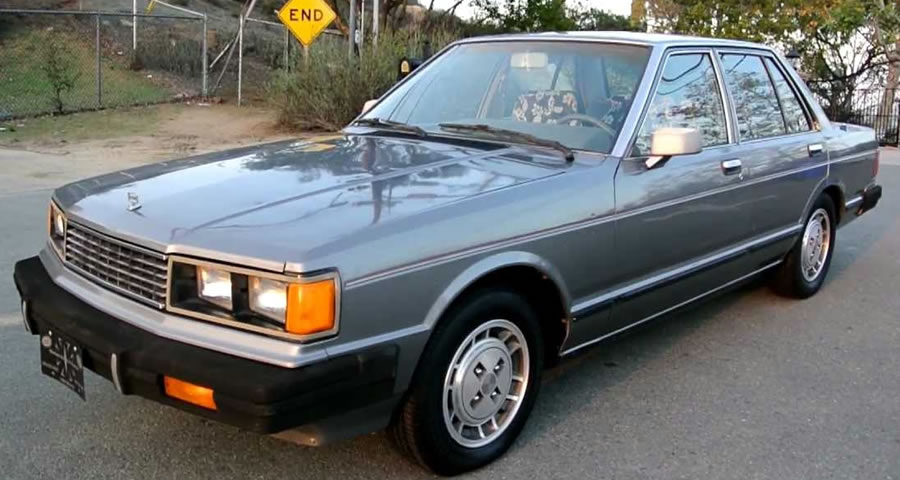
The first generation of Maxima is the second generation "Datsun 810", which was introduced in 1980 as a 1981 model. The body style was a 4-door sedan and a 5-door station wagon. The engine was located in the front with rear-wheel drive. In fact, it was the second generation of the car "Datsun 810" and was sold primarily in North America. The unique feature of the car was the use of voice warnings about the door being opened, the lights being on, etc. It was the first talking car sold in the United States.
There were only two models of engines, both six-cylinder in-line, one petrol and one diesel. The petrol engine with the code "L24E" with a volume of 2.4 liters and a power of 138 hp. The diesel engine with the code "LD28" with a volume of 2.8 liters and a power of 90 hp. The gearbox is a 5-speed manual or 4-speed automatic "Jatco L4N71B".
The car was produced in Japan at the Oppama plant.
Second generation (PU11, 1984−1988)
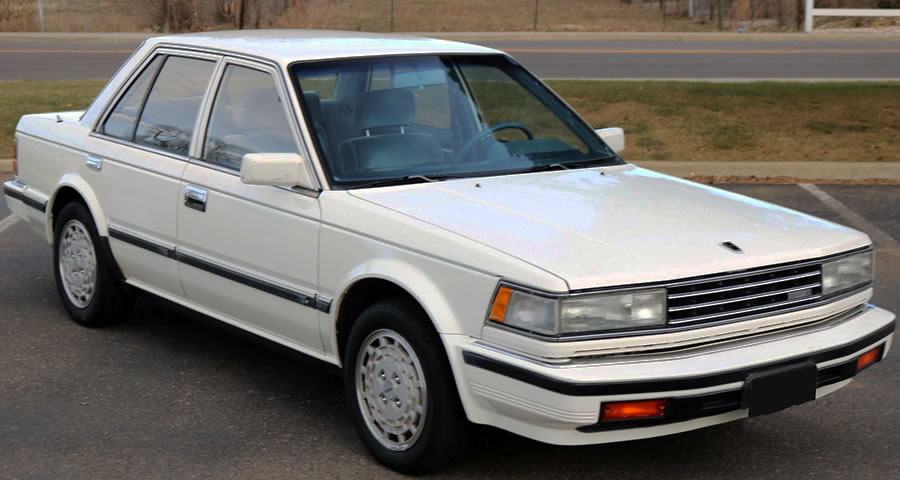
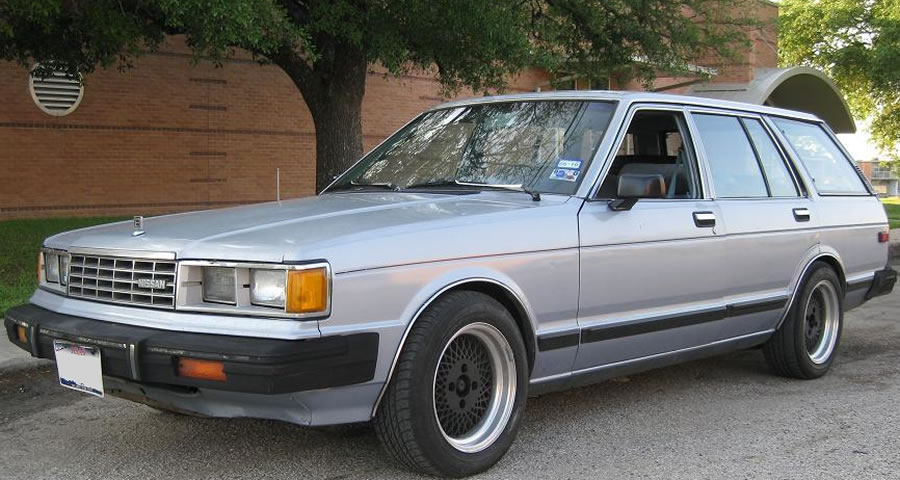
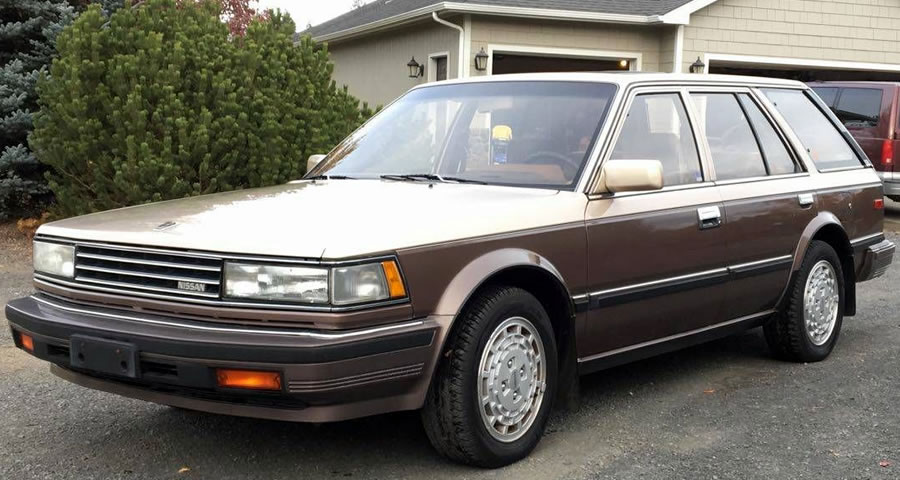
In the autumn of 1984, the second generation of "Maxima" with the code "PU11" appeared, which was based on the car "Bluebird U11". The most important difference was the rejection of the rear-wheel drive and the transition to front-wheel drive with a front transverse engine. The body was made in the form of a 4-door sedan (length 4610 mm, width 1689 mm, height 1389 mm) and a 5-door station wagon (length 4694 mm, width 1689 mm, height 1415 mm). This is the latest generation with a station wagon body.
The engines were only petrol six-cylinder V-shaped 2.0 liters (1998 cm³, VG20E/VG20ET, V6, 113/170 hp) and 3.0 liters (2960 cm³, VG30E, V6, 153 hp). Transmission 4-speed automatic "RL4F02A" or 5-speed manual "RS5F50A".
In 1986, the exterior and interior of the car were slightly updated. They began to use automatic seat belts, a digital touch entry system, electric windows, a sunroof, locks, an antenna and seats, a voice warning system, heated leather seats, and other electronic options available at that time. Another feature is the use of an active suspension with sonar, which scans the road and adjusts the suspension for better performance.
Third generation (J30, 1988–1994)
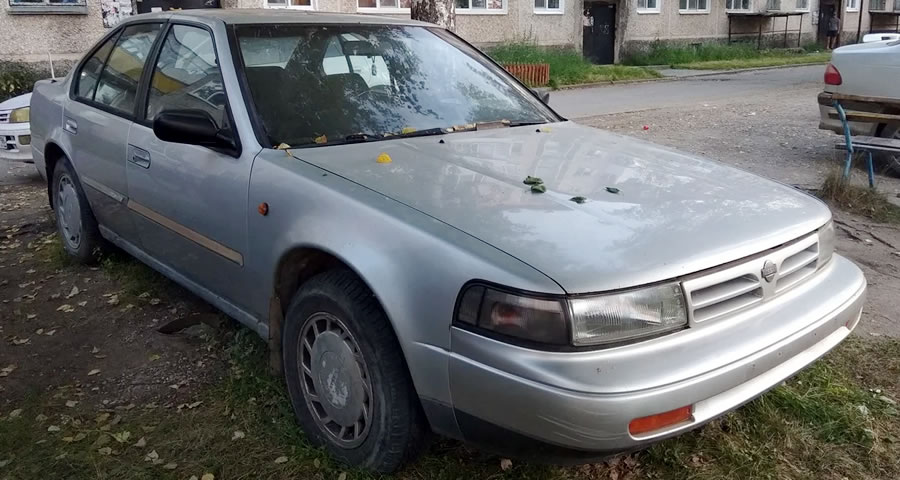
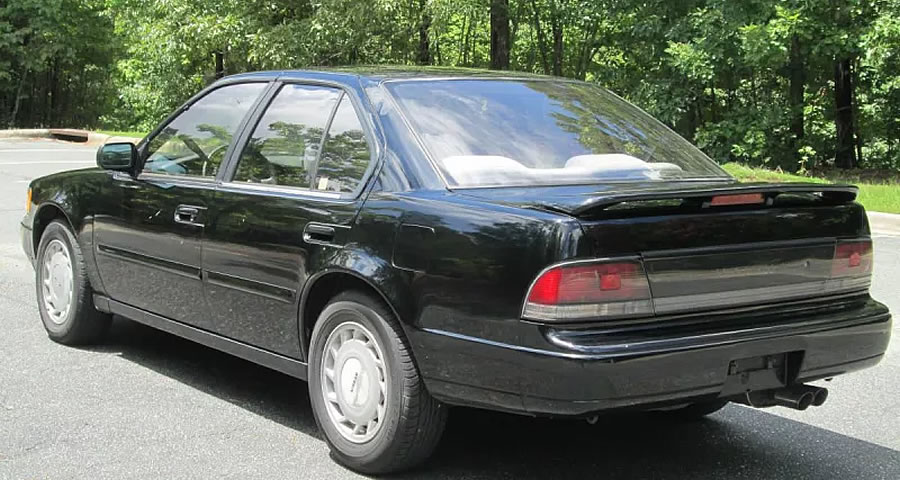
In 1988, the third generation of "Maxima" with the factory code "J30" was introduced. Due to the increase in size, it began to be classified as a mid-size car instead of a compact one. The body remained only a 4-door sedan with a length of 4765 mm, a width of 1760 mm and a height of 1400 mm (since 1991 - 1346 mm). The engine was located in the front, front-wheel drive. The suspension became completely independent, they continued to improve the active suspension with sonar.
The engines installed were only petrol six-cylinder V-shaped 3.0-liter engines (2960 cm³, VG30E, V6, 153 hp) and (2960 cm³, VE30DE, V6, 190 hp). Gearbox 5-speed manual or 4-speed automatic "Jatco" with "sport" and "comfort" modes.
In 1991, the model was updated. The height of the car was significantly reduced (by 56 mm), and the driver began to install a side airbag. Since that year, the car began to be offered on the European market, replacing the "Laurel".
Fourth generation (A32, 1994–1999)
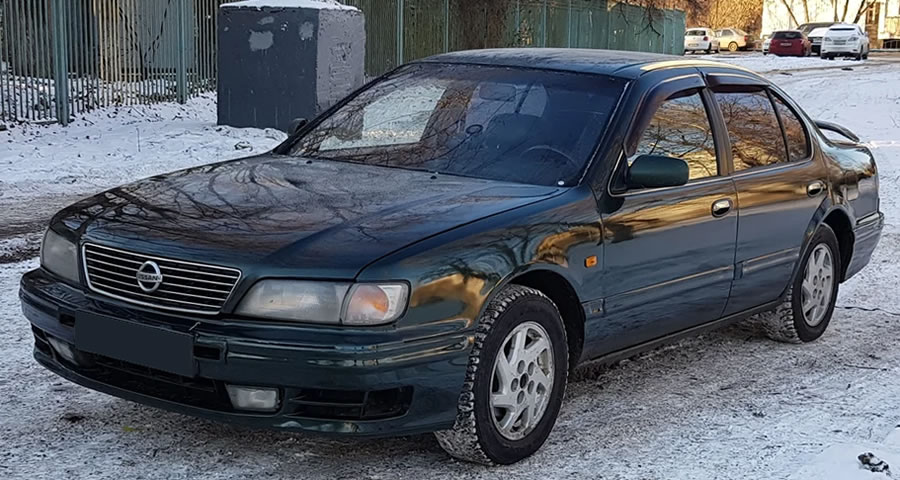
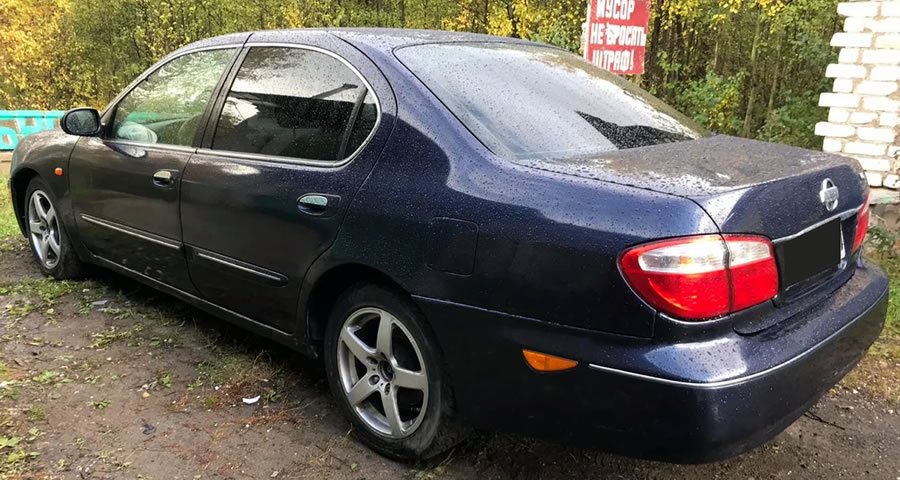
The fourth generation with the code "A32" was developed back in 1991 and presented in May 1994 as a 1995 model. The engine was in the front, the drive remained on the front wheels. The body is only a 4-door sedan, 4768 mm long (since 1996 - 4811 mm), 1770 mm wide, 1415 mm high. The curb weight was 1300 kg. The independent rear suspension of the previous generation was replaced by a lighter and cheaper semi-independent with a torsion rigid beam.
There were two models of engines, both 6-cylinder V-shaped petrol engines with a capacity of 2.0 liters (1995 cm³, VQ20DE, V6, 148 hp) and 3.0 liters (2988 cm³, VQ30DE, V6, 190 hp). The VQ30DE engine was included in the list of the best engines in the world from 1995 to 2001. The gearbox is 5-speed manual or 4-speed automatic.
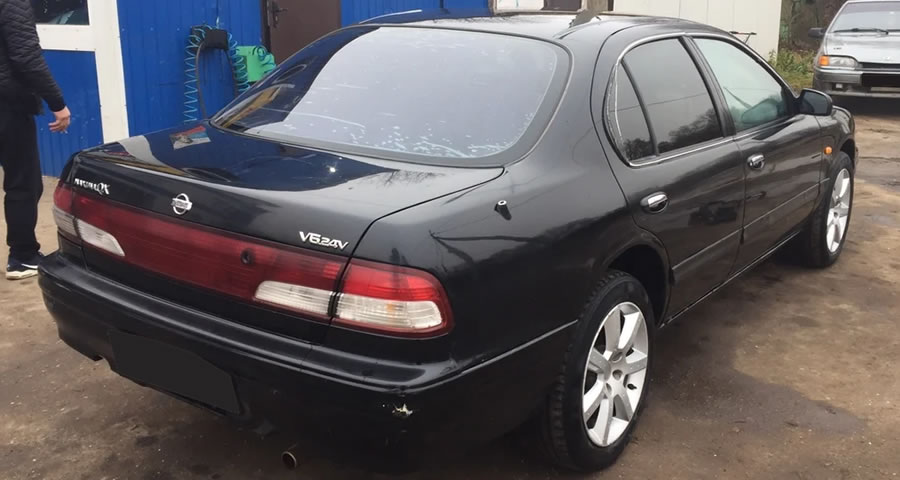
In 1995, the American magazine "Motor Trend" gave the award "Best Import Car of the Year". In 1995 and 1996, "Maxima" was included in the list of "Top Ten Cars" published by the American magazine "Car and Driver".
In October 1996, the car's appearance was updated. Instead of glass headlights, plastic ones were installed, the design of the remaining lights was also updated. A CD player appeared inside. The interior was highly rated by experts as quiet and roomy.
Fifth generation (A33, 1999–2003)
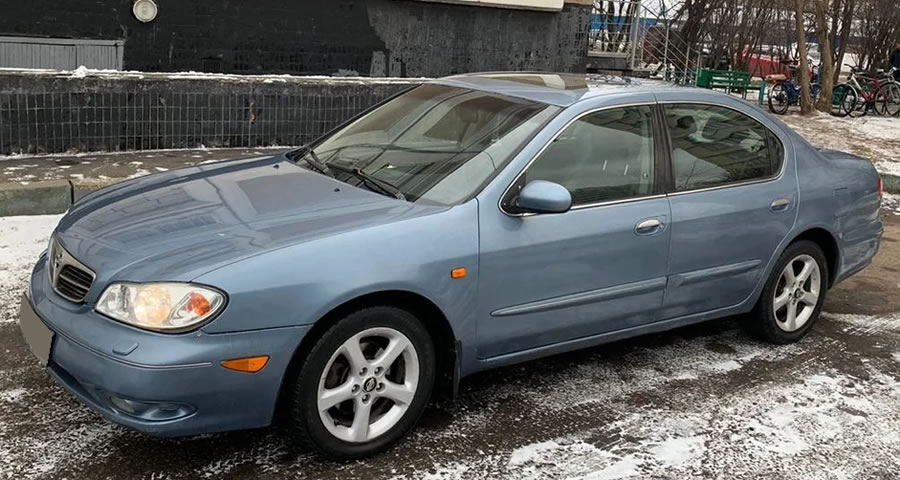
In May 1999, the fifth generation was introduced with the code "A33". The body was only a 4-door sedan, 4839 mm long (since 2001 - 4864 mm), 1786 mm wide, 1430-1450 mm high. The engine is located in the front, front-wheel drive. The car had three trim levels - "GXE", "GLE" and "SE". A new axle suspension was introduced "Bridgestone" with sensors, the signals from which are processed by the ECM (Electronic Control Module). Problems with the engine and gearbox have been fixed.
Only six-cylinder V-shaped petrol engines with a capacity of 3.0 liters were used (2987 cm³, VQ30DE - K, V6, 200 hp) and 3.5 liters (3498 cm³, VQ35DE, V6, 255 hp). The gearbox was 5- or 6-speed manual, as well as 4-speed automatic.
The 2002 model year saw a facelift, the introduction of the VQ35DE engine, a six-speed manual transmission, new high-intensity discharge (HID) headlights, a high-resistance differential, and other minor improvements.
Sixth generation (A34, 2003–2008)
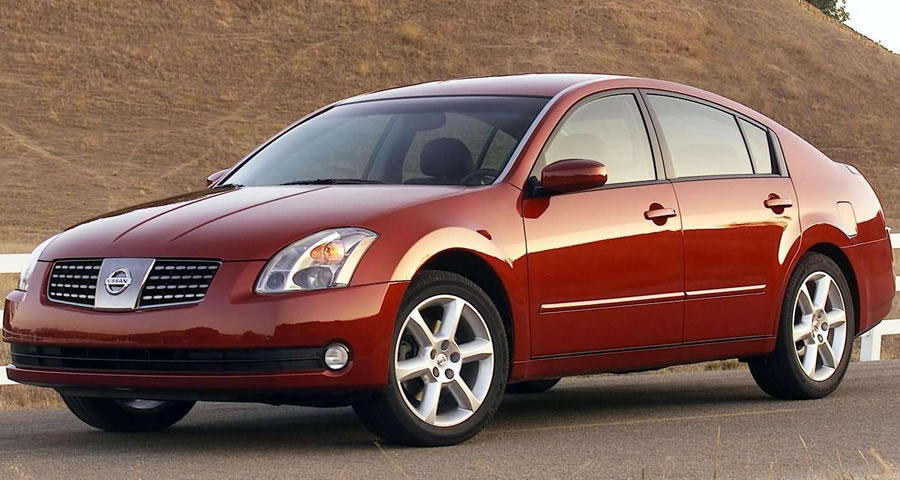
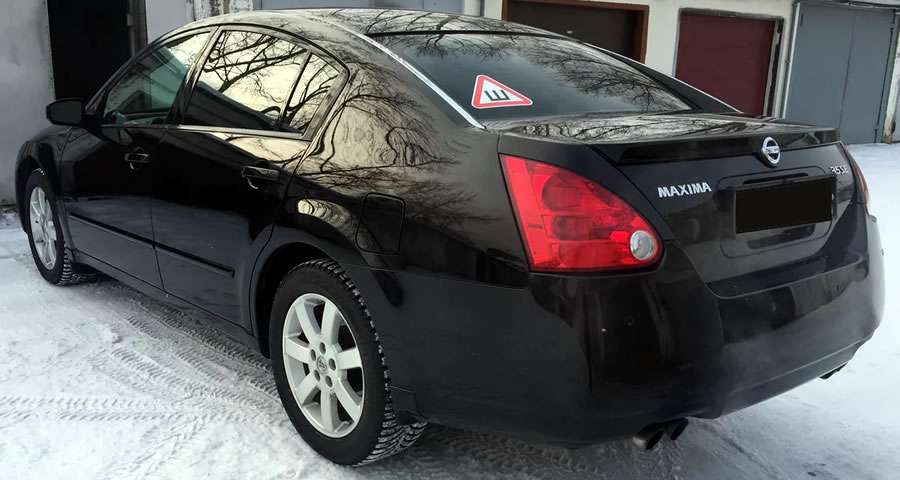
Work on the sixth generation Maxima project with the factory code "A34" was completely finished in March 2001. The finished car was presented to the public in January 2003 at the North American International Auto Show in Detroit. Sales were carried out only in North American countries. In other countries, a similar car was sold under the name "Nissan Cefiro". There were only two trim levels - "SE" (sport) and "SL" (luxury). The car is based on the platform "Nissan FF-L". The body is traditionally a 4-door sedan with a length of 4915 mm (since 2006 - 4938 mm), a width of 1821 mm, a height of 1481 mm. Production was carried out in the USA, Tennessee, the city of Smyrna.
Only one petrol six-cylinder V-shaped engine with a volume of 3.5 liters was installed (3498 cm³, VQ35DE, V6) with a capacity of 265 hp. Gearbox 6-speed manual, 4- or 5-speed automatic and since the 2007 model year they have been installing the "Xtronic" variator (CVT), similar to that installed on "Nissan Murano".
In 2006, a minor update was made to the exterior and interior of the car.
Seventh generation (A35, 2008–2014)
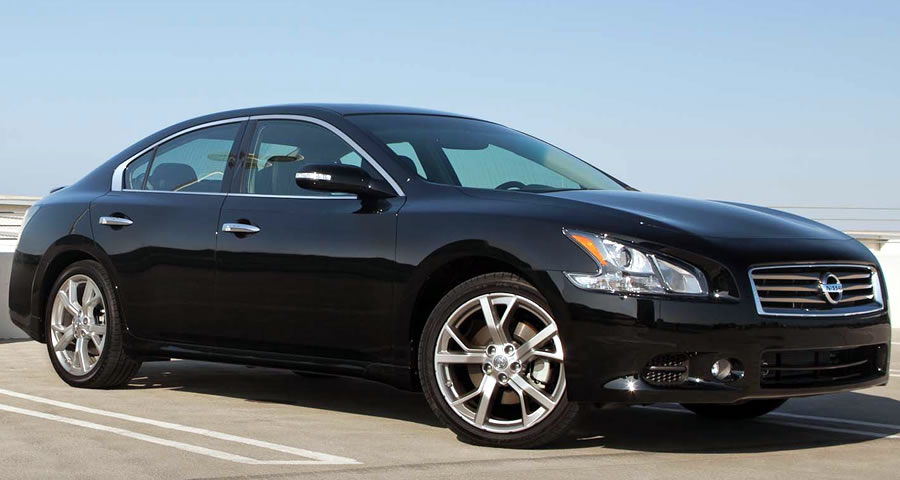
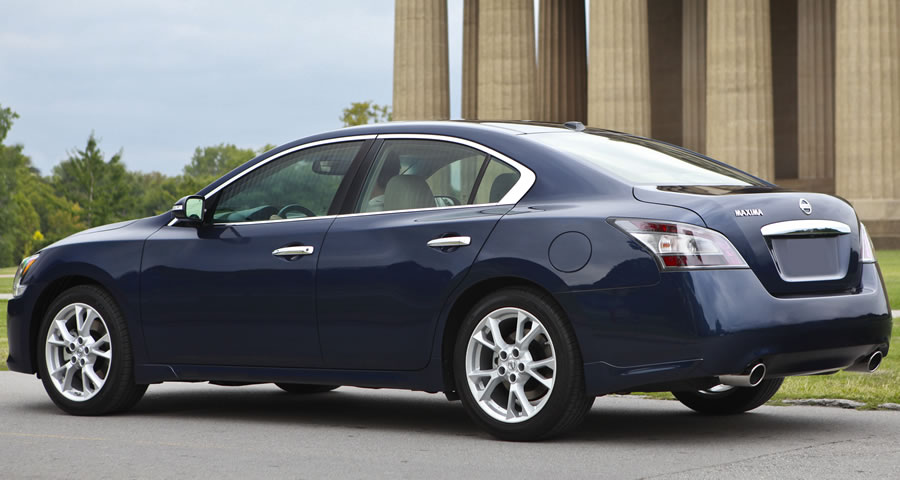
The seventh generation with the code "A35" was presented in March 2008 at the New York International Auto Show. The car is built on the "Nissan D" platform, which is slightly smaller than the previous one and is also used on the fourth generation "Nissan Altima" and the second generation "Nissan Murano". The engine is located in the front, front-wheel drive. The body is still only a 4-door sedan with a length of 4841 mm, a width of 1859 mm, a height of 1468 mm and a curb weight of 1617 kg. There were two trim levels - "S" and "SV". The car was assembled in the USA, in the state of Tennessee, in the city of Smyrna.
The engine used is a petrol six-cylinder V-shaped with a volume of 3.5 liters (3498 cm³, VQ35DE, V6) 290 hp, which works together with a continuously variable transmission "Xtronic" (CVT). A diesel engine was expected in 2010, but these plans were not realized.
In 2012, the car was updated, which affected the radiator grille, rear seat, new wheel disks, and also slightly changed the interior. In 2013 and 2014, minor updates were also carried out.
Eighth generation (A36, 2015–present)
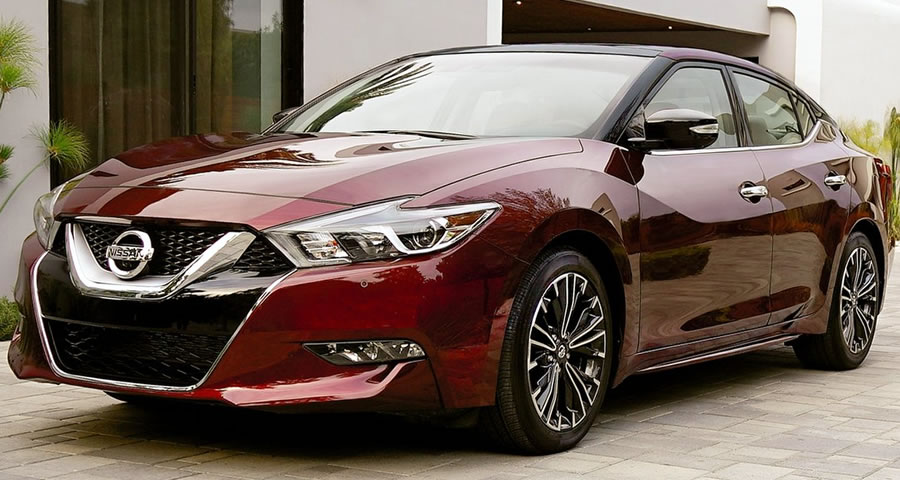
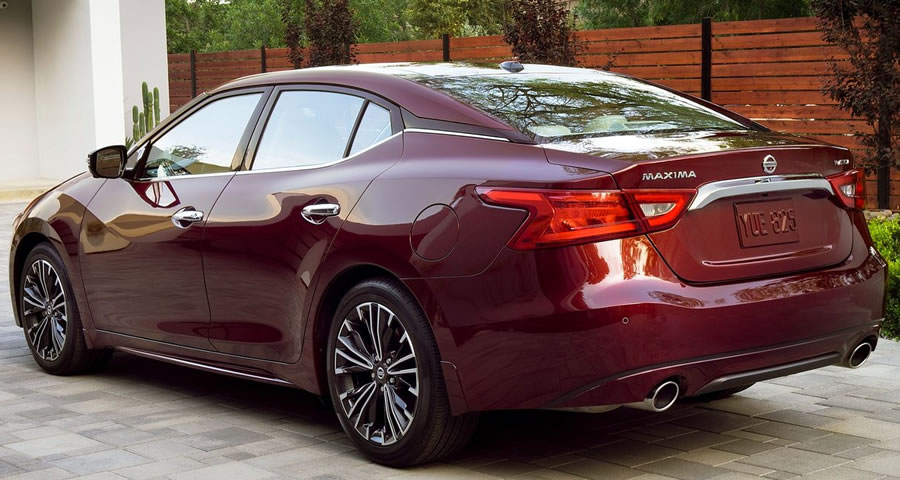
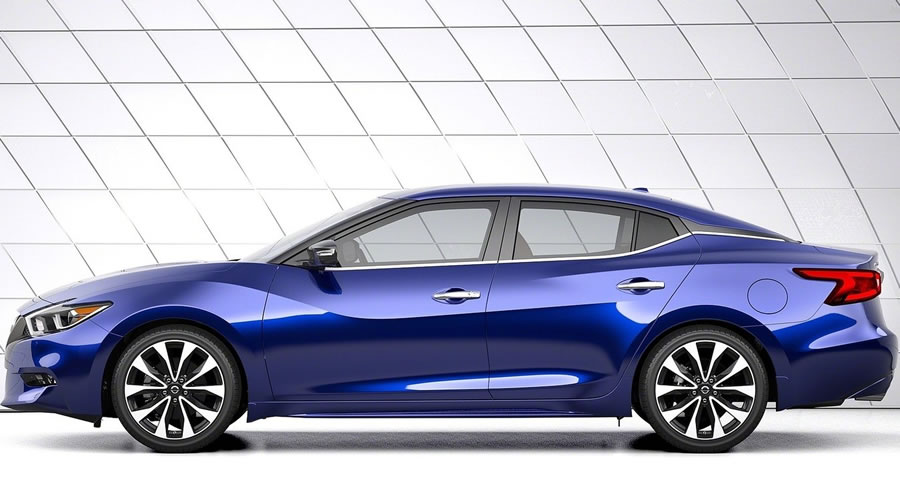
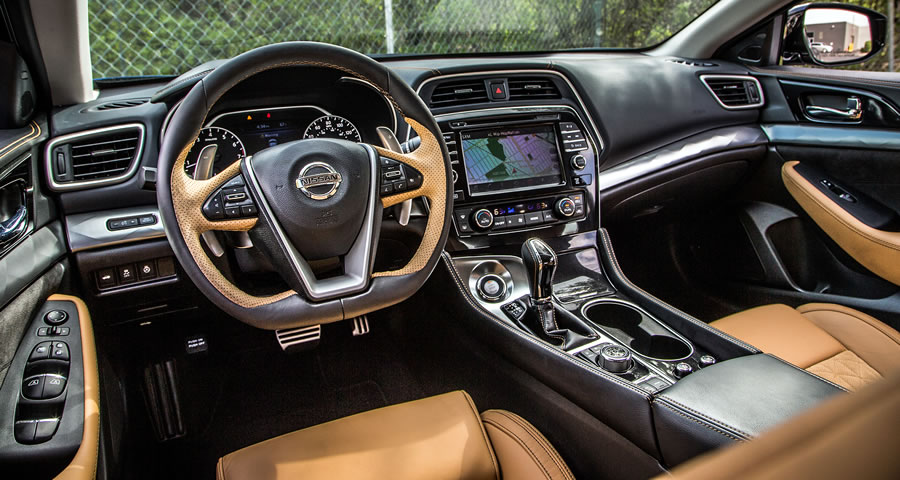
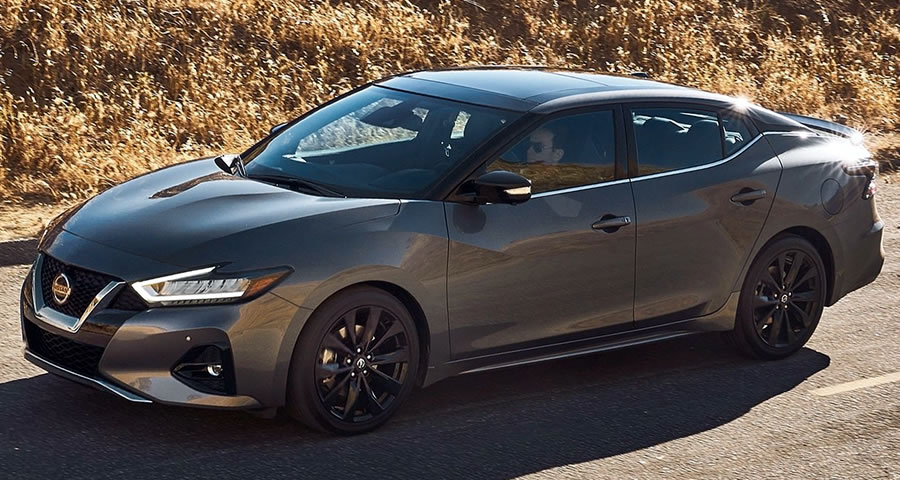
An advertisement for the eighth generation with the factory code "A36" was shown on February 1, 2015 in the United States during "Super Bowl XLIX". In April, the car was presented to the public at the New York International Auto Show. The interior design is reminiscent of aerospace technology. There are now five trim levels - "S", "SV", "SL", "SR" and "Platinum". The car is assembled on the "Nissan D" platform. The engine is located in the front, the drive is on the front wheels. The body is only a 4-door sedan with a length of 4897 mm, a width of 1859 mm, a height of 1435 mm and a curb weight of 1580 kg.
The petrol engine is still a six-cylinder V-shaped 3.5-liter engine (3498 cm³, VQ35DE, V6) 300 hp. Gearbox continuously variable transmission "Xtronic" (CVT).
In 2018, they carried out a minor update of the model and showed the car in December 2018 at the Los Angeles International Auto Show.