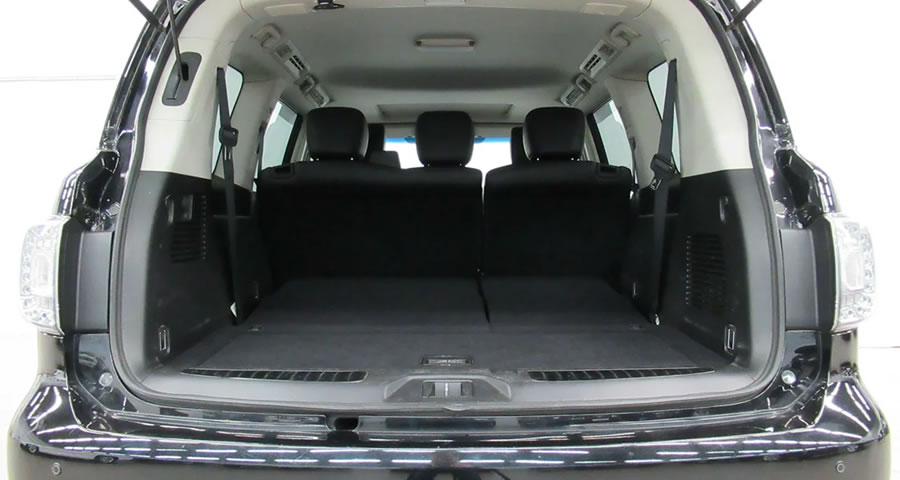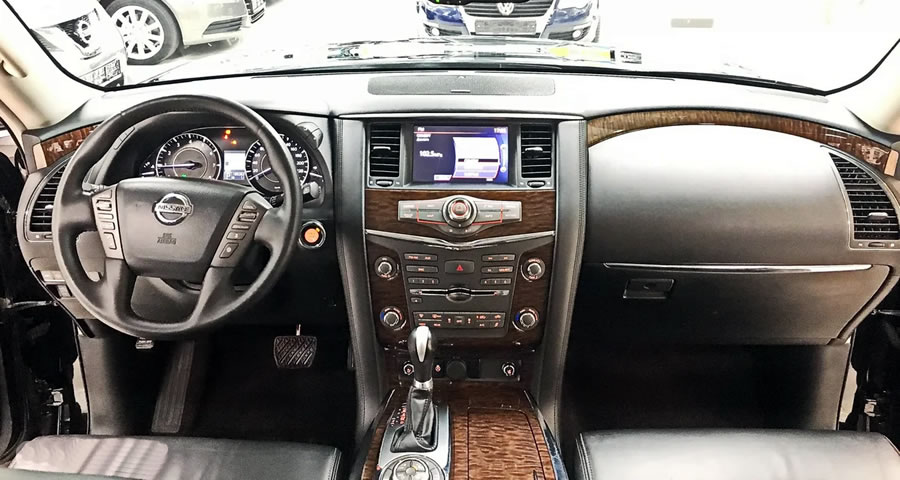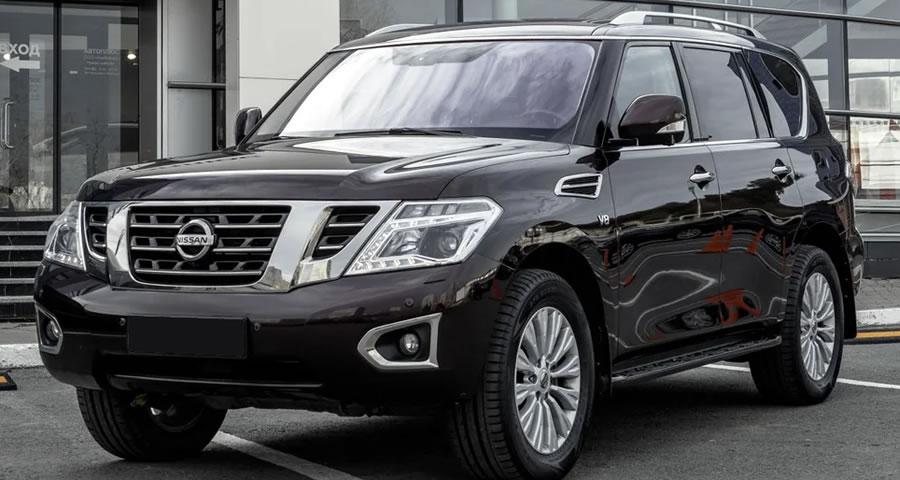
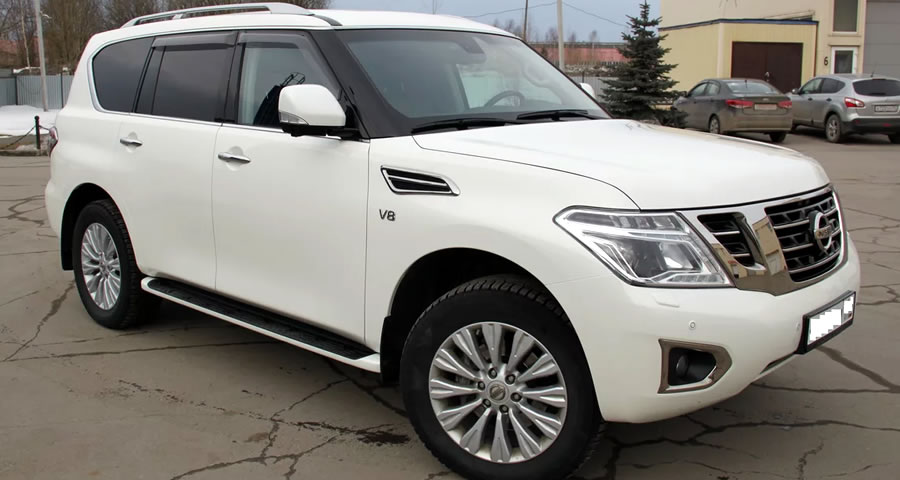
The main competitors and classmates of this car are Audi Q7, BMW X6, Chevrolet Tahoe, Infiniti QX80, Lexus GX, Mercedes-Benz G-Class, Mitsubishi Pajero, Porsche Cayenne, Toyota Land Cruiser, Range Rover and Volvo XC90.
First generation (4W60, 1951−1960)
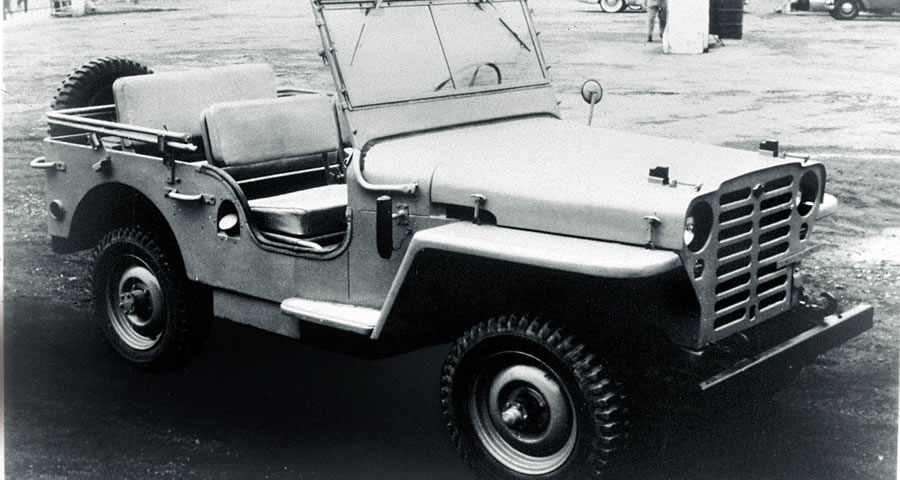
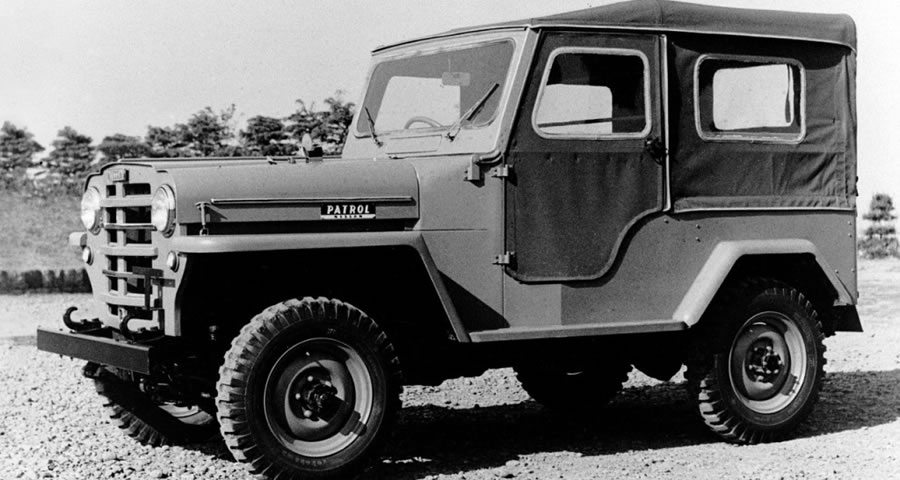
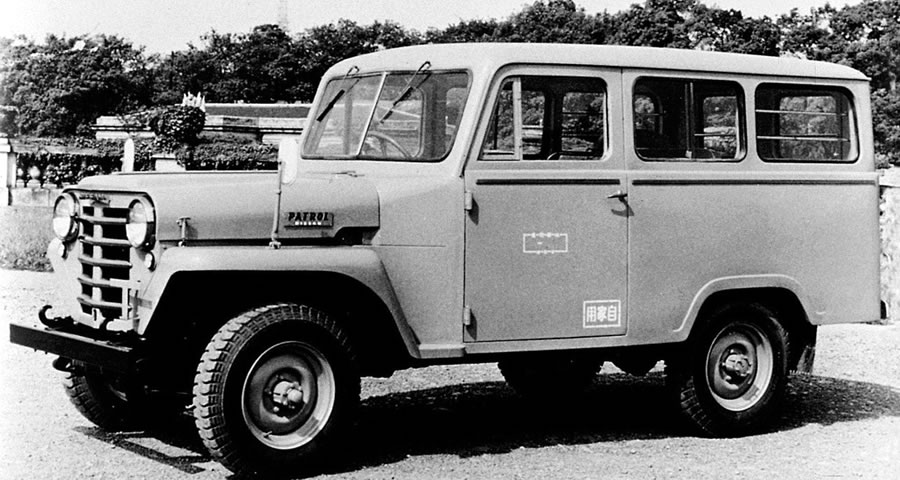
In September 1951, an SUV with the code "4W60" appeared in all Nissan showrooms, outwardly very similar to "Willys Jeep". The body was a 3-door station wagon or 2-door pickup truck, 3650 mm long, 1740 mm wide, 1720 mm high and with a curb weight of 1500 kg. The engine was located in front longitudinally, the drive was a plug-in full on all wheels. The engine was initially installed 6-cylinder in-line with a volume of 3.7 liters, the "NAK" model had a power of 75 hp. The gearbox is 4-speed manual.
In August 1955, a modification of the Patrol car with the code "4W61" was presented. The windshield was changed, which became one piece, the radiator grille, more chrome was added to the exterior and the seats were of unequal size (the passenger side is wider than the driver's). The grille badge was chromed with red paint and the inscription "NISSAN". The engine remained the same volume of 3.7 liters, but it was seriously improved - the "NB" model with a capacity of 92 hp appeared. Also, a 6-cylinder in-line engine with a volume of 4.0 liters (3956 cm³) appeared, the "NC" model with a capacity of 105 hp.
In October 1958, the next modification with the code "4W65" appeared. The radiator grille became completely chromed, the front wings and hood were changed. The station wagon body "WG4W65" with a capacity of eight people appeared. In December 1959, the modification "4W66" appeared, the main difference from its predecessors was the use of a 6-cylinder in-line gasoline engine with a volume of 4.0 liters (3956 cm³), modification "P" with a capacity of 125 hp.
In 1950 appeared "Nissan 4W70 Carrier" based on the Dodge M37 chassis, but with a 4W60 transmission. It was a truck for bad road conditions. Later, the 4W72 and 4W73 modifications appeared with a 135 hp P engine.
Second generation (60, 1960−1980)
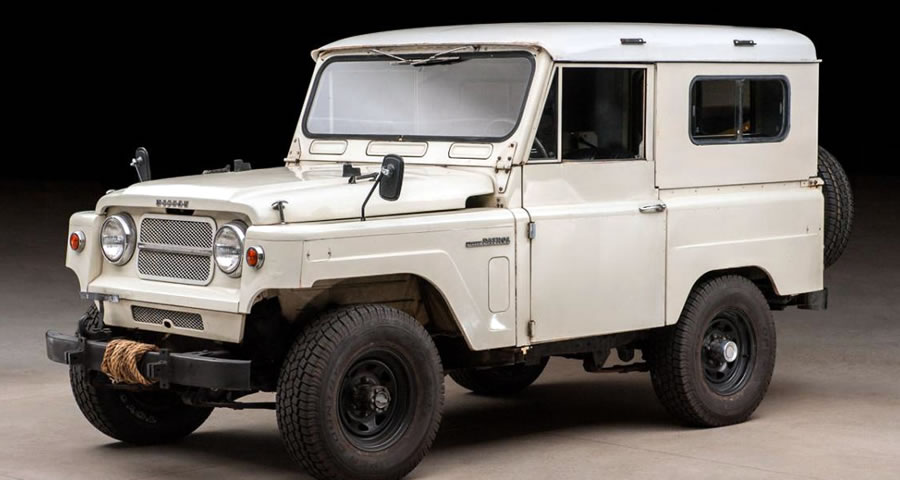
In 1960, the second generation was launched in Australia under the name "Nissan Patrol 60". It was a two-door soft-top body with a short (2200 mm) and regular (2500 mm) wheelbase. There were also "H60" models with an extended wheelbase (2800 mm) with seats for eight passengers. The suspension was spring, the brakes were drum. Left-hand drive modifications with the code "L60/GL60" were sold later outside Australia. In the USA, the car began to be delivered only in 1962 through "Datsun" dealerships and ended in 1969.
The engine was a 6-cylinder in-line petrol with a volume of 4.0 liters (3956 cm³), modification "P" with a capacity of 145 hp. The gearbox was a 3-speed mechanical "F3B83L", and then a 4-speed. Also a two-speed transfer case with a plug-in all-wheel drive.
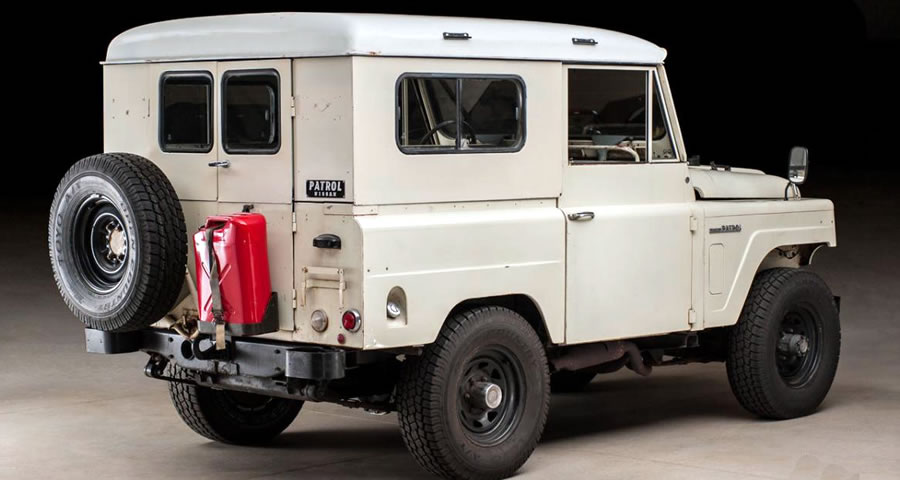
In 1963, a hardtop body appeared (models "KG60" and "KGL60"), which was similar in appearance to "Toyota Land Cruiser".
In 1960, the Indian Army showed interest in two vehicles based on "Nissan" — "Patrol P60" and "Nissan 4W73". On their basis, a car was developed called "Jonga" (short for "Jabalpur Ordinance and Guncarriage Assembly", that is, the place where the car was assembled). In 1965, its production began, which continued until 1999.
Third generation (160, 1980–1989)
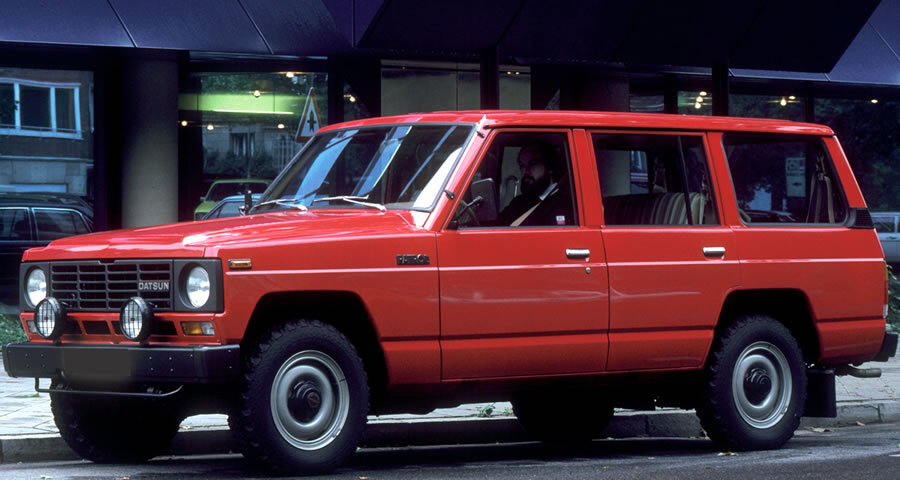
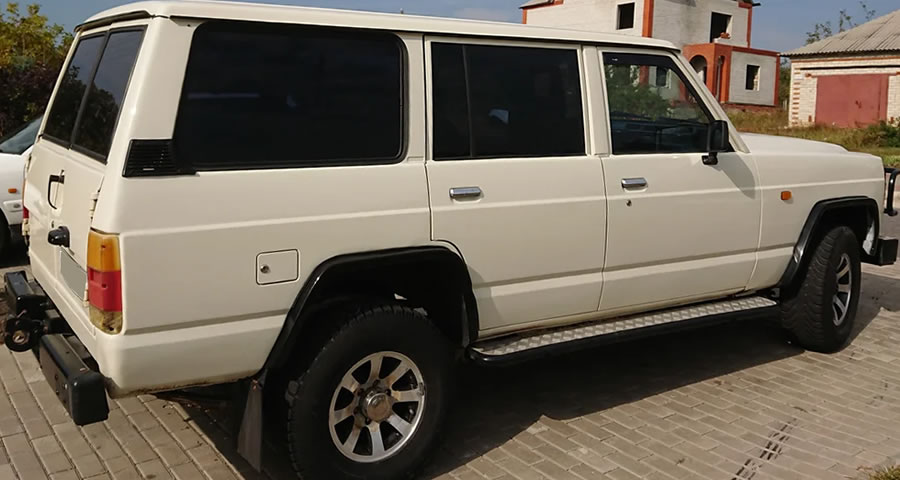
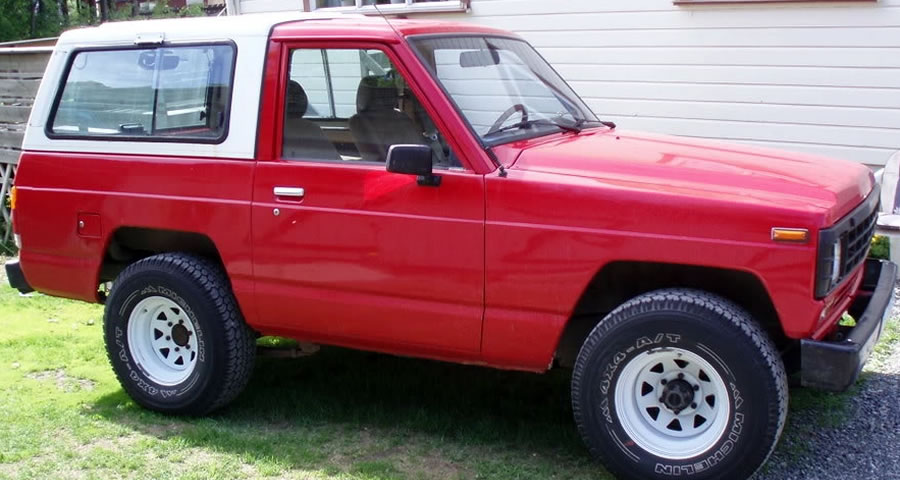
The third generation with the code "160" appeared in 1960. The body was produced as a 3-door with a soft and hard top, a 5-door station wagon, a 2- and 4-door pickup, and a fire truck. The entire suspension was spring. Rear-wheel drive with a plug-in front-wheel drive. Various trim options and colors became available. At the highest trim levels, hydraulic power steering and air conditioning were available. The car was assembled in Japan, Iran, Spain and South Africa.
The gearbox was a mechanical 4-speed, and on the chassis with an extended wheelbase and the "L28" engine, a 3-speed automatic was optionally installed. All cars were equipped with a two-speed transfer case with a normal 1:1 gear and a low gear. The front differential on all models was "C200". A differential with increased internal resistance was installed optionally. The heavy rear differential "H260" was used in some pickups and station wagons with the "P40" engine. On models for the European market, a light differential "C200" was installed at the rear.
The petrol engine range includes three 2.4-litre models (2389 cm³, Z24, I4, 103 hp), 2.8 liters (2753 cm³, L28/L28E, I6, 133 hp) and 4.0 liters (3956 cm³, P40, I6, 143 hp). There were two models of diesel engines, both six-cylinder in-line engines with a capacity of 3.3 liters (3245 cm³) - "SD33" with a capacity of 81 hp and a turbocharged "SD33T" with a capacity of 110 hp.
In 1983, the car was updated. The front end was redesigned, the front suspension was modernized, and a high roof was added "Super Roof", and also modified the gearbox and engines.
In 1984, the company abandoned the Datsun brand and that was the last year you could buy one "Datsun Patrol".
Series 260 (1986–2002)
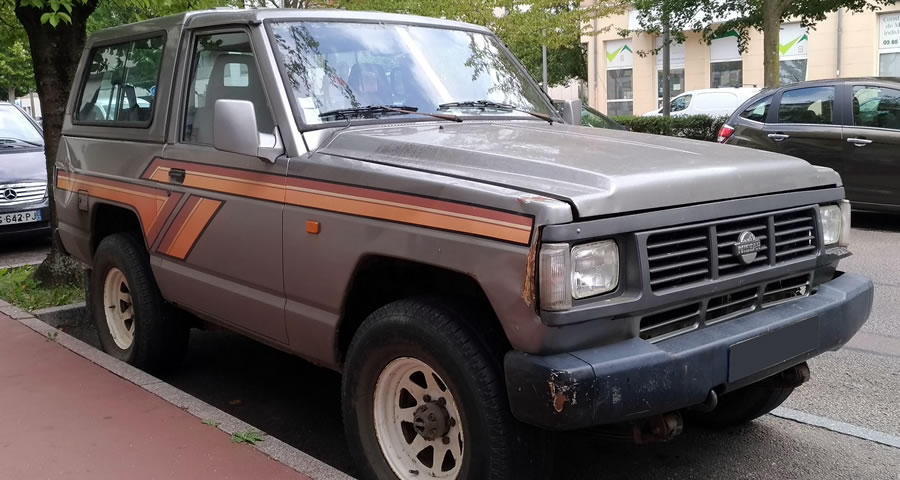
The car with the code "260" was a version of the "160", distinguished by rectangular headlights, produced in Spain (Rome and Barcelona) by the company "Nissan Ibérica" from 1986 to 2002 and was called "Ebro Patrol". During all this time, two 2.4-liter gasoline engines were installed (2389 cm³, Z24, I4, 103 hp) and 2.8 liters (2753 cm³, L28/L28E, I6, 133 hp)There were five models of 2.7-liter diesel engines (2702 cm³, Perkins MD27, I4, 59 l. With.), 2.8 liters (2825 cm³, RD28, I6, 99 hp), 2.8 liters (2825 cm³, RD28T, I6, turbo, 125 hp), 3.3 liters (3245 cm³, SD33, I6, 81 hp) and 3.3 liters (3245 cm³, SD33T, I6, turbo, 110 hp).
Fourth generation (Y60, 1987–1997)
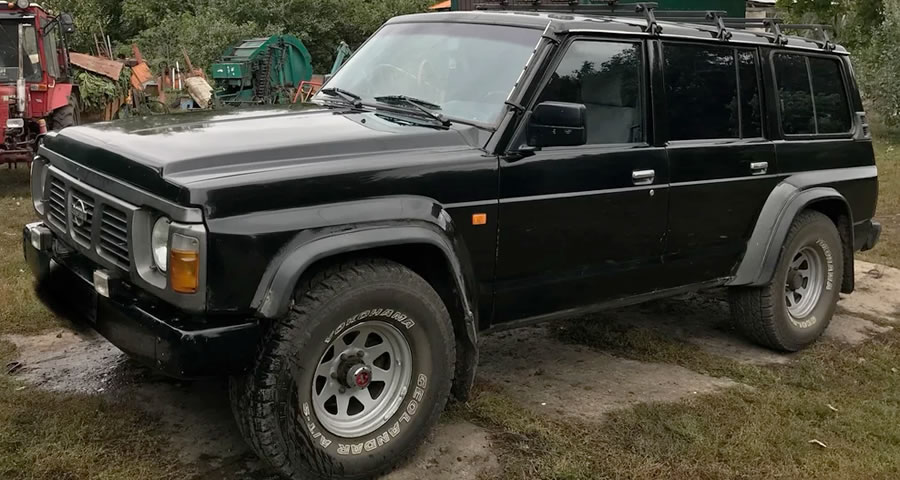
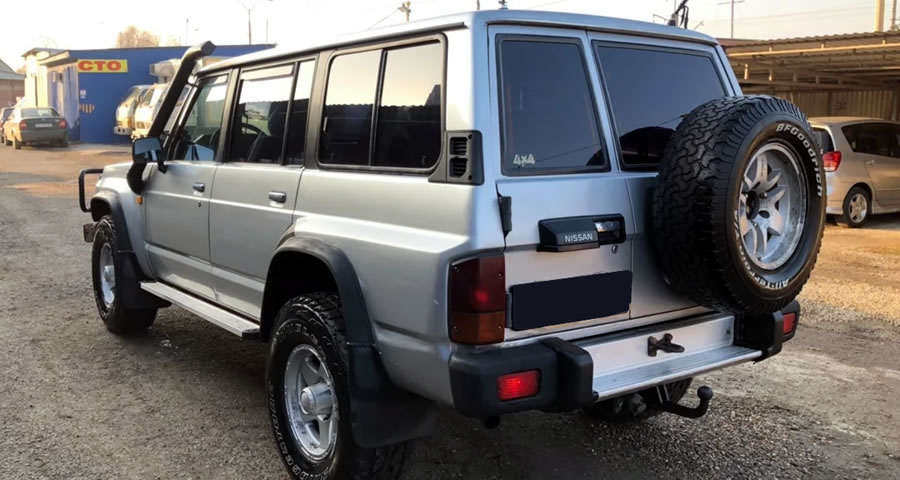
The fourth generation with the code "Y60" began production in 1987. The new car was mechanically radically different from its predecessors. From the middle class, it became a full-size SUV, as it would be classified in the future. Springs began to be used in the suspension instead of leaf springs, which greatly improved comfort. A three-link suspension was installed in the front, and anti-roll bars appeared. The wheelbase was short (SWB, 2400 mm) and elongated (LWB, 2970 mm). The SWB body length was 4285 mm, LWB: 4845 mm, width 1930 mm, height 1815 mm. The car had different trim levels, designated in different countries in their own way, for example "SLX", "LX".
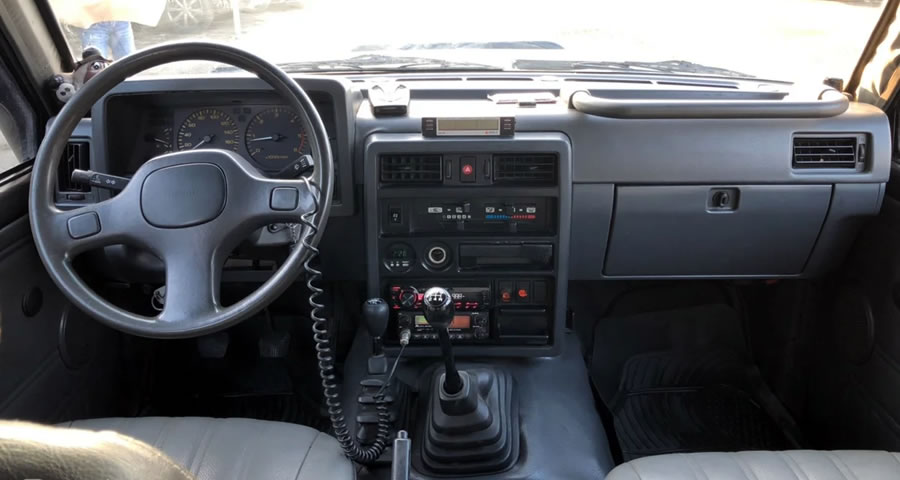
The front brakes were disc, the rear - disc and drum. Hydraulic power steering was on all cars in the base. For the first time, the reverse gear in the gearbox was equipped with a synchronizer. Most models were equipped with a differential with increased internal resistance, and the rest with a vacuum or electric solenoid, controlling the rear differential lock. Some models were equipped with a winch with an engine drive and control from the cabin. The car was also sold with many accessories to improve off-road qualities by official dealers.
There were two models of petrol engines with the following characteristics: 3.0 liters (2962 cm³, RB30S, I6, 134 hp) and 4.2 liters (4169 cm³, TB42S/TB42E, I6, 173 l. With.)There were also two models of 2.8-liter diesel engines (2825 cm³, RD28T, I6, turbo, 183 hp) and 4.2 liters (4169 cm³, TD422, I6, 123 hp). The gearbox was equipped with a 4-speed automatic "RE4R03A", as well as a 5-speed manual "FS5R50A" or "FS5R30A".
In 1992 and 1995, major updates were made to the car, which affected the exterior, interior, engines and transmission.
Fifth generation (Y61, 1997–2013)
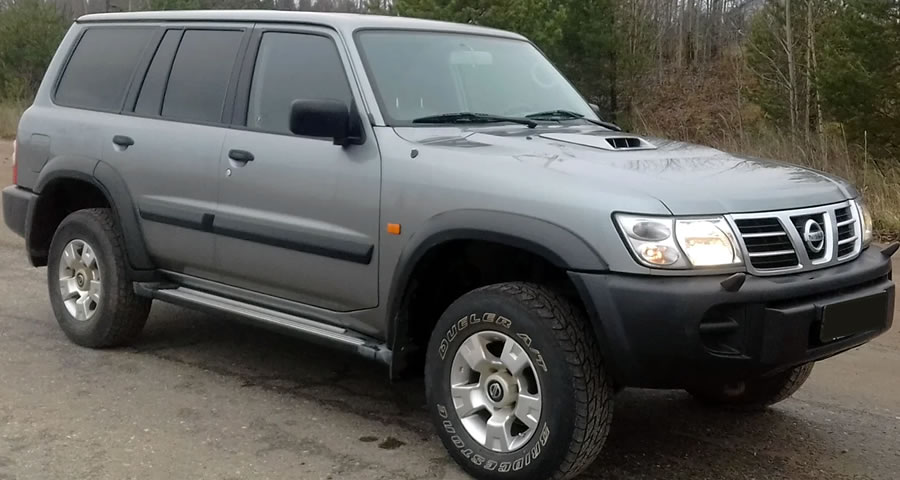
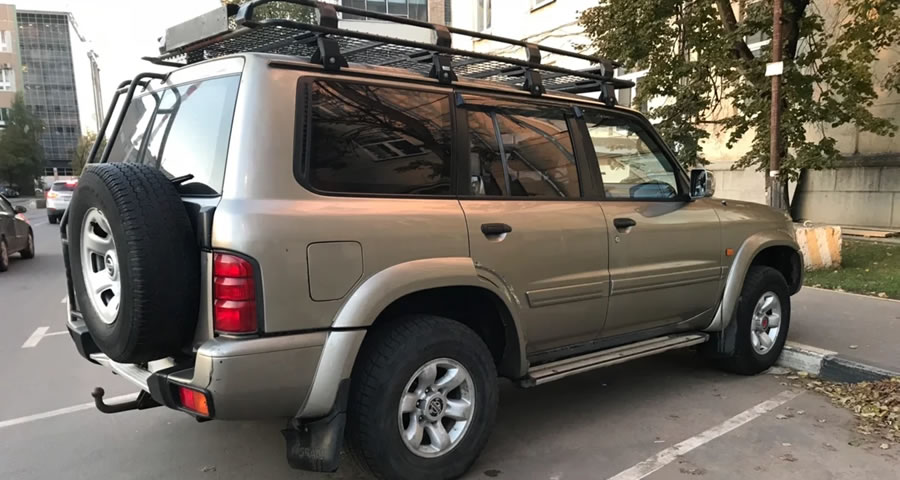
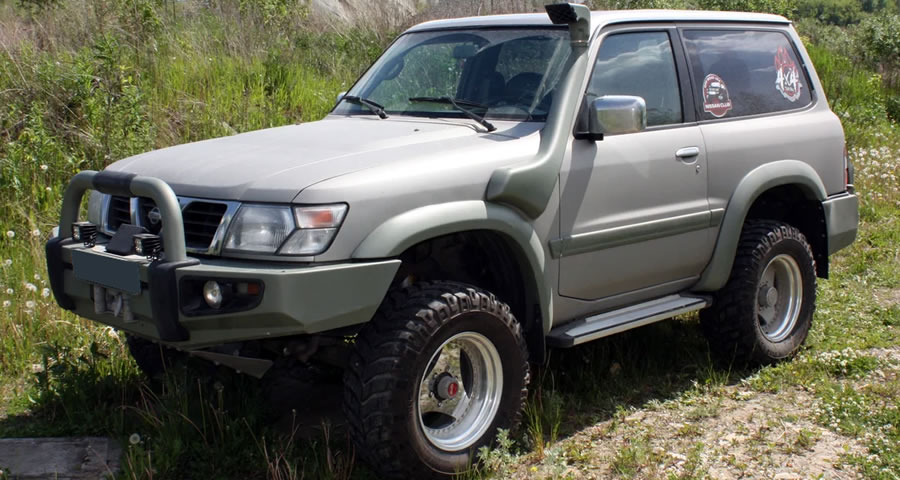
In December 1997, the fifth generation of the Patrol with the factory code "Y61" appeared. The car was presented at the International Motor Show in Frankfurt. The body was in the form of a 3- and 5-door station wagon or a 2- and 4-door pickup. The wheelbase remained the only length and the total length of the car was 5080 mm, width 1940 mm, height 1855 mm and the curb weight of 2473 kg. The engine was located longitudinally in the front, the drive was carried out on the rear wheels, the front drive is connected rigidly only for overcoming off-road conditions. Assembly facilities were located in Japan, Morocco, Pakistan, South Africa and Spain.
Two models of 4.5-liter gasoline engines were installed (4479 cm³, TB45E, I6, 197 hp) and 4.8 liters (4759 cm³, TB48DE, I6, 245 hp)There were four models of 2.8-liter diesel engines (2825 cm³, RD28ETi, I6, 133 l. With.), 3.0 liters (2953 cm³, ZD30DDTi, I4, 158 hp), 4.2 liters (4169 cm³, TD422, I6, 145 hp) and 4.2 liters (4169 cm³, TD42T3, I6, 160 hp). Gearbox 4-speed "RE4R03A" or 5-speed "RE5R05A" automatic, as well as 5-speed manual "FS5R30A" or "FS5R50B".
In 2005, an updated version of the car "Y61" was released. The front headlights were updated, reflectors appeared on the body protection elements, the rear lights were enlarged, the problems of the engine "ZD30" were eliminated. Sales "Nissan Safari" were discontinued in the Japanese market due to poor sales. In 2014, production of the fifth generation was stopped in favor of the sixth, but assembly is still carried out in South Africa, Pakistan, the Middle East, the Philippines and some other countries.
Sixth generation (Y62, 2010–present)
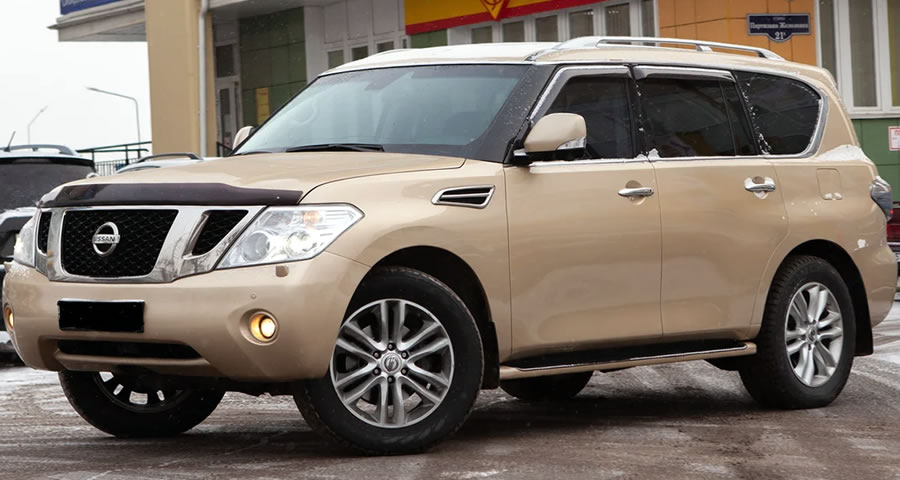
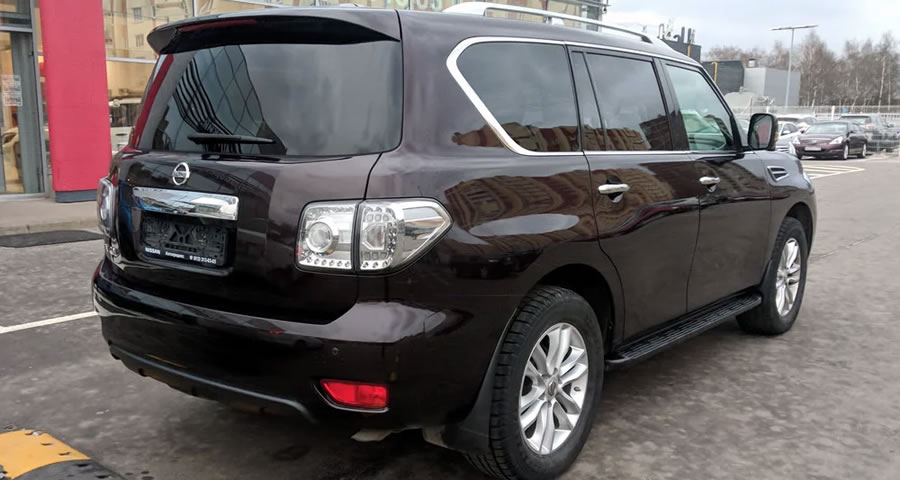
The all-new sixth generation with the code "Y62" was presented in the city of Abu Dhabi in February 2010. The body is produced only as a 5-door SUV on the platform "Nissan F-Alpha", that is, a body on a supporting frame. The car is 5140 mm long, 1995 mm wide, 1940 mm high and has a curb weight of 2695-2795 kg, that is, the external dimensions have increased compared to its predecessor. Rear-wheel drive with all-wheel drive in poor road conditions. You can choose one of four modes: sand, road, rocks and snow. The car was assembled in Japan, Malaysia and Nigeria.
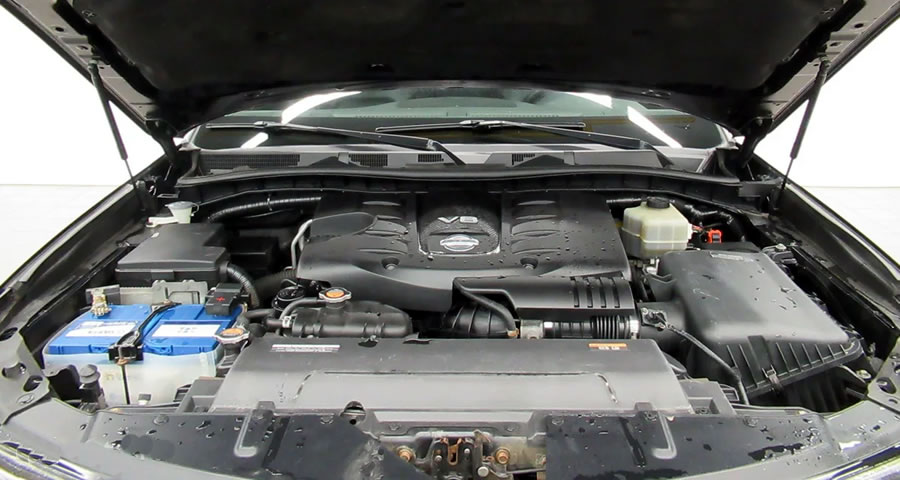
As of 2017, the car was equipped with one 4.0-liter V6 petrol engine (3954 cm³, VQ40DE, V6, 275 hp), as well as two eight-cylinder V-shaped engines with a volume of 5.6 liters (5552 cm³), code "VK56VD" with a capacity of 400 hp and "VK56DE" with a capacity of 320 hp. The gearbox is 6-speed manual, as well as two automatic, 5- or 7-speed.
A luxury version coded "Z62" was sold in North America as "Infiniti QX56", which was later renamed in 2013 "Infiniti QX80". The regular version of the Y6 went on sale in the US in 2016 under the name Armada.
In 2014, a rather strong update was carried out. The rear lights were changed, all the front lights became LED. The interior and wheel disks were also updated.