


Nissan Note
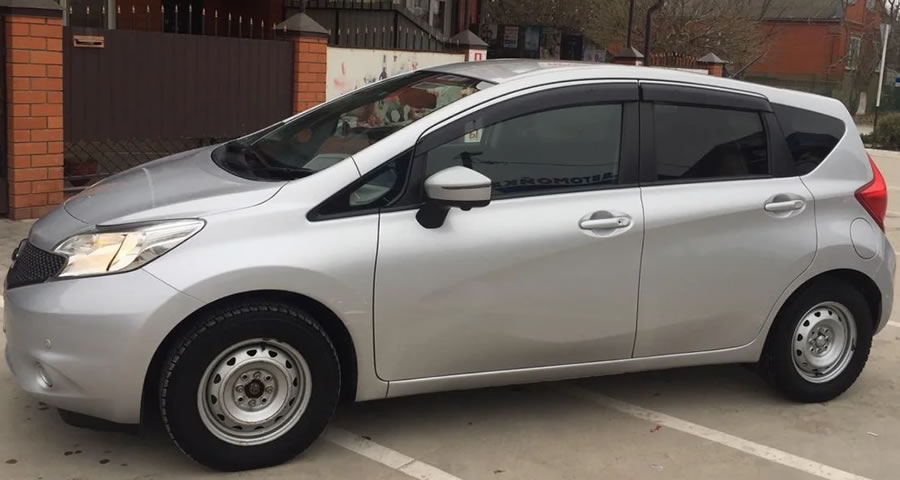
Note E12 2015 year
The main competitors of the Note are the Citroën C3 Picasso, Ford B-Max, Ford Fusion, Honda Freed, Hyundai Getz, Kia Soul, Kia Venga, Lada X-Ray, Mazda Verisa, Opel Meriva, Renault Modus, Skoda Roomster, Subaru Justy, Suzuki MR Wagon, Toyota Verso etc.
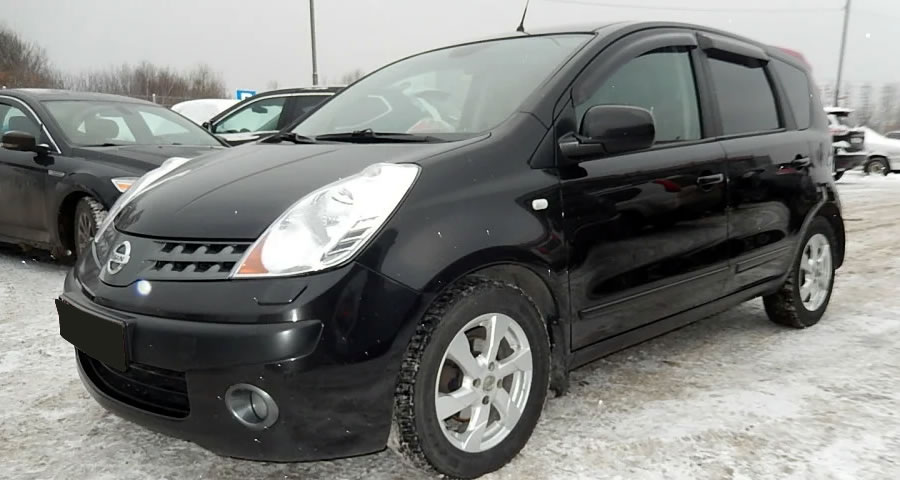
Note E11, front view
First generation (E11, 2004−2013)
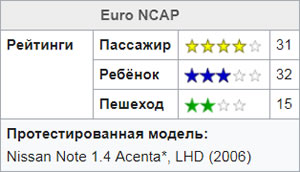
The prototype for the production car "Note" was a concept car "Nissan Tone", which was shown in September 2004 at the Paris Motor Show. In December 2004, production of the first generation with the code "E11" began. It first went on sale in Japanese markets in January 2005. In Europe, the car was presented at the Frankfurt International Motor Show in September 2005, and then at the Geneva Motor Show in March 2006. Based on the Nissan B platform. The body was a 5-door hatchback 4083 mm long, 1690 mm wide, 1550 mm high and a curb weight of 1150-1250 kg. Production was carried out in Japan, Great Britain and the USA. A total of about 940 thousand cars were produced.
The car was initially offered in three trim levels - "S", "SE" and "SVE", and then in five trim levels - "Visia", "Visia+", "Acenta", "Acenta S" and "Tekna". All cars came with four airbags, a CD player, electric front windows and mirrors and folding rear seats.
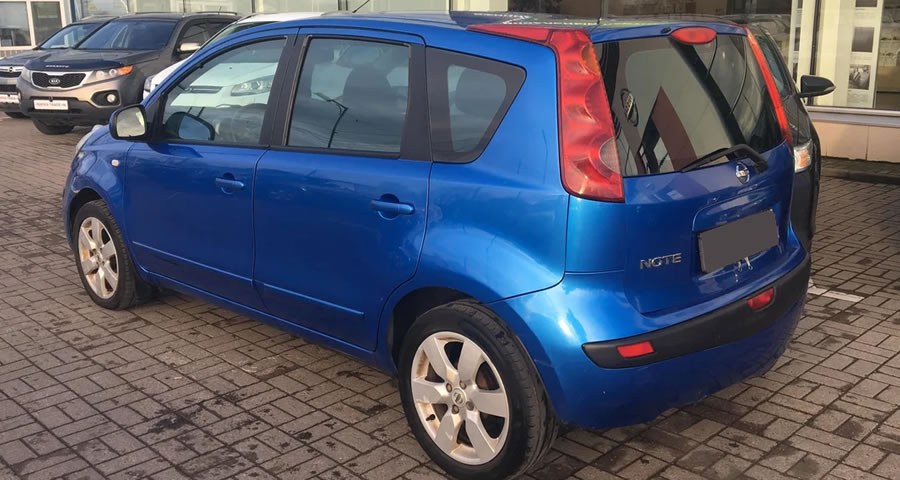
Note E11, back view
In 2008, the car's exterior was updated for European markets. The bumpers were painted in body color, the radio antenna moved to the rear of the roof, the headlight washer became fully automatic, the headlights and radiator grille were changed, as well as less noticeable changes. For the Japanese market, the update was carried out in 2008. The second update was carried out in 2010, the third in 2012.
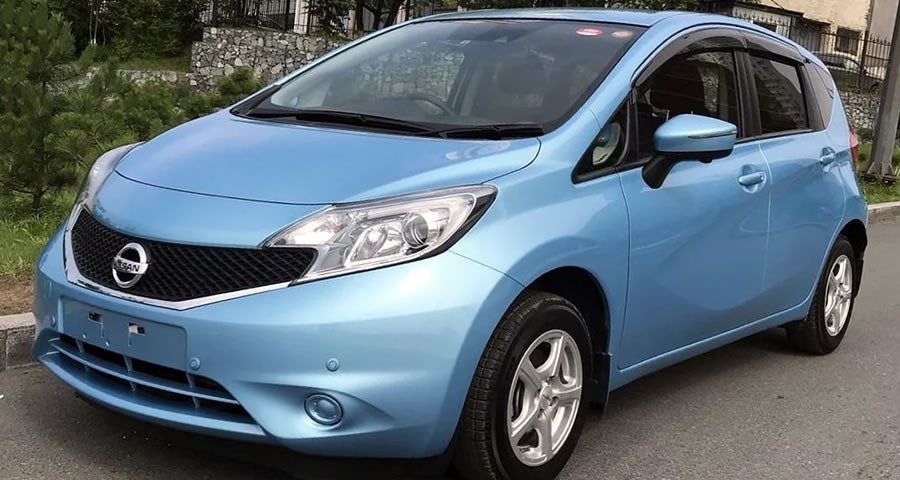
Note E12, front view
Second generation (E12, 2013–present)
At the 82nd International Geneva Motor Show in March 2012, a concept called "Nissan Invation", based on the Nissan V platform, which is also used by the Micra and Juke. It used independent front suspension "MacPherson", rear torsion beam, technology "Around View Monitor" (AVM), security system "Nissan Safety Shield". All this formed the basis of the second generation with the code "E12". In North America, the car is called "Versa Note". The body is designed as a 5-door hatchback with a length of 4100 mm, a width of 1695 mm and a height of 1525 mm. The car was assembled in Japan, Great Britain, Mexico and Thailand.
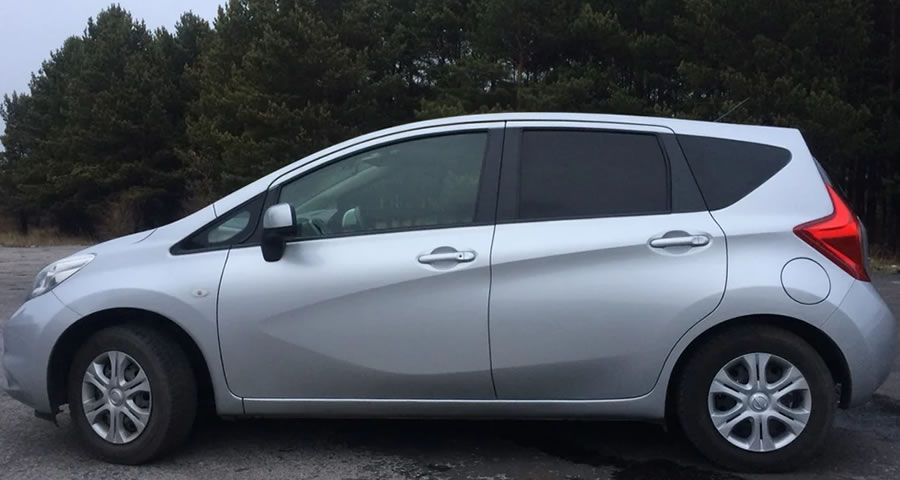
Note E12, side view
Some models are equipped with daytime running lights (DRL). Special models with exclusive paintwork or equipment for different markets were produced with the names "Note Axis", "Note Medalist", "Note Rider", "Note E-Power".
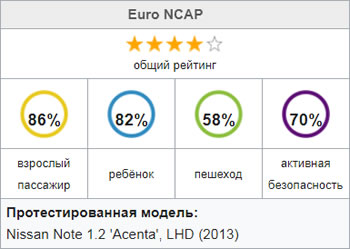
The 2014 model year saw updated engines, the addition of an emergency braking package, lane departure warning, moving object detection, and other driver assistance packages. The updated car was shown at the 43rd Tokyo Motor Show 2013.
On November 2, 2016, Nissan introduced a new hybrid powertrain, the e-Power, in Japan. It consists of a three-cylinder, 1.2-liter gasoline engine (1198 cm³, HR12DE) and an electric traction motor (EM57), which is used in conjunction with a 1.5 kWh battery. Wheels "Nissan e-Power" are driven only by an electric motor, the internal combustion engine is used only to generate electricity.
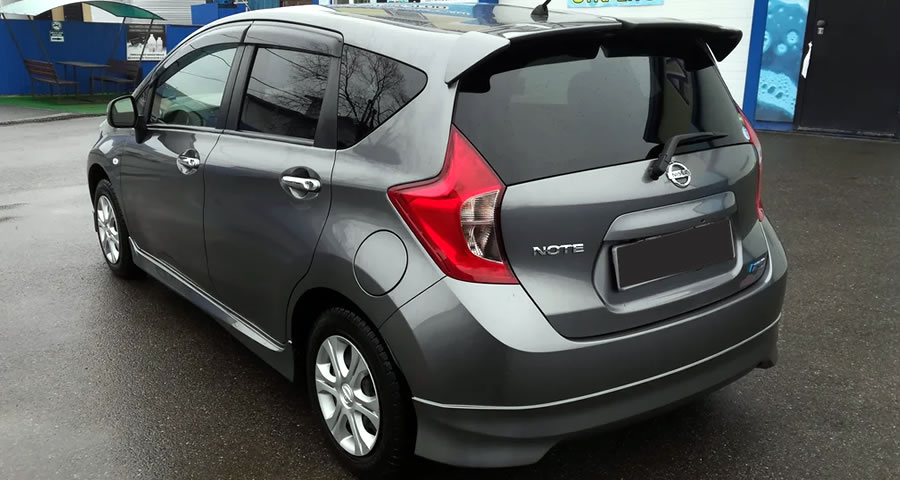 Note E12, back view | 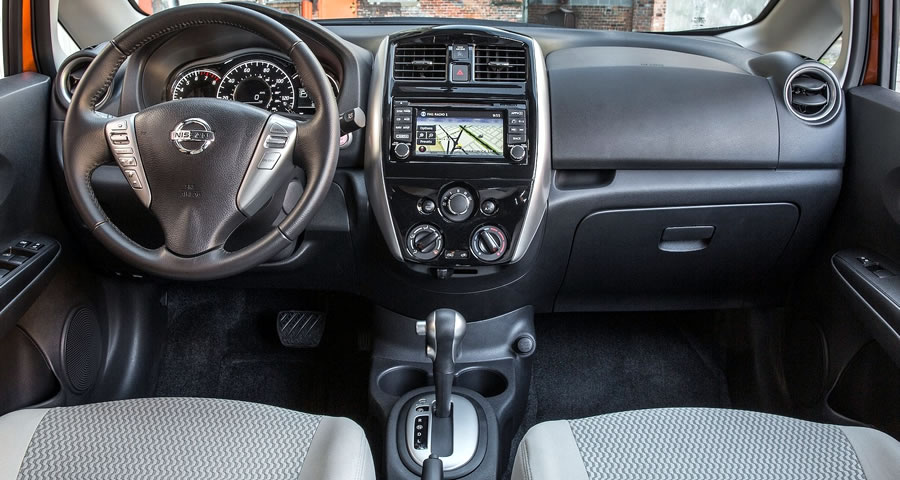 Note E12, interior | 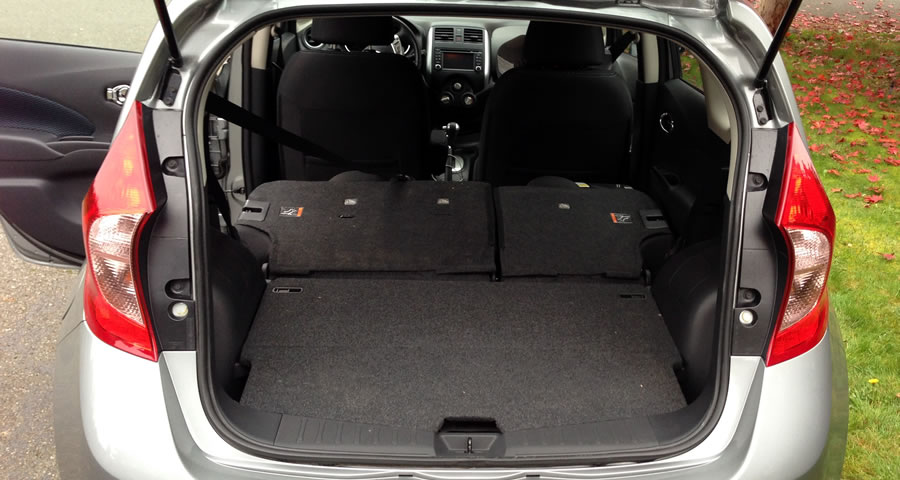 Note E12, trunk |
Nissan Micra
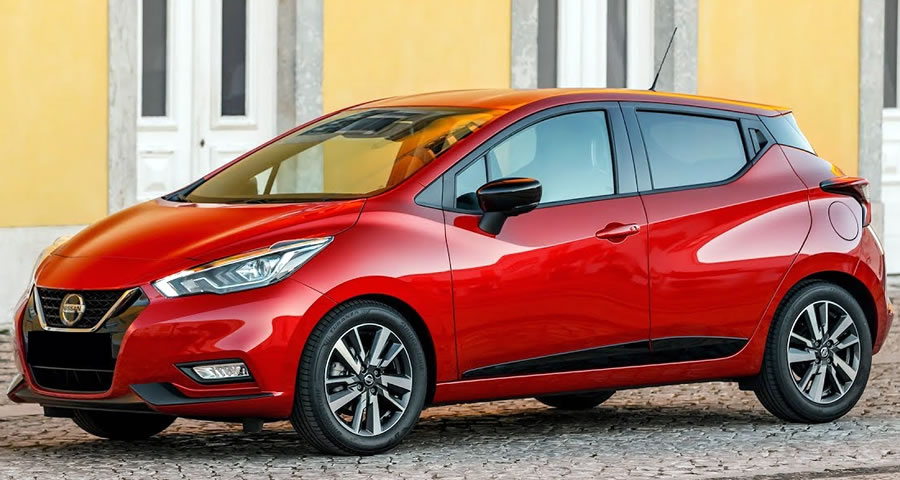
Micra К14 2019 year
At the moment, the main competitors and classmates of Nissan Micra are cars Chevrolet Aveo, Citroen C2, Fiat Punto, Ford Fiesta, Honda Fit/Jazz, Kia Rio, Lada Granta, Mazda 2, Mitsubishi Colt, Opel Corsa, Peugeot 208, Renault Logan, Renault Sandero, Skoda Fabia, Seat Ibiza, Toyota Yaris, Volkswagen Polo.
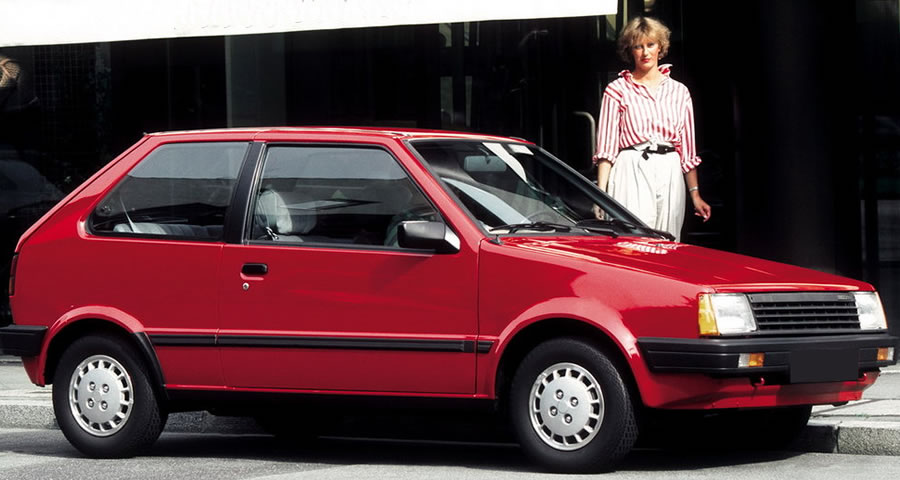
Micra К10, front view
First generation (K10, 1982−1992)
The prototype of the "Micra" was shown at the Tokyo Motor Show in 1981 under the name NX-018. In October 1982, the first generation with the code K10 was presented in Japan to compete with the already produced cars Daihatsu Charade, Honda City, Suzuki Cultus and Toyota Starlet. The body was only as a 3- or 5-door hatchback with a length of 3760 mm, a width of 1560 mm, a height of 1395 mm and a curb weight of 660-710 kg. Developed according to sketches of the Italian car designer Giorgetto Giugiaro using Nissan's own developments. The car had low fuel consumption due to its low weight and a low drag coefficient of 0.39.
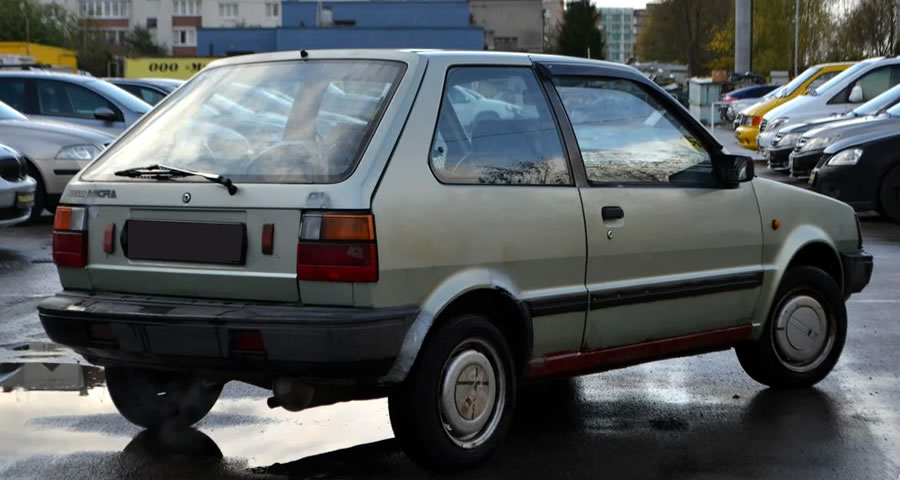
Micra К10, back view
There were four models of engines, all four-cylinder with a capacity of 0.9 liters (930 cm³, MA09ERT, turbo, 110 hp), 1.0 liter (0.987 cm³, MA10S, 50-57 hp), 1.0 liters (0.988 cm³, EK10FR, turbo, 85 hp) and 1.2 liters (1235 cm³, MA12S, 57-60 hp). The gearbox was installed as a four- or five-speed manual or a three-speed automatic "Nissanmatic".
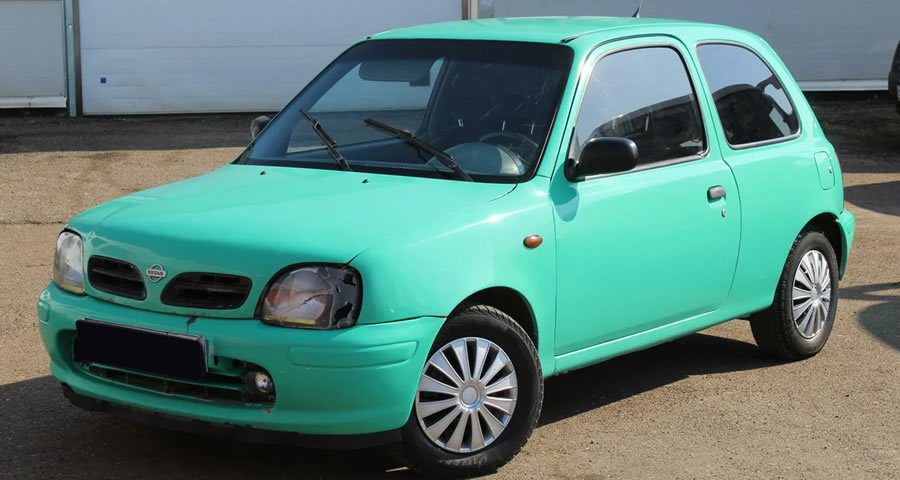
Micra К11, front view
Second generation (K11, 1992−2002)
Following the success of the K10, a second generation was released under the code K11 with a completely redesigned design, which acquired more rounded shapes, following the trends of its time. The first cars appeared in January 1992 in Japan, and at the end of this year in Europe. The body was presented as a three- and five-door hatchback, a two-door convertible and a four-door sedan (March Cubic). The length of the car was 3701-3746 mm, width 1580-1595 mm, height 1430-1440 mm, wheelbase 2360 mm and unladen weight 780-840 kg. The model included such automotive technologies as airbags, ABS, electric windows, central locking and air conditioning. The European model range consisted of equipment "1.0L", "1.0LX", "1.3LX", "SLX" and "Super S". Assembly was carried out in Japan, Great Britain and Taiwan.
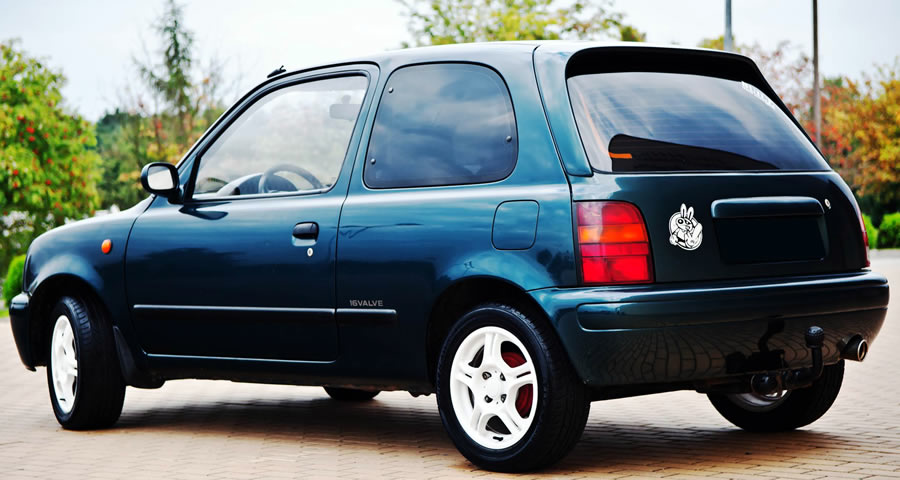
Micra К11, back view
In 1992, the car won the "Car of the Year in Japan" award, and in 1993, the "Car of the Year in Europe" award. In 1995, a small aesthetic update was carried out. In 1997, a fairly strong update of the model was carried out, bringing new headlights, a hood and a new interior. At the end of 1999, another minor update was carried out.
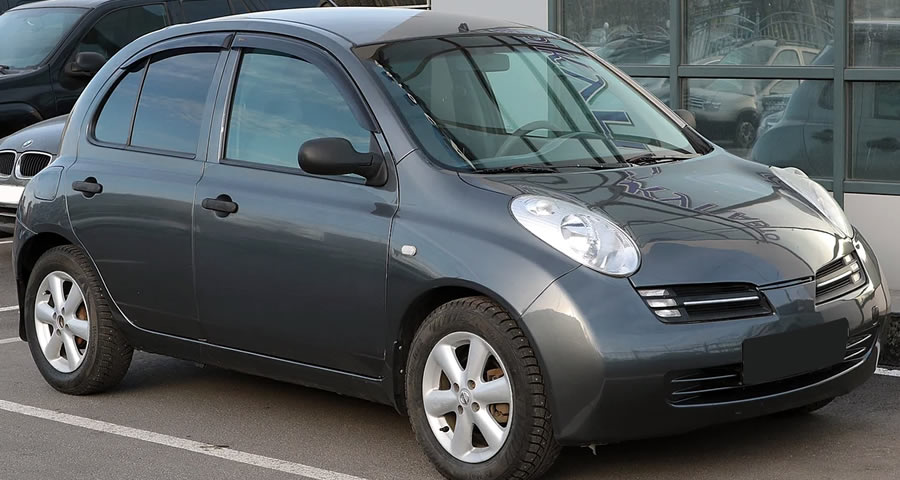
Micra К12, front view
Third generation (K12, 2002−2010)
After the successful second generation, the third generation Micra was presented at the Paris Motor Show in September 2002 with the code K12 and a completely new exterior design. It went on sale at the end of 2002. The car uses the "Nissan B" platform, which was developed jointly with the company "Renault", an alliance with which was concluded in 1999. The body was presented in the form of a three- and five-door hatchback (length 3715 mm, width 1660 mm, height 1540 mm, weight 1040-1105 kg), as well as a two-door convertible (length 3808 mm, width 1668 mm, height 1441 mm). The wheelbase was increased to 2430 mm. Production was located in the UK and Japan.
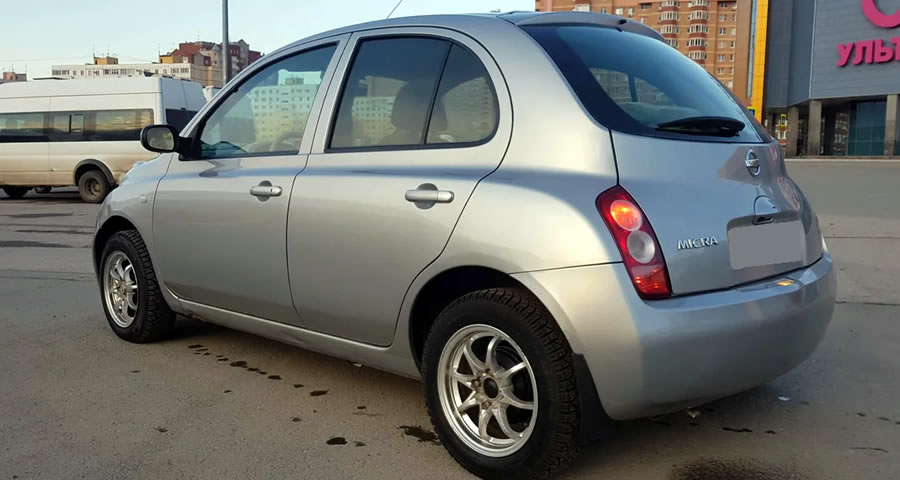
Micra К12, back view
In 2004, the model was updated, which was presented at the Paris Motor Show in 2004. At the end of 2007, the car was updated again.
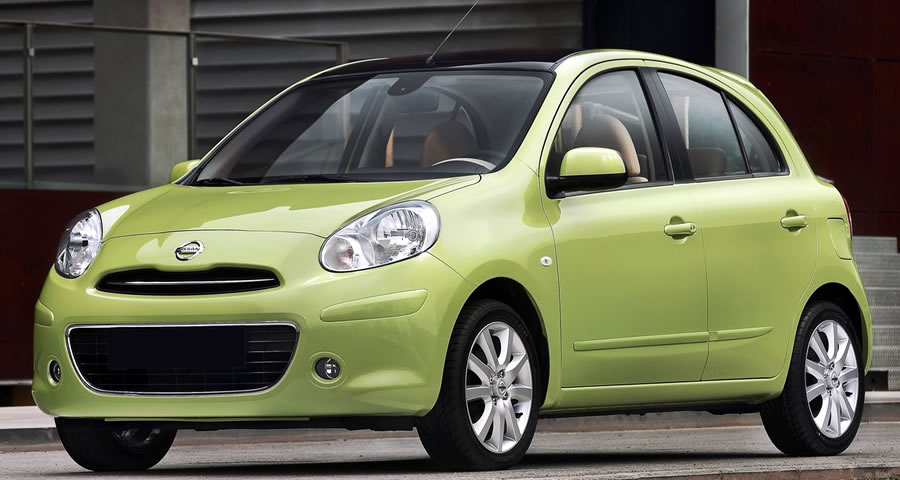
Micra К13, front view
Fourth generation (K13, 2010−2017)
The Nissan Micra with the K13 code was presented at the 80th Geneva Motor Show in March 2010. It is based on the new "Nissan V" platform, which is also used for other Nissan cars such as Almera, Pulsar, Sentra, Note and Kicks. The exterior design has not changed much, the same rounded shapes with bulging headlights, similar to the style of "Porsche" cars, remained. The body shape remained only in the form of a five-door hatchback with a length of 3780 mm, a width of 1675 mm, a height of 1515 mm, a wheelbase of 2450 mm and a curb weight of 985-1082 kg. Assembly shops were located in India, Indonesia, Thailand, Taiwan, China and Mexico. In India, the car was produced and sold under the name "Renault Pulse" The drag coefficient of the body is only 0.32, which is achieved thanks to the smooth roof line.
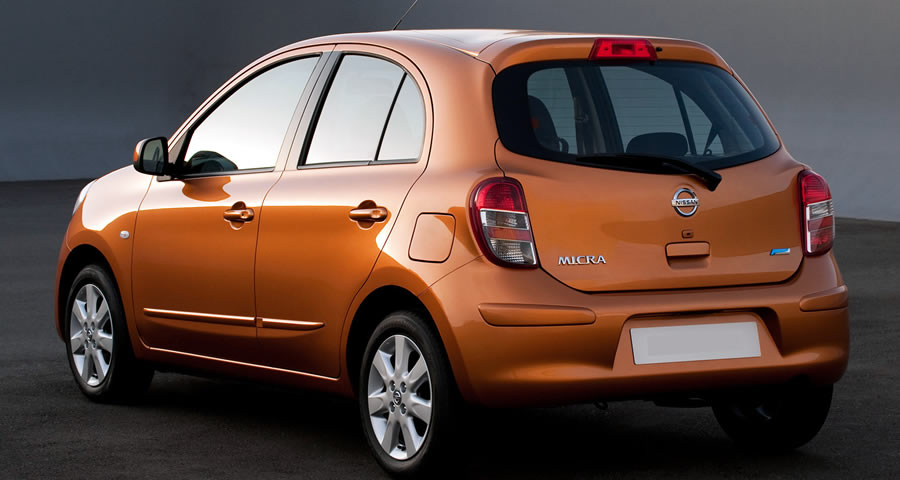
Micra К13, back view
In 2013, the car was updated, receiving a new radiator grille, hood, fenders, headlights and front bumper. LED taillights and other minor changes. Inside, the center console, air vents, gear selector, door armrests, seat fabrics and linings were updated.
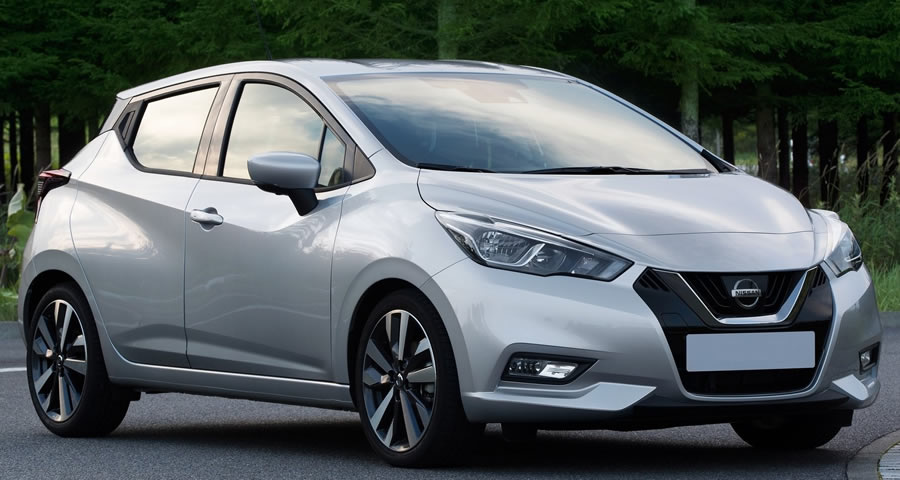
Micra К14, front view
Fifth generation (K14, 2017−present)
The concept car was shown back in 2015 at the International Geneva Motor Show, and the industrial model of the fifth generation with the code K14 was shown in 2016 at the Paris Motor Show. The car is aimed mainly at Europe and is currently manufactured only in France. It is assembled on the same platform as the previous K13, and the exterior and interior design has become completely new. The body is presented only as a five-door hatchback with a length of 3999 mm, a width of 1743 mm, a height of 1455 mm, a wheelbase of 2525 mm and a curb weight of 977 kg. The quality of the interior trim has improved significantly.
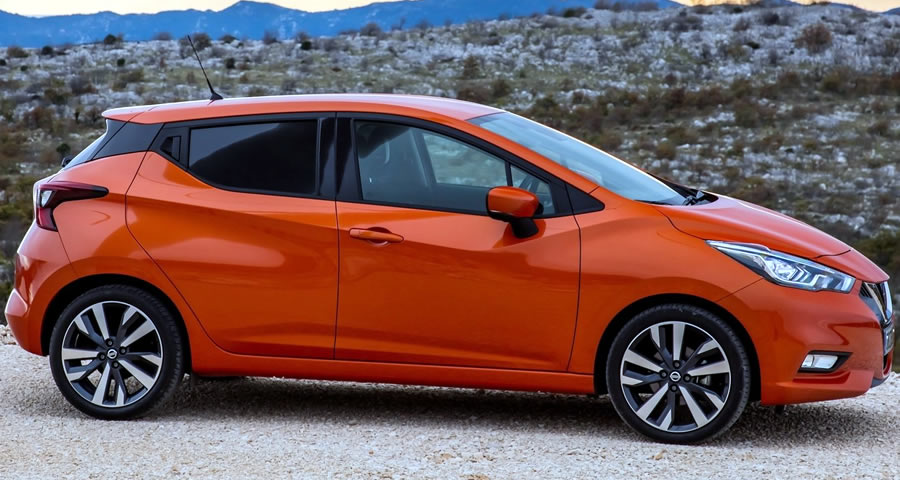
Micra К14, side view
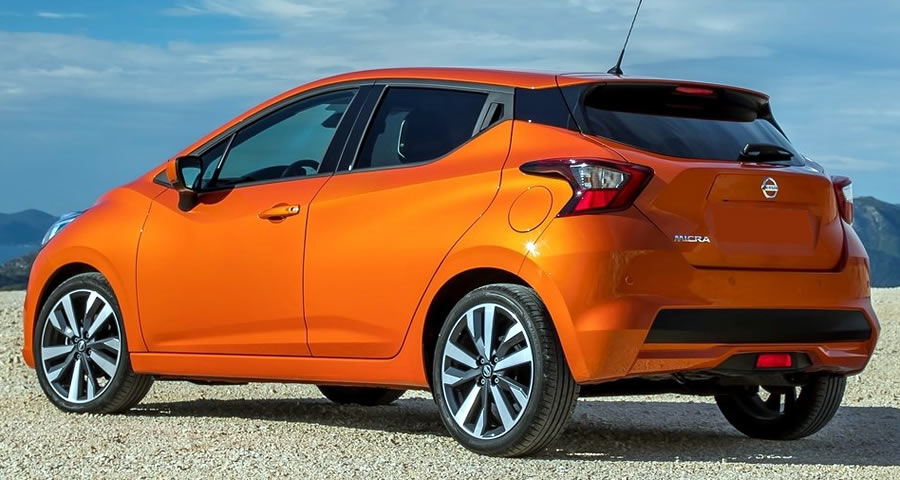 Micra К14, back view | 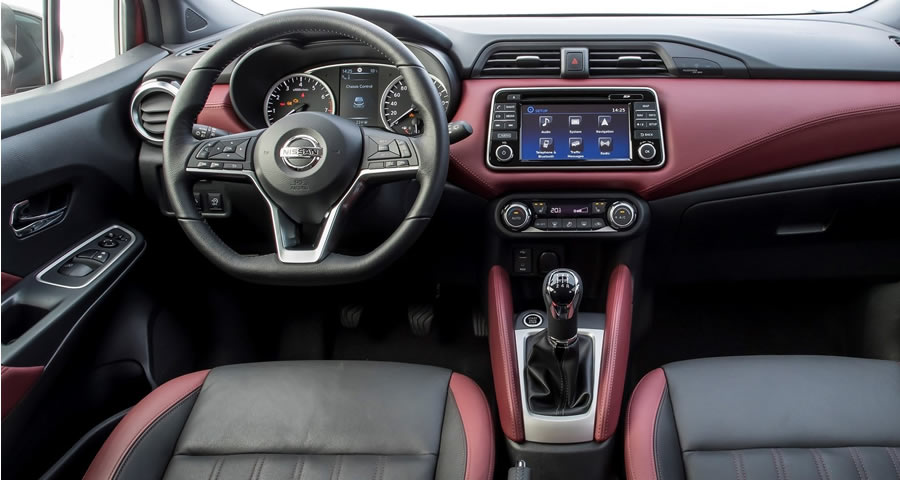 Micra К14, interior | 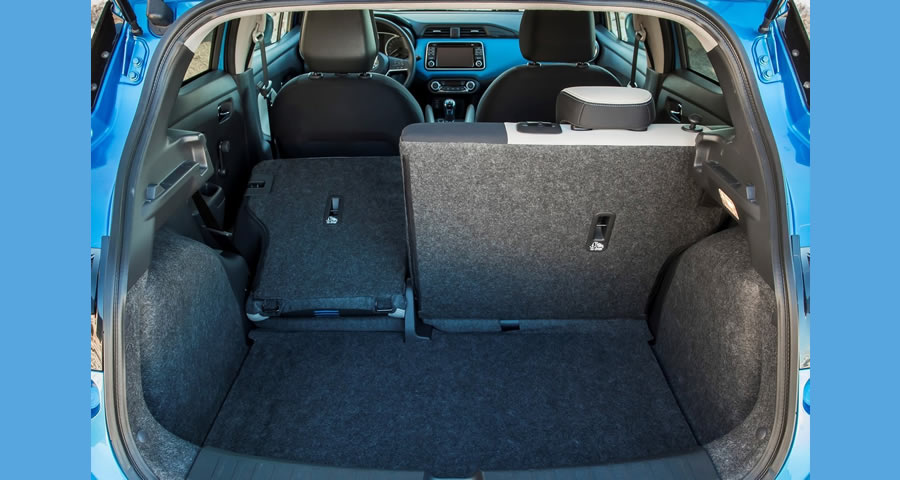 Micra К14, trunk |