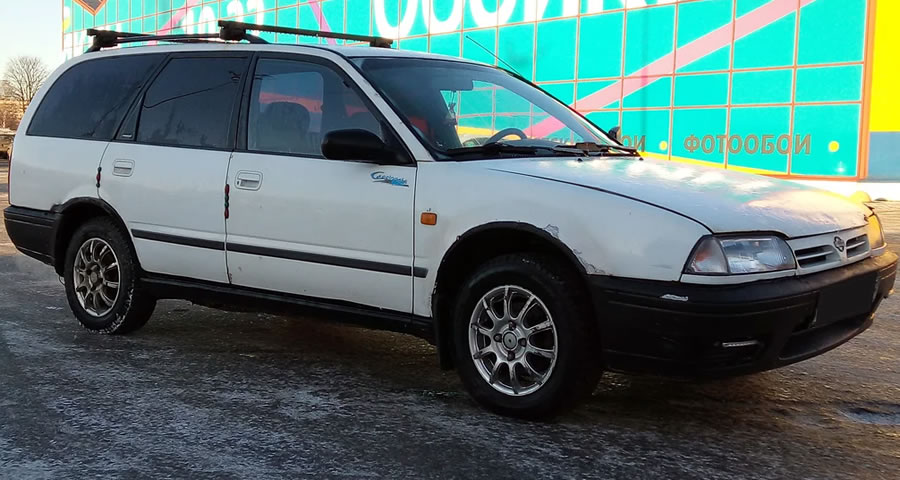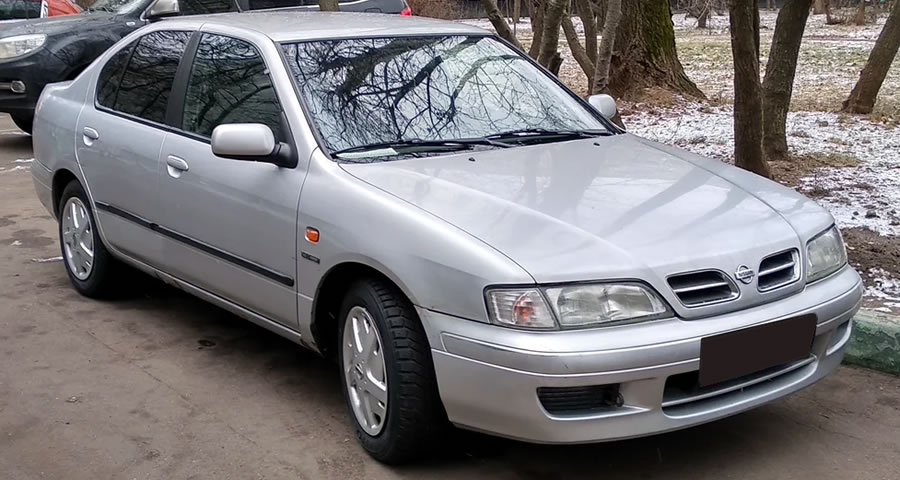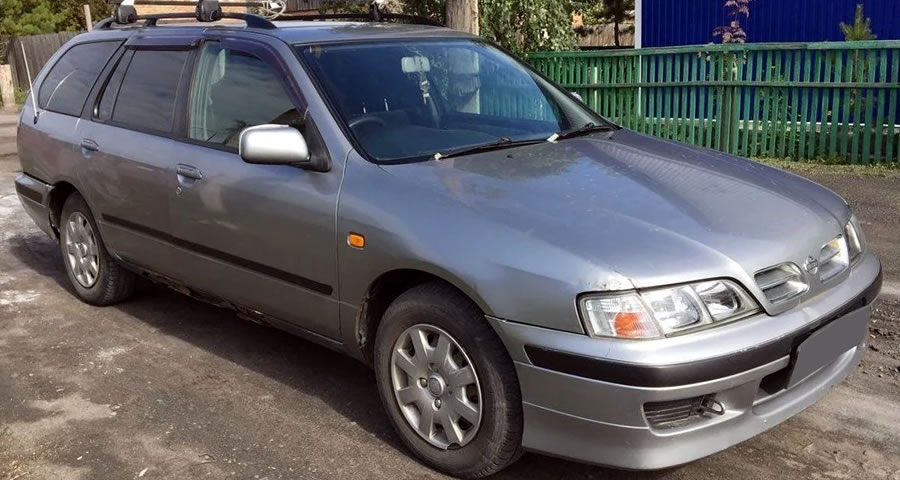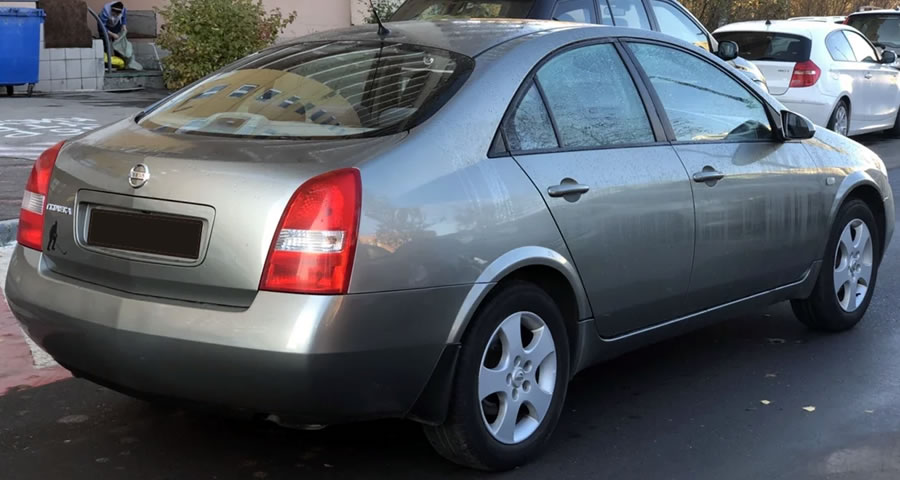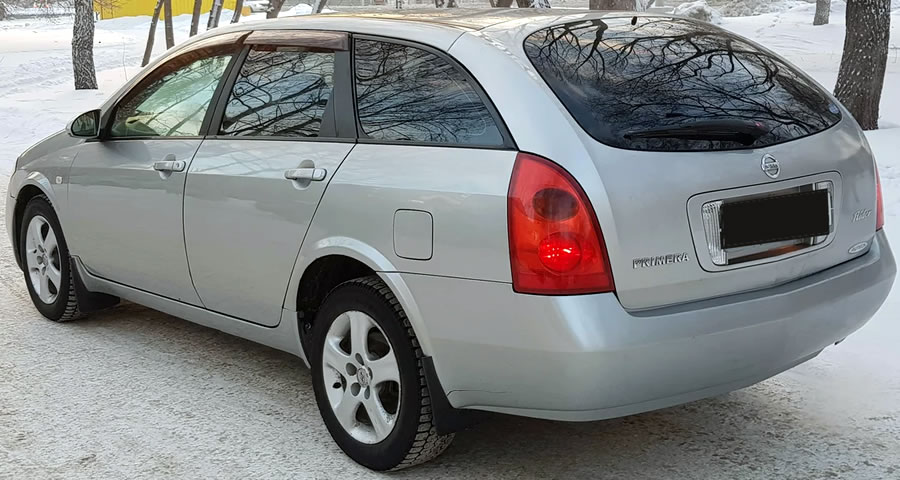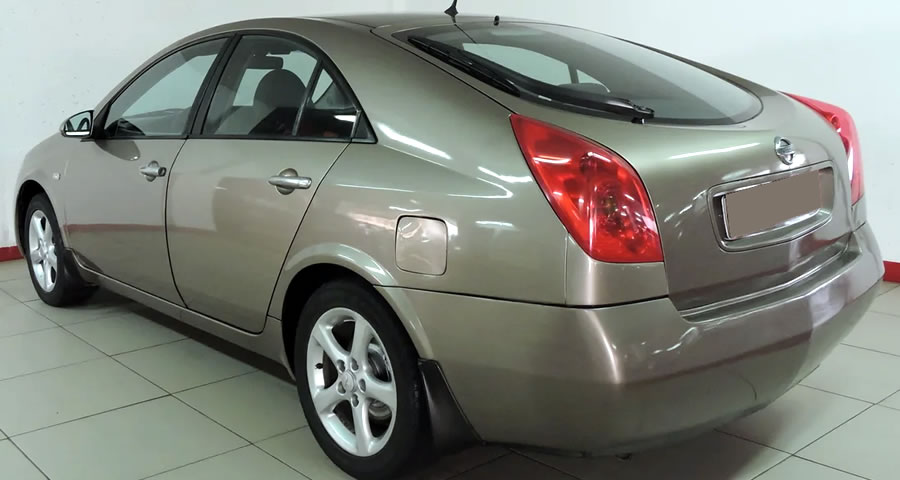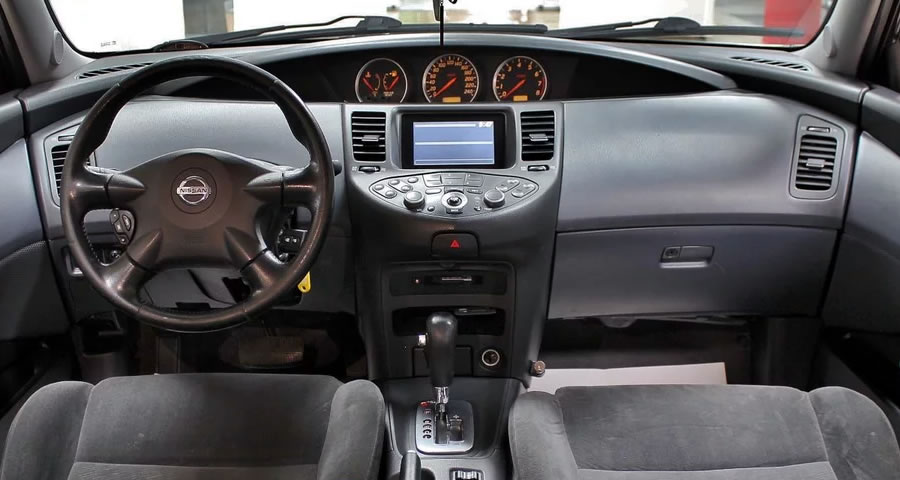
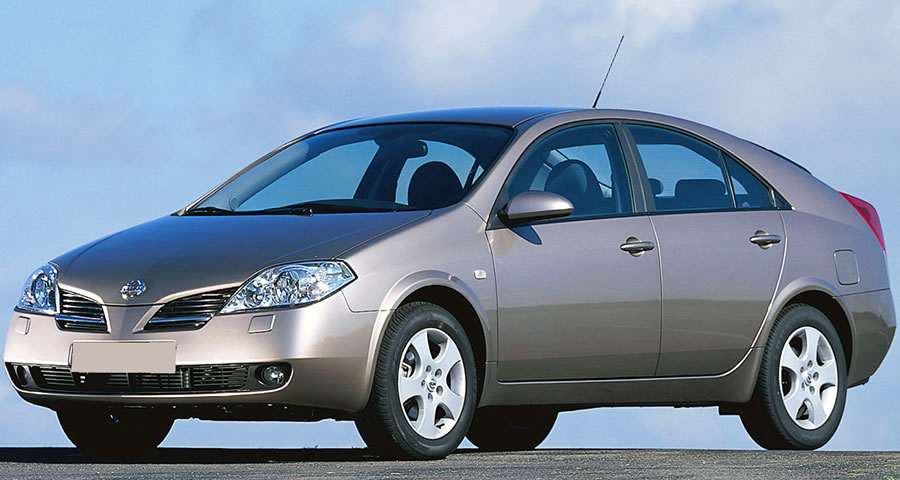
The engine is located transversely in front, the drive is only on the front wheels. The body was made in the form of a sedan, hatchback and station wagon. The main classmates and competitors of the "Primera" are cars Audi A4, Ford Mondeo, Honda Accord, Kia Optima, Mazda 6, Mitsubishi Galant, Opel Insignia, Peugeot 406, Renault Laguna, Skoda Superb, Toyota Avensis, Volkswagen Passat.
First generation (P10, 1990−1996)
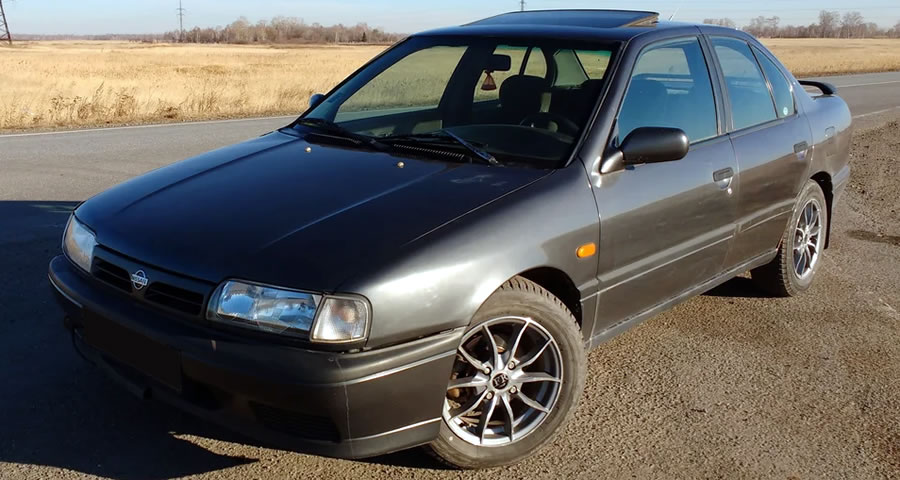
In the autumn of 1990, the first "Primera" car with the code "P10" appeared, which replaced the "Bluebird" in European markets. This car was derived from "Pulsar". It had a standard chassis for its class, a front-mounted engine, and front-wheel drive. The body was produced as a 4-door sedan, as well as a 5-door station wagon and hatchback. The sedan and hatchback were 4481 mm long, 1747 mm wide, and 1372 mm high. The station wagon was 4631 mm long, 1745 mm wide, and 1391 mm high. Production was located in Japan, Great Britain, and Taiwan.
There were three models of petrol engines: 1.6 litre carburetor (90 hp) or injection engines with a capacity of 1.8 litres (110 hp) and 2.0 litres (115, 123 and 152 hp). In 1993, a 1.6-liter injection engine (102 hp) appeared. In 1992, a 2-liter diesel engine with a capacity of 76 or 90 hp appeared. The gearbox was a 5-speed manual or 4-speed automatic.
The Primera car included six trim levels: "L", "LS", "SLX", "GS", "GSX" and "ZX".
Second generation (P11, 1996−2002)
At the end of 1995, the second generation went on sale in Japan, and in Europe only in the fall of the following year. In the US, the car was sold under the name "Infiniti G20". The bodies remained the same - sedan, hatchback and station wagon. The station wagon was assigned a separate code "WP11". The length of the car in the sedan and hatchback bodies was 4481 mm, width 1747 mm, height 1372 mm. The car with the station wagon body was 4631 mm long, 1745 mm wide and 1391 mm high. "Primera P11" was equipped with a new multi-link front and rear suspension. Production was carried out in Japan, Great Britain and New Zealand.
The engine was located transversely in the front, with front-wheel drive. The petrol engine lineup consisted of three models of four-cylinder in-line engines with a capacity of 1.6 litres (1597 cm³, 99 hp), 1.8 liters (1838 cm³, 125 hp) and 2.0 liters (1998 cm³, 130 or 150 hp). There was a 2.0-liter (1974 cm³) diesel engine with a power of 90 hp. The gearbox was a 5-speed manual, 4-speed automatic or continuously variable transmission (CVT).
The car was updated in the fall of 1999. They tried to make the exterior more modern, the headlights became completely transparent, hiding the yellow turn signals, and they began to use spotlights instead of the usual Fresnel lenses.
Third generation (P12, 2001–2007)
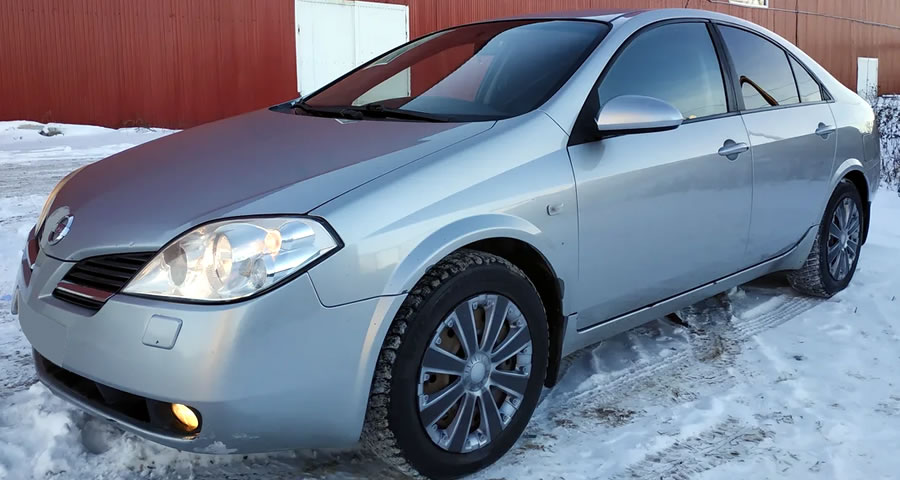
In December 2001, Nissan introduced the third generation with the code "P12". This is the first car released in the alliance with Renault, which was formed two years earlier. The design of the car was greatly changed. There was no luxury version released under the brand "Infiniti", in the USA this place was taken by "Infiniti G35", which was based on "Nissan Skyline". The body styles remained the same - sedan, hatchback and station wagon. The length of the sedan and hatchback was 4481 mm, width 1747 mm and height 1372 mm. The length of the station wagon was 4631 mm, width 1745 mm and height 1391 mm. Assembly was carried out in Japan and Great Britain.
The range of petrol four-cylinder in-line engines consisted of the following models: 1.6 litre (1596 cm³, 109 hp), 1.8 liters (1769 cm³, 116 and 125 hp), 2.0 liters (1998 cm³, 140 and 150 hp) and 2.5 liters (2488 cm³, 170 hp)There were two modifications of diesel engines with a volume of 1.9 liters (1870 cm³, 120 hp) and 2.2 liters (2184 cm³, 126 and 138 hp). Gearbox 5- or 6-speed manual, as well as 4-speed automatic and continuously variable transmission "Hyper CVT".
Production ceased in 2005 in Japan and 2007 in Europe. The automotive press was unanimous in its belief that the successor would be the Altima, but Nissan never officially confirmed this. At the same time, the "Qashqai" and the company decided not to release a direct successor to the "Primera".