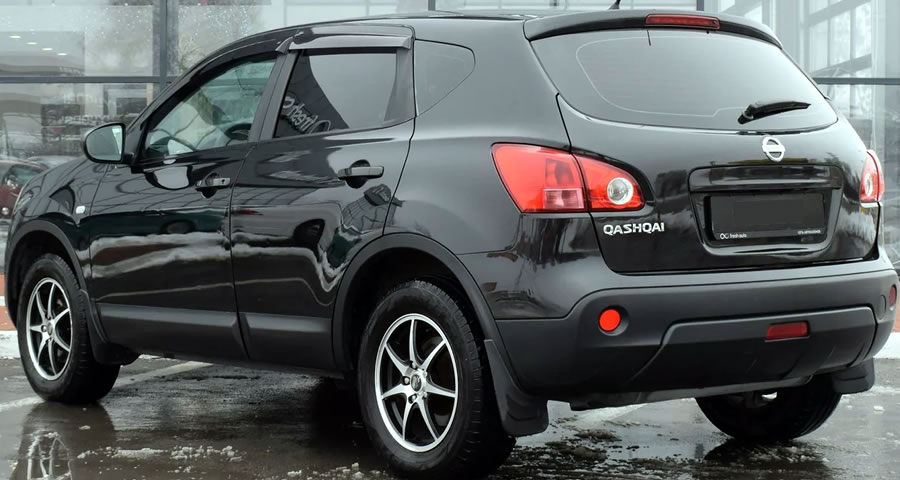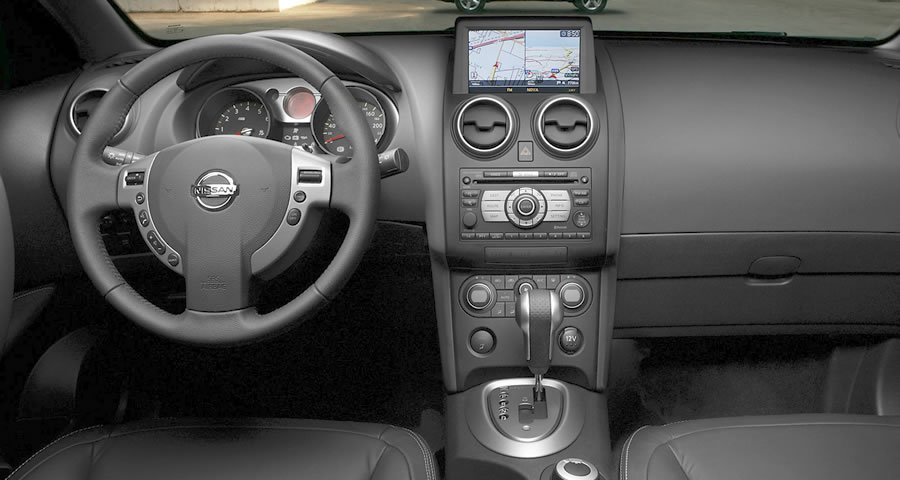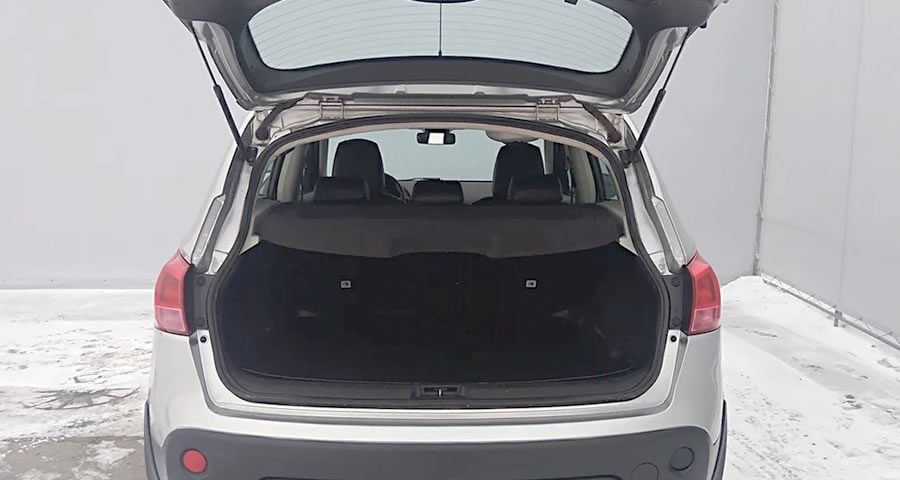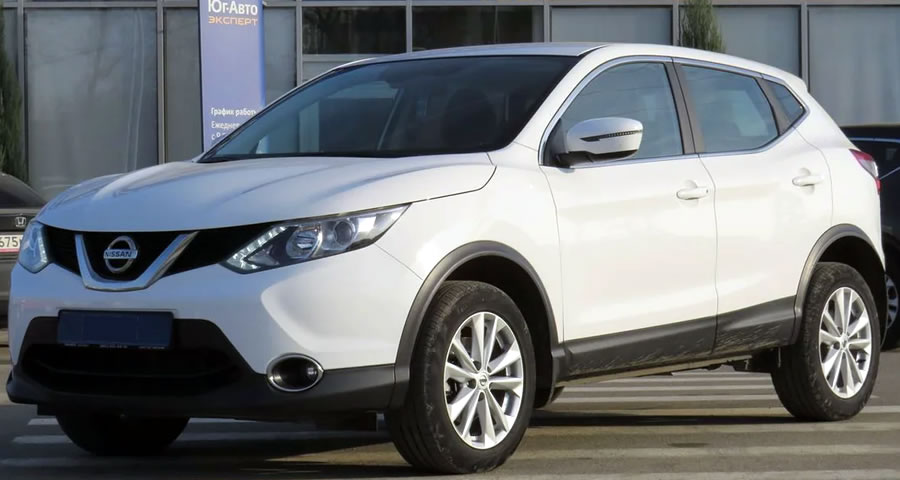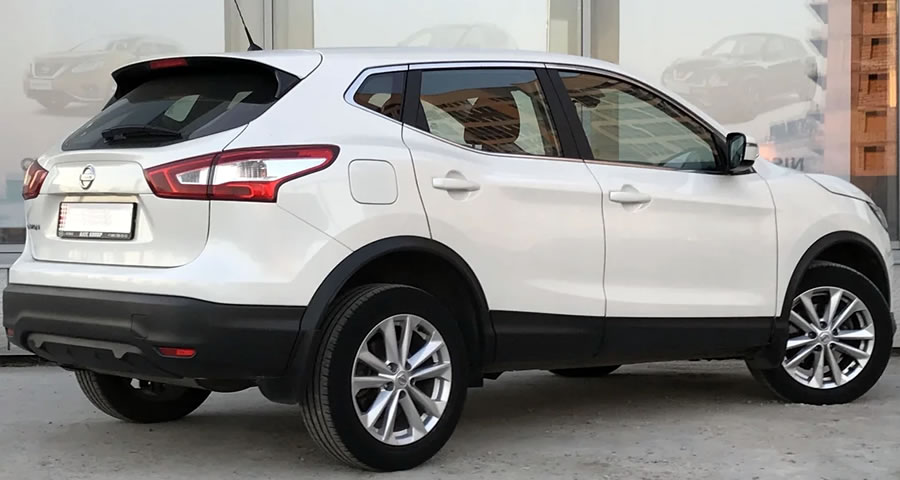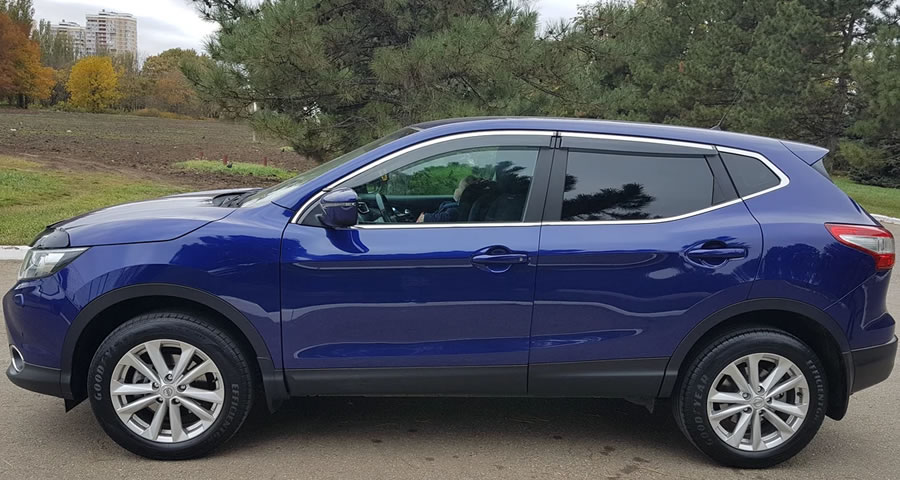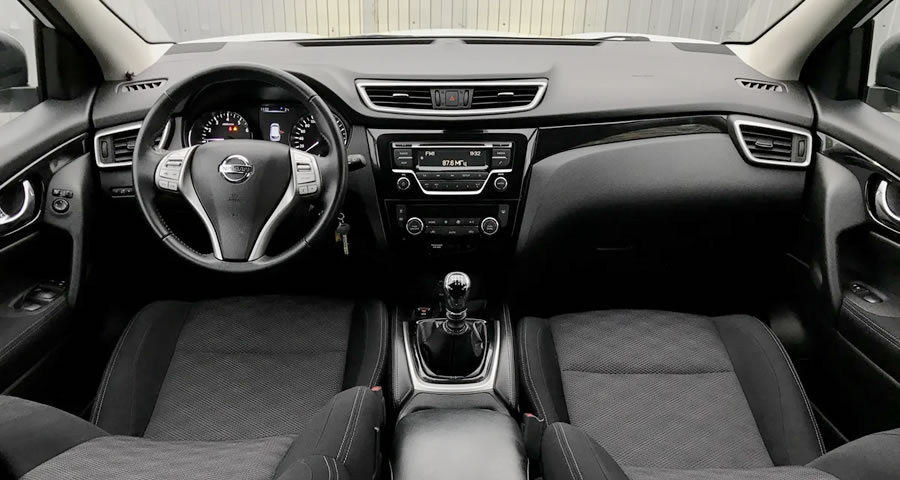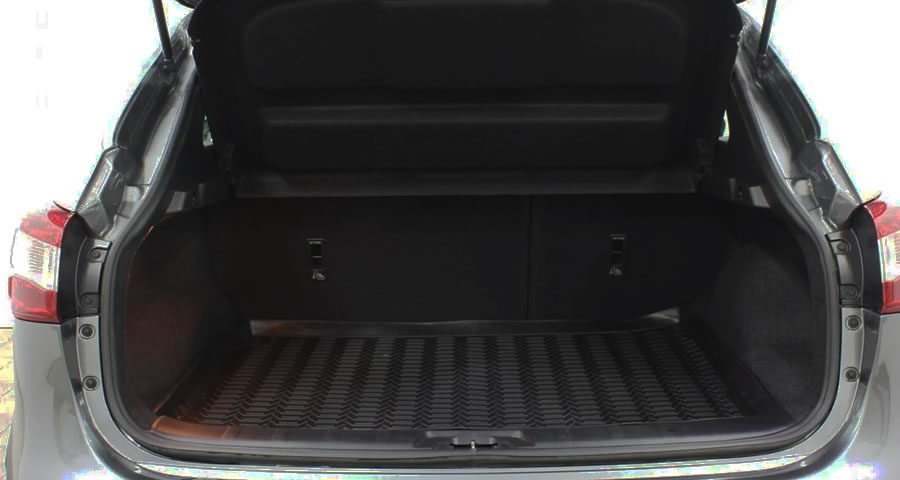
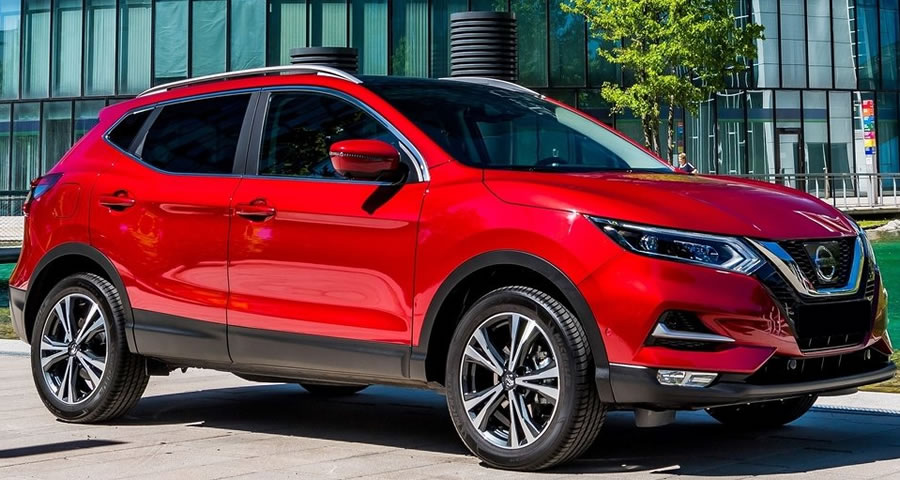
The car has a 5-door monocoque body and replaced the outdated frame compact crossover "Mistral" / "Terrano II". The engine is located transversely in front, front or full drive on all wheels. All engines are four-cylinder in-line, running on gasoline or diesel fuel. The main competitors and classmates are the following cars - Citroen C-Crosser, Chery Tiggo, Ford Kuga, Great Wall Hover H6, Honda CR-V, Hyundai Tucson, Kia Sportage, Mazda CX-5, Mitsubishi ASX, Peugeot 3008, Renault Duster, Skoda Kodiaq, Subaru XV, Suzuki Grand Vitara, Toyota RAV4, Volkswagen Tiguan.
Predecessor: Nissan Terrano II (R20, 1993−2006)
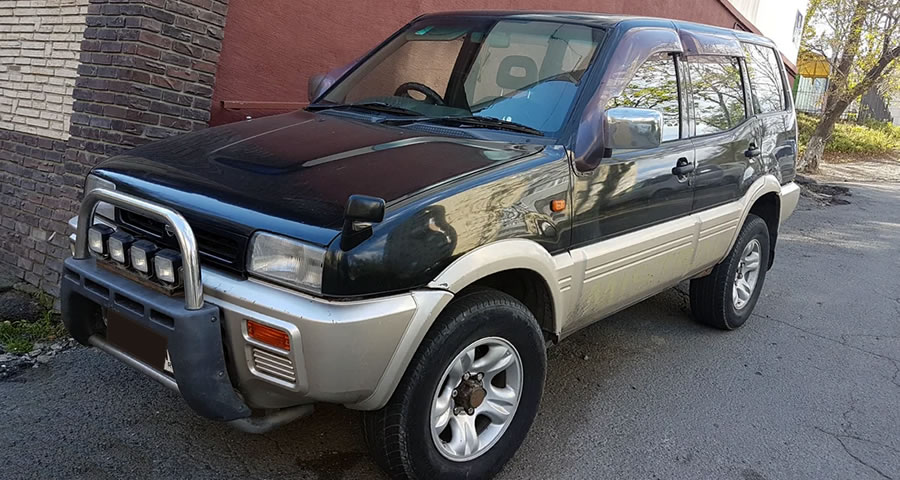
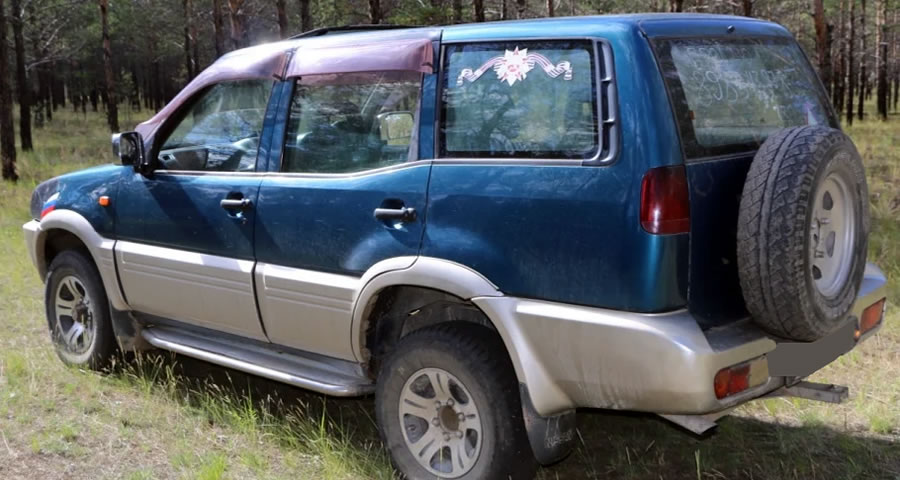
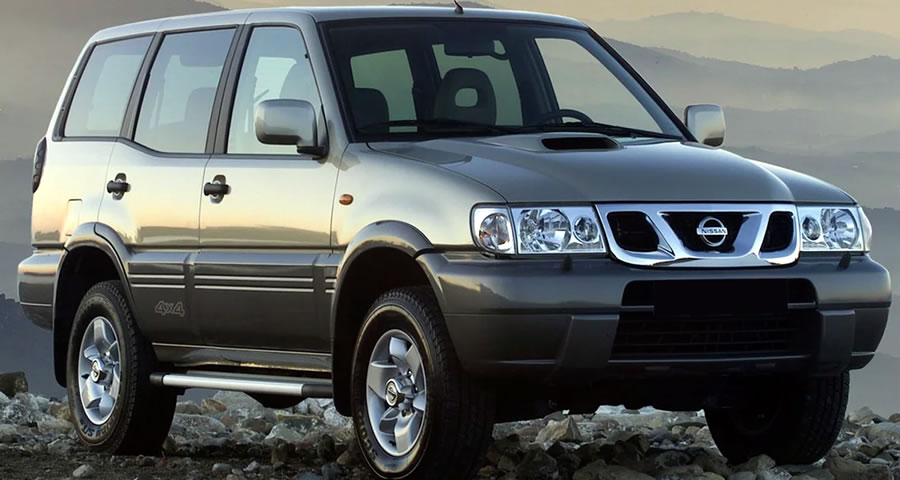
Terrano II or Mistral — a compact crossover produced by the Japanese company "Nissan". It was produced from 1993 to 2006 with virtually no changes in appearance, but with a significant number of technical updates. Production was carried out in Spain from February 1993 and exported to Japan under the name "Mistral", since in all other markets the name was "Terrano II". Also, under an agreement with Ford, it was sold in Europe as "Ford Maverick".
The body style was a 3- or 5-door station wagon (SUV) and it was based on the platform "WD21" on a load-bearing steel frame. The length of a three-door car was — from 1993 to 2000 4185 mm, from 2000 to 2007 4250 mm. The length of a five-door car was — from 1993 to 2000 4665 mm, from 2000 to 2007 4730 mm. The width of all cars was 1755 mm, height 1805 mm, curb weight 1760-1920 kg.
There was one petrol engine with a capacity of 2.4 liters (2389 cm³, KA24E, I4, 134 hp)There were two 2.7-liter diesel engines (2663 cm³, TD27Ti/TD27ETi, I4, 123/128 l. With.) and 3.0 liters (2953 cm³, ZD30DDTi, I4 170 hp). The transmission was a 5-speed manual or 4-speed automatic, as well as a four-wheel drive system with a limited-slip differential and a low-range transfer case.
In 1996, the model was updated. The square headlights were replaced with round ones, and minor defects were corrected. In 1999, production of the "Mistral" ceased and "Ford Maverick", leaving "Terrano II", and also carried out another update. The front became more similar to other cars of the company, the interior was also redesigned. In March 2002, at the 72nd Geneva Motor Show, another update was presented and from that time on in Europe it began to be sold simply as "Nissan Terrano". In 2006, production in Spain ceased and the model was replaced by other compact crossovers - "Pathfinder", "X-Trail" and "Qashqai".
First generation (J10, 2006−2013)
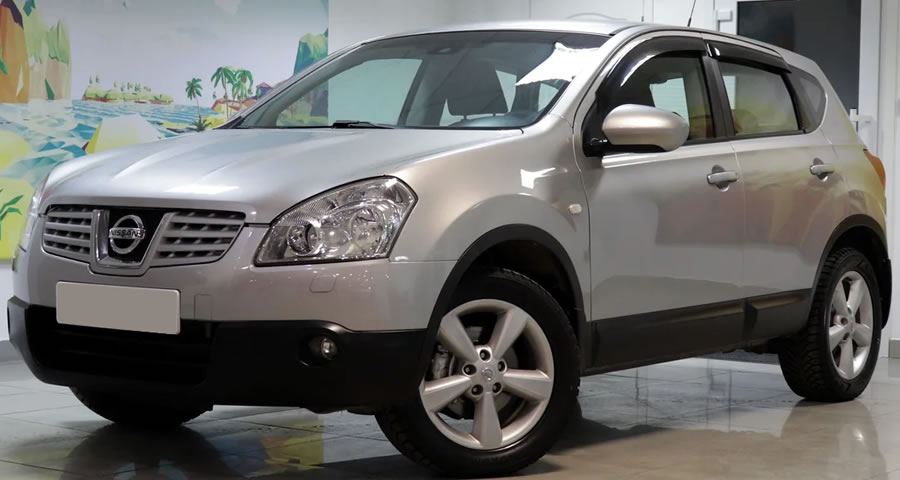
Production of the car began in the UK at a plant "Nissan Motor Manufacturing UK" (NMUK) in December 2006, with sales commencing in February 2007. The design was entirely developed by the European group "Nissan Design Europe", located in London. The concept car was presented at the Geneva Motor Show in March 2004. The finished car was shown to the public at the Paris Motor Show in October 2006. By December 2007, exactly one year after the start of production, more than 100 thousand cars had been sold. In total, more than 1.2 million cars of the first generation were sold. Assembly was carried out in England and Japan.
The Qashqai is based on the Nissan C platform, which also underpins the "X-Trail", "Rogue", "Sentra", "Lafesta" and "Serena". There were two wheelbase options - standard (2760 mm) and extended (2760 mm, Qashqai+2). The length of the car was 4315 mm (Qashqai+2 - 4535 mm), width 1785 mm, height 1605 mm. "Qashqai+2" is a 7-seater car, the production of which began in July 2008. Since 2013, it has ceased to be produced, it was replaced by "X-Trail". The engine was located transversely in the front, the drive was carried out on the front wheels, and there was also an all-wheel drive option.
There were two models of petrol engines, both 4-cylinder in-line engines with a capacity of 1.6 liters (1598 cm³, HR16DE, I4, 112 hp) and 2.0 liters (1997 cm³, MR20DE, I4, 139 hp). Three models of diesel engines were installed, also four-cylinder in-line engines, with a volume of 1.5 liters (1461 cm³, K9K, I4, 105 hp), 1.6 liters (1598 cm³, R9M, I4, 128 hp) and 2.0 liters (1995 cm³, M9R, I4, 148 hp). Four gearbox options were installed - 5- or 6-speed manual, 6-speed automatic, and continuously variable transmission (CVT).
In March 2010, the updated Qashqai went on sale. The front of the car was significantly changed, LED lights were installed at the rear. The updated interior contains a new dashboard layout for the on-board computer, better sound insulation and small additions for storing things. In 2011, the engines were updated. The diesel 2-liter engine had its power reduced from 148 to 127 hp, but without reducing torque. The basic configuration began to include cameras for all-round visibility, the so-called "bird's eye".

In September 2012, Nissan recalled 51,000 vehicles to investigate a problem with the steering wheel.
Second generation (J11, 2013–present)
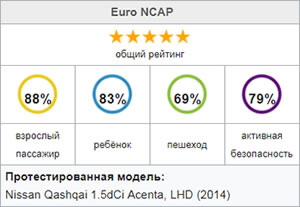
In November 2013, the second generation was presented in London, and then in January 2014 at the Brussels International Motor Show. Sales started in February 2014. The car is based on the platform "Nissan CMF-CD". The body remained only with a regular wheelbase in a 5-door version with a length of 4370 mm, a width of 1800 mm, a height of 1595 mm. The engine is located transversely in the front, the drive is full on all wheels or cheaper on the front wheels. "Qashqai" received the "Car of the Year" award from the magazine "What Car?" in 2014. Assembly is carried out in England, Japan, China and Russia.
The petrol engine range included three 1.2-litre models (1199 cm³, HR12DDT, I4, turbo, 114 hp), 1.6 liters (1618 cm³, MR16DDT, I4, turbo, 161 hp) and 2.0 liters (1997 cm³, MR20DE, I4, 148 hp)There were two models of 1.5-liter diesel engines (1461 cm³, I4, 108 hp) and 1.6 liters (1598 cm³, I4, 129 hp). Gearbox 6-speed manual or continuously variable transmission (CVT).
In 2017, at the North American International Auto Show in Detroit, an updated model of Qashqai was presented, created for the North American market. In the US, the name was changed to "Rogue Sport", in Canada they left the usual name.