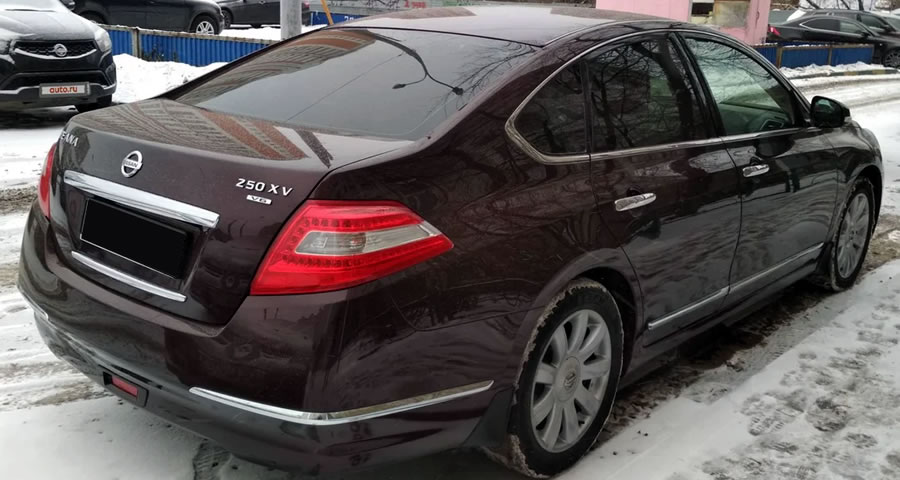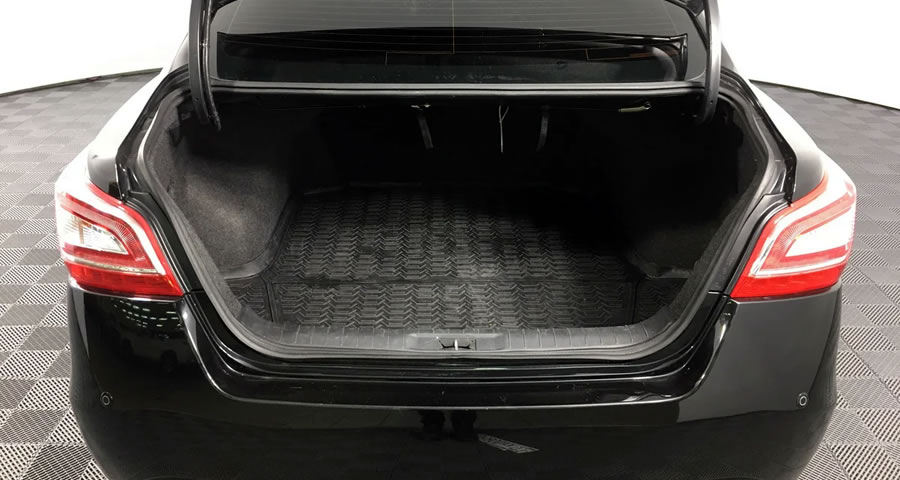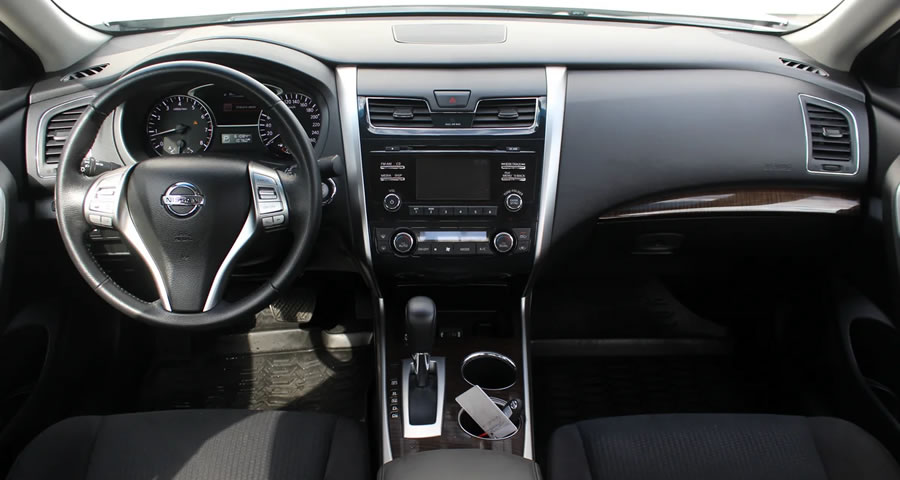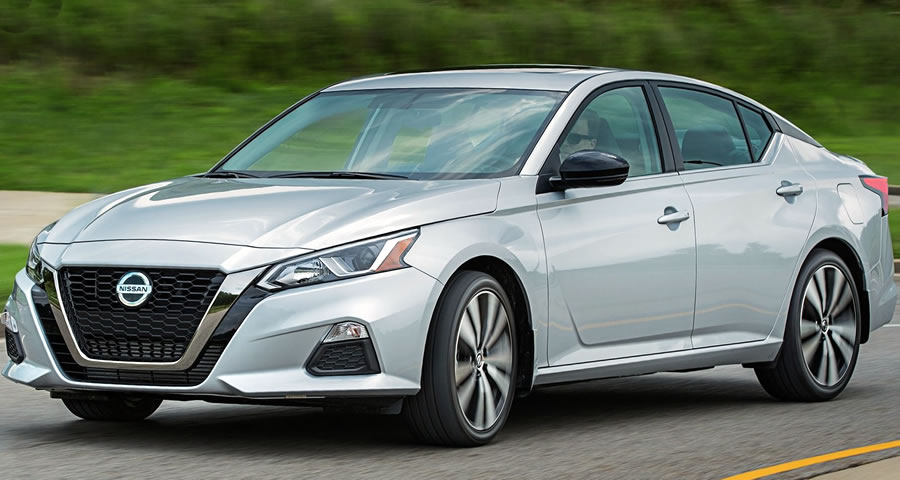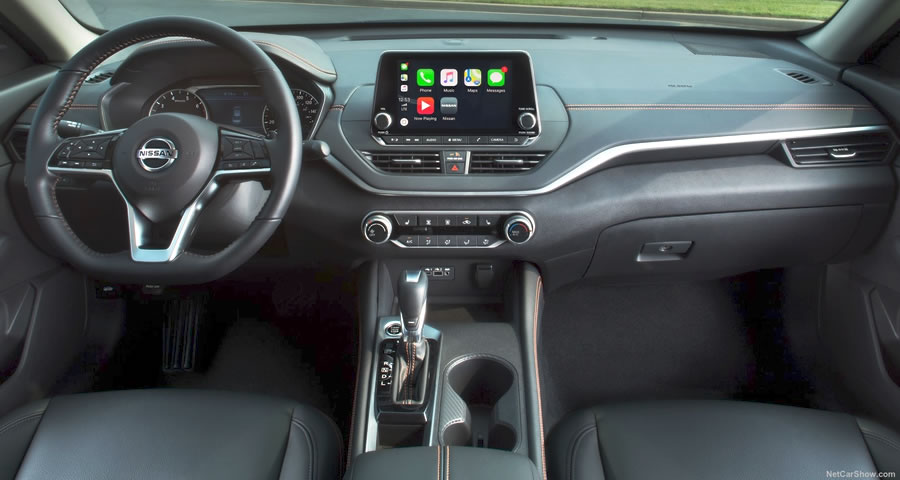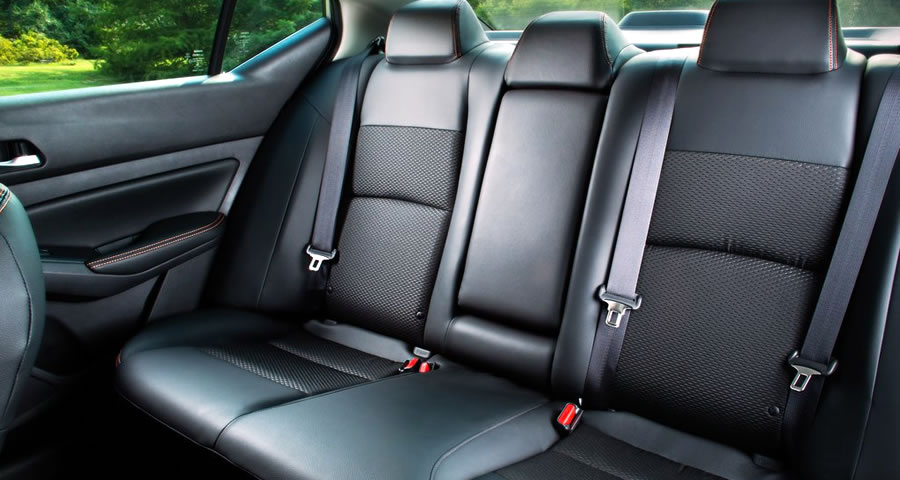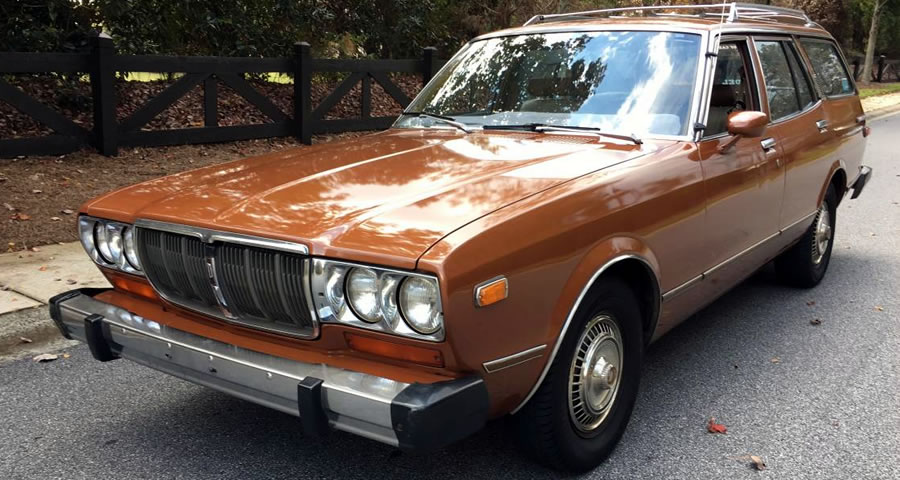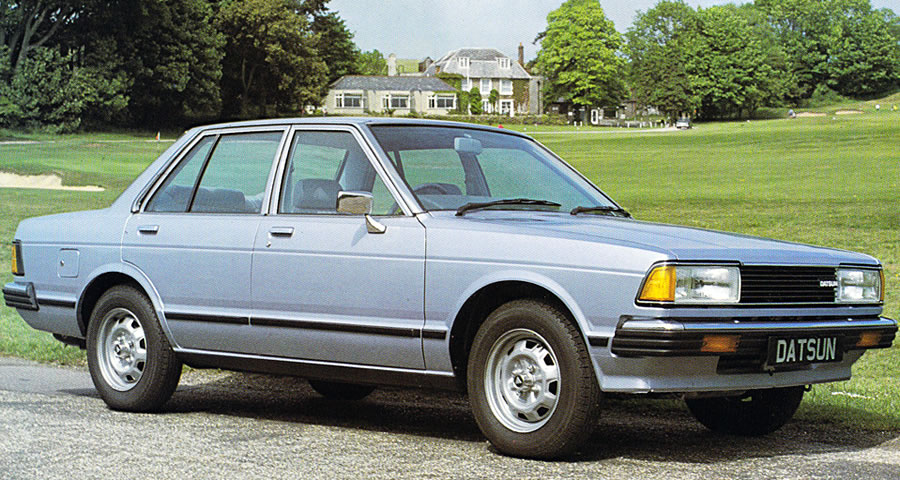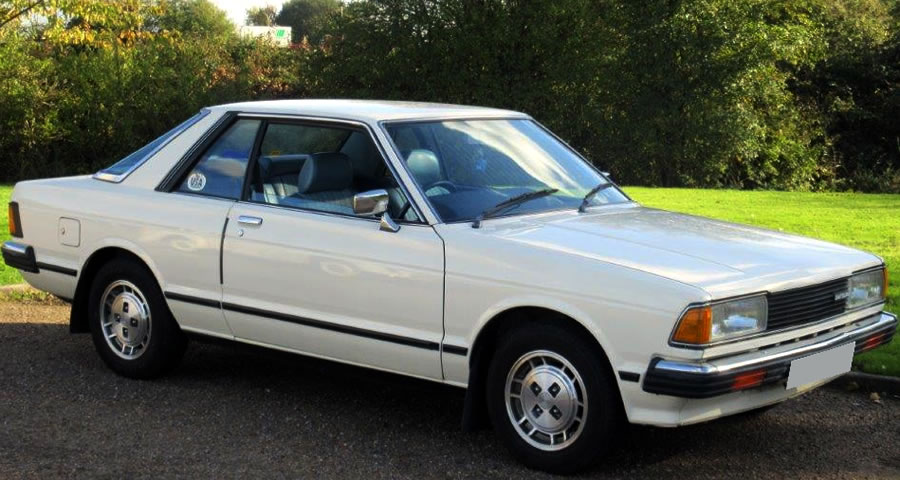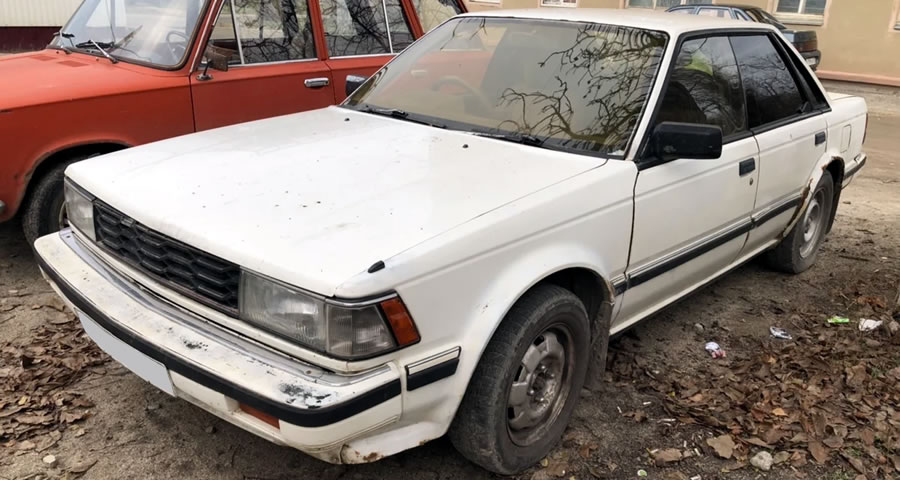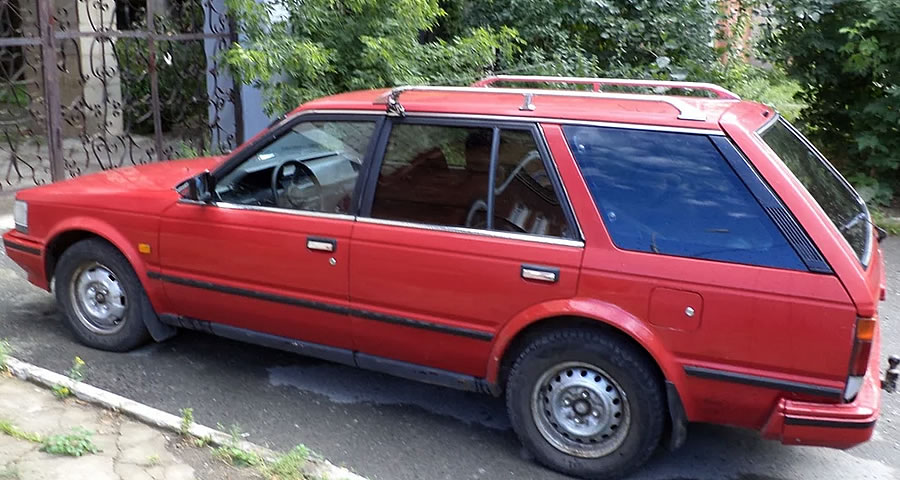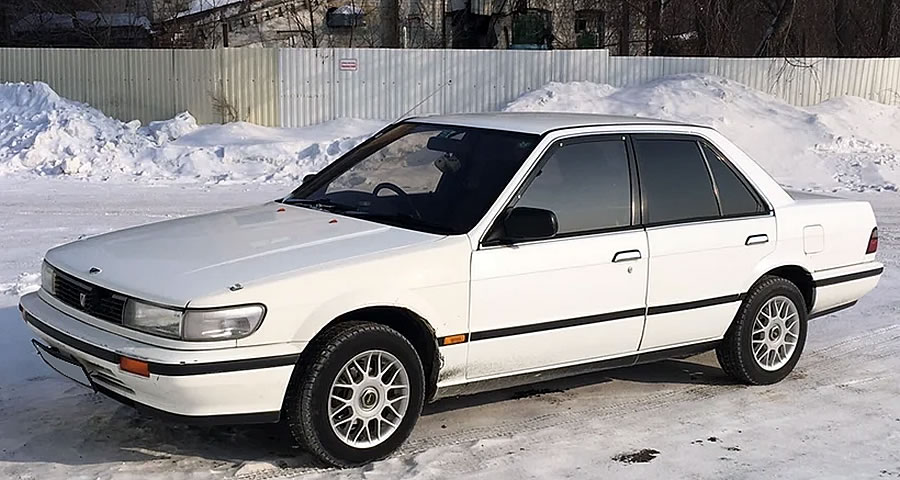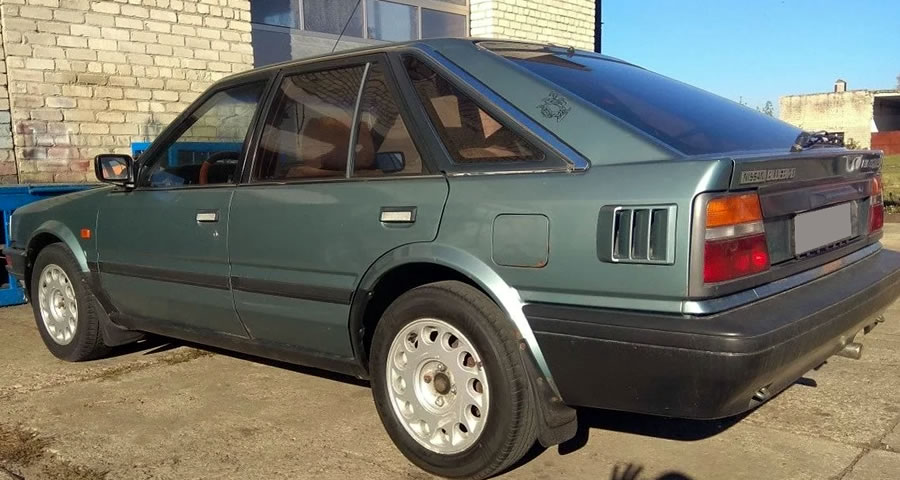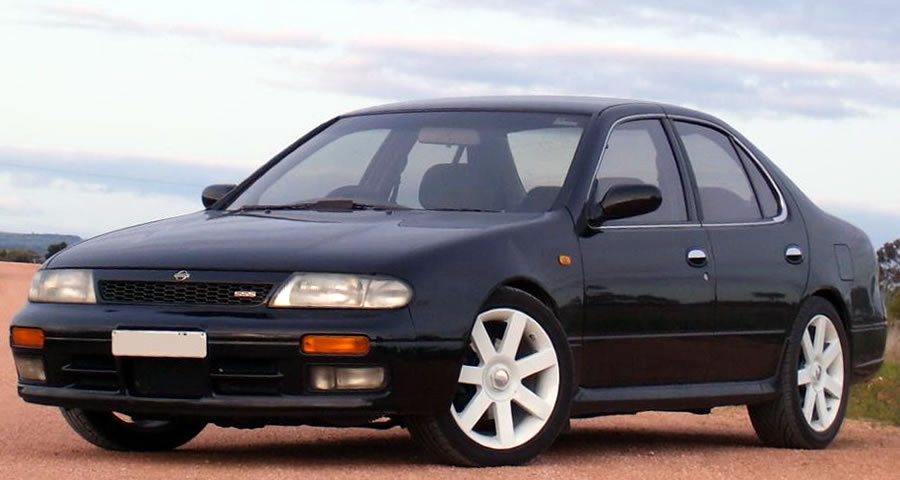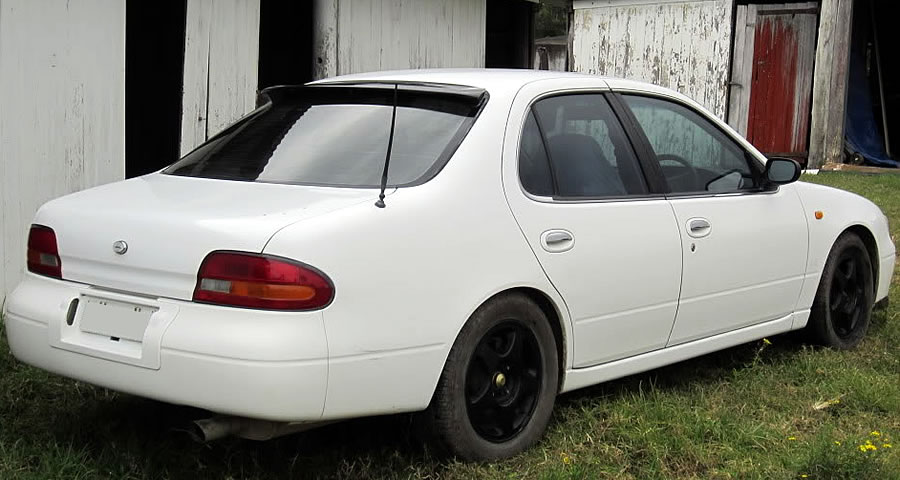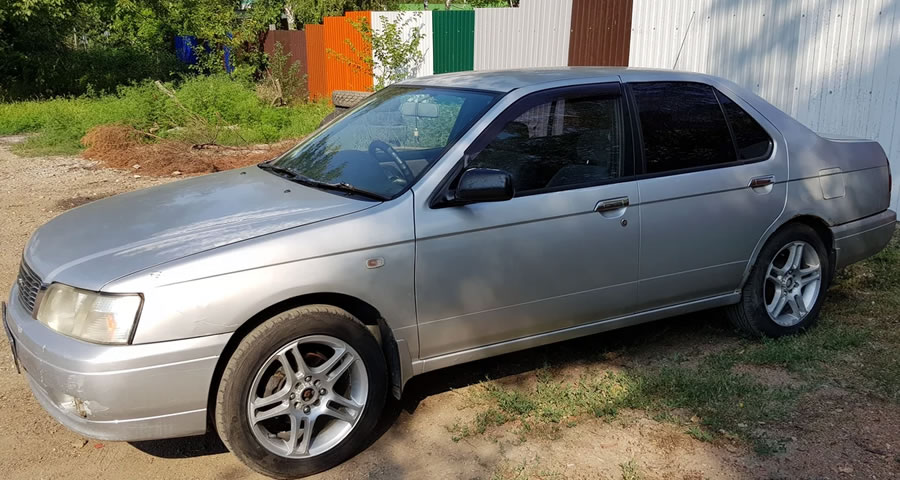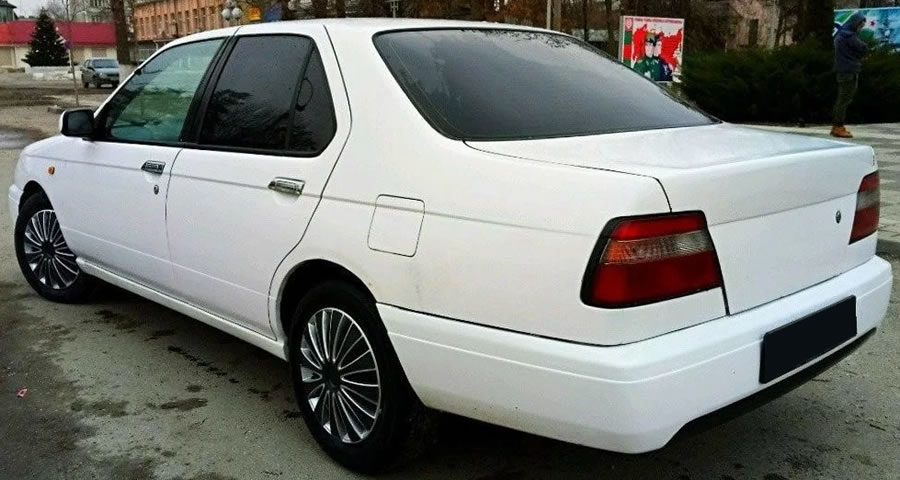
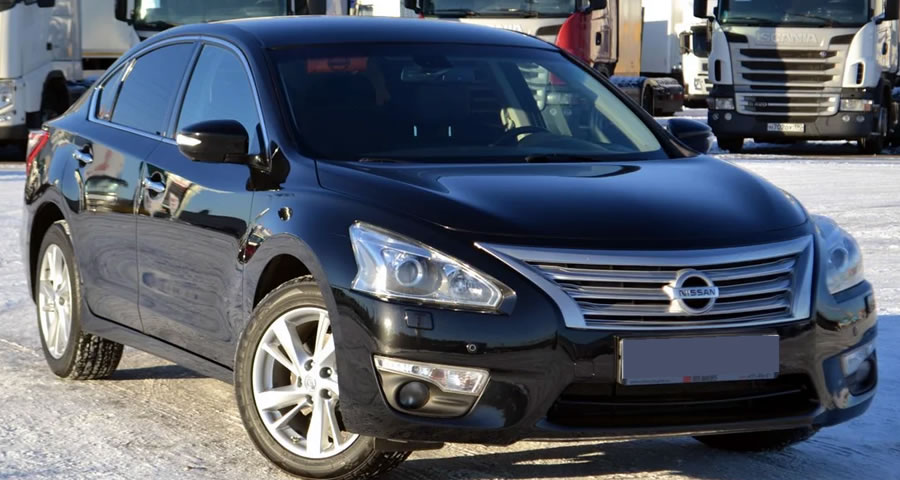
Nissan Teana — a mid-size car (D-segment), produced from 2003 to the present by the Japanese automaker "Nissan Shatai Co., Ltd.". The name "Teana" comes from the village of the same name, located in the south of Italy. It came to replace the outdated cars "Bluebird", "Laurel" and "Cefiro". It is exported to some countries under the names "Nissan Maxima" and "Nissan Cefiro". The body is a 4-door sedan with a front transverse engine. The drive is mainly carried out on the front wheels, there are also all-wheel drive models. On all generations, the gearbox is a continuously variable transmission (CVT). The latest generation of the car is an updated version of the fourth generation "Nissan Altima".
The main competitors of this car are Audi A4, BMW 3, Chevrolet Malibu, Citroen C5, Ford Mondeo, Honda Accord, Hyundai Sonata, Kia Optima, Mazda 6, Mitsubishi Galant, Opel Insignia, Peugeot 508, Renault Laguna, Skoda Superb, Subaru Legacy, Toyota Camry and Volkswagen Passat.
First generation (J31, 2003–2008)
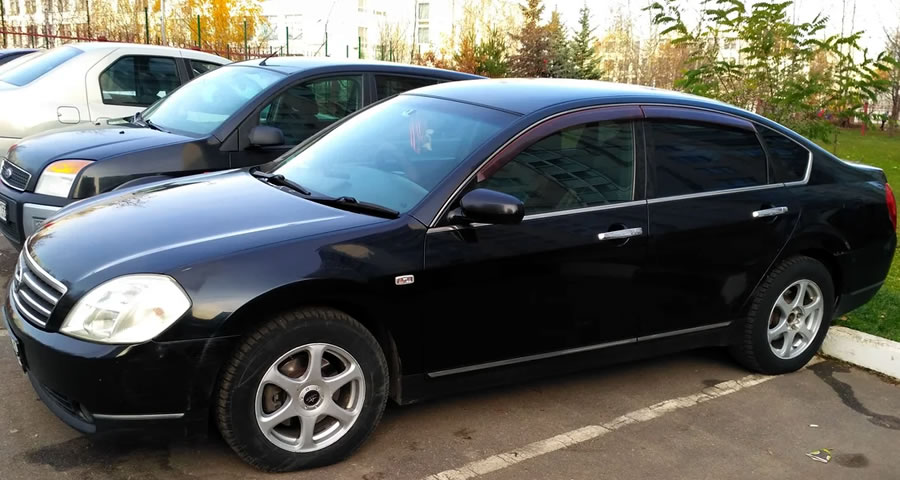
In February 2003, the first generation of the Teana sedan with the code "J31" appeared in Japan as a companion to the crossover "Nissan Murano". A month later, exports to other countries began, and sales in Europe began only in 2004. The car is based on the platform "Nissan FF-L", which is also the basis for "Maxima", "Altima", "Quest", "Presage" and others. The length of the car was 4770-4845 mm, width 1765 mm, height 1475-1495 mm and the unladen weight was 1460-1540 kg. It is one of the largest sedans in the world with front-wheel drive. The car was assembled in Japan, China, Taiwan, Thailand and South Korea.
Only petrol engines with the following characteristics were installed: a four-cylinder in-line engine with a volume of 2.0 liters (1998 cm³, QR20DE, I4, 134 hp), as well as two six-cylinder V-shaped 2.3-liter (2349 cm³, VQ23DE, V6, 171 hp) and 3.5 liters (3498 cm³, VQ35DE, V6, 241 hp). Torque is transmitted to the wheels via an X-Tronic continuously variable transmission (CVT). Trim levels depending on engine size were called "200JK", "230JM" and "350JM".
In December 2005, the model was slightly updated. The headlights, taillights and fog lights were refreshed, and chrome trim appeared on the bumpers. The length of the car was slightly reduced.
Second generation (J32, 2008–2013)
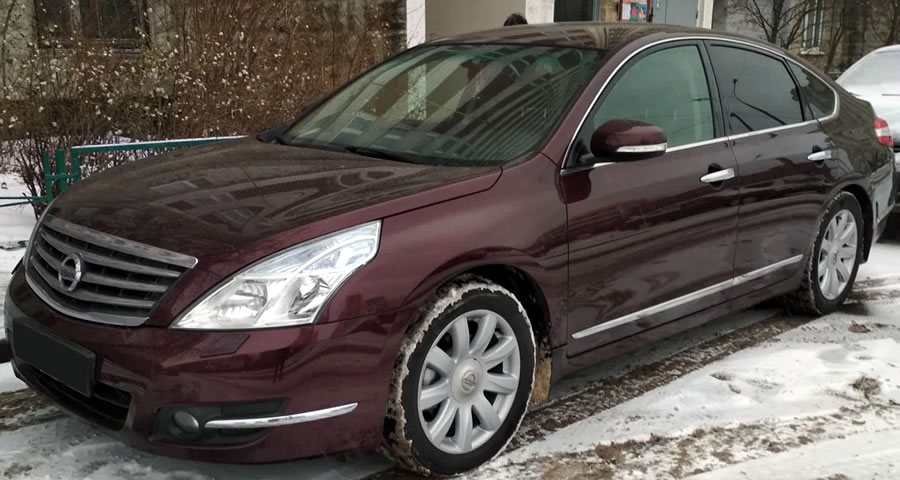
The second generation, coded "J32", was shown at the 2008 Beijing Auto Show. The design was based on the "Intima" concept car shown in October 2007. The car is based on the "Nissan D" platform, which is used for the "Altima", "Murano", "Maxima", "Elgrand", "Quest" and some other cars of the same time. It was sold in the countries of the Near and Far East, Oceania and Russia. In some countries it was called "Cefiro", in some "Maxima". It was not sold in Europe, where its classmates were "Renault Laguna" and "Renault Latitude". The body was a 4-door sedan with a length of 4850 mm, a width of 1795 mm, a height of 1500 mm and a curb weight of 1480-1570 kg. The car was assembled in Japan, India, China, Iran, Malaysia, Russia, Taiwan and Thailand.
Only 2.0 liter petrol engines were installed (1997 cm³, MR20DE, I4, 134 hp), 2.5 liters (2488 cm³, QR25DE, I4, 165 hp), 2.5 liters (2495 cm³, VQ25DE, V6, 183 hp) and 3.5 liters (3498 cm³, VQ35DE, V6, 249 hp). Transmission only continuously variable transmission (CVT).
In 2011, the car underwent a minor update.
Third generation (L33; 2013-present time)
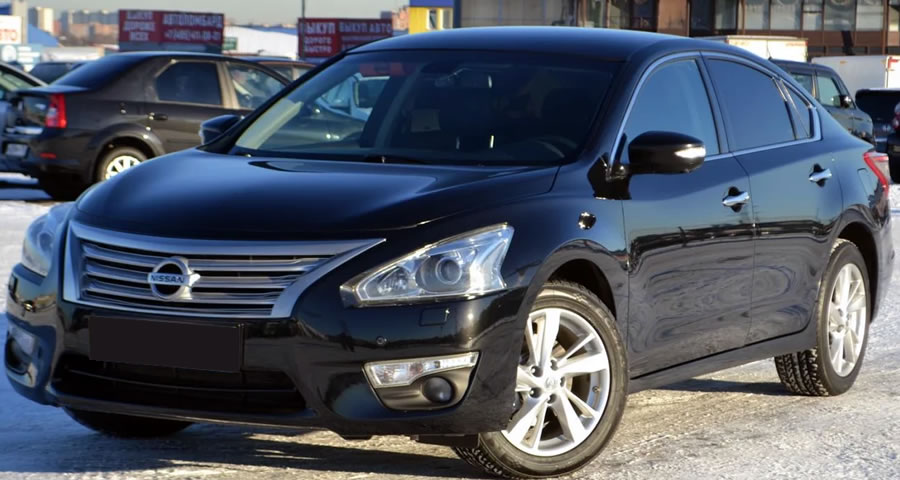
In 2013, the third generation of Teana was introduced in China. This car is similar to the fifth generation "Altima", which is sold in North America and has the same code "L33". In 2014, assembly for the Russian market was established at the plant in St. Petersburg. In December 2015, production in Russia was stopped. The car is based on the "Nissan D" platform. The body is a 4-door sedan with a length of 4863 mm, a width of 1830 mm, a height of 1482 mm and a curb weight of 1514 kg.
There were only two 2.5-liter petrol engines (2488 cm³, I4, 173 hp) and 3.5 liters (3498 cm³, V6, 249 hp). Continuously variable transmission - CVT.
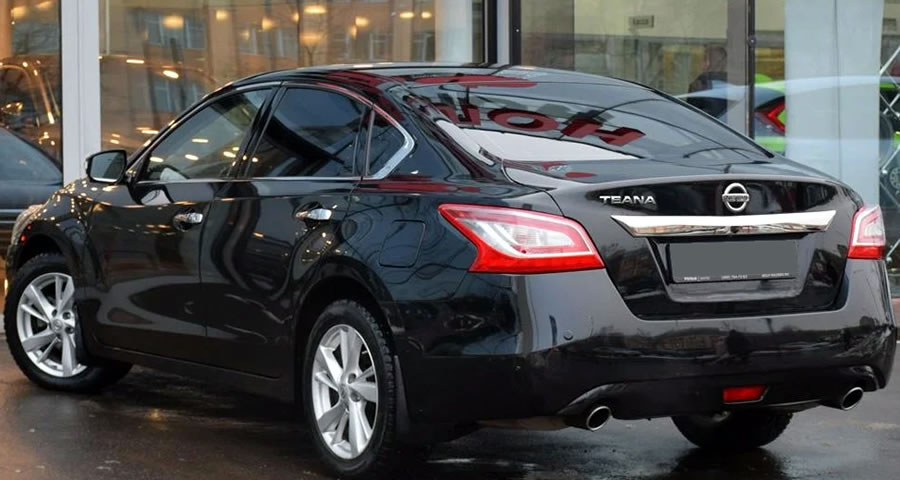
Predecessor - Nissan Altima
Nissan Altima - a medium-sized passenger car (since 2001), which is produced by a Japanese company "Nissan Motor" from 1992 to the present. From the beginning of production and until 2001, it was classified as a compact car. It is a direct continuation of the "Bluebird" model, the description of which is below. From the first to the fourth generation, it was produced only in the USA and sold on the American continents, in the Middle East and Australia. In other markets, the car was called "Teana". Until 2012, Altima was slightly smaller than Teana, and then both cars became almost identical with a common chassis code "L33".
The "Altima" name was originally applied to the top trim line "Nissan Leopard", sold on the Japanese market since 1986, and then to a mid-size car "Nissan Laurel", sold in Central America until 1992. In 1992, Nissan discontinued the Stanza, which was a clone of the Bluebird, replacing it with the American Altima.
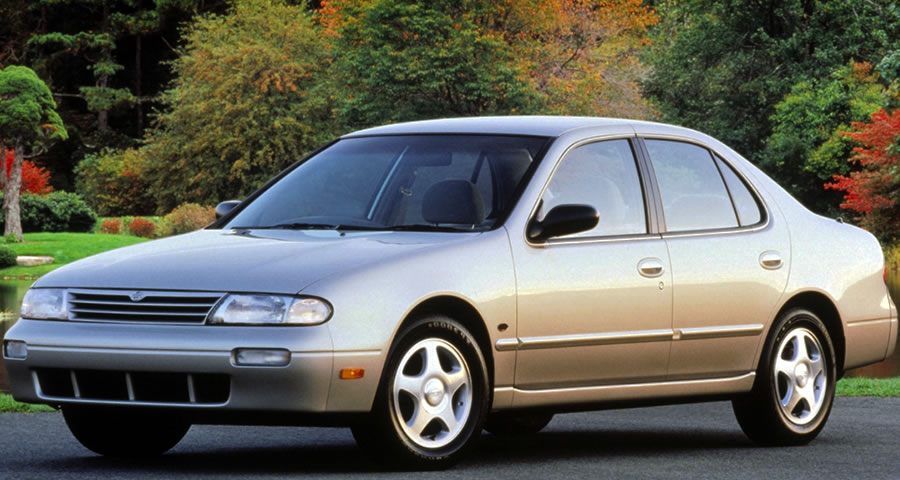
First generation (U13, 1992–1997)
The first generation was an export version of the eleventh generation Bluebird with the overall chassis code "U13". The styling was developed by Nissan's Californian design group. The car's very first official name was "Stanza Altima", which was written in early owner's manuals. The 1993 models can be seen with the word "Stanza" in small letters to the right of the ALTIMA emblem on the trunk lid. The body was a 4-door sedan with front-wheel drive and was 4585 mm long, 1704 mm wide, 1420 mm high.
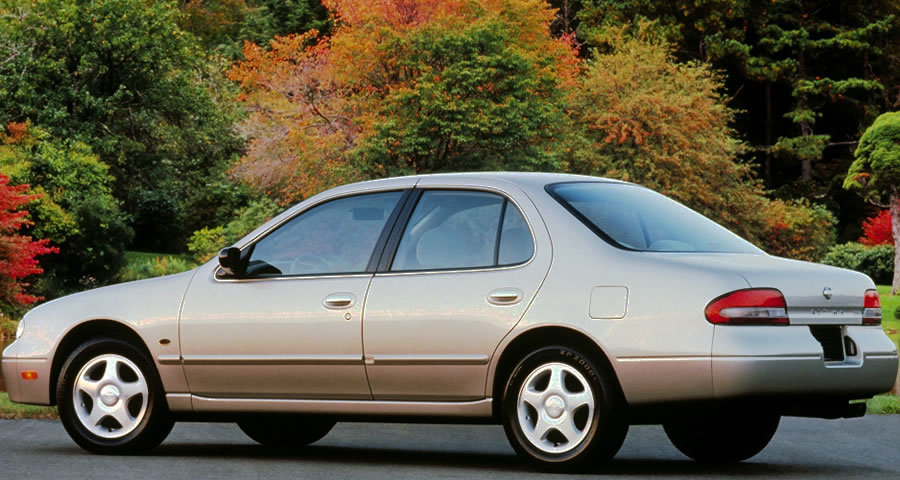
Only a 2.4-liter in-line petrol four-cylinder engine was installed (2389 cm³, KA24DE, I4, 150 hp). Gearbox 4-speed automatic or 5-speed manual.
The suspension consisted of struts with anti-roll bars at both ends and was noted for its sporty and satisfying handling. The interior could seat four adults quite comfortably. There were four trim levels - "XE", "GXE", "SE" and "GLE". All cars except "XE" had electric windows.
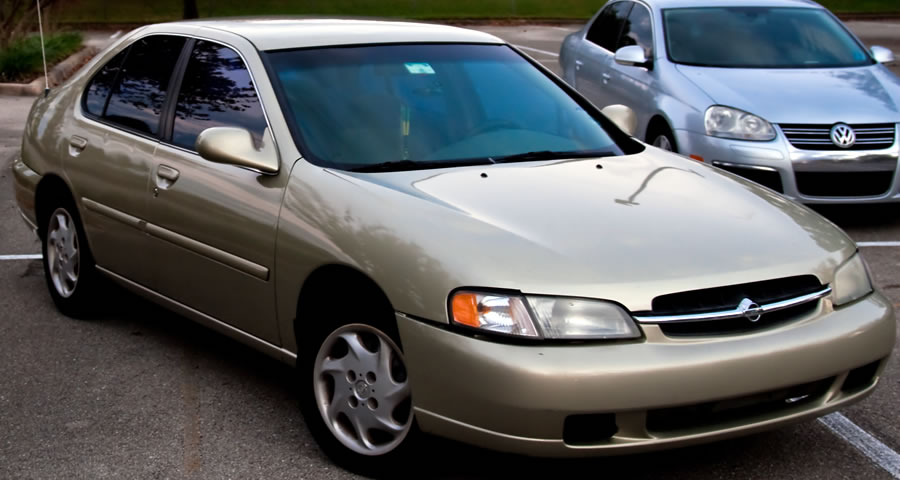
Second generation (L30, 1997–2001)
The design of the second generation was also developed in the Californian design center "Nissan" under the leadership of Doug Wilson. The body is also in the form of a 4-door sedan with a length of 4661 mm (until 1999) and 4719 mm (since 2000), 1755 mm wide, 1420 mm high. The engine was located transversely in front, front-wheel drive. There were also four trim levels - "XE", "GXE", "SE" and "GLE".
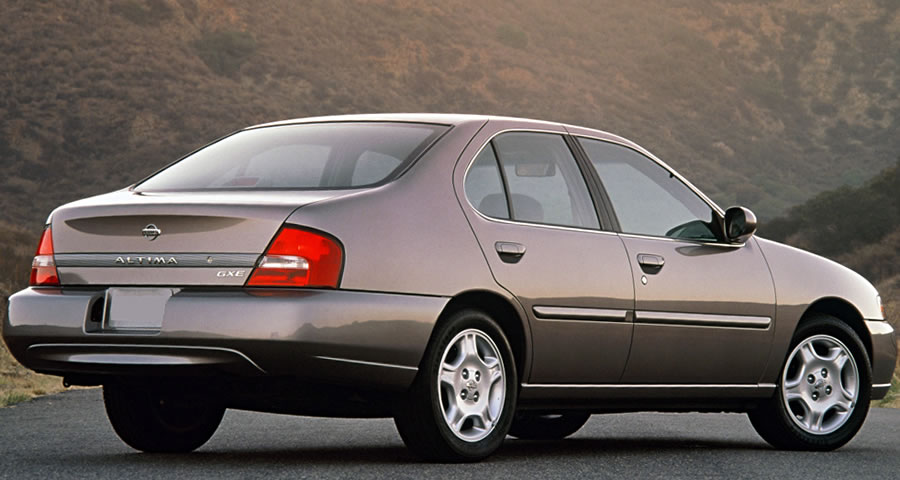
The engine remained from the previous generation with a volume of 2.4 liters (2389 cm³, KA24DE, I4, 150 hp). The gearbox is also unchanged - 4-speed automatic or 5-speed manual.
In 1999, the car was updated for the 2000 model year. Inside, the audio system front panel was changed. The engine power increased from 150 to 160 horsepower. The gear ratios were reduced on both gearbox options, the anti-roll bars were thickened, the steering was strengthened. The external dimensions of the body became slightly longer, the design of the radiator grille, headlights and taillights was changed.
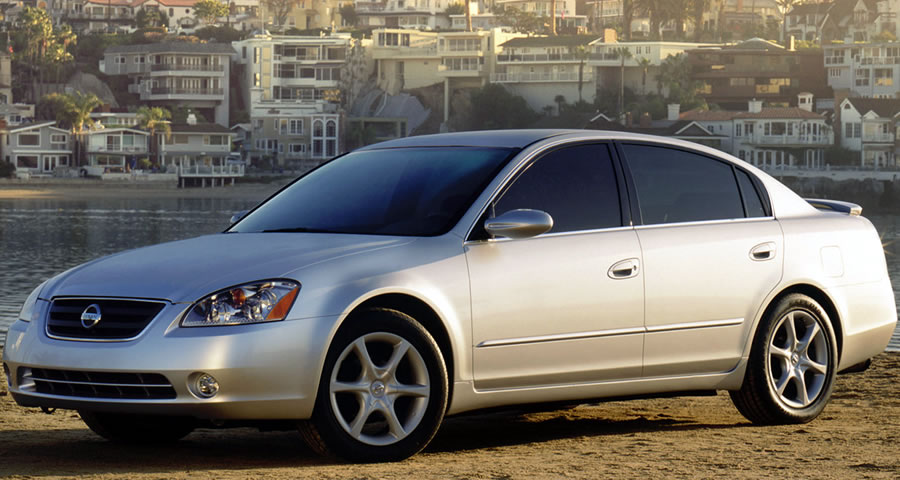
Third generation (L31, 2001–2006)
The third generation appeared in August 2001 as a 2002 model. It was the first car built on the new platform "Nissan FF-L", which was unique to North America. The Asian "Teana" is similar, but not quite identical to the "Altima", and was developed for the requirements of the Southeast Asian market. The body is traditionally a 4-door sedan with front-wheel drive, 4864-4884 mm long, 1788 mm wide, and 1471 mm high. The car was well received by the press, critics praised the increased interior space and engine power, all of which significantly increased demand for this family sedan.
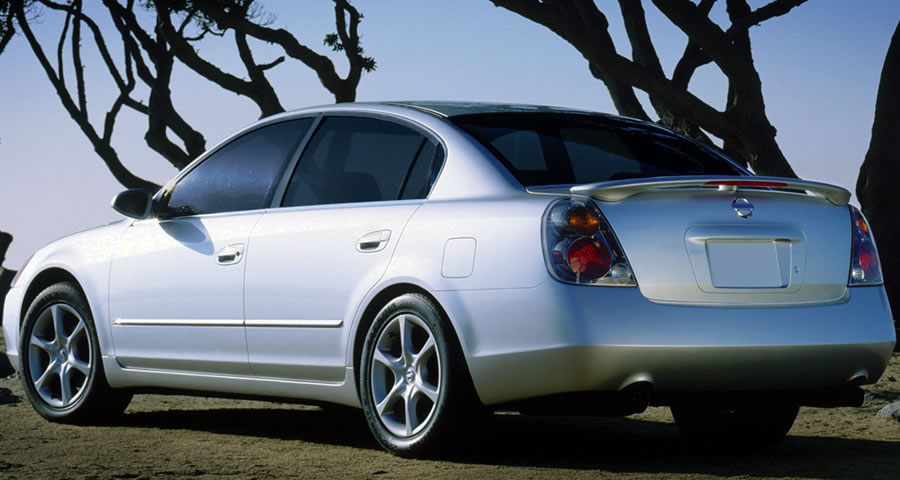
There are now two 2.5-liter gasoline engine models (2488 cm³, QR25DE, I4, 175 hp) and 3.5 liters (3498 cm³, VQ35DE, V6, 240-260 hp). Gearbox 5- or 6-speed manual, as well as 4- or 5-speed automatic.
In 2005, the model was updated. The body length was slightly increased, and the car also received a new front grille, all-red taillights, an updated interior and an optional DVD-based navigation system. The V6 engine power was also slightly increased.
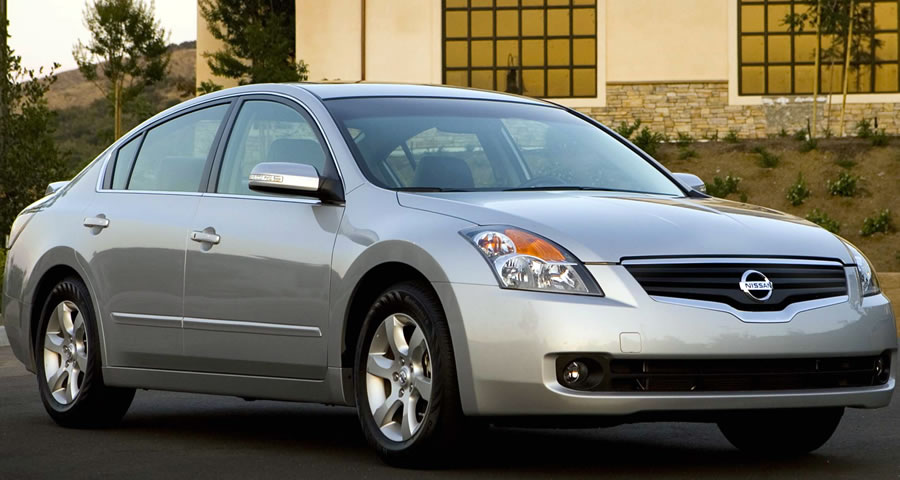
Fourth generation (L32A, 2006–2012)
The fourth generation with the code "L32A" was shown on April 12, 2006 at the New York International Auto Show. The car is based on the "Nissan D" platform with a new front and modernized rear suspension. Since 2009 "Maxima", "Murano" and "Teana" also used this platform. The interior space and exterior dimensions remained almost unchanged. The body was a 4-door sedan with a length of 4821-4844 mm, a width of 1796 mm, and a height of 1471 mm. For the first time, a 2-door coupe body with the code "D32" appeared, with a length of 4595-4636 mm, a width of 1796 mm, and a height of 1405-1420 mm. The curb weight of the car was 1442-1492 kg.
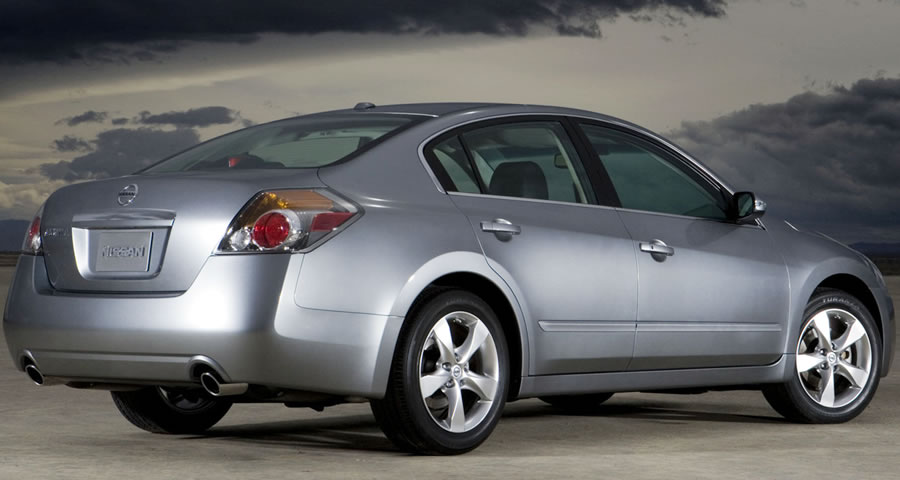
Only petrol engines with the following characteristics were installed: 2.5 liters (2488 cm³, QR25DE, I4, 175 hp) and 3.5 liters (3498 cm³, VQ35DE, V6, 270 hp). The gearbox is mechanical 6-speed, as well as a continuously variable transmission CVT.
The car was equipped with modern technologies such as "Smart Key", "Bluetooth" for mobile phones, rear view camera, etc. The dashboard was designed with large buttons for convenience. In 2008, ABS with electronic brake force distribution was installed.
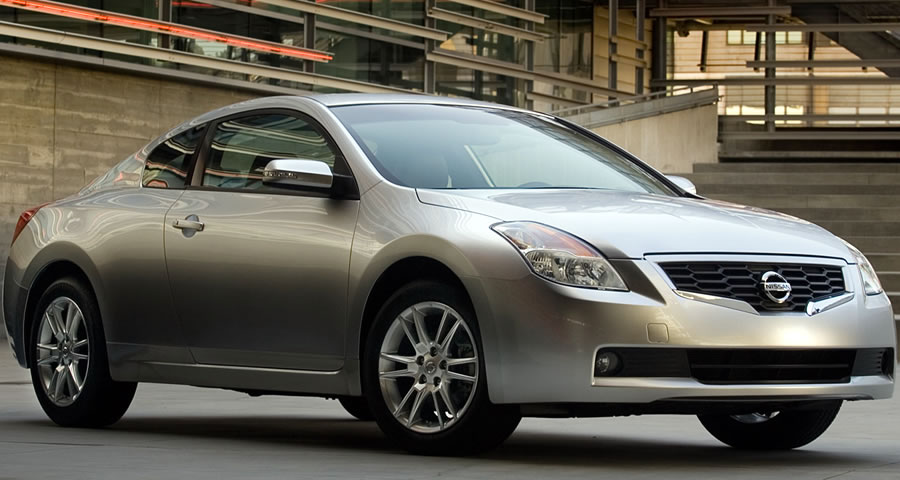
In 2009, the car was updated for the 2010 model year. The car received a new front fascia, hood, headlights, wheels, and new interior trim materials. Electronic stability control, previously offered only as an option, is now standard on all trim levels.
The two-door coupe (code D32) was shown separately at the 2006 Los Angeles Auto Show, and production began in May 2007. A facelift was given in 2009, which included a revised front end, hood, grille and headlights.
In February 2007, a hybrid car was introduced "Altima Hybrid", the production of which was launched in 2011. The hybrid had a 2.5-liter gasoline engine (2488 cm³, QR25DE, I4) with a power of 158 hp, and the electric motor also produces an additional 40 hp, developing a maximum power of 198 hp.
Fifth generation (L33, 2012–2018)
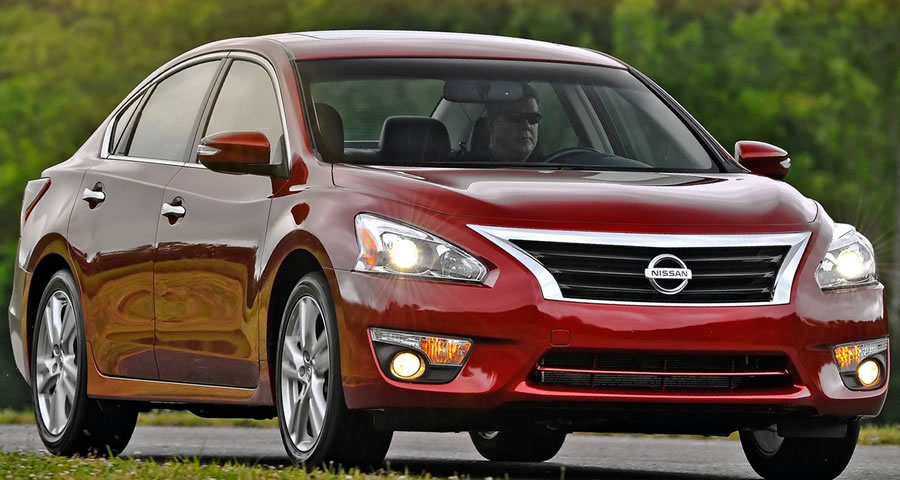
In April 2012, the fifth generation Altima with the code "L33" was shown to the public at the New York International Auto Show. Production began in May 2012 as a 2013 model. The car uses the "Nissan D" platform. The body remained only a 4-door sedan with a length of 4859 mm, a width of 1829 mm, a height of 1471 mm and a curb weight of 1430-1530 kg. Production of the coupe was discontinued. Most of the exterior style is taken from "Maxima A35". Most of the major mechanical components were carried over from the previous generation. This car is identical to the third generation "Teana" and has the same chassis code "L33".
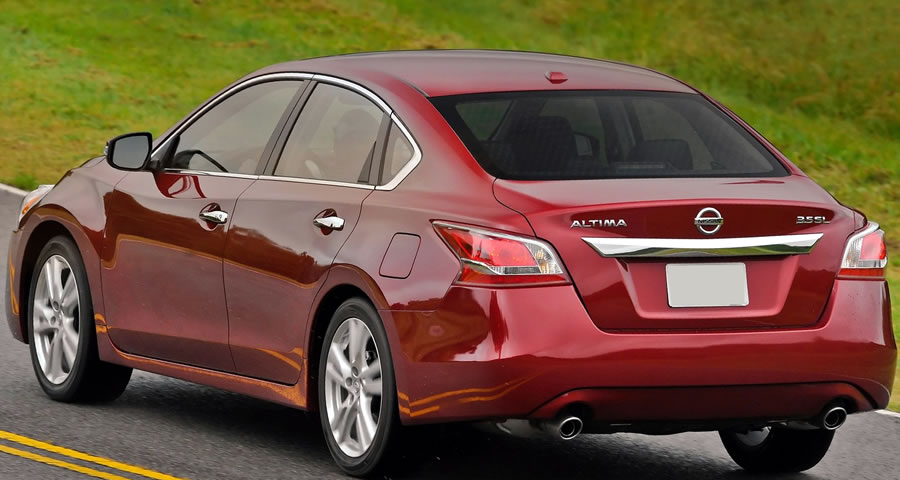
The range of petrol engines expanded significantly and included the following models: 1.6 litre (1618 cm³, MR16DDT, I4, turbo, 190 hp), 2.0 liters (1997 cm³, MR20DE, I4, 136 hp), 2.5 liters (2488 cm³, QR25DE, I4, 182 hp) and 3.5 liters (3498 cm³, VQ35DE, V6, 270 hp). Also, for the first time, a 2.0-liter diesel engine was installed (1995 cm³, M9R dCi, I4) with a capacity of 148 hp. Gearbox - continuously variable transmission (CVT).
In a 2012 comparison test conducted by American magazine Motor Trend, the Altima placed fourth out of six cars, behind the first-place Volkswagen Passat, second place Honda Accord and third place Ford Fusion. After that, the American magazine "Car and Driver" also conducted tests, where the Altima took third place out of four.
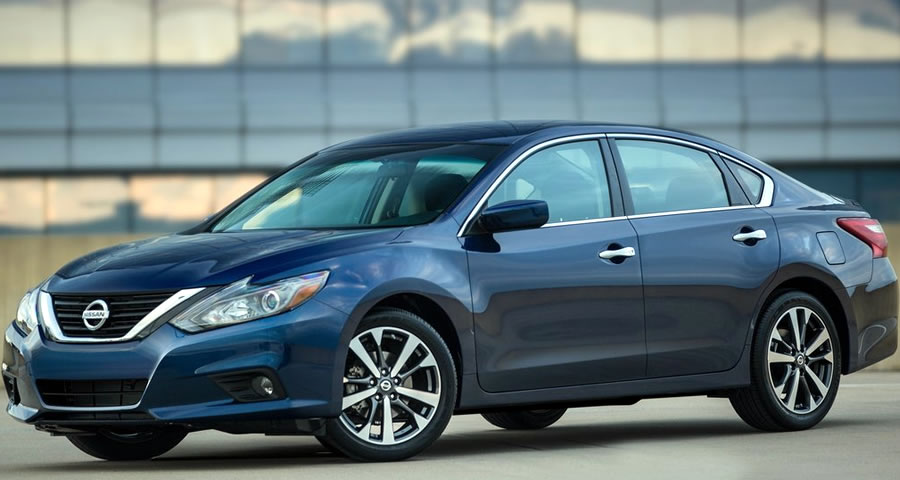
The 2016 model year cars have been significantly updated. It received new front and rear bumpers, headlights and taillights, and modified front seats "Zero Gravity", steering wheel and center console. New noise-reducing materials for the interior and a noise-absorbing windshield began to be used. Finally, in 2018, the infotainment system was improved "NissanConnect", which has added functions "Apple CarPlay" and "Android Auto Connectivity", as well as an improved user interface (UI).
Sixth generation (L34, 2018–present)
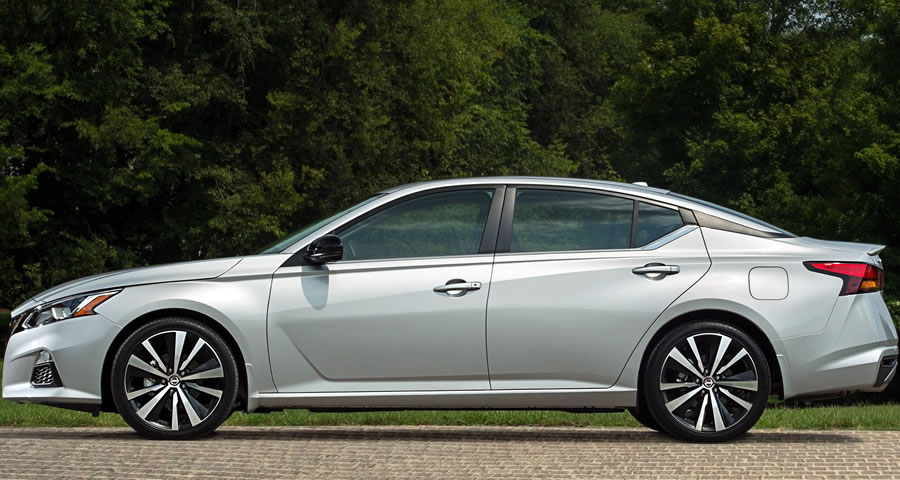
In April 2018, the sixth generation of Altima with the code "L34" was presented at the New York International Auto Show. Sales began in October 2018. The car is based on the platform "Nissan CMF C/D", which also serves as the basis for "Qashqai", "X-Trail", as well as some cars "Renault" — "Espace", "Kadjar", "Talisman", "Mégane", "Koleos" and "Scénic". The body is traditionally only a 4-door sedan with a length of 4874 mm, a width of 1829 mm, a height of 1468 mm and a curb weight of 1466 kg. In addition to the front-wheel drive, an all-wheel drive model will be available for the first time. The car is offered in five trim levels: "S", "SR", "SV", "SL" and "Platinum".
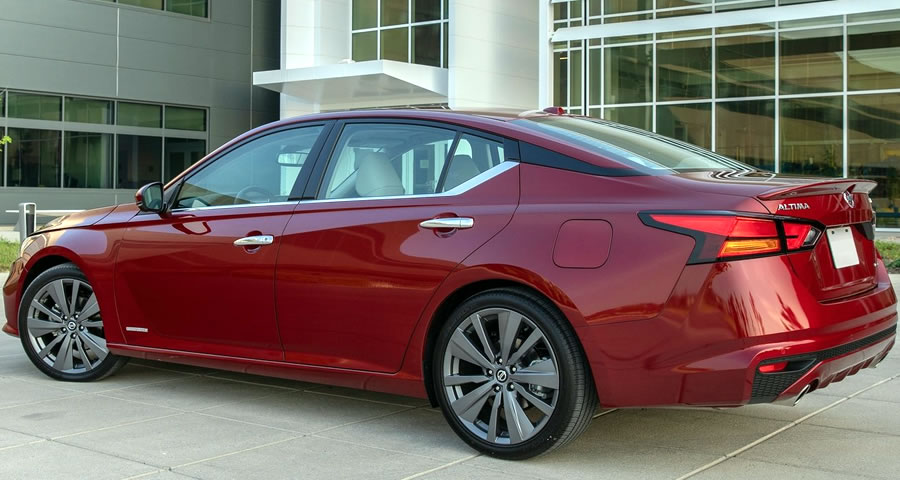
There are two models of 2.0-liter engines available (1997 cm³, KR20DDET, I4, turbo, 248 l. With.) and 2.5 liters (2488 cm³, PR25DD, I4, 188 hp). All engines are connected to a continuously variable CVT transmission. All-wheel drive is only available on 2.5-liter engine models.
The car will have a system "Nissan Intelligent Mobility", which includes semi-autonomous driving "ProPilot Assist", Intelligent Around View Monitor, Automatic Emergency Braking with Pedestrian Detection and Intelligent Lane Keeping Assist.
Predecessor - Nissan Bluebird
Nissan Bluebird — is a compact family car produced from 1955 to 2001 by the Japanese automobile manufacturer "Nissan Motor". The name "bluebird" is translated into Russian as "blue bird" or "singing bird" and appeared only in 1957. This is a world-famous recognized car, which over a long period of production has proven its reliability and durability. The body was produced in various versions - sedan, station wagon, coupe and hardtop. The engine was located transversely in the front. The drive was on the rear wheels until the eighth generation, and after 1983 the car switched to front-wheel drive. Cars with all-wheel drive were also produced.
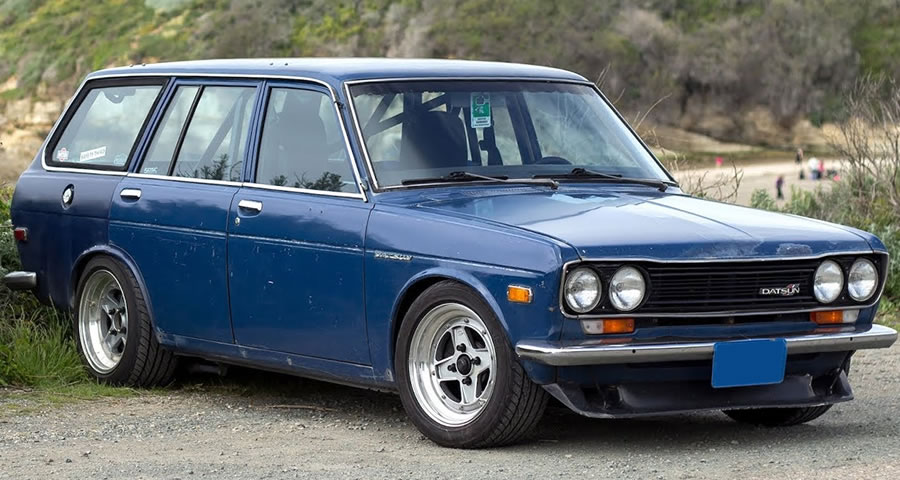
The Bluebird evolved from the very first Nissan cars dating back to the 1900s, and became the forefather of subsequent generations of family cars. Its traditional competitor from the first years of production was the car "Toyota Corona", which was widely used as a taxi. Export versions were sold under different names - "Datsun 510", "Datsun 180B" (with versions 160B and 200B) and "Datsun Bluebird". Brand name "Nissan Bluebird" began to appear around 1982, when the Datsun brand was abandoned in favor of Nissan. In the US it was sold under the name "Nissan Stanza", which was replaced in 1992 "Nissan Altima", the description of which you can see above. In Europe it was replaced "Primera" in Nissan's European lineup in 1990. A six-cylinder version called "Maxima" was released in the 1980s and became a separate model.
Predecessors - Datsun Type 10–17
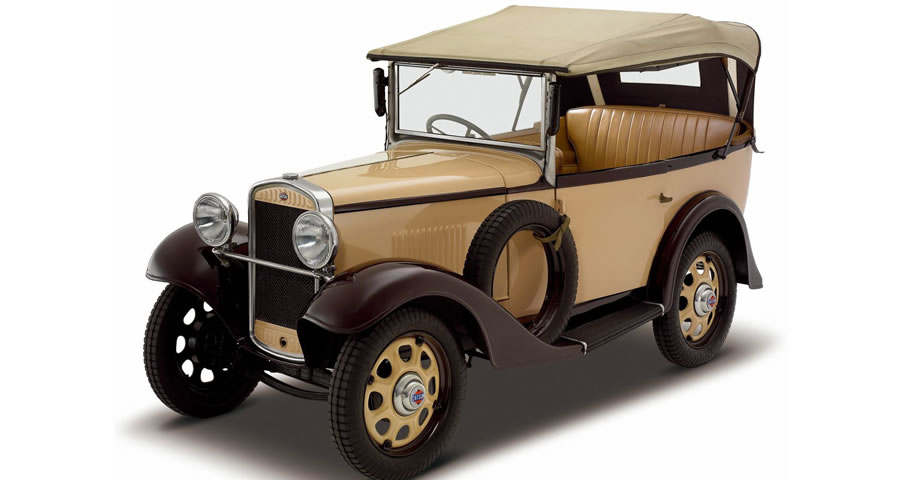
Datsun Type 10 was a prototype of a small car built in 1931.
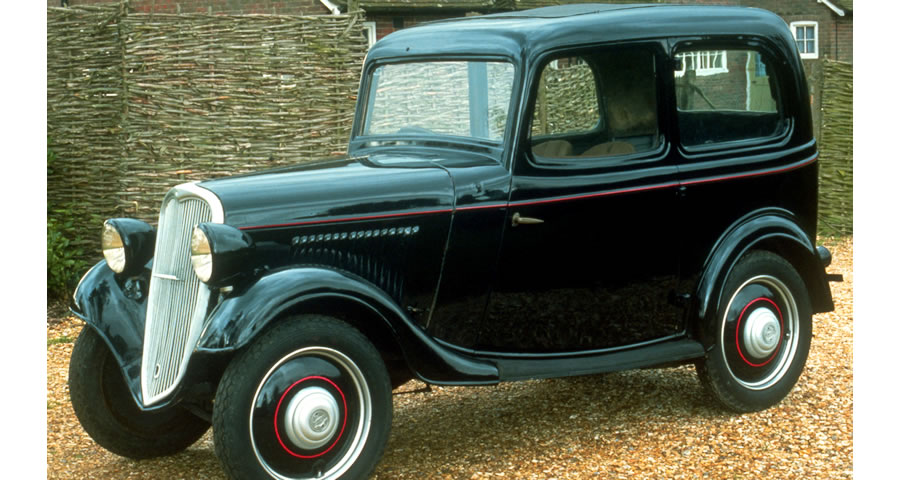
Datsun Type 11 The 1932 model year was a small car with a four-cylinder in-line side-valve engine with a capacity of 495 cm³, a power of 10 hp and a three-speed gearbox. The drive was on the rear wheels. The body was of different types - a sedan, a coupe, a phaeton, a roadster and a van. The length of the car was 2710 mm, the width was 1175 mm, the curb weight was 400 kg. It is believed that it is a copy of the British car "Austin Seven". Only 150 cars were produced. At first, the cars were called "Datson", that is, "son of DAT". The abbreviation "DAT" is formed from the letters of the surnames of the founders of the company "Datsun" - Den, Aoyama and Takeuchi.
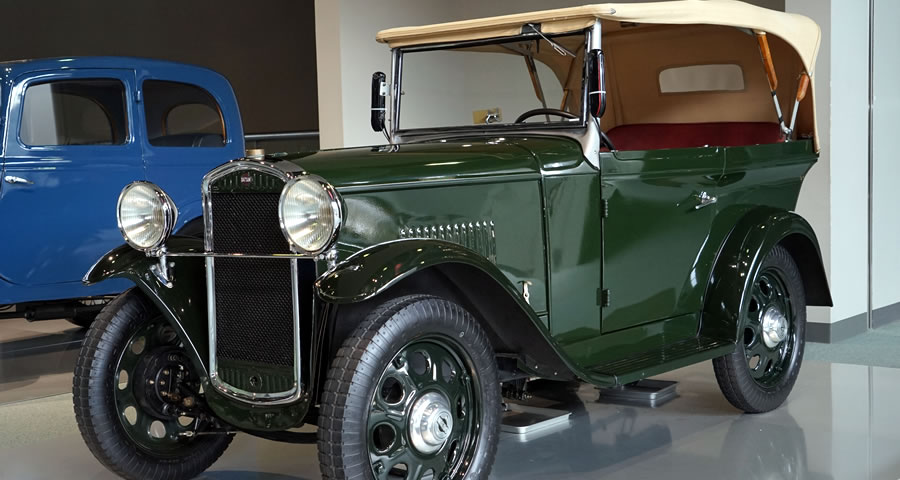
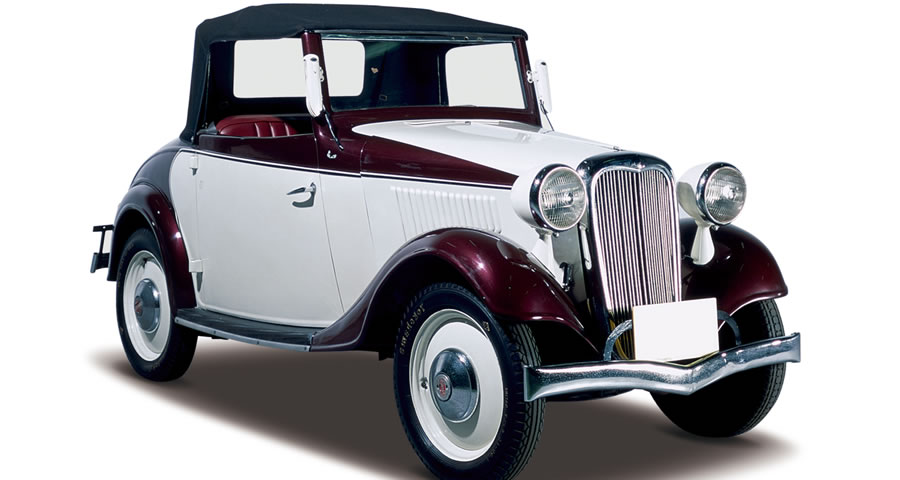
Datsun Type 12 was a small automobile produced by Nissan Corporation in 1933. The Datsun name was used by DAT Corporation for a line of small cars to differentiate them from full-size cars and trucks. After DAT Corporation was acquired by Nissan, these cars continued to be produced and the name was retained. The Type 12 was basically similar to the previous Type 11, the body dimensions were completely identical, but it had a larger engine - 748 cc, producing 12 hp.
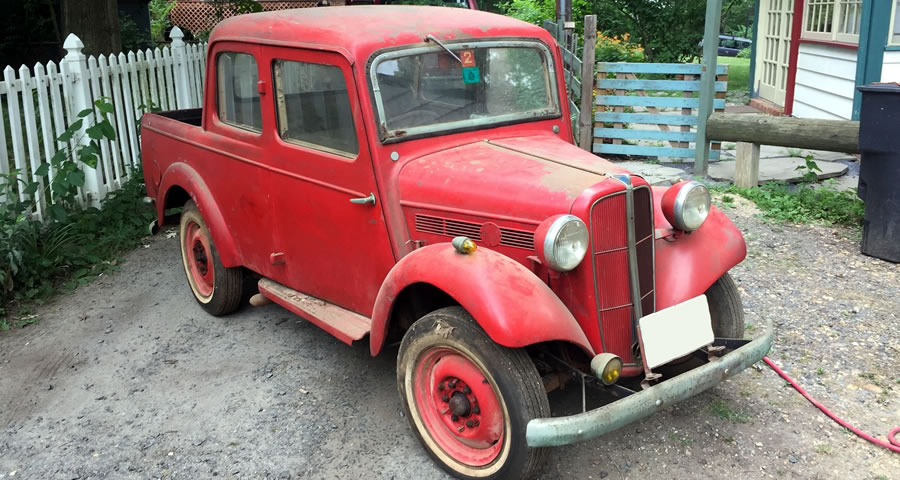
Datsun Type 13 began production in April 1934. The dimensions, body shape and engine capacity were identical to the "Type 12". The only thing they added was a body in the form of a small truck. The most significant changes were in the exterior design - they added more chrome elements, the appearance became more modern. This model was the first to be exported to other countries. Also, small production was established in Australia. In total, about 880 cars were produced.
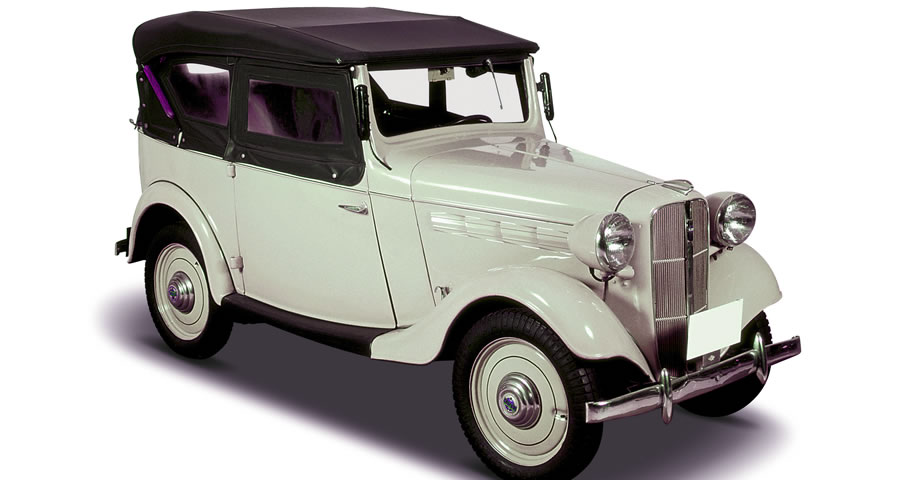
Datsun Type 14 The 1935 model was not much different in design from the previous model, but a new "Type 7" engine was installed - a four-cylinder with side valves with a volume of 722 cm³ and a power of 15 hp, connected to the wheels through a three-speed manual gearbox. The dimensions of the body slightly increased and became 2800 mm long, 1200 mm wide, 1600 mm high. Since the word DAT turned out to be a Japanese word translated as a hare or rabbit, a chrome figurine of a jumping rabbit was installed on the radiator above the logo on the "Type 14". On the following generations of the car, the figurine disappeared. The car was produced at the new Nissan plant in Yokahama and assembled there entirely, unlike previous generations, for the construction of which subcontractors were involved. A total of about 3800 cars were produced, 53 of which were exported.
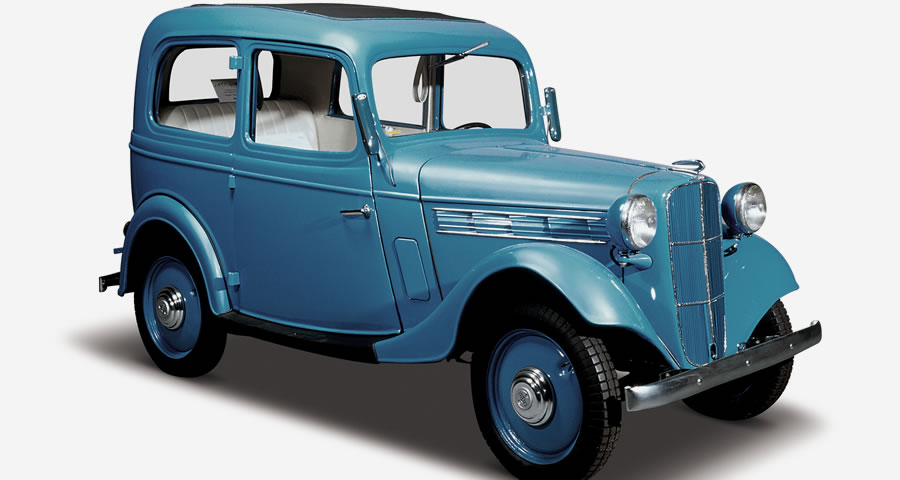
Datsun Type 15 began to be produced in May 1936 and it was a completely new body, which was significantly different from the previous "Type 14". Its length increased significantly from 2800 mm to 3187 mm, the width was 1190 mm, the height was 1600 mm. The body shapes were as follows - sedan, coupe, roadster, van, phaeton, and also a small truck "Datsun 15T". The engine remained the same, with a volume of 722 cm³, the power was slightly increased to 16 hp. Due to the increase in length, the space in the cabin increased significantly. Due to the escalating conflict with China, various materials became scarce and chrome elements had to be almost abandoned. The radiator grille was painted to match the color of the car and was installed not at an angle, but almost vertically. Ventilation holes appeared on the hood. Bumpers began to be installed on all models.
Datsun Type 16 was launched in April 1937. The mechanical part is identical to the previous model with the same engine and transmission. The dimensions of the body also remained the same, and the shapes remained as follows - sedan, coupe, roadster and phaeton. The design of the hood also changed. The shortage of materials was becoming more serious for "Nissan" and the interior trim became simpler and cheaper. Also, the appearance of the truck was not updated and continued to be produced "Datsun 15T".
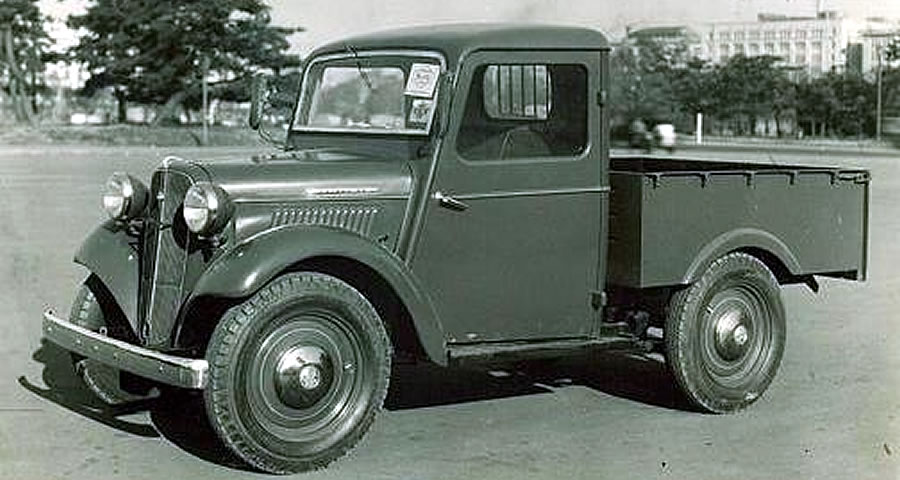
Datsun Type 17 began to be produced in April 1937 and became the last model in the line due to the war with China that began on July 7, 1937 and the transition to the production of equipment for military needs. Externally, the car remained the same except for the design of the radiator grille. The engine remained the same (4-cylinder, 722 cm³, 16 hp), as well as the transmission (3-speed). The body styles were as follows: sedan, coupe, phaeton and roadster. An updated truck was also produced "Datsun 17T". Production ceased completely at the end of 1938. The Nissan website's Fact File shows a chart showing production of this line of passenger cars ending in January 1944.
Predecessors - Datsun DA/DB/DS/DC series
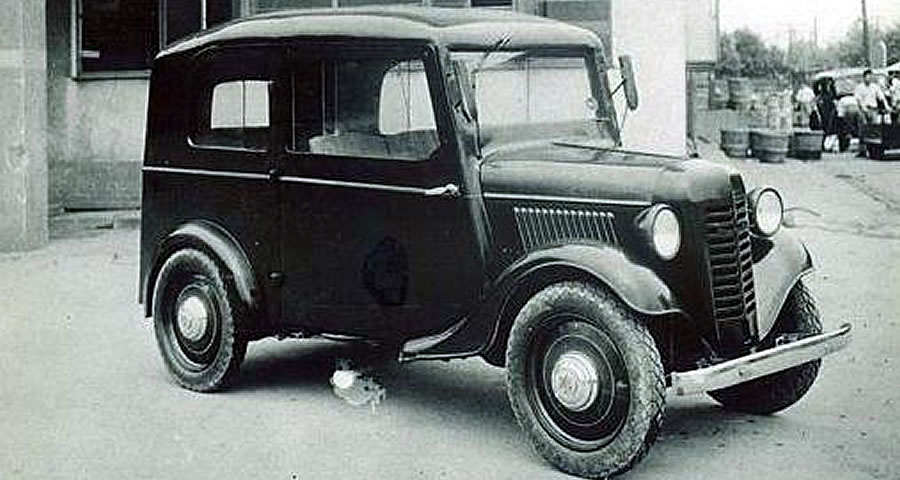
Datsun DA was produced from November 1947 to mid-1948. On September 2, 1945, World War II ended, where Japan was the loser. All companies and factories in the country were in complete disarray, both financially and in fact. Due to the bombing, most of the production was stopped in 1944. During the war, passenger cars were practically not produced. In 1946, the restoration of factories and the development of a new model called "Datsun DA" were completed. It was a very simple car. The chassis was based on a truck "Datsun 17T", but with a new rough and angular body 3150 mm long, 1330 mm wide, 1570 mm high and a curb weight of 520 kg. The engine remained the same from "Datsun Type 17" volume of 722 cm³ and power of 16 hp. The transmission is also the same three-speed. At the end of production, the body acquired more rounded and smooth shapes.
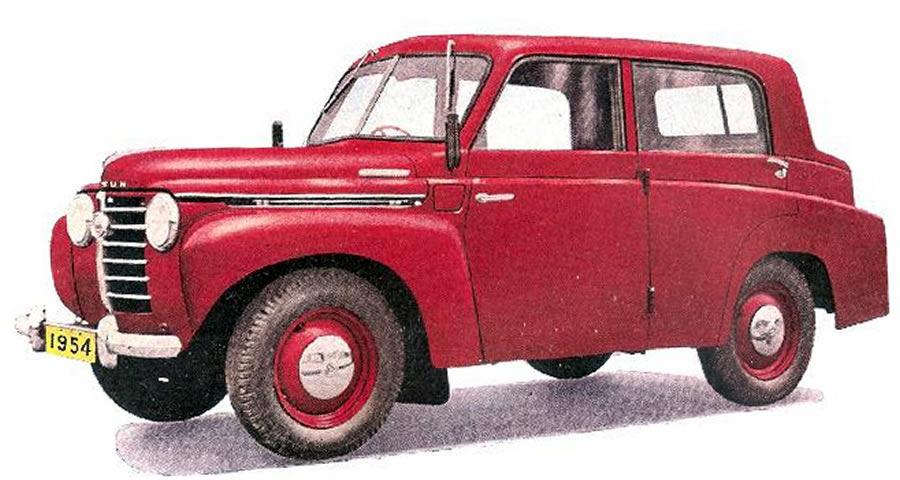
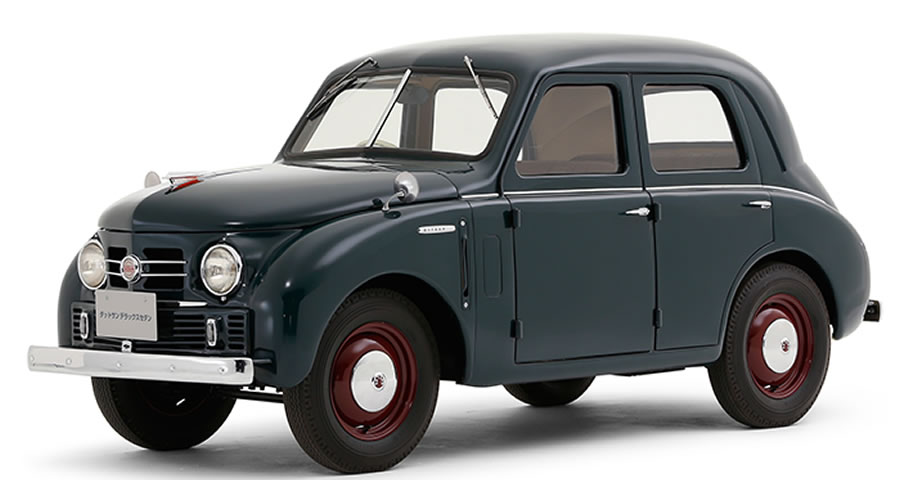
Datsun DS appeared in 1950 as a replacement for the "DA" series. Also based on pre-war truck designs "Datsun 17T", originating from the British car "Austin Seven". The engine remained the same, with a volume of 722 cm³, the power was increased to 20 hp. Three-speed manual transmission. By 1950, the chrome deficit was eliminated and the car again shone with chrome parts. The exterior design was similar to pre-war models. The body was a 2-door sedan, 3185 mm long and 1380 mm wide. There was also a modification of a truck and a van. In 1951, a modification of the model was released with the name "Datsun DS-2". The design was completely redesigned and presented in a completely new body, but the chassis remained from the pre-war truck. The length of the car with a sedan body was 3500 mm, the width was 1400 mm, the height was 1550 mm and the unladen weight was 770 kg. From "DS-2" onwards, the series of cars was called "Datsun Thrift". In 1952 appeared "Datsun DS-4" and immediately gained a reputation as the most terrifying car in the Datsun company. The body was in the form of a four-door sedan, 3750 mm long, 1458 mm wide, 1535 mm high and with a curb weight of 930 kg. The engine and gearbox remained the same. In 1953, a "Datsun DS-5" with a modified design. The external dimensions and weight of the car have not changed. The most important innovation is the installation of an 860 cm³ engine (D10 SV) with a power of 25 hp, which increased the maximum speed from 72 to 78 km/h. The latest modification "Datsun DS-6" appeared in 1954 and was called "Convar". The design was significantly different from its predecessors, became more modern and attractive. The body was only a four-door sedan. The engine and chassis remained the same from the "DS-5". Production ended in December 1954 and was replaced by the series "Datsun 110".
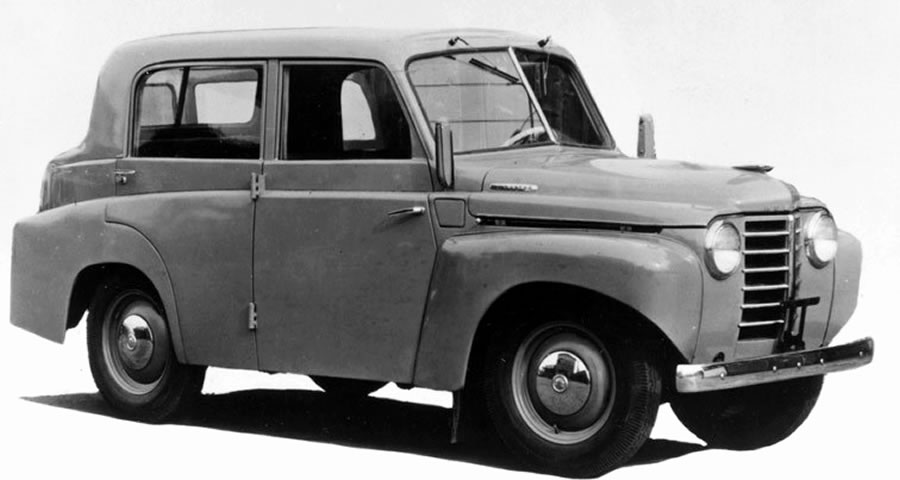
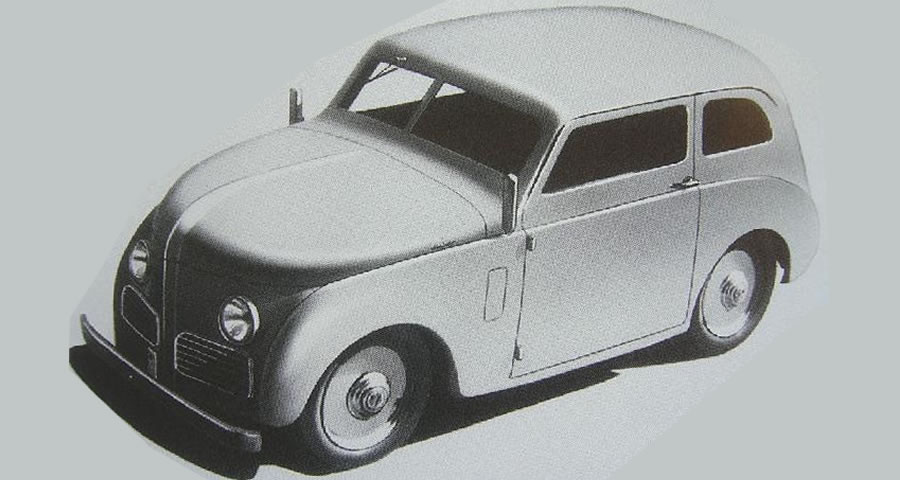
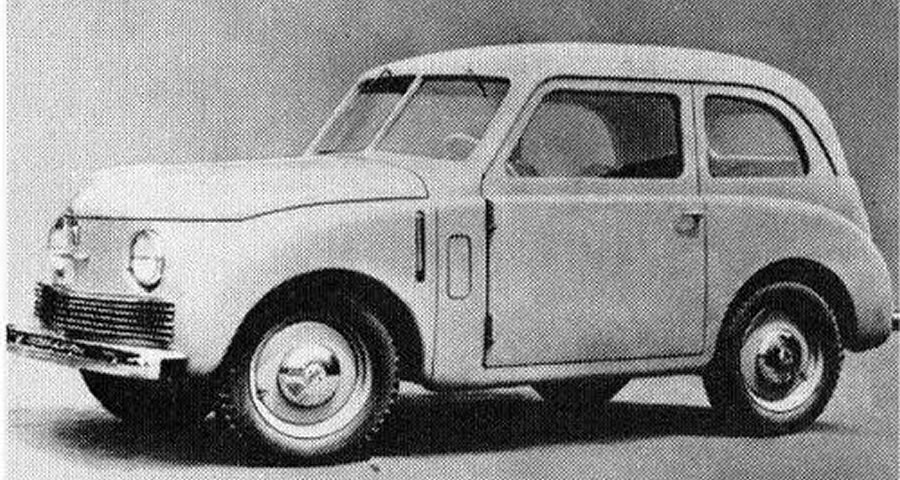
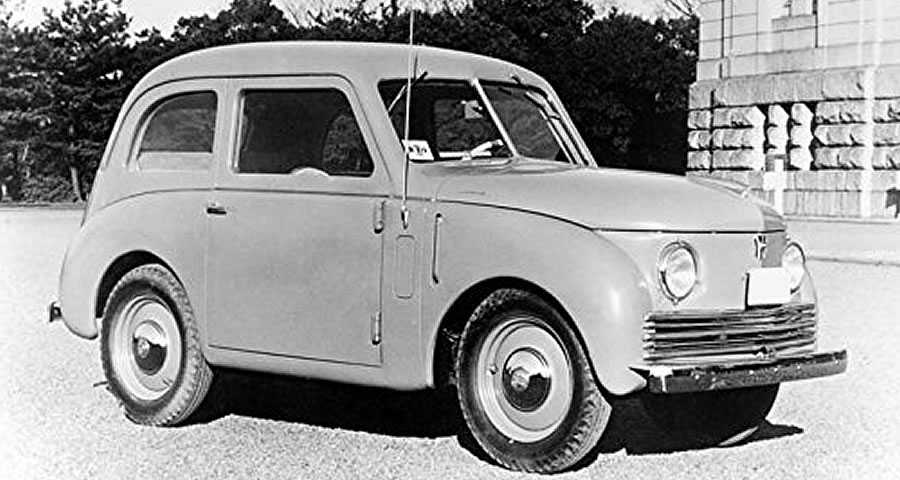
Datsun DB was introduced in March 1948 and was unlike anything that had ever been seen in Japan before. It was the first modern car Nissan had produced since the start of World War II and was a carbon copy of the American Crosley of 1947. The only significant differences were the grille design, the length of the bonnet and the shape of the windscreen. The measurement between the rear of the bonnet and the windscreen was shorter on the Datsun because they needed a longer engine bay to accommodate the Type 7 engine carried over from previous generations. The body was a 2-door sedan only, 3150 mm long, 1330 mm wide, 1570 mm high and had a curb weight of 520 kg. In 1949, Nissan changed the design of the front of the car to make it look less like a Crosley. The new model was called "Datsun DB-2" and was produced until 1950. In 1951, a four-door "Datsun DB-4" (dB-3 designation was omitted) with a sedan, station wagon or van body, 3850 mm long, 1480 mm wide, 1560 mm high and a curb weight of 890 kg. The engine was carried over from the previous model. In 1953, it was replaced by "Datsun DB-5" with a four-door sedan body of the same dimensions. The most important thing in this car is a completely new engine. A four-cylinder in-line engine with a volume of 860 cm³ (D10 SV) with a power of as much as 25 hp. The last modification of the "DB" series appeared in 1954 with the name "Datsun DB-6". The body and engine remained unchanged, a new four-speed gearbox appeared.
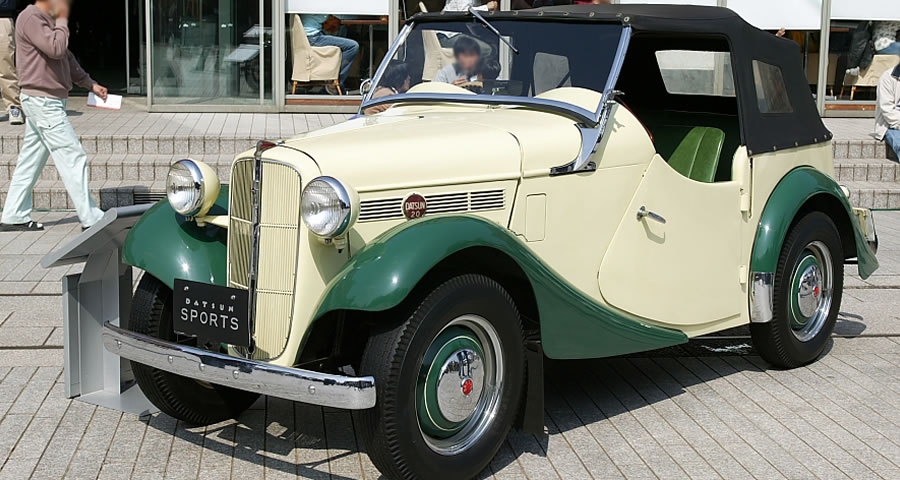
Datsun DC-3 a lightweight sports car with a roadster body with two doors, 3150 mm long, 1360 mm wide, 1450 mm high and a curb weight of 750 kg. First went on sale on January 12, 1952. Based on the chassis of trucks of the time. The engine was 860 cm³ (D10) with side valves and a power of 25 hp, a three-speed non-synchronous transmission, cable-operated brakes. The maximum speed of the car was only 70 km / h. Only 50 cars were produced.
First generation (110/112/113, 1955–1957)
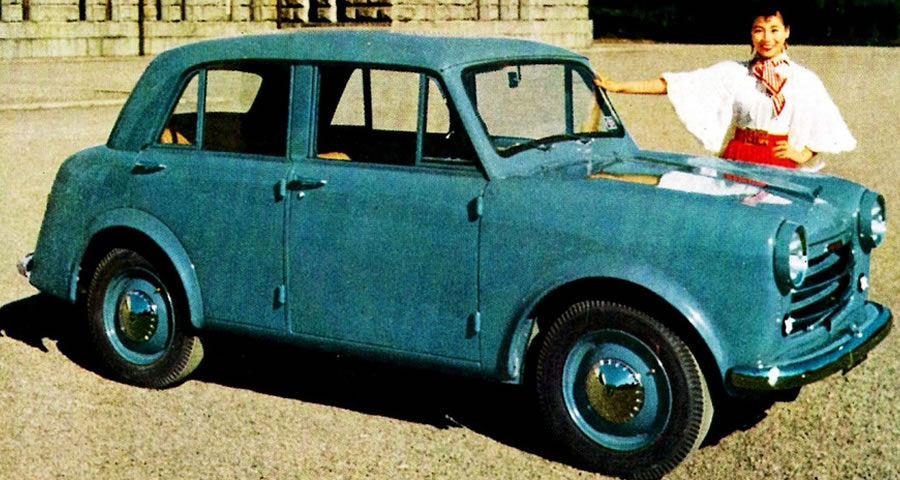
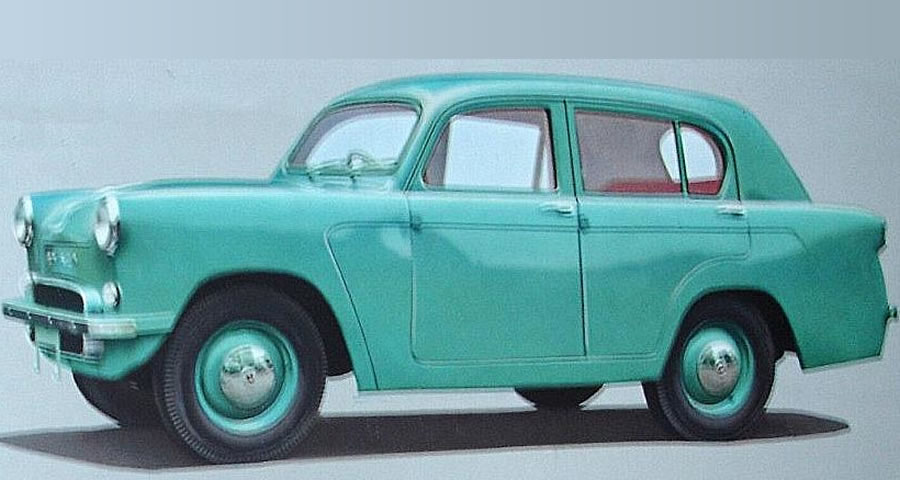
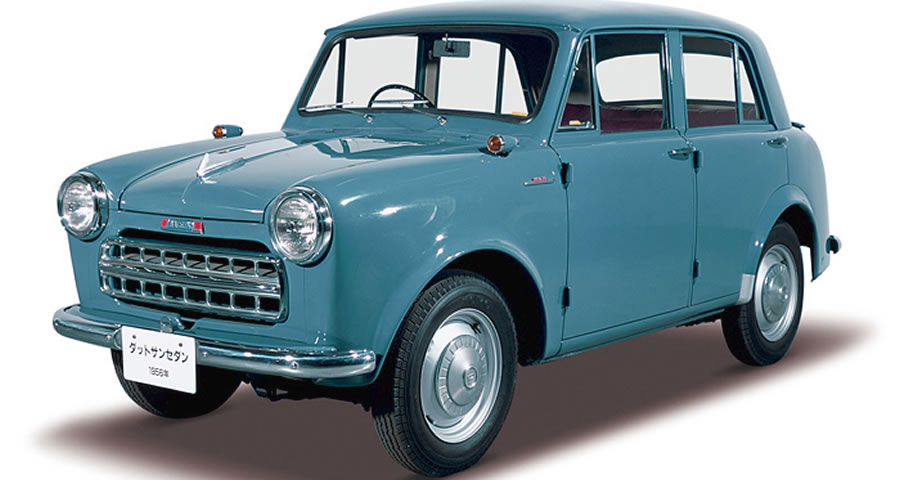
Datsun 110 was launched in January 1955 and is the first car in what would eventually become the "Datsun Bluebird", a car that would become the basis of the entire Datsun line for decades to come. With minor changes, production continued until July 1959, when the "Datsun 211". The design of the car was quite modern for its time, especially compared to previous "DB" models. In addition to the basic 4-door sedan, there was also a station wagon (W110), a truck (120) and a convertible (K110) with a soft top. The length of the car was 3860 mm, the width 1466 mm, the height 1540 mm and the curb weight 890 kg. The engine remained the same four-cylinder 860 cm³ (D-10) with a Solex carburetor with a power of 25 hp. The chassis and suspension were completely new. The electrical system was 6-volt.
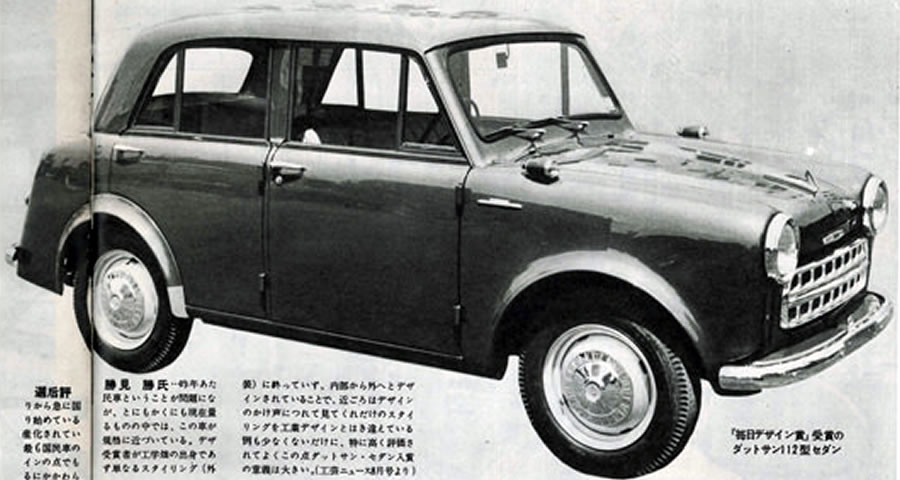
Datsun 112 it was produced from December 1955 to May 1956. The body was almost the same as the "110", but there were some changes in the exterior design. The dashboard was also completely redesigned. The mechanical part remained without any changes. This car won the second prize in the field of industrial design "Mainichi" in 1956 for "fresh design, maneuverability and comfortable interior". The body was a 4-door sedan, as well as a station wagon (W112) and a truck (122).
Datsun 113 was produced from June 1956 to September 1957. Visually, the car is no different from the previous model. The only difference between the "112" and the new "113" is the gearbox, but this is a very important change for the vehicle. Previously, a four-speed gearbox without synchronizers was used, which is a copy of the device used on the "Austin A40 Somerset". The "113" was equipped with Nissan's own transmission, which was a 4-speed gearbox with synchronization on the 2nd, 3rd and 4th speeds, and was also 10 kg lighter. Also, instead of the shift lever on the floor, the lever was moved to the steering column, as this allowed three people to sit in the front seat.
Second generation (210/211, 1957–1959)
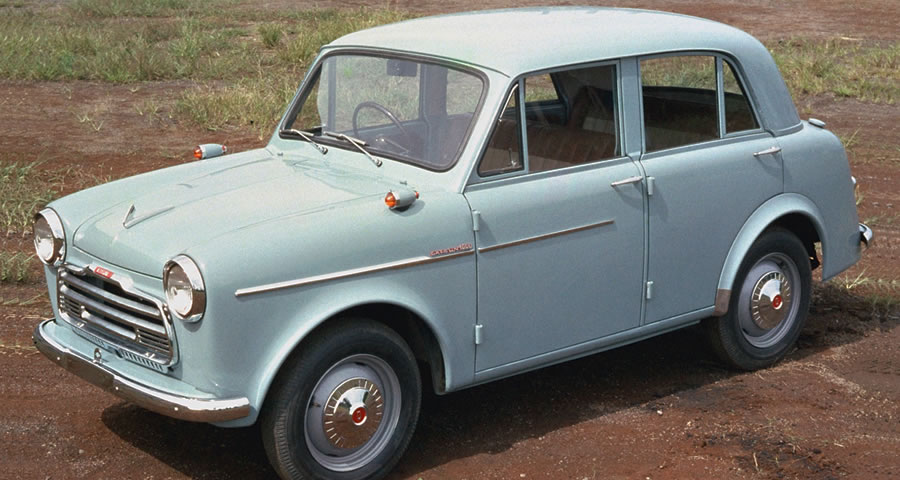
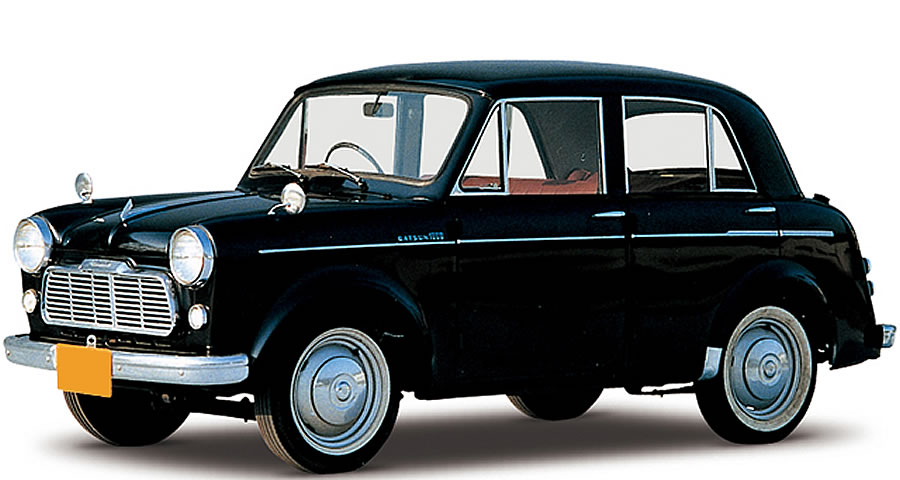
Datsun 210 was launched in October 1957 and continued until September 1958. In a strange marketing move, the new 210 was launched at the same time as the new sedan "Datsun 114", which was a direct replacement for the previous one "Datsun 113", And "Datsun 210" entered the line as a more advanced version of the "114". The design of the car is almost identical "Datsun 113", differences only in the radiator grille, as well as the presence of steel side strips. The 114 had no side lanes. The chassis remained unchanged. The most important changes occurred in the engine compartment. A new 988 cm³ overhead valve (OHV) Model C engine with 37 hp was introduced, which was developed on the basis of the Austin B series engine. For the first time, Takei used a 12-volt electrical system instead of a 6-volt one. "Datsun 114", which continued to be produced simultaneously with the "210", continued to use the old "D-10" engine. In addition to the 4-door sedan, there was a station wagon (W210), an ambulance (M210), a commercial truck (220), and a cheaper sedan (114).
Datsun 211 was the last of the cars based on "Datsun 110" and the last small car produced before the "Bluebird" name was introduced. It was launched in October 1958 and discontinued in July 1959. It was produced simultaneously with the sedan "Datsun 115", which was a cheaper version and used an outdated side-valve engine. Technically, the "211" was practically no different from the "210", the only differences were in the external design. And also on the top versions, the "E" model engine with a volume of 1189 cm³ and a power of 48 hp was installed.
Third generation (310/311/312, 1959–1963)
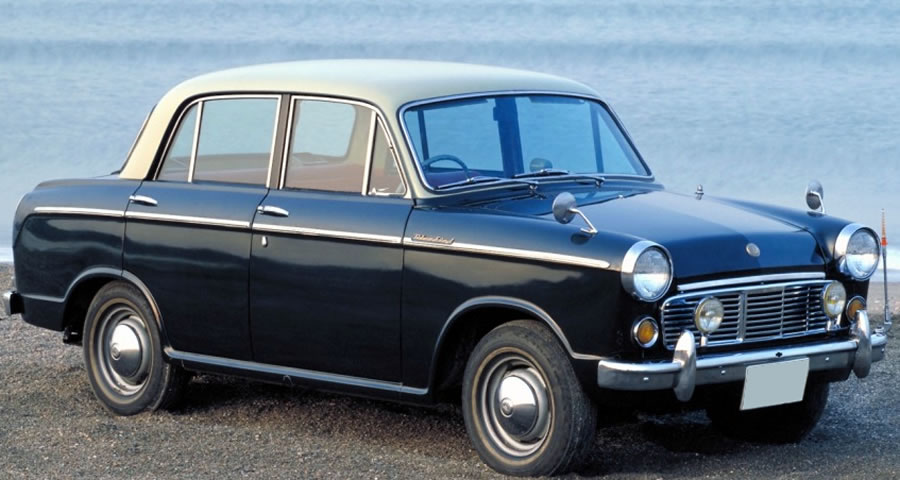
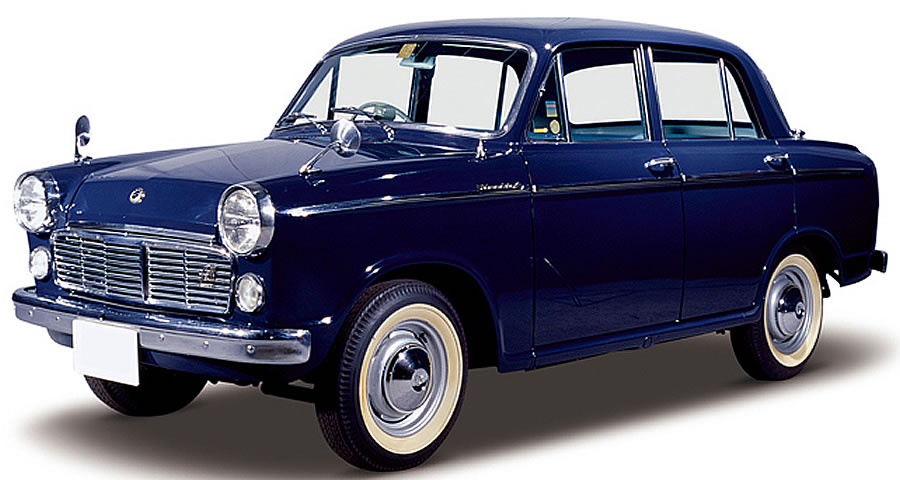
Datsun Bluebird 310 was launched in August 1959 and continued until January 1961. The 310 series was a milestone for both Nissan and the Japanese auto industry as a whole. It coined the Bluebird name and marked the first time a Japanese automaker had built a modern, truly world-class automobile. By the late 1950s, Nissan had spent a great deal of time and money installing the latest presses and machining equipment. By 1959, it was arguably the most modern auto assembly plant in the world. The build quality and finish of the car was on par with other cars that cost two to three times more. Engines were used from "Datsun 211". The suspension was completely new, the door hinges were hidden inside the body. There were two body styles - a 4-door sedan and a station wagon (WP310). The length of the car was 3910 mm, the width was 1496 mm, the height was 1460 mm and the unladen weight was 870 kg. With the advent of the "310" model, Nissan sales quickly rose all over the world and made the company the fifth automaker in the world by the end of the 1960s.
Datsun Bluebird 311 was launched in November 1960 and stopped in August 1961. The exterior is almost identical to the previous model, with the exception of some details. There are badges on the rear of the car "Datsun 1200" or "Datsun 1000", depending on the engine installed. In addition to the sedan, a station wagon body (WP311) was offered. The 988 cm³ model "C" engine was installed without changes, but the 1189 cm³ engine was worked on and the "E-1" model was presented. It works in tandem with a new two-contact "Nikki" carburetor with a vacuum secondary system and produces 60 hp. The engines also became even more reliable.
Datsun Bluebird 312 appeared in August 1962 and was the last modification of the third generation of "Bluebird". The appearance and dimensions were practically no different from previous modifications. The most noticeable differences are a completely new design of the radiator grille, the design of the taillights was also significantly changed, the side stripes on the body were changed, a completely new instrument panel and steering wheel. The engines used were the same "C-1" and "E-1". In September 1962, changes were made to the external design, which affected the radiator grille and taillights. In September 1963, production ceased with the appearance of the "410" series.
Fourth generation (410/411, 1963–1967)
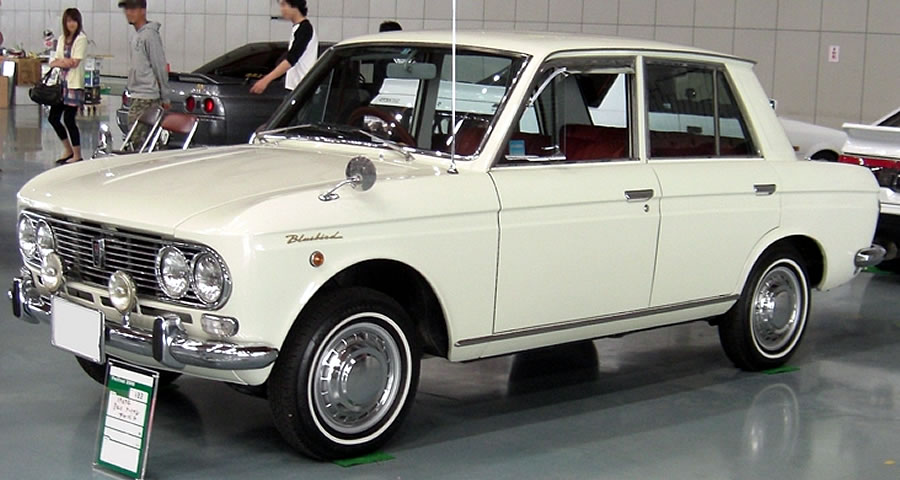
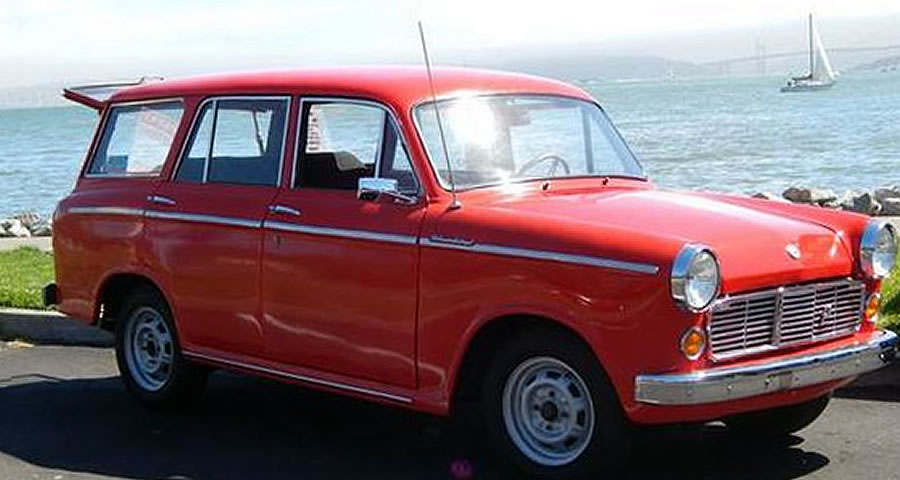
Datsun Bluebird 410 appeared in September 1963, it was a quantum leap in the design and construction of Nissan cars. The company contracted the design with the Italian design house "Pininfarina", which was known for its collaboration with Ferrari and Fiat. They came up with a very beautiful and very modern design. Compared to the previous model, the body of the "410" became load-bearing, abandoning the frame, which reduced the weight and production costs. The body was a 4-door sedan, station wagon (WP410) and 2-door sedan (P410-R). The length of the car was 3995 mm, width 1490 mm, height 1390 mm and the curb weight was 885 kg. The engines were 4-cylinder gasoline with a volume of 988 cm³ (C-1) with a capacity of 45 hp and 1189 cm³ (E-1) with a capacity of 60 hp. Both engines with overhead valves (OHV) with Nikki carburetors. The gearbox was transferred from the "312" series without changes. There was also a more powerful model of the car "DP410-M Bluebird SS" with two Hitachi carburetors and an engine power of 65 hp and a "women's" version of the car "DP410-L Fancy DeLuxe". In September 1964, a series of cosmetic changes were made.
Datsun Bluebird 411 appeared in 1965. The exterior design, dimensions and weight are almost identical to the "410", the difference on export cars was that the badge on the front bumpers was now printed in block letters DATSUN. The most important change occurred under the hood. The 988 cm³ engine was no longer used, leaving the 1189 cm³ with a capacity of 60 hp, and a new "J" series engine with a volume of 1299 cm³ with a capacity of 67 hp appeared. In addition to the 4-door sedan, there was a station wagon (WP411) and a 2-door sedan (P411-R). There were also more powerful modifications with the names "R411 Bluebird SSS" and "P411-U-MTK Bluebird SS".
Fifth generation (510, 1967–1972)
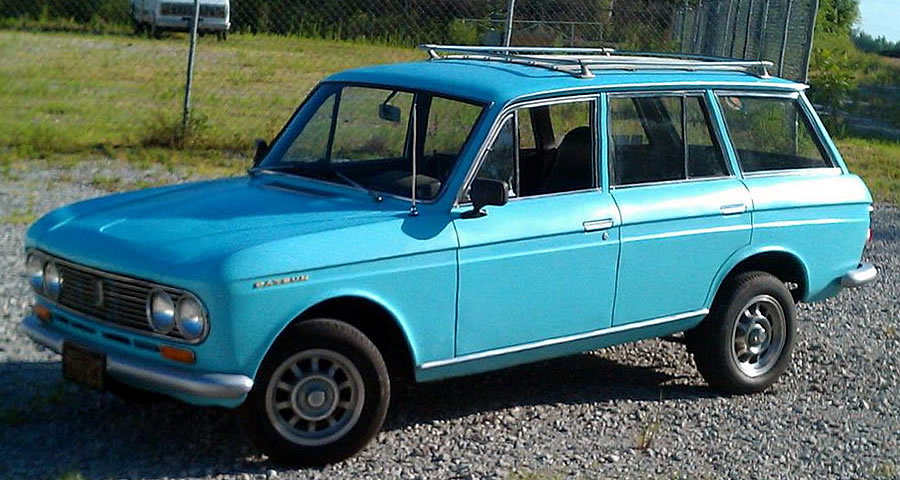
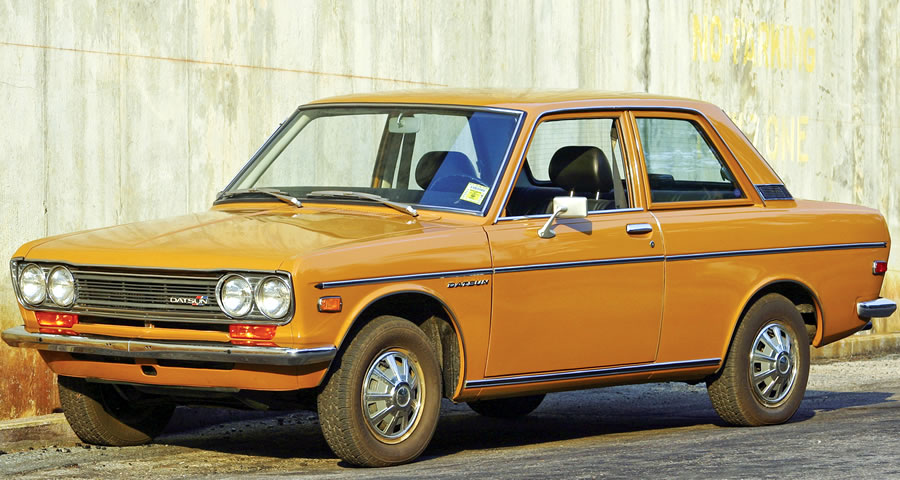
The 510 series was introduced in August 1967 and went on sale in 1968 in most export markets. The car was an immediate hit. Nissan wanted to create a more affordable version of the car line "BMW 02 Series", launched in 1966. That is, the goal was to create a light, comfortable, controllable, dynamic family car and it was achieved. Design "Bluebird 510" was very modern for its time, and it does not look archaic today. The body was a 2- and 4-door sedan, a 2-door coupe (KB510), and also a 4-door station wagon (WP510). The length of the car was 4120 mm, the width was 1560 mm, the height was 1405 mm and the curb weight was 915 kg.
The range of petrol four-cylinder engines of the "J" series was carried over from the previous generation, increased in volume and there were two models with a volume of 1.3 liters (1289 cm³, J13, 67 hp) and 1.5 liters (1471 cm³, J15, 76 hp). Also, completely new 1.3-liter "L" series engines appeared (1286 cm³, L13, 77 hp), 1.4 liters (1428 cm³, L14, 84 hp), 1.6 liters (1595 cm³, L16, 96 hp) and 1.8 liters (1770 cm³, L18, 105 hp). The gearbox was a 4-speed manual with synchronizers on all gears and was located on the floor next to the driver.
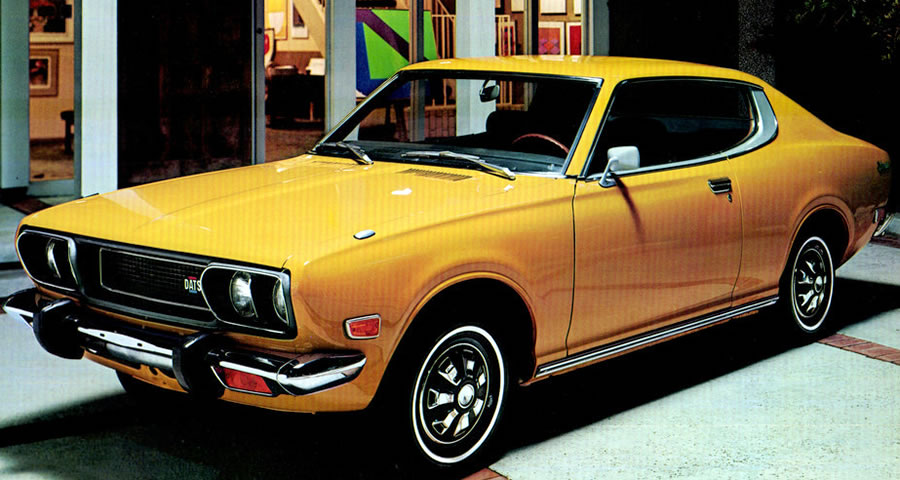
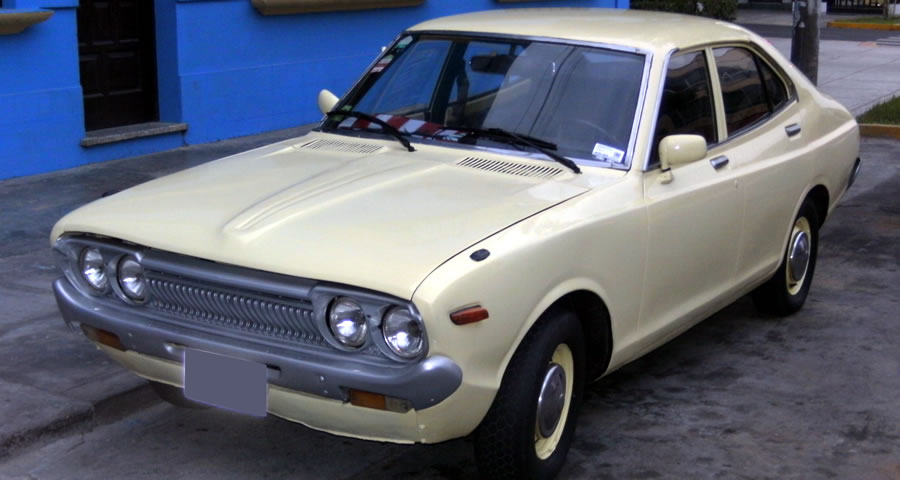
Sixth generation (610, 1971–1976)
In August 1971, production of the "610" series began in Japan and it was named "Datsun Bluebird-U". According to Nissan, the letter "U" stands for "user-oriented", meaning the emphasis is on increasing the comfort of the car. The advertising campaign used the slogan "Bluebird U − Up You!". The car body design was made in the "Coke Bottle Style", a fashionable trend at the time. The body is presented in the form of a 4-door sedan, 2-door coupe and 5-door station wagon. The overall length of the car was 4215 mm, width 1600 mm, height 1415 mm and the curb weight was 1035 kg. Trim levels in Japan were STD (standard), GL (Grand Luxe), SSS (Super Sports Sedan) and DX (Deluxe).
The range of four-cylinder petrol engines remained only in the "L" series with the following characteristics: 1.6 liters (1595 cm³, L16, 92 hp), 1.8 liters (1770 cm³, L18, 105 hp), 2.0 liters (1952 cm³, L20B, 110 hp). A 2.0-liter in-line six-cylinder engine also appeared (1998 cm³, L20/L20A) with a capacity of 113 hp. The gearbox is 4- or 5-speed manual, and for the first time they began to install a 3-speed automatic.
The car received a facelift in 1974 with prominent indicators on the front corners, a squarer grille and new taillights. Inside, there was new equipment such as a remote boot release, interval wipers, a central handbrake and new trim materials.
In January 1973, Nissan launched a new line of slightly smaller cars "Datsun 710" or "Datsun Violet", using details and design from the "610" series.
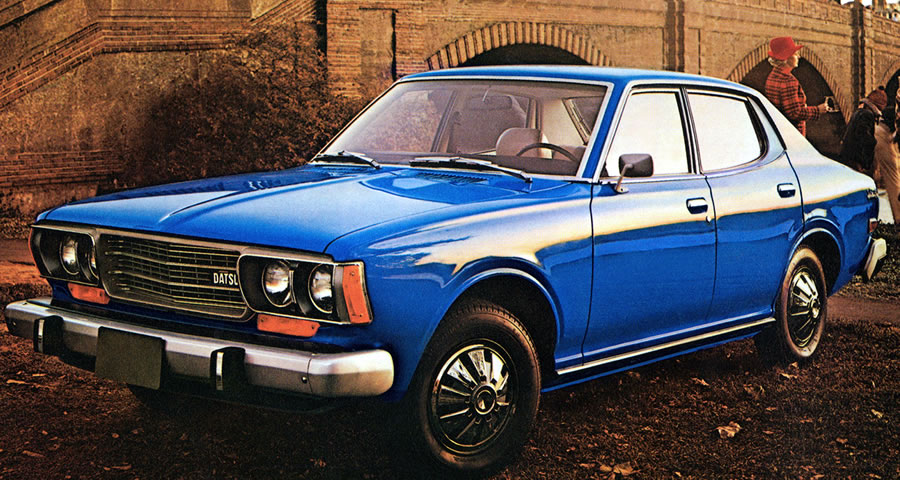
Seventh generation (810, 1976–1979)
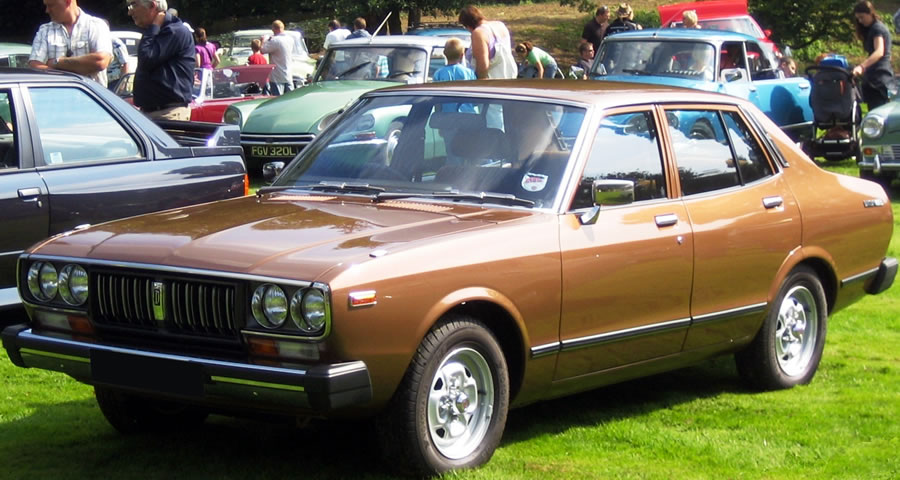
In July 1976, the "810" series of the "Bluebird" line of cars was introduced. The design was an evolution of the "610" series with straightened lines, but still retaining the features of the "Coke bottle". The body was a 4-door sedan, 2-door coupe and 5-door station wagon. The overall dimensions of the car were: length 4260 mm, width 1631 mm, height 1389 mm and an unladen weight of 1084 kg. The car was exported under the names "Datsun 160B", "Datsun 180B" and "Datsun 200B". In the Japanese market, cars were equipped with NAPS badges on the rear, which indicated the use of emission control technology.
The first two years used engines of the "L" series with identical characteristics and already used in the previous generation. Since 1978 they were replaced by a new series of four-cylinder petrol engines of the "Z" series with the following volumes - 1.6 liters (1595 cm³, Z16, 94 hp) and 1.8 liters (1770 cm³, Z18 - 103 hp, Z18E - 113 hp). The transmission remained unchanged - 4- and 5-speed manual or 3-speed automatic.
Eighth generation (910, 1979–1983)
The eighth generation was introduced in November 1979 "Datsun Bluebird". The design used simple and clear lines, unlike its predecessor, which was made in the style of a "Coke bottle". The suspension, wheelbase and most of the engines remained the same. This is the last car in the line with rear-wheel drive. The body was a 4-door sedan, 5-door station wagon and 2-door coupe. The length of the sedan was 4351 mm, width 1656 mm, height 1402 mm and the curb weight was 1135 kg. Name "Maxima" first appeared in this generation.
The L-series petrol engines were modified and had the following capacities: 1.6 litres (1595 cm³, L16S), 1.8 liters (1770 cm³, L18S), 1.8 liters (1770 cm³, L18T, 108 hp) and 2.0 liters (1952 cm³, L20B, 110 hp). The Z series engines are represented by the following models: 1.6 liters (1595 cm³, Z16S), 1.8 liters (1770 cm³, Z18E, 113 hp) and a turbocharged 1.8 liter (1770 cm³, Z18ET, 133 hp). A 2.0-litre petrol engine was offered in Australian markets (1974 cm³, CA20S, 102 hp) and a 2.0-liter diesel engine (1952 cm³, LD20, 64 hp).
Ninth generation (U11, 1983–1987)
In October 1983, a completely new car from a technical point of view was presented. It was a transition from rear-wheel drive to front-wheel drive. The design remained very similar to the previous generation. Because of this, the drag coefficient could not boast of success and was 0.39, which for that time was not a very good indicator. The body was offered as a 4-door sedan, a sedan with a folding roof and a 5-door station wagon. The length of the car was 4360-4500 mm, width 1690 mm, height 1370-1430 mm and the curb weight was 1080-1215 mm. During this period, the name "Datsun" was completely abandoned and the model was called "Nissan Bluebird".
The range of petrol engines consisted of the following volumes: 1.6 liters (1598 cm³, CA16, I4, 80 hp), 1.8 liters (1809 cm³, CA18S/CA18DE, I4, 113/129 hp), 1.8 liters (1809 cm³, CA18ET/DET, turbo, I4, 133/164 hp), 2.0 liters (1973 cm³, CA20S/E, I4, 100 hp) and a six-cylinder 2.0-liter engine (1998 cm³, VG20E/VG20ET, V6, 113/170 hp)There were two models of diesel engines, both with a volume of 2.0 liters (1952 cm³), one naturally aspirated (LD20, I4, 66 hp) and one turbocharged (LD20T, I4, 78 hp). Gearbox 4- or 5-speed manual, as well as 3- or 4-speed automatic.
Tenth generation (U12, 1987–1992)
In September 1987, the "U12" series was introduced with a more modern, rounded design. The car also had other names - "Nissan Stanza" (North America), "Ford Corsair", "Nissan Pintara" (Australia), "Tan Chong Bluebird" and "Yue Loong Bluebird 941". The body was produced as a 4-door sedan and a sedan with a folding hardtop, as well as a 5-door hatchback. The length of the car was 4570 mm, and from 1992 4590 mm, width 1699 mm, height 1374 mm. The drive was mainly on the front wheels, and for the first time on the "Bluebird" they began to use a mechanical all-wheel drive system called "ATTESA".
The petrol engines were mostly carried over from the previous generation with minor modifications and were the following models: 1.6 litre (1598 cm³, CA16S, I4, 80 hp), 1.8 liters (1809 cm³, CA18DE/CA18i, I4, 128/91 hp), 1.8 liters (1809 cm³, CA18DET/DET-R, turbo I4, 167 hp), 1.8 liters (1838 cm³, SR18Di, I4, 108 hp), 2.0 liters (1974 cm³, CA20E, I4, 105 hp), 2.0 liters (1998 cm³, SR20DE, I4, 128 hp), 2.0 liters (1998 cm³, SR20DET/DET-R, turbo, I4, 202 hp) and 2.4 liters (2389 cm³, KA24E, I4, 134 hp). There was one diesel engine with a volume of 2.0 liters (1974 cm³, LD4 II, I4, 64 hp). Gearbox 5-speed manual or 4-speed automatic.
Eleventh generation (U13, 1991–1997)
In September 1991, the next generation was launched with the code "U13". The exterior design became even more modern and streamlined. The body is presented in the form of a 4-door sedan and hardtop (folding hardtop) 4585 mm long, 1695 mm wide, 1405 mm high and a curb weight of 1070 to 1370 kg. The wheelbase has grown by 70 mm, which has made the cabin more spacious and comfortable. For a more comfortable feeling for passengers, an active noise reduction system was used on hardtop models. The drive is mainly on the front wheels, and several Japanese models were equipped with all-wheel drive "ATTESA". The car was exported under the name "Nissan Altima" first generation with the same chassis code "U13" (see above on the page).
Petrol engines were all seriously updated - all became with two overhead camshafts (DOHC) and had the following volumes and characteristics - 1.6 liters (1597 cm³, GA16DS, I4, 89 hp), 1.8 liters (1838 cm³, SR18DE, I4, 123 hp), 2.0 liters (1998 cm³, SR20DE/EQ486, I4, 128 hp), 2.0 liters (1998 cm³, SR20DET, turbo, I4, 206 hp) and 2.4 liters (2389 cm³, KA24DE, I4, 155 hp)There was one diesel engine with a capacity of 2.0 liters (1973 cm³, I4, 76 hp). Gearbox 5-speed manual or 4-speed automatic.
Twelfth generation (U14, 1996–2001)
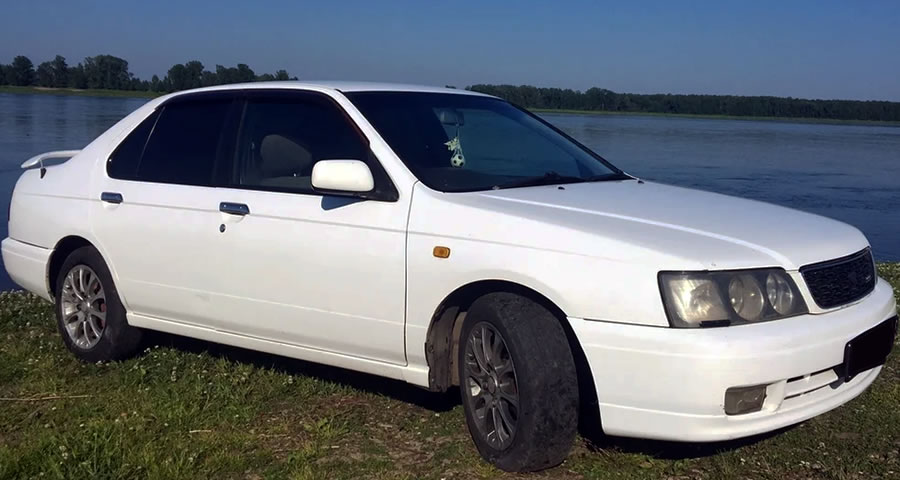
The last generation "Nissan Bluebird" with the code "U14" was released in January 1996. This generation was sold only in the Japanese domestic market. The American "Altima" developed into a completely separate line of cars with new chassis codes of the "L" series (see above), and a more powerful one was already being produced in the USA "Maxima". In Europe it was replaced by "Teana", which appeared in 2003 (see above). The body was offered as a 4-door sedan with front-wheel drive or all-wheel drive. The length of the car was 4565 mm, width 1695 mm, height 1395 mm and the curb weight from 1140 to 1330 kg.
The petrol engine range now starts with a 1.8-litre capacity (1838 cm³, SR18DE, I4, 123 hp), then come two 2.0 liter engines (1998 cm³, SR20DE, I4, 145 hp) and (1998 cm³, SR20VE, I4, 187 hp)There were also two diesel engines, one with two camshafts and a capacity of 1.8 liters (1769 cm³, QG18DE, I4, 115 hp), the other one has a single camshaft and a volume of 2.0 liters (1973 cm³, CD20E, I4, 75 hp). The transmission is a 5-speed manual, 4-speed automatic, and also a continuously variable transmission (CVT).
Trim levels included the standard "LeGrand", the luxurious "Eprise", the sporty "SSS", and the limited-edition "SSS-Z" model.