The main competitors and classmates of the Siren are Chevrolet Orlando, Ford Galaxy, Honda Stepwgn, Kia Grand Carnival, Mazda Bongo, Mercedes-Benz Viano, Mitsubishi Grandis, Opel Vivaro, Peugeot Expert, Renault Espace, Toyota Ipsum/Estima and Volkswagen Caddy.
First generation (C23, 1991−2000)
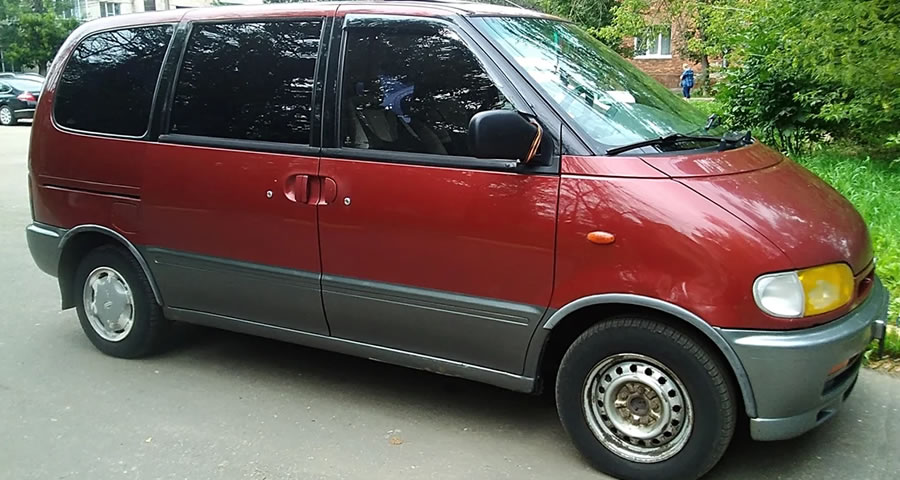
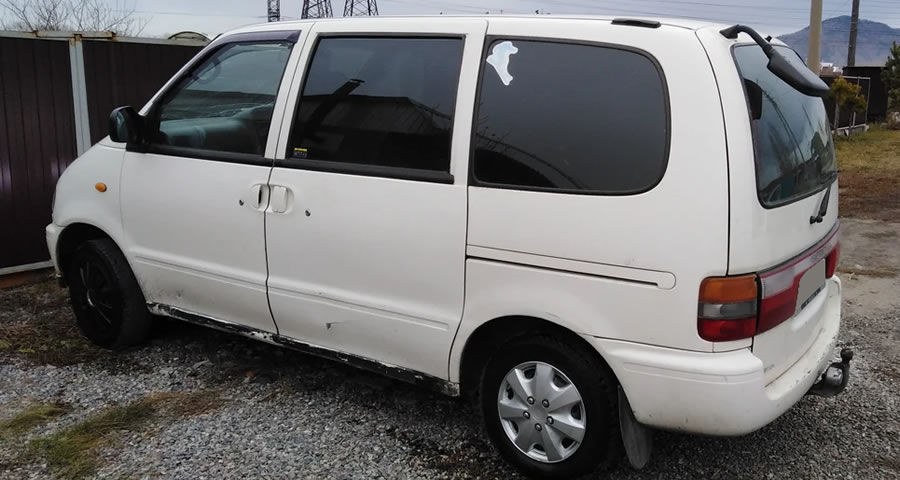
The first generation C23 right-hand drive model was launched in Japan in 1991 and exported to Australia and the UK. It was launched in right-hand traffic and left-hand drive countries in Spain in 1992. The body is a 4- or 5-door eight-seater minivan, 4,350-4,380 mm long, 1,695 mm wide, 1,825-1,915 mm high and 1,250-1,610 kg unladen weight. The engine is located behind the front axle between the front seats with rear-wheel drive — "FMR" (Front Mid-engine). There were also all-wheel drive modifications, which were more controllable.
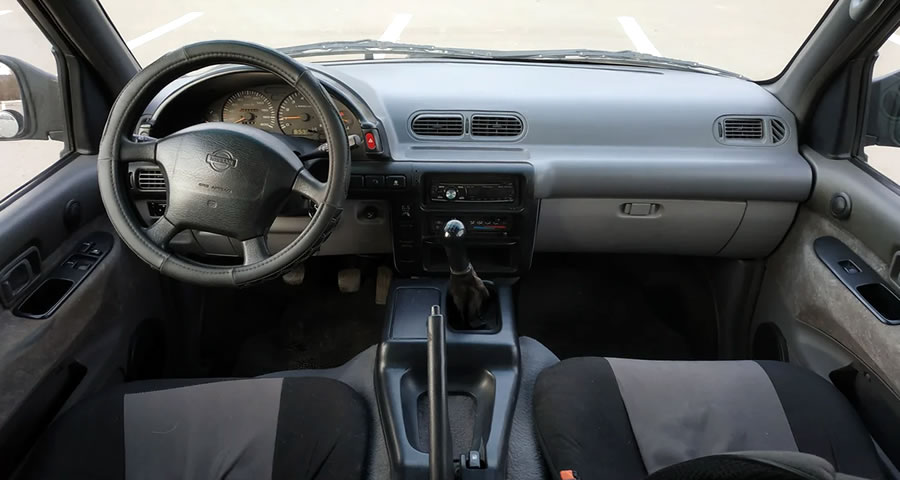
The range of petrol four-cylinder in-line engines included three models with a capacity of 1.6 litres (1596 cm³, 97 hp), 2.0 liters (1998 cm³, 126 hp), 2.4 liters (2388 cm³, 105 hp). There were two models of diesel engines: 2.0 liters (1973 cm³, naturally aspirated - 67 hp, turbocharged - 91 and 97 hp) and 2.3 liters (2283 cm³, 75 hp). Gearbox 5-speed manual or 4-speed automatic.
There were several different trim levels in different countries, for example in Europe there were "LX", "SLX", "SGX" and "SGXi". Weekly magazine "Auto Express", published in the UK, called the Serena the slowest car in the world to accelerate from 0 to 100 km/h. With a 2.3-liter diesel engine, it took 27.8 seconds. This generation also has a negative reputation due to criticism that was heard several times on the TV show "Top Gear".
Throughout its production, the C23 model underwent several updates. The interior design and exterior remained largely unchanged. The update can be identified by the radiator grille, which was changed in 1994 and 1997.
Second generation (C24, 1999−2012)
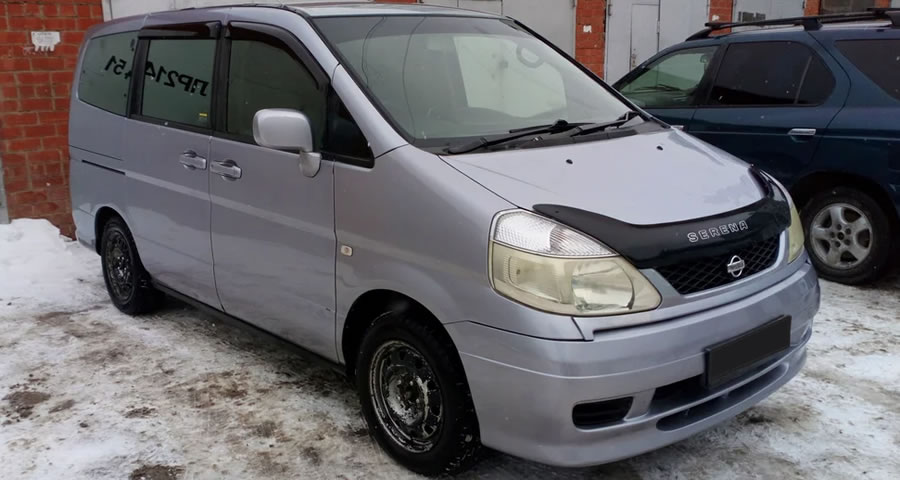
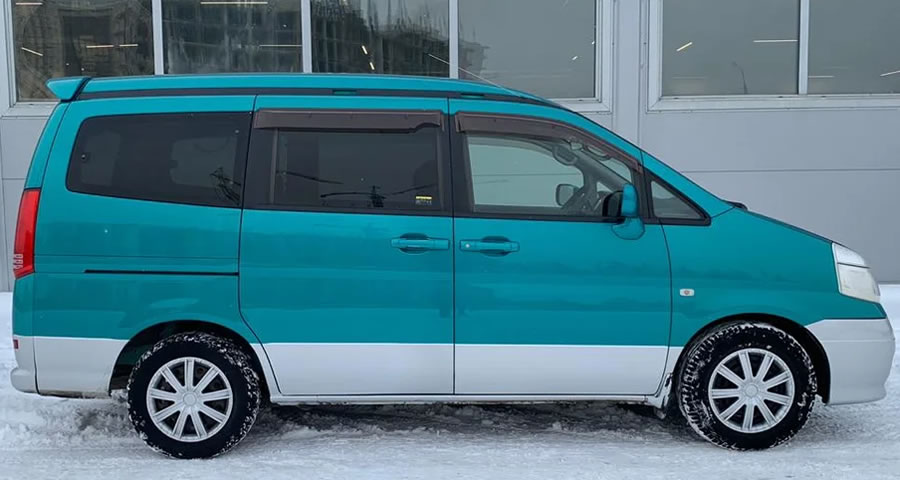
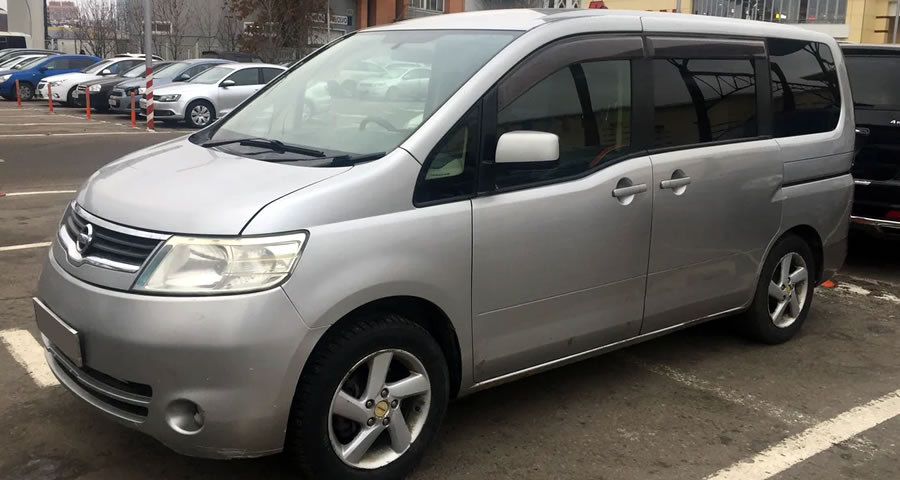
In July 1999, the second generation with the code "C24" began production in Japan. It was an updated version with an expanded range of engines and body colors. The body was a 5-door minivan with eight seats, 4590 mm long, 1695 mm wide, 1825 mm high and a curb weight of 1580 kg. In Taiwan, an extended by 141 mm version of the Siren was produced by the automaker "Yulon" under license from "Nissan". The engine was moved forward under the hood, the drive became on the front wheels, and there were also all-wheel drive models. The car was assembled in Japan, Indonesia, China, Malaysia, Taiwan and the Philippines.
The range of petrol four-cylinder in-line engines is represented by three models with a volume of 1.5 liters (1499 cm³, 4A15, I4, 113 hp), 2.0 liters (1998 cm³, QR20DE, I4, 145 hp) and 2.5 liters (2488 cm³, QR25DE, I4, 158 hp). Diesel engines are also four-cylinder in-line engines with a capacity of 2.0 liters (1998 cm³, SR20DE, I4, 128 hp) and 2.5 liters (2488 cm³, YD25DDTi, I4, 150 l. With.). The gearbox was equipped with a 4-speed automatic and a continuously variable transmission "Xtronic CVT". The suspension became completely independent and on springs instead of leaf springs.
Third generation (C25, 2005–2011)
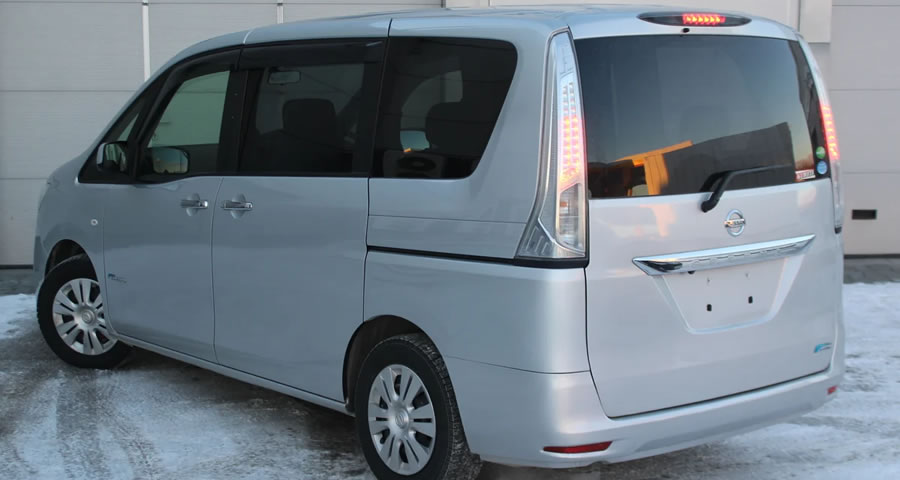
The third generation debuted in May 2005 in Japan. The design of the car has changed significantly. The body is a 5-door minivan with 8 seats. The length of the car was 4650-4725 mm, the width was 1695-1725 mm, the height was 1840-1850 mm. The engine was located transversely in the front, the drive was full 4x4 or only on the front wheels. The car was sold within Japan and was exported only to Hong Kong, Singapore, Indonesia and Brunei. In Japan, it was also sold under the name "Suzuki Landy". In 2007, 2008 and 2009, the Serena was the best-selling minivan in Japan. Production was carried out only in Japan.
Only a 2.0-liter, four-cylinder in-line petrol engine was installed (1997 cm³, MR20DE DI, I4) 137 and 147 hp. Gearbox continuously variable transmission "Xtronic CVT".
Fourth generation (C26, 2010–2016)
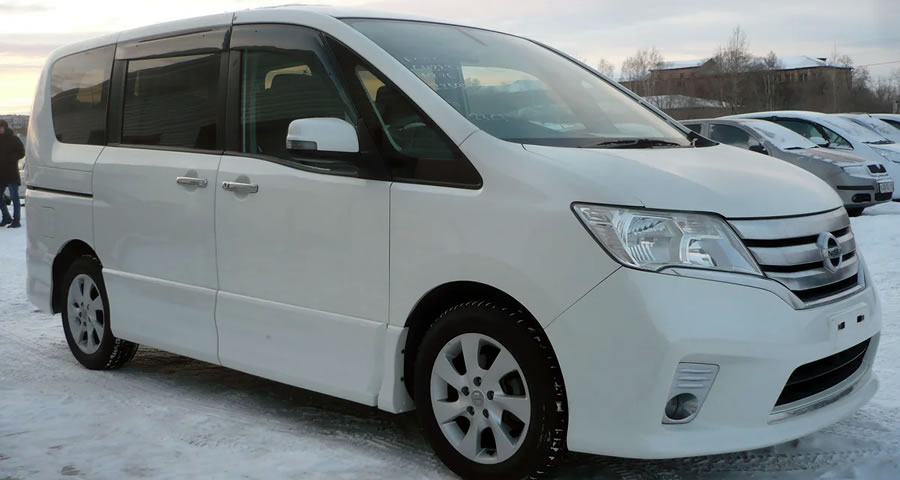
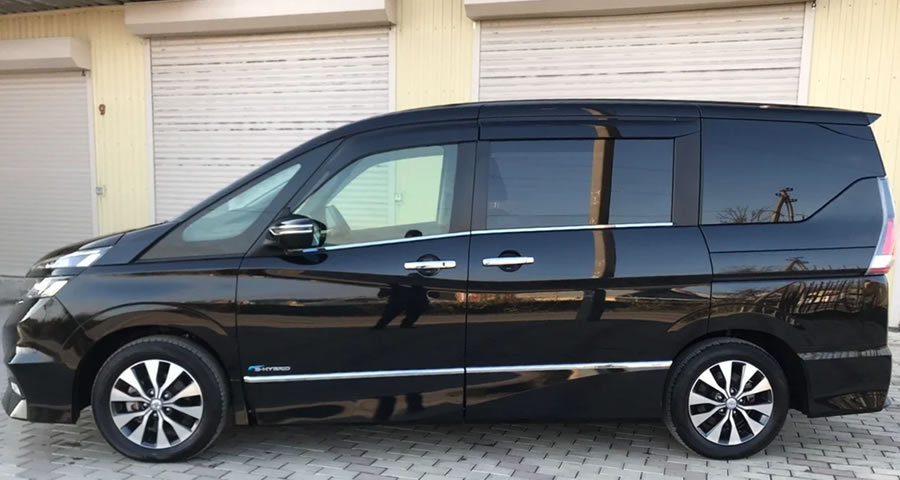
In November 2010, the fourth generation was released to the Japanese market as a 2011 model. The body is a 5-door minivan with 7 or 8 seats. The engine is located transversely in the front, front-wheel drive or all-wheel drive. The overall length of the car was 4685-4770 mm, width 1695-1735 mm, height 1865-1875 mm. This model was sold in Japan, Hong Kong, Indonesia and Malaysia. Assembly was carried out in Japan, Indonesia and Malaysia.
The engine was a four-cylinder in-line petrol with a capacity of 2.0 liters (1997 cc, MR20DD DI, I4) 147 hp. Transmission - continuously variable transmission "Xtronic CVT". In August 2012, Nissan began using a newly developed hybrid system "Smart Simple Hybrid" or "S-HYBRID". In November 2014, a small facelift was performed.
Fifth generation (C27, 2016–present)
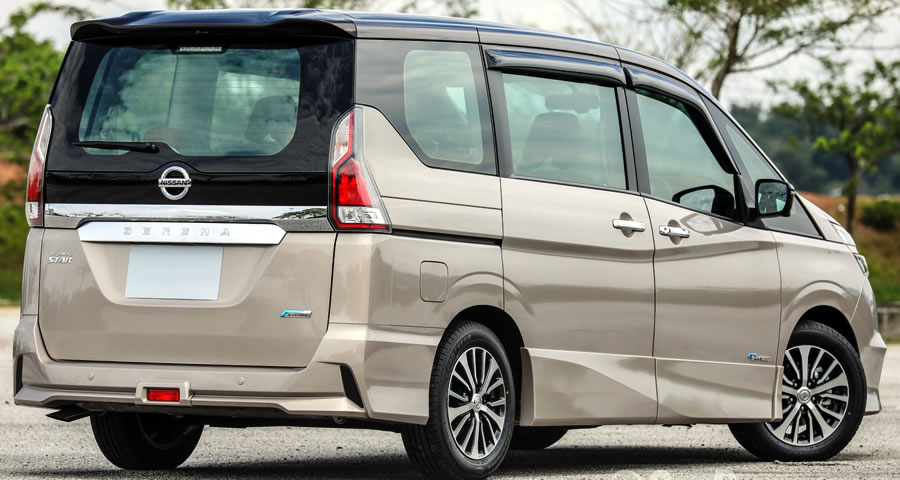
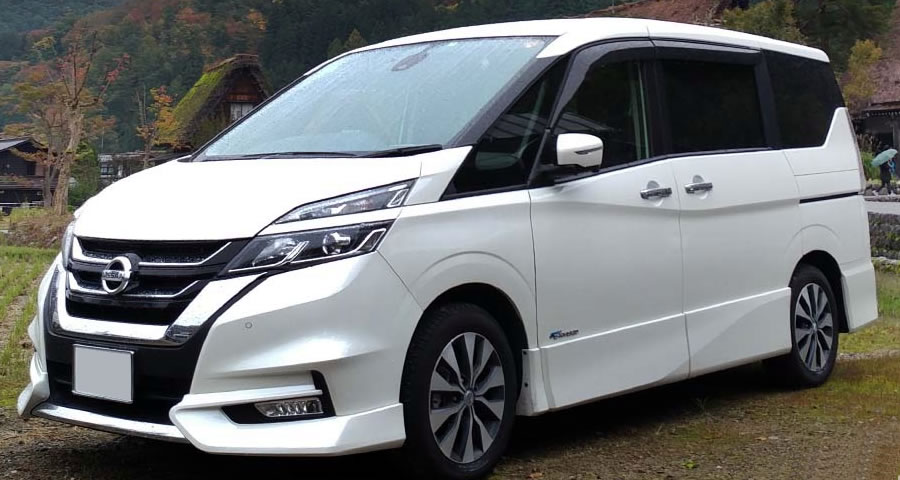
In July 2016, the fifth generation was presented, and in August, sales began in Japan. All cars are equipped with the "Propilot" system, which keeps the car, moving at a speed of 30 to 100 km / h, in its lane on the road and controls the distance between the car in front.
The engine is a 2.0-liter, four-cylinder, in-line gasoline engine (1997 cc, MR20DD DI, I4) 150 hp. The transmission is also a continuously variable transmission "Xtronic CVT". It went on sale in February 2018 "Serena e-Power" with a 1.2-liter three-cylinder in-line engine (1198 cm³, HR12DE, I3) 80 hp, working in tandem with the "EM57" electric motor. In this car, the front wheels are driven only by the electric motor, and the gasoline engine works as a power generator. In tests, the car consumed 3.8 liters of gasoline per 100 km.