The engine on all modifications was located transversely in the front, the drive up to the fifth generation was on the rear wheels, and from the fifth generation and 1981 the drive became on the front wheels. Modern competitors and classmates of Sunny are represented by the following cars - Fiat Linea, Honda City, Hyundai Verna, Skoda Rapid, Toyota Etios and Volkswagen Vento.
First generation (B10, 1966−1969)
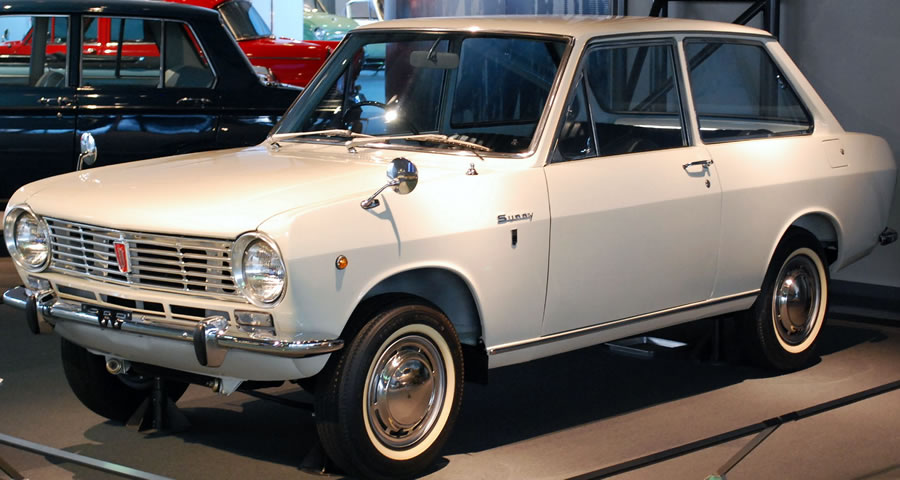
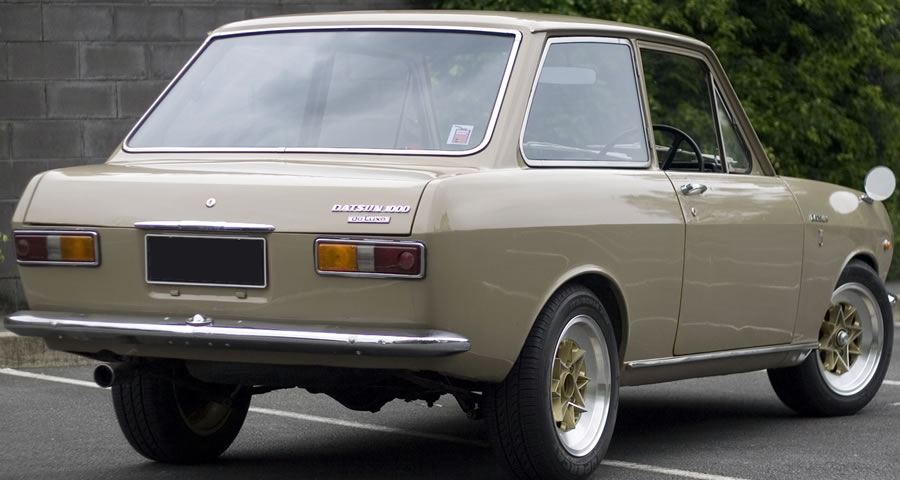
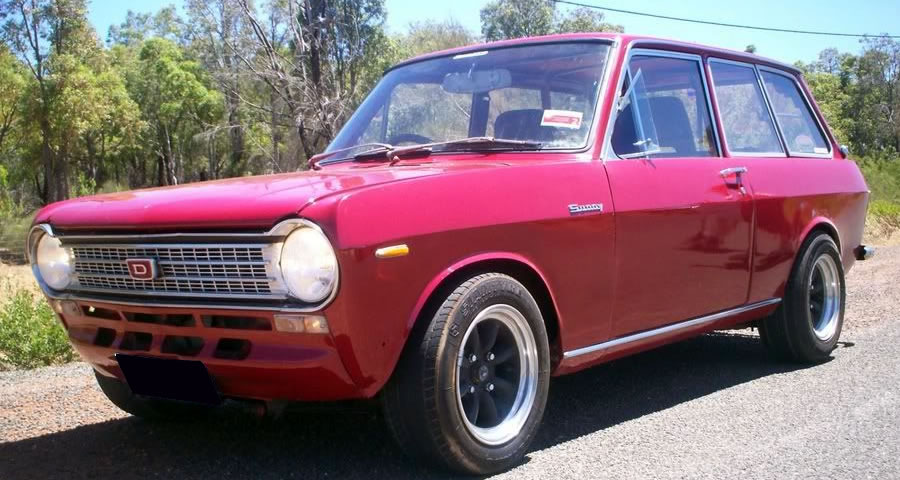
The first car was launched in September 1966. The export name was "Datsun 1000". "Sunny" was an entirely new car, built on a special platform called the "B" that took the best of the compact cars Nissan had been producing before World War II and combined the engineering efforts with a recently acquired aircraft company "Aichi Manufacturing". At first, two body styles were launched - a 2-door sedan (B10) and a 2-door station wagon (VB10). The length of the car was 3820 mm, the width was 1445 mm, the height was 1295 mm and the unladen weight was 625-705 kg. In October 1967, a 4-door sedan appeared, and in October 1968, a 2-door coupe (KB10) appeared.
There were two trim levels - "Standard" and "Deluxe". The brakes were drum, the suspension was on leaf springs. The engine was a gasoline four-cylinder in-line with a volume of 1.0 liter (988 cm³, A10, OHV, I4, 62 hp). In Japan, engines under 1 liter were subject to a small road tax, so the car was not expensive to own. The gearbox was a four-speed manual with synchronizers on all gears. The engines on cars with a coupe body had a capacity of 66 hp.
A commercial version was released in February 1967 "Datsun Sunny truck" with a pickup body coded "B20", which was based on the "VB10" chassis.
In July 1969, 9 months before the release of the second generation, the exterior was slightly updated. In December 1969, production ceased.
Second generation (B110, 1970−1973)
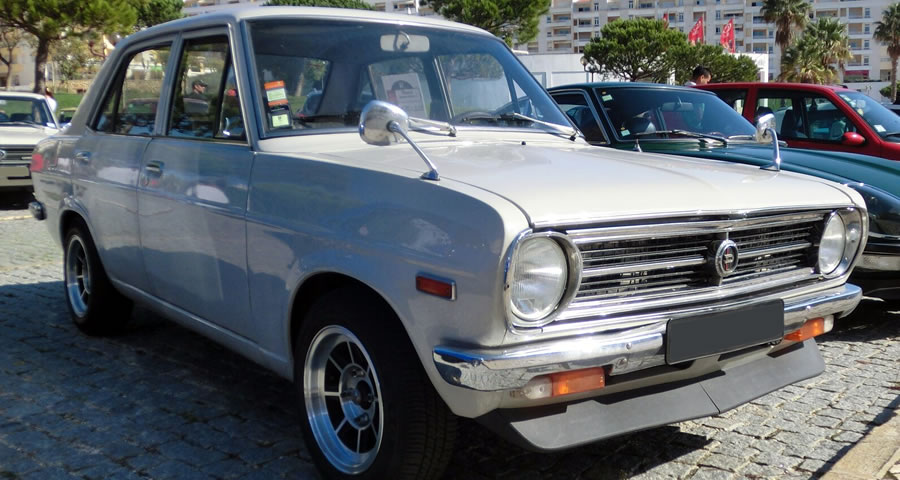
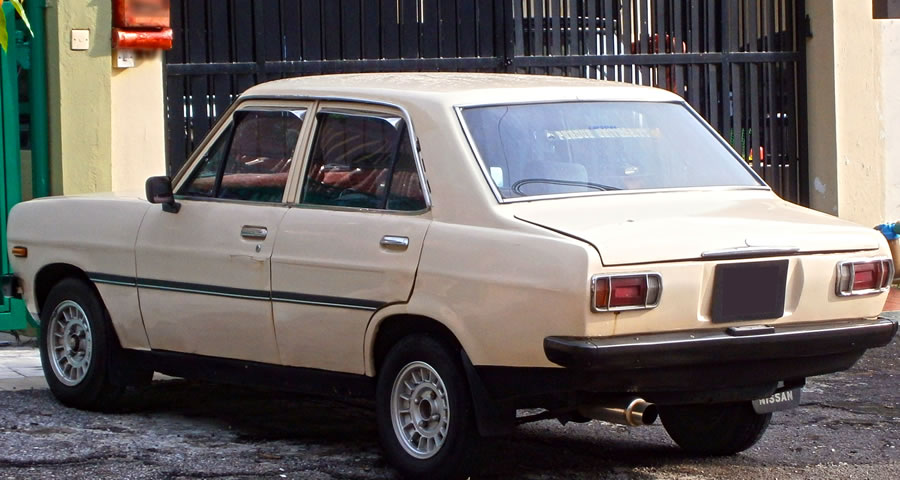
The second generation was the "Sunny" with the code "B110" launched in 1970 with an export name "Datsun 1200". In Malaysia the name was "Tan Chong B110", and in Finland "Datsun Finn". The body styles were as follows: 2- or 4-door sedan, 3- or 5-door station wagon, and 2-door coupe. The length of the car was 3830 mm, width 1495 mm, height 1390 mm and the curb weight was 700 kg. The engine was located transversely in front, the drive was on the rear wheels. The front suspension became "MacPherson" with disc brakes. Production took place in Japan.
There are now two 1.2-liter gasoline engine models (1171 cm³, A12, I4, 70 hp) and 1.4 liters (1595 cm³, L16, I4, 96 hp), both four-cylinder in-line. Gearbox 3-, 4- and 5-speed manual, and for the first time an automatic 3-speed gearbox appeared.
In 1972, the model was slightly updated. Notable changes included a new hood and grille. For cars exported to the United States, safety was improved by adding energy-absorbing bumpers, fire-resistant interiors, and other safety features.
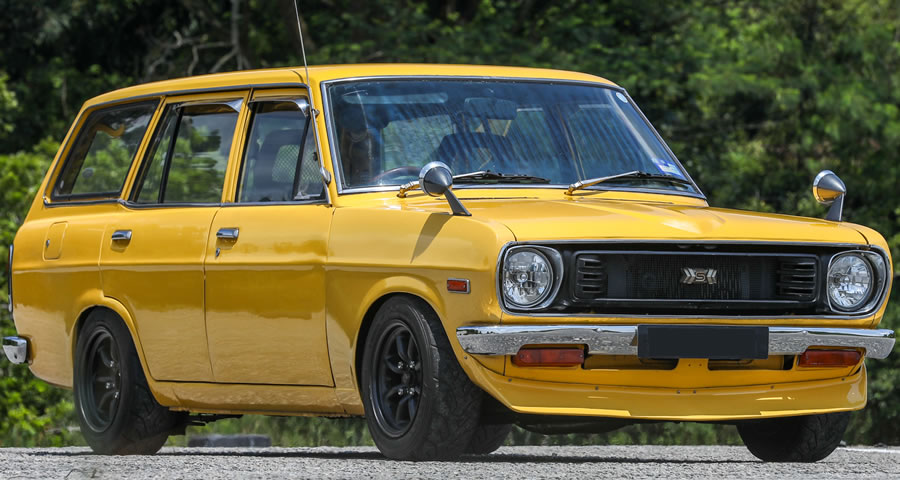
In February 1971, the commercial truck was launched (2-door pickup truck) with the code "B120" based on the chassis of the sedan "B110". This truck was produced until 1978, when it was replaced by the "B121".
In April 1971, a 2-door sedan called "Sunny Excellent" code "PB110". It was based on the "B110", but with a new hood, fenders and grille, as well as a new 1.4-liter "L" series engine. In Mexico, it was sold as "Sentra 1400". On October 18, 1972, it was presented at the Tokyo Motor Show "Sunny Excellent" with a Wankel rotary engine.
In 1971, a pickup truck was launched in South Africa "Nissan 1400 B140 Bakkie" with a 1.4-liter "A14" engine and a five-speed manual transmission. This car was produced until 2008 (37 years) with numerous changes under the name "Nissan LDV 1400" by the company "Nissan South Africa".
Third generation (B210, 1973–1977)
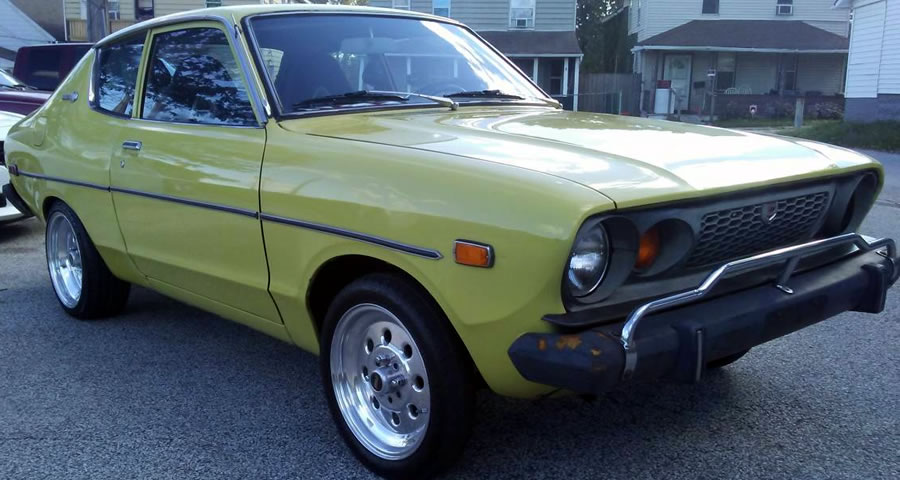
On May 1, 1973, the third generation was introduced in Japan with the code "B210". The export name was "Datsun 120Y" and in North America "Datsun B-210". The body styles were as follows: 2-door fastback (coupe), 2- and 4-door sedan, 5-door station wagon and 3- and 5-door van. The length of the sedan was 3950 mm, the length of the station wagon was 3985 mm. The width was 1545 mm, the height was 1360 mm and the curb weight was 907 kg. The car became very popular against the backdrop of the oil crisis of 1973, as it consumed little fuel, which had become much more expensive. The car was assembled in Japan, New Zealand and South Africa.
The range of petrol engines expanded significantly and included 6 models with a volume of 1.2 liters (1171 cm³, A12, OHV I4, 67 hp), 1.3 liters (1288 cm³, A13, OHV I4, 75 hp), 1.4 liters (1397 cm³, A14, OHV I4, 85 hp), 1.4 liters (1428 cm³, L14, I4, 88 hp), 1.6 liters (1595 cm³, L16, I4, 92 hp) and 1.6 liters (1595 cm³, L16T, I4, 109 hp). Gearbox 3-speed automatic, as well as mechanical 3-, 4- and 5-speed.
In 1975, models produced for Japan were equipped with emission control technology called "Nissan NAPS".
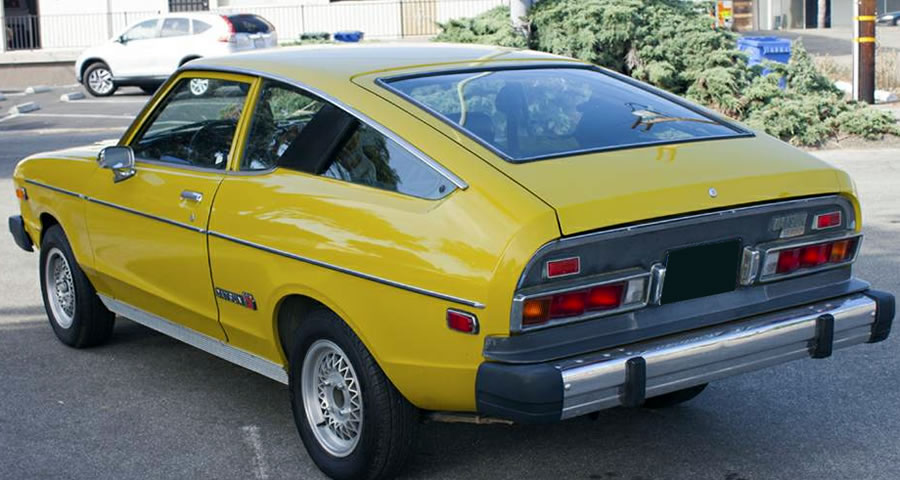
In February 1976, the model was updated and assigned the code "B211". The changes affected the radiator grille, new rear-view mirrors installed on the front wings, and wheel caps. The most significant changes took place under the hood - new "L" series engines with a volume of up to 1.6 liters began to be installed. Chassis code "Sunny Excellent" changed from PB210 to GB211 and is now considered a trim level of the regular "B211" rather than a separate coupe model.
Fourth generation (B310, 1977–1981)
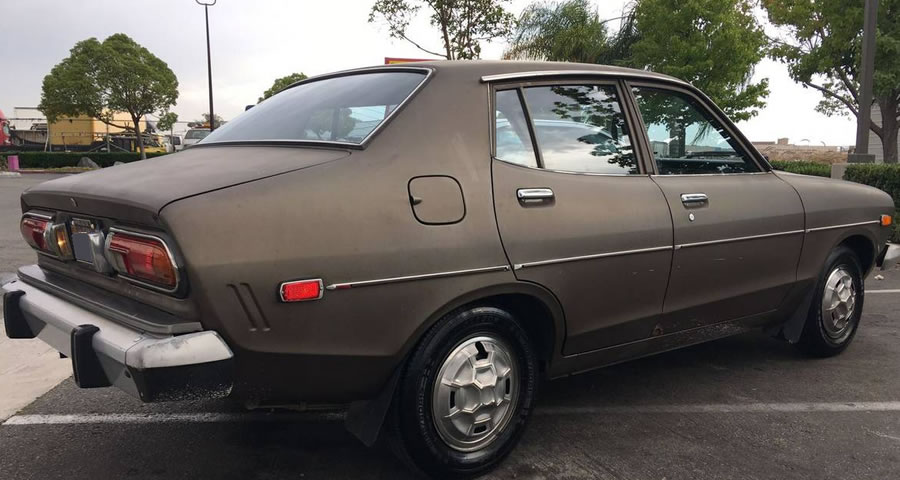
In October 1977, the fourth generation was introduced in Japan with the code "B310", and sales began in November. The following body styles were offered - 2- and 4-door saloon, 3-door coupe, 3- and 5-door station wagon, and 3- and 5-door van. The overall length of the car was 4190 mm, width 1580 mm, height 1365 mm and the curb weight was 907 kg. The engine is located transversely in the front, the drive is on the rear wheels and this is the last generation with rear-wheel drive. In addition to the main name "Datsun Sunny", in different countries there were the following names "Datsun 210", "Datsun 120Y/130Y/140Y/150Y", "Yue Loong 302/303". Production took place only in Japan.
The range of petrol four-cylinder in-line engines is represented by the following models: 1.2 liters (1171 cm³, A12, I4, 68 hp), 1.2 liters (1237 cm³, A12A, I4, 70 hp), 1.3 liters (1270 cm³, A13, I4, 75 hp), 1.4 liters (1397 cm³, A14/A14E, I4, 80/92 hp) and 1.5 liters (1487 cm³, A15, I4, 70 hp). The gearbox was mechanical, four- or five-speed, and also automatic, three-speed.
The leaf spring rear suspension was replaced by a more advanced coil spring setup, but the overall chassis was similar to the previous generation. There was slightly more room for rear passengers and luggage.
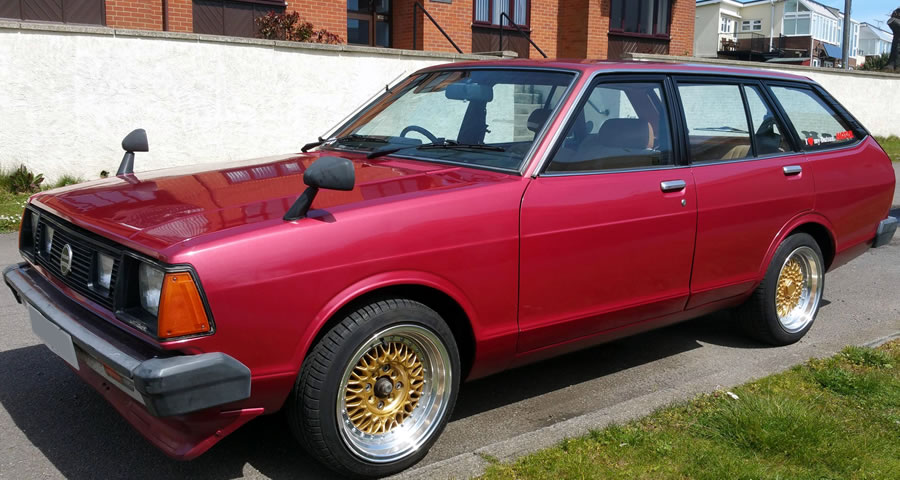
In 1980, the model was slightly updated. The front end became smoother, the headlights were also changed to square ones, the radiator grille and the dashboard were changed. In Taiwan, the company "Yulon Motor Co., Ltd." continued to produce the "B310" series into the 1990s as a cheaper alternative to the next generations of "Sunny". At first called "YLN 302", after the update in 1981 it was called "YLN 303", and after the next update in 1989 it became "YLN 303S". There was also a station wagon "YLN 303W".
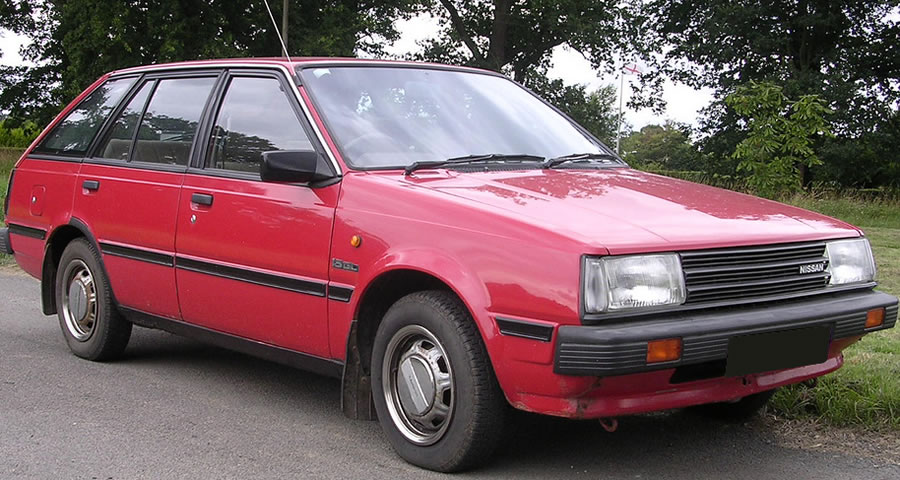
Fifth generation (B11, 1981–1985)
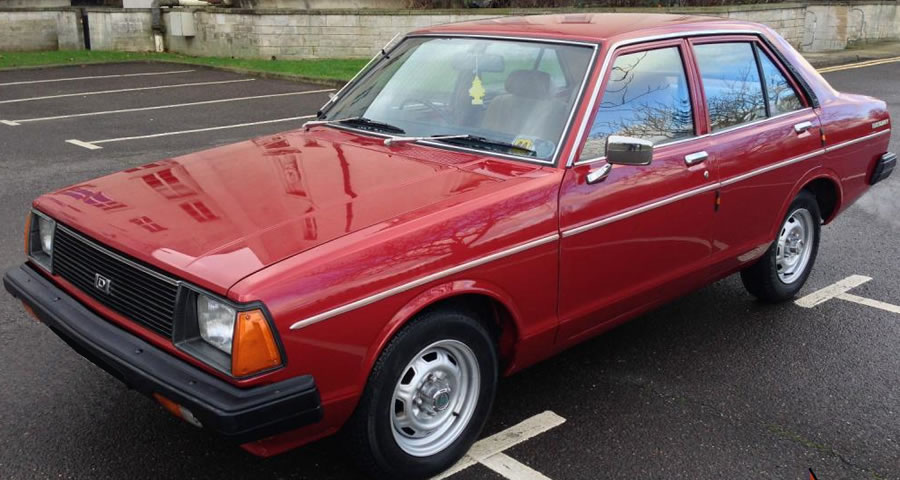
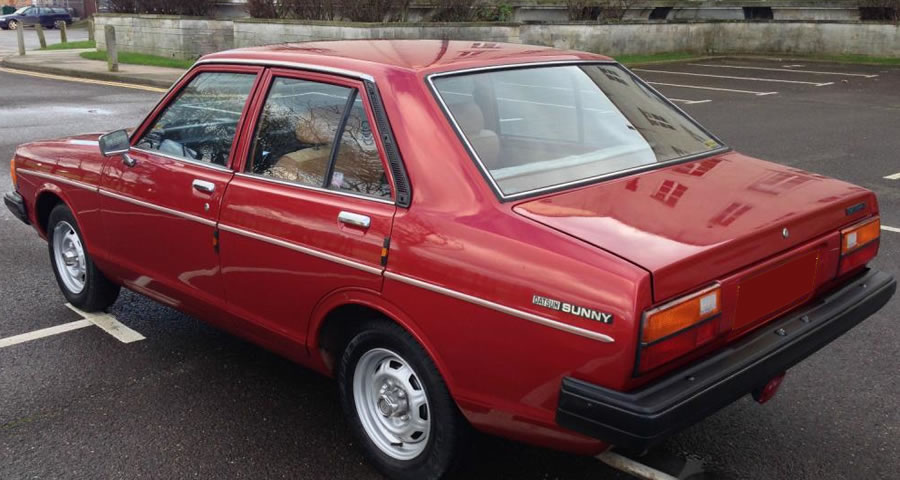
In the fall of 1981, the fifth generation of the Sunny B11 was presented at the Tokyo Motor Show. The main difference from the previous model was the transition to front-wheel drive. Also during the life of this generation, the Datsun brand was abolished, leaving the name "Nissan Sunny". The car was exported to the United States under the name "Nissan Sentra", also in other markets there were names "Nissan Tsuru" and "Yue Loong 311". The body styles were as follows: 3-door hatchback, 2- and 4-door sedan, 4- and 5-door station wagon/van, and 3-door coupe. The length of the car was 4050-4255 mm, width 1620 mm, height 1360-1380 mm and the unladen weight was 745-910 kg. The car was produced only in Japan.
The range of petrol engines consists of the following models: 1.0 litre (988 cm³, E10, I4, 50 l. With.), 1.3 liters (1270 cm³, E13, I4, 60 hp), 1.5 liters (1488 cm³, E15, I4, 75 hp) and 1.5 liters (1488 cm³, E15ET, turbo, I4, hp), all four-cylinder in-line engines. For the first time, a 1.7-liter diesel engine was installed (1680 cm³, CD17, I4) with a capacity of 60 hp. The same engines were installed on the B11 series cars as on "Nissan Pulsar N12" which was launched around the same time. The gearbox was a 3-speed automatic, as well as a 4- or 5-speed manual.
In 1982, a compact minivan (MPV) began to be assembled in Japan on the Sunny platform "Nissan Prairie".
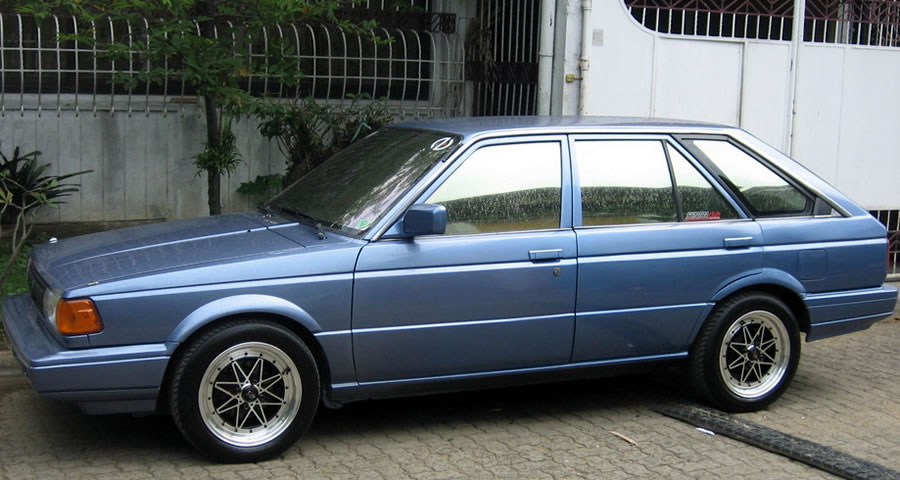
Sixth generation (B12, 1985–1990)
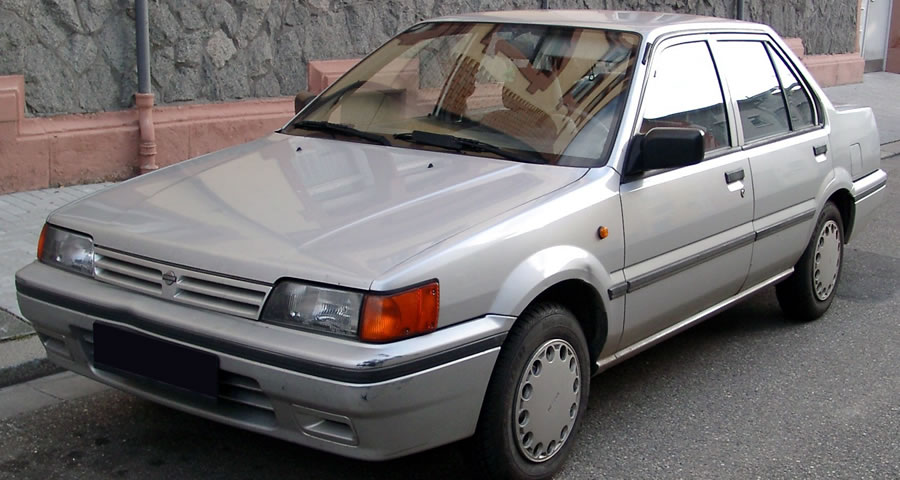
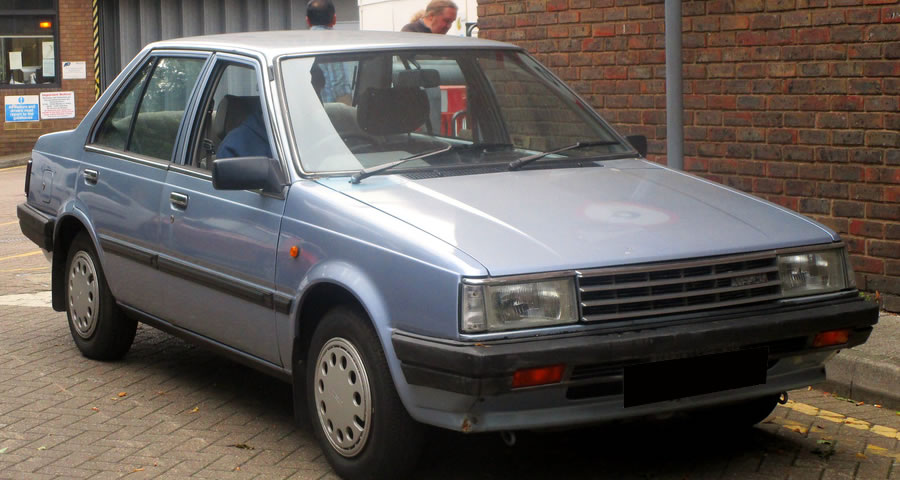
The sixth generation with the code "B12" was presented at the Tokyo Motor Show in September 1985. Despite the automobile fashion of those years, the design of the "Sunny" continued to use square shapes, which negatively affected sales. The body was produced in the following styles - 4-door sedan (length 4285 mm, width 1640 mm, height 1379 mm), 5-door station wagon (length 4374 mm, width 1640 mm, height 1379 mm), as well as 3-door hatchback (length 4125 mm, width 1640 mm, height 1405 mm) and coupe (length 4229 mm, width 1665 mm, height 1326 mm). The engine is located transversely in the front, the drive is on the front wheels, and all-wheel drive also appeared for the first time. In some countries it was called "Nissan Sentra", "Nissan Tsuru II" and "Nissan Hikari". The car was assembled in Japan, Mexico, the USA and the Philippines.
The petrol engine range consists of the following models: 1.3 litre (1270 cm³, E13S, I4, 66 hp), 1.5 liters (1487 cm³, E15S/E, I4, 84 l. With.), 1.5 liters (1487 cm³, E15ET, I4, turbo, 113 l. With.), 1.5 liters (1497 cm³, GA15S/E, I4, 85/97 l. With.), 1.6 liters (1597 cm³, E16S/i/E, I4, 71 hp), 1.6 liters (1598 cm³, CA16DE, DOHC, I4, 122 hp) and 1.8 liters (1809 cm³, CA18DE, DOHC, I4, 131 hp). A single 1.7-liter diesel engine was installed (1680 cm³, CD17, I4) with a capacity of 54 hp. The gearbox is mechanical 4- or 5-speed, as well as automatic 3-speed.
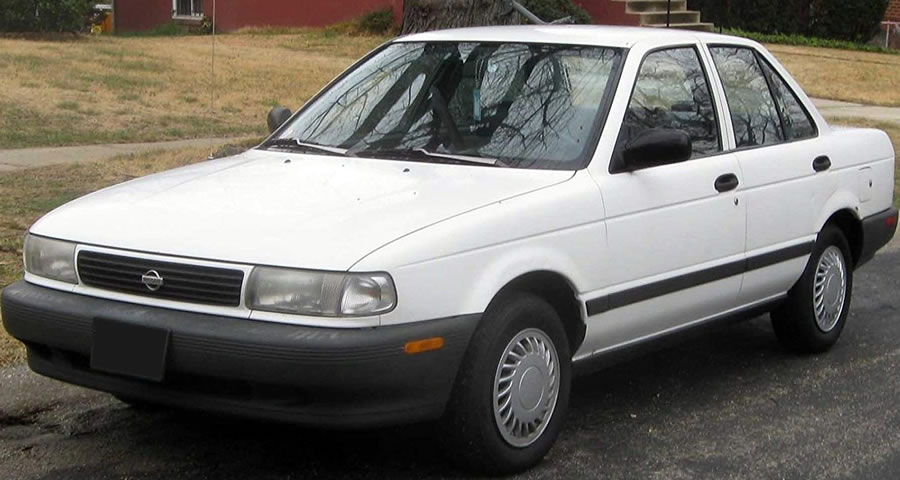
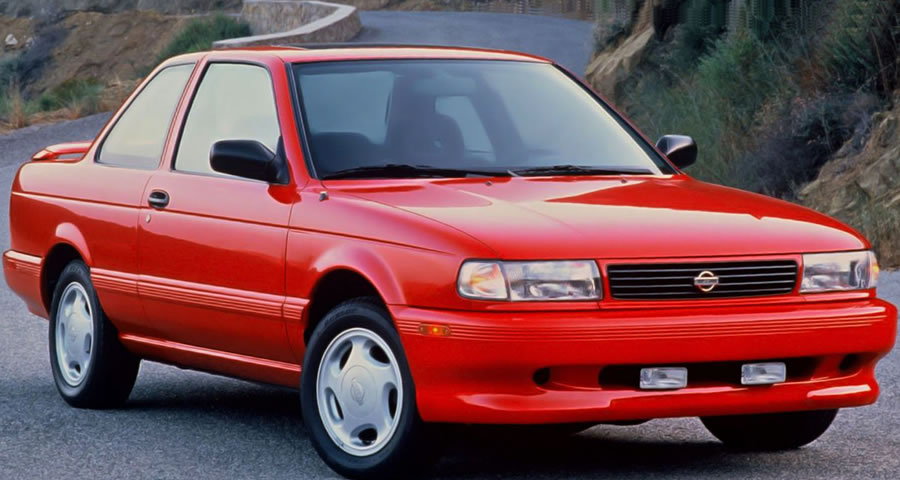
Seventh generation (B13, 1990–1993)
The design of the seventh generation retained the general direction of the previous generation, but became more rounded in line with automotive fashion. In some countries, the car was called "Nissan Sentra", "Nissan Tsuru" and "Nissan Tsubame". The body was in the form of a 2- or 4-door sedan, 4326 mm long, 1669 mm wide, 1346 mm high and with a curb weight of 1038 kg. The engine was located transversely in front, the drive was on the front wheels. Assembly facilities were located in Japan, the USA, Mexico and the Philippines.
There were only three models of 1.4-liter petrol engines (1392 cm³, GA14DS/GA14DE, I4, 75/86 hp), 1.6 liters (1597 cm³, GA16DS/GA16DE, I4, 89/110 hp) and 2.0 liters (1998 cm³, SR20DE, I4, 16V, 145 hp). There was one diesel engine with a volume of 2.0 liters (1974 cm³, CD20, I4, 76 hp). The gearbox was installed as a 4- or 5-speed manual, as well as a 3- or 4-speed automatic.
In Mexico, this generation was called "Tsuru", was produced from 1992 to 2017 and was the best-selling car in its class. Due to its low maintenance costs and high reliability, the car was often used by taxi drivers.
Eighth generation (B14, 1993–1998)
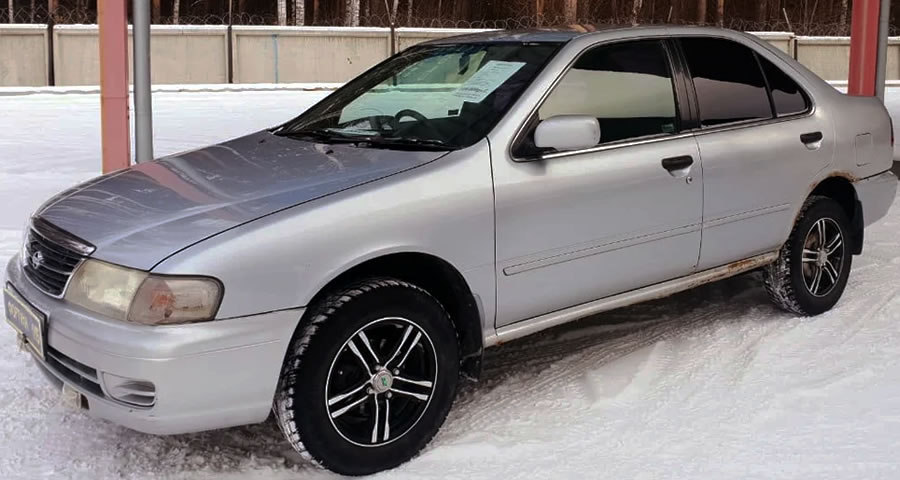
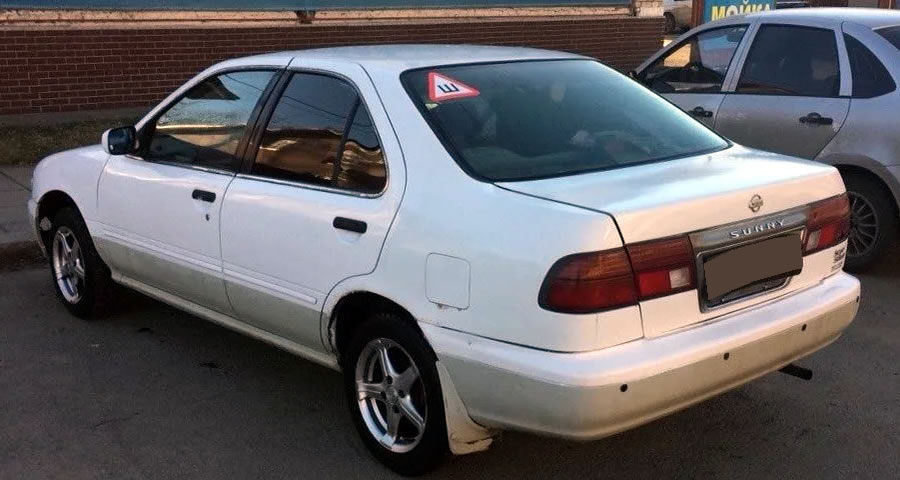
In December 1993, the eighth generation of "Sunny" with the code "B14" appeared. The body was only a 4-door sedan with a length of 4321-4343 mm, a width of 1692 mm, a height of 1384 mm. The car with a station wagon body was produced by the company "Mazda" under the OEM agreement as "Familia Van". There was also a luxury version of the car called "Presea". The engine was located transversely in the front, front-wheel drive, and all-wheel drive, which in addition to sales in the Japanese market began to be exported to other countries. The car was assembled in Japan, the USA, Mexico, Malaysia, the Philippines and Pakistan.
The car was equipped with a 1.3-liter, four-cylinder in-line petrol engine (1295, GA13DE, I4, 84 hp), 1.5 liters (1497 cm³, GA15DE, I4, 100 hp), 1.6 liters (1597 cm³, GA16DE/GA16DNE, I4, 110/105 hp), 1.8 liters (1838 cm³, I4, 140 hp) and 2.0 liters (1998 cm³, SR20DE, I4, 16V, 145 hp)There was also one 2.0-liter diesel engine (1974 cm³, CD20, I4) with a capacity of 75 hp. The transmission was a 5-speed manual and 4-speed automatic.
All models were equipped with a multi-link rear suspension.
Ninth generation (B15, 1998–2006)
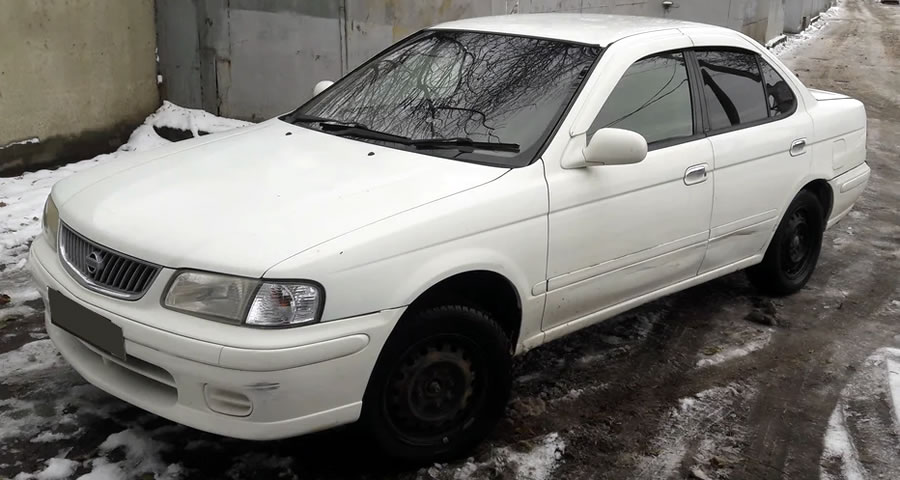
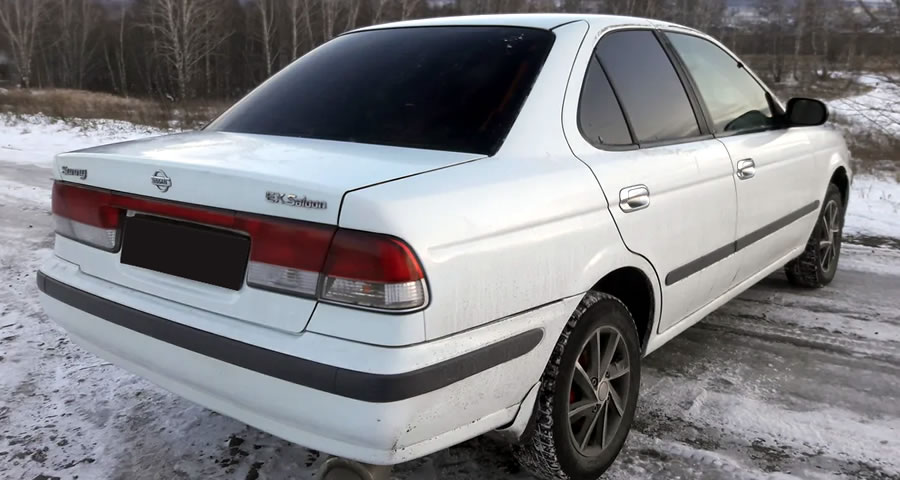
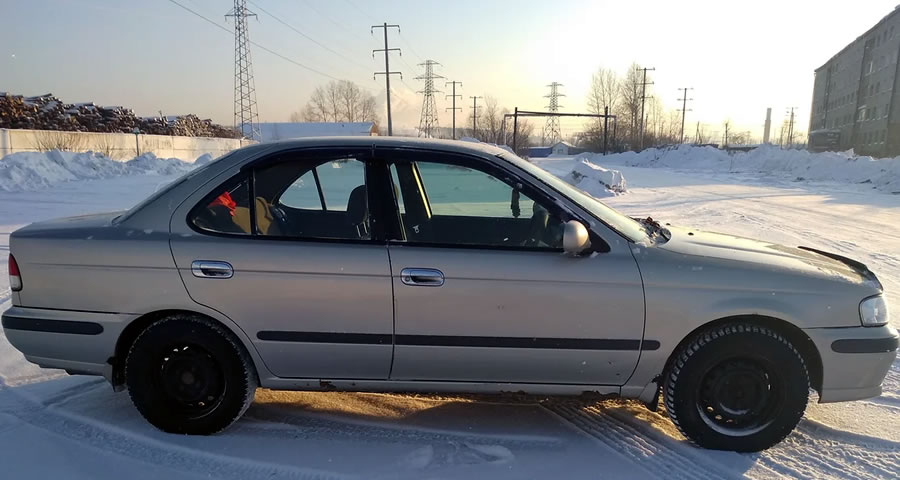
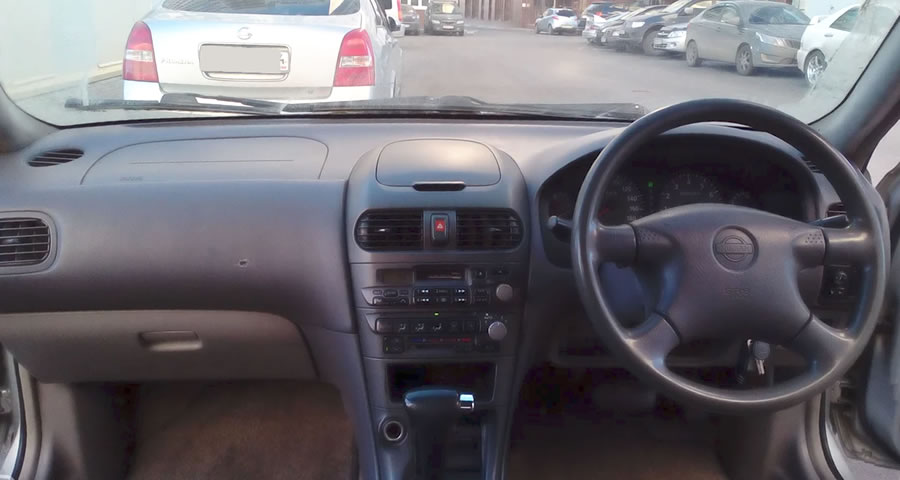
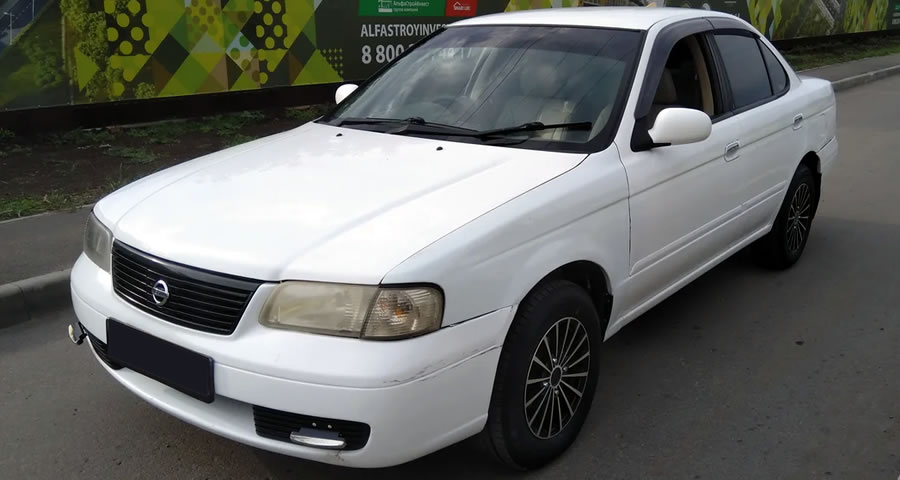
The last generation with the code "B15" was produced from October 1998 to the end of 2004. In 2005, this car was replaced in Japan by the "Tiida C11" and "Bluebird Sylphy G11". In the US, a replacement came "Sentra B16". Based on the Nissan MS platform. The engine was located in the front, front-wheel drive. The body of the 4-door sedan was 4508 mm long, 1709 mm wide, 1410 mm high and had a curb weight of 1140 kg. Assembly shops were located in Japan, Mexico and South Korea.
The petrol engines were four-cylinder in-line units with a capacity of 1.3 litres (1295 cm³, QG13DE, I4, 87 hp), 1.5 liters (1497 cm³, QG15DE, I4, 105 hp), 1.6 liters (1596 cm³, QG16DE, I4, 118 hp) and 1.8 liters (1769 cm³, QG18DE, I4, 130 hp). The diesel engine is also a four-cylinder 2.2-liter (2184 cm³) with a power of 79 hp. The transmission is 5- or 6-speed manual, as well as 4-speed automatic.