


Power supply system (carburetor) of the car Nissan Sunny 7 (B13)
The fuel system consists of a mechanically driven pump, fuel filter, fuel tank, carburetor and air filter. The air filter has a damper for the air flow thermostat. When working with system units, observe fire safety rules.

Technical data of the power supply system
Fuel pump type Mechanical with camshaft drive Carburetor (general information) Type Nikki 21L with automatic choke Carburetor data for 1.4 and 1.6 L engines without...
Fuel pump type Mechanical with camshaft drive Carburetor (general information) Type Nikki 21L with automatic choke Carburetor data for 1.4 and 1.6 L engines without...

Air filter — removal and installation
Removal 1. Release the latches, unscrew the bolt and nut of the filter nozzle. Remove the nozzle from the air duct and disconnect the hose. 2. Disconnect the hot air...
Removal 1. Release the latches, unscrew the bolt and nut of the filter nozzle. Remove the nozzle from the air duct and disconnect the hose. 2. Disconnect the hot air...

Air flow thermostat
The thermostat is designed to supply heated air to the engine. The cold air channel on a cold engine is closed by a valve connected to a vacuum diaphragm. As the engine...
The thermostat is designed to supply heated air to the engine. The cold air channel on a cold engine is closed by a valve connected to a vacuum diaphragm. As the engine...

Fuel pump — removal, inspection and installation
Location of the fuel pump The fuel pump is located on the left side of the cylinder head. Examination 1. To check the pump's performance without removing it, disconnect...
Location of the fuel pump The fuel pump is located on the left side of the cylinder head. Examination 1. To check the pump's performance without removing it, disconnect...
Fuel level sensor — removal and installation
Removal 1. Disconnect the battery from ground. 2. Remove the rear seat back (see subsection 13.23 ). 3. Remove the inspection hatch. 4. Disconnect the connector from the...
Removal 1. Disconnect the battery from ground. 2. Remove the rear seat back (see subsection 13.23 ). 3. Remove the inspection hatch. 4. Disconnect the connector from the...
Fuel tank — removal and installation
Removal 1. Before removing the fuel tank, drain as much gasoline as possible. It is advisable to empty the tank by driving, as there is no drain plug. 2. Disconnect the...
Removal 1. Before removing the fuel tank, drain as much gasoline as possible. It is advisable to empty the tank by driving, as there is no drain plug. 2. Disconnect the...

Throttle Cable — Removal and Installation
Removal 1. Unhook the cable from the cam on the carburetor. 2. Loosen the nuts of the cable sheath to the bracket and remove the cable sheath from the bracket (the...
Removal 1. Unhook the cable from the cam on the carburetor. 2. Loosen the nuts of the cable sheath to the bracket and remove the cable sheath from the bracket (the...
Throttle Pedal — Removal and Installation
Removal 1. Remove the lower trim panel in the driver's footwell. 2. Disconnect the throttle cable from the pedal. 3. Loosen the bracket mounting bolts and remove the...
Removal 1. Remove the lower trim panel in the driver's footwell. 2. Disconnect the throttle cable from the pedal. 3. Loosen the bracket mounting bolts and remove the...
Fuel for carburetor engines — general information
Only unleaded gasoline can be used as fuel for engines with a catalytic converter. Engines without a catalytic converter can use either leaded or unleaded gasoline, and...
Only unleaded gasoline can be used as fuel for engines with a catalytic converter. Engines without a catalytic converter can use either leaded or unleaded gasoline, and...
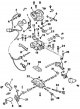
Design and description of the carburetor
Carburetor parts on cars without a neutralizer 1. Secondary chamber emulsion tube; 2. Idle speed correction solenoid valve; 3. Thermoelectric actuator of the air damper;...
Carburetor parts on cars without a neutralizer 1. Secondary chamber emulsion tube; 2. Idle speed correction solenoid valve; 3. Thermoelectric actuator of the air damper;...

Removal and installation the carburetor
Removal 1. Disconnect the battery from ground and partially drain the coolant. 2. Remove the air filter. 3. Disconnect the throttle cable. 4. Disconnect the carburetor...
Removal 1. Disconnect the battery from ground and partially drain the coolant. 2. Remove the air filter. 3. Disconnect the throttle cable. 4. Disconnect the carburetor...

Diagnostics, disassembly and adjustment of the carburetor
Before making a conclusion about the carburetor malfunction, check the ignition timing, spark plug and valve clearances, and cylinder compression. If these checks do not...
Before making a conclusion about the carburetor malfunction, check the ignition timing, spark plug and valve clearances, and cylinder compression. If these checks do not...

Carburetor Sensors and Valves — Removal and Installation
Head pressure sensor 1. The sensor is mounted on the left suspension cap. 2. Disconnect the battery from ground. 3. Loosen the screws, lift the sensor and disconnect the...
Head pressure sensor 1. The sensor is mounted on the left suspension cap. 2. Disconnect the battery from ground. 3. Loosen the screws, lift the sensor and disconnect the...
Intake manifold — removal and installation
Removal 1. Remove the carburetor. 2. Drain some of the coolant. 3. Disconnect all hoses from the manifold, having marked them first. 4. On vehicles with a neutralizer,...
Removal 1. Remove the carburetor. 2. Drain some of the coolant. 3. Disconnect all hoses from the manifold, having marked them first. 4. On vehicles with a neutralizer,...

Exhaust manifold — removal and installation
Exhaust manifold on cars with a catalytic converter 1. Hot air extraction hose; 2. Recirculation tube; 3. Exhaust gas sensor connector; 4. Exhaust gas sampling pipe...
Exhaust manifold on cars with a catalytic converter 1. Hot air extraction hose; 2. Recirculation tube; 3. Exhaust gas sensor connector; 4. Exhaust gas sampling pipe...

Exhaust system — removal and installation
On cars without a neutralizer, the exhaust system consists of 3 sections - a receiving pipe, an intermediate section with a resonator and an end section with a muffler....
On cars without a neutralizer, the exhaust system consists of 3 sections - a receiving pipe, an intermediate section with a resonator and an end section with a muffler....
This section is available on: russian, bulgarian, belarusian, ukrainian, serbian, croatian, romanian, polish, slovak, hungarian
Link in different formats to this section
TEXTHTMLBB Code
- General information
- User manual
- Faults en route
- Maintenance
- Power unit
- Petrol engines (1.4 and 1.6)
- Engine overhaul (1.4 and 1.6)
- Petrol engines (2.0)
- Engine overhaul (2.0)
- Diesel engine
- Cooling system
- Heating and ventilation
- Power system (carburetor)
- Power system (injector)
- Fuel injection system
- Single point injection
- Multi-point injection
- Decreased toxicity
- Engine electrical equipment
- Transmission
- Clutch
- Mechanical gearbox
- Automatic gearbox
- Drive shafts
- Chassis
- Brake system
- Car suspension
- Steering
- Body
- Body repair
- Body elements
- Doors, locks and windows
- Electrical equipment
- Equipment and devices
- Electrical circuits
Cookies are used to improve the site's performance. 💻 Continue by agreeing to the terms.