


Table of contents: Engine compartment ↓ Salon ↓
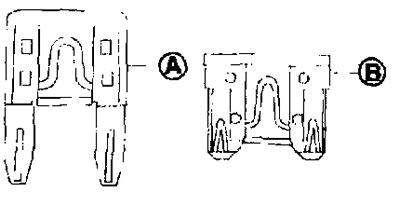
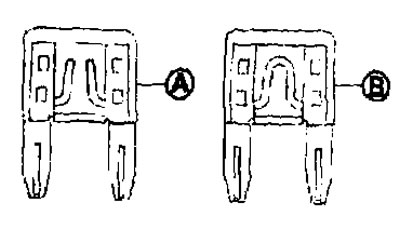
- Some vehicles are equipped with fuse boxes in the engine compartment and the passenger compartment that use the same type (A) fuses. Other vehicles are equipped with type (A) fuses in the engine compartment box and type (B) fuses in the passenger compartment box.
- Type (A) fuses can be used in either the engine compartment fuse box or the passenger compartment fuse box
- If a type (A) fuse is used to replace the type (B) fuse, the type (A) fuse will not be flush with the fuse socket. This does not affect the operation of the fuse. Check that the fuse is firmly installed in the appropriate socket.
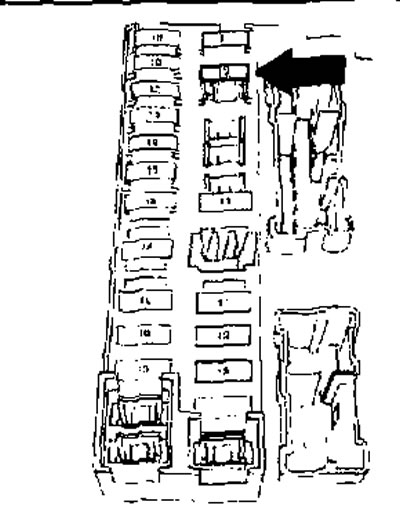
Engine compartment
If any electrical component fails, check the integrity of the fuses.
1. Check that the ignition key and central light switch are in the OFF position.
2. Open the hood.
3. Remove the air intake. See above.
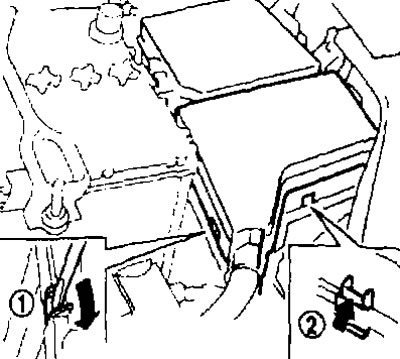
4. Remove the fuse box cover [use a suitable tool (1) for this] and press the lock (2).
5. Locate the faulty fuse.
6. Remove the blown fuse using special tweezers. The tweezers are stored in the fuse box located in the passenger compartment.
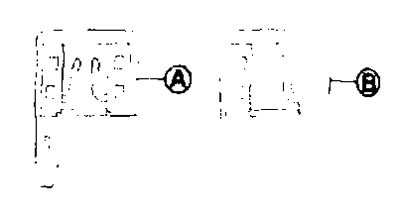
7. The blown fuse (A) should be replaced with a new fuse (B).
8. Install the fuse box cover and install the air intake.
9. Close the hood.
Note: If the new fuse also blows, contact a service station to check and repair the vehicle's electrical equipment.
Fusible links
If any electrical equipment does not work and the fuses are normal, check the fuse links. If any link has melted, replace it with a genuine NISSAN part.
Salon
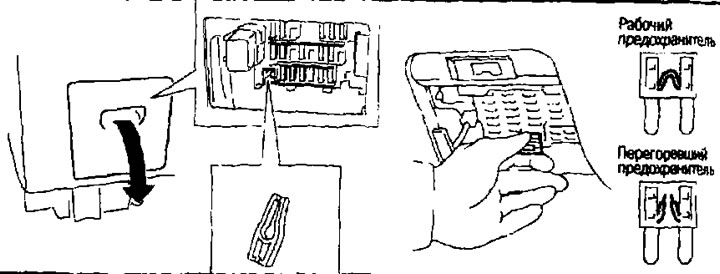
If any electrical component fails, check the integrity of the fuses.
1. Check that the ignition key and central light switch are in the OFF position.
2. Remove the fuse box cover.
3. Remove the blown fuse using special tweezers.
4. The blown fuse (A) should be replaced with a new fuse (B).
5. Install the fuse box cover.
Note: If the new fuse also burns out, contact a service station to check and repair the vehicle's electrical equipment.