

Examination
1. Visually inspect the EVAP lines to ensure they are properly connected and free of cracks, damage, looseness, chafing, or wear.
2. Check the EVAP carbon canister as follows.
a. Plug channel (B). Blow air through channel (A).
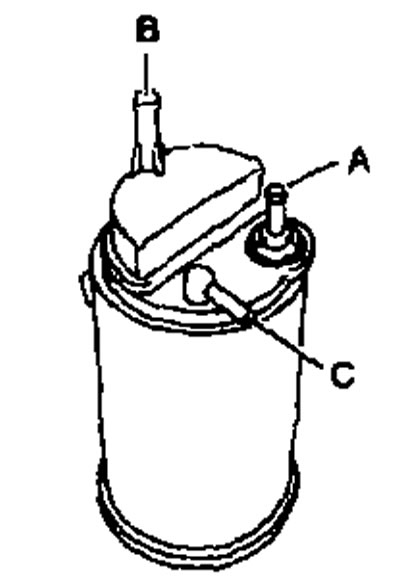
- Make sure that air flows freely through channel (C).
b. Plug channel (A). Blow air through channel (B).
- Make sure that air flows freely through channel (C).
3. Visually inspect the fuel tank shutoff valve for cracks, damage, looseness, chafing or wear.
4. Check the fuel tank shut-off valve as follows:
a. Blow air through the coupler on the fuel tank side. There should be significant resistance and some air flow should be directed toward the EVAP filter.
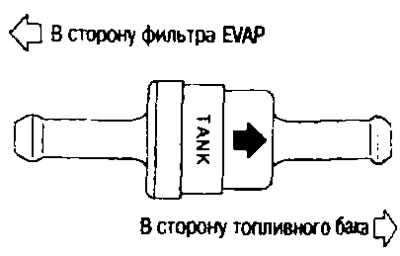
b. Blow air through the coupling on the EVAP filter side. Air should flow freely toward the fuel tank.
c. If there is a suspicion that in points 1 and 2 above the fuel supply shut-off valve is not working properly, replace it.
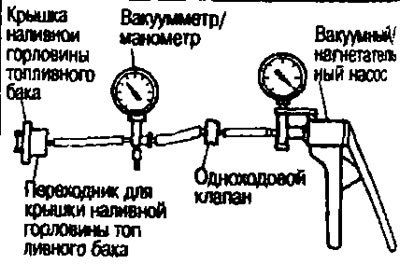
5. Check the fuel tank vacuum valve (built into the fuel filler cap) and make sure there is no blockage, sticking, etc.
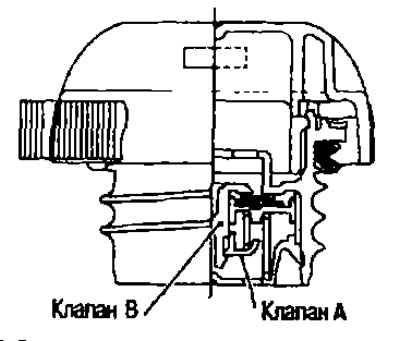
a. Wipe the valve body.
b. Check the valve opening pressure and vacuum.
The article is located on the website NissanBook.ru
Pressure: 15.3-20.0 kPa (0.156-0.204 kg/cm²)
Vacuum: -6.0-3.4 kPa (from -0.061 to 0.035 kg/cm³)
c. If the pressure and vacuum are different from the standard, replace the fuel tank filler cap assembly.