


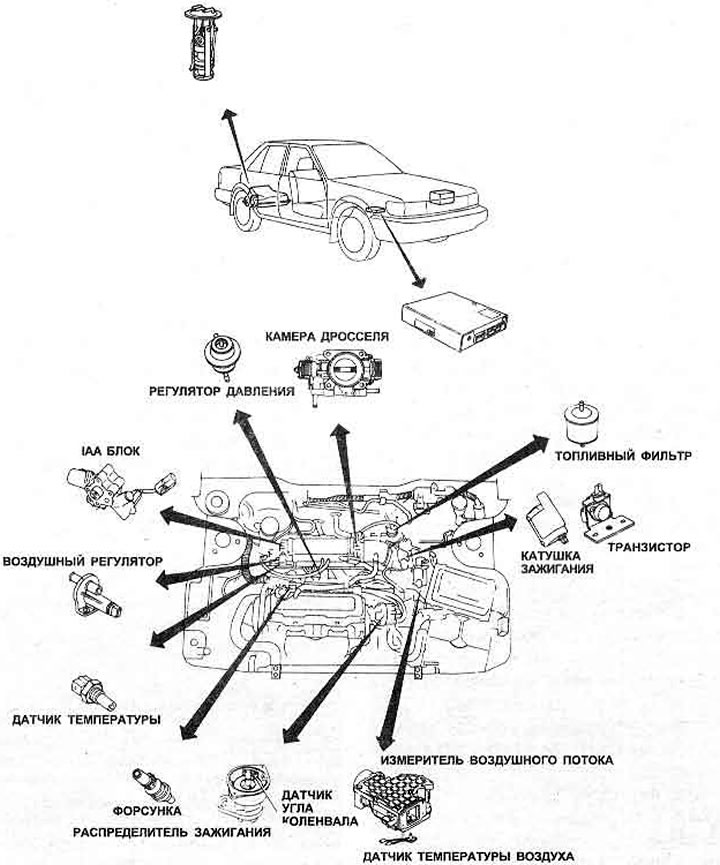
Figure 3.53. Location of engine control system components with fuel injection 2.0 liter
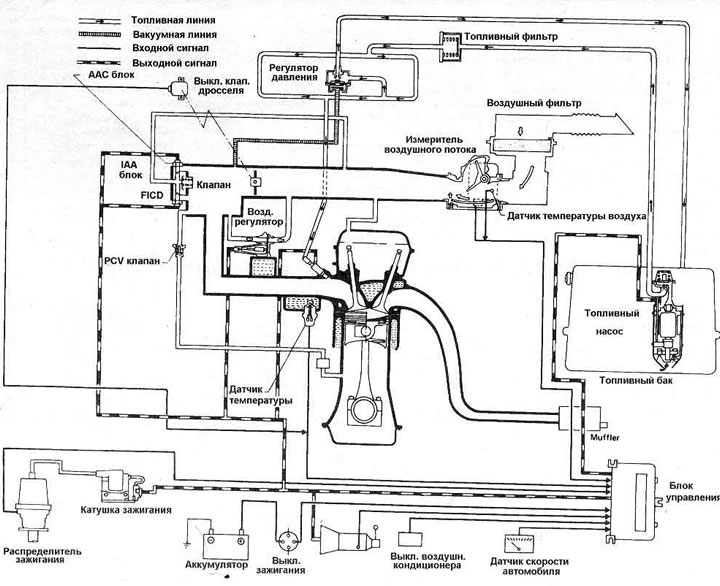
Figure 3.54. Engine management system - 2.0 liter fuel injection models
The fuel system starts with the fuel tank, which houses the electric fuel pump. It is protected by a mesh filter on the inlet side and a full-flow filter on the outlet side. When the ignition is turned on and the starter is running, the pump pumps fuel into the fuel line. Fuel pressure is controlled by a vacuum regulator. The injectors are controlled by coils and are opened and closed by electrical impulses from the ECCS unit; the right moment of opening is determined by the information that the unit receives from the ignition distributor angle sensor. The injector winding diverts the needle valve and allows a certain amount of fuel to pass from the fuel line through a small filter into each injector, to the atomizer; all four injectors are turned on simultaneously, twice per engine cycle.
The induction system takes cold air and passes it through the air filter element into the air flow meter. There, the temperature of the incoming air and the required volume are determined. The force of the incoming air deflects the flap of the sensor, which converts this movement into voltage by a potentiometer; the information from these two sensors is fed to the ECCS unit. The flap of the sensor is supported by a spring. To regulate the air/fuel mixture at idle, there is a bypass channel in the air flow meter which is adjusted by the measuring screw. From the air flow meter, the air passes through the throttle chamber to the inlet manifold. The throttle valve switch is mounted outside the throttle chamber and provides the ECCS unit with information about the throttle valve position. It has two pairs of contacts, one for idle and one for wide open throttle. The amount of air at idle is regulated by the I AM unit, mounted on the inlet manifold, and controls the idle speed based on signals from the ECCS unit by adjusting the amount of air that bypasses the throttle valve. Activated by the ECCS unit only when the throttle valve is closed and the vehicle speed is less than 5 km/h, the IAA unit pei-culates the air according to the signals from the control unit, which are determined by the information pre-programmed into the memory. The IAA unit has an idle speed adjusting screw, a vacuum control valve, an LAS valve and (only on Executive models) FICD valve.
The text was copied from the portal: NISSANBOOK.RU
The heart of the electronic system is the ECCS unit, it compares information about the volume and temperature of the incoming air (air flow meter), engine speed (ignition system), throttle valve position (throttle valve switch), and engine temperature (water temperature sensor); it also uses vehicle speed data (speed sensor), is the air conditioning system turned on? (if installed). The control unit sends signals to the air regulator, AAC valve and fuel pump, to the power transistor and to the fuel injectors. The system is fail-safe, uses a variety of programmed injection pulse durations in the event of an air flow meter failure and accepts set water temperature values in the event of a temperature sensor failure.