


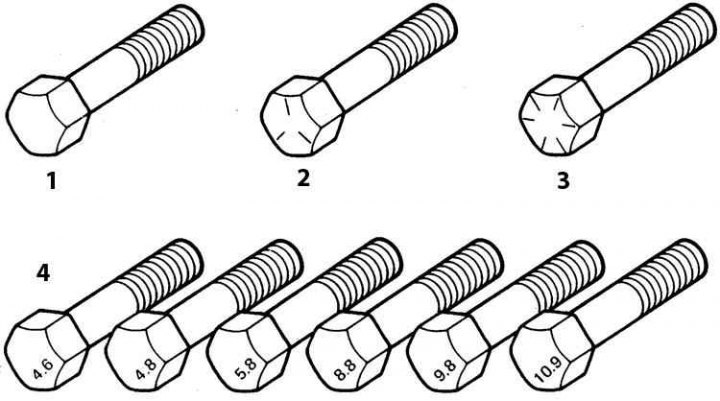
Bolt grade marking (top - standard / SAE / USS, bottom - metric)
Strength class marking for standard hex nuts
 | 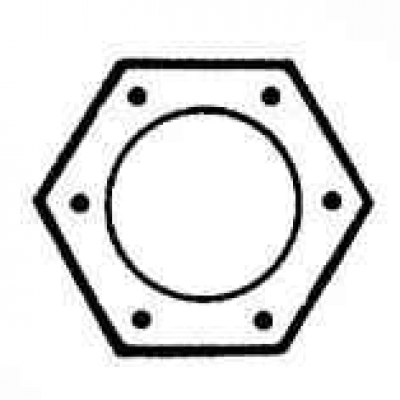 |
Property class marking for metric hex nuts
 |  |
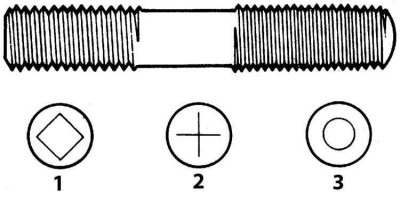
Strength class marking for metric studs
Dimensions/marking of strength class standard (SAE and USS) bolts
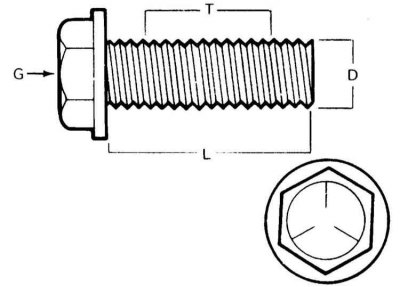
G - Strength class marking
L - Length (in inches)
T - Thread Pitch (number of threads per inch)
D - Nominal diameter (in inches)
Dimensions/marking of the property class of metric bolts
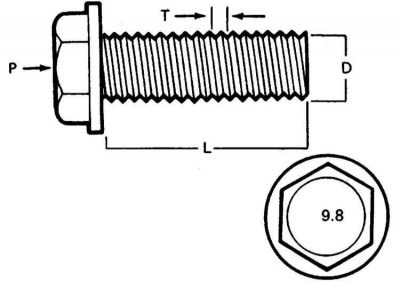
P - Strength class
L - Length (in mm)
T - Thread Pitch (distance between adjacent turns in mm)
D - Nominal diameter (in mm)
Service Technology
There are several methods for performing vehicle maintenance and repair procedures, which the reader will find references in the text of this Guide. Following the proposed instructions will make the work of an amateur mechanic more efficient, will allow you to best organize and perform various technical procedures in the best possible way and will be the key to the full implementation of all necessary work.
Fasteners
Fasteners are nuts, bolts, studs and screws that are used to connect two or more parts together. There are a few things to keep in mind when working with fasteners. In almost any threaded fastener, one or another type of locking and locking devices is used. These can be lock washers, locknuts, lock flags, or a special locking sealant for threaded connections. All fasteners used must be absolutely clean and straight, with undisturbed threads and unrounded hex sockets. It should be made a rule to replace damaged fasteners without fail. Special self-locking nuts with nylon or fiber inserts cannot be reused, as they lose their locking properties when released and must always be replaced during assembly.
"addicted" fasteners, in order to facilitate unscrewing and to avoid damage, must be treated with a special penetrating compound before releasing. Many mechanics prefer to use turpentine for this purpose, which is conveniently applied from a special small canister with a long spout. After wetting the fasteners with a penetrating compound, allow the agent to thoroughly soak the oxidized contact layer for several minutes. Heavily rusted fasteners can be cut down with a chisel, cut down with a hacksaw or removed using a special wrench.
When cutting off the bolt head or breaking off the stud on the assembly, the rest of the threaded part can be drilled out or removed using a special extractor. Most bodyshops can take on this, as well as others (e.g. repairing stripped threads in threaded holes), repair procedures.
Flat washers and lock washers must always be reinstalled in their original positions when reassembling. Damaged washers must be replaced without fail. Between lock washer and soft metal surface (e.g. aluminum), thin sheet metal, or plastic of the workpiece to be fastened, flat washers should always be installed.
Fastener dimensions
For many reasons, automotive manufacturers are increasingly adopting metric fasteners. However, it is important to know the difference between this (more versatile) fasteners and sometimes used fasteners of the SAE standard (or American). Despite the external similarity, the elements of these two types of fasteners are not interchangeable.
All bolts, whether SAE or metric, are classified by diameter, thread pitch, and length. For example, an SAE 1/2-13 x 1 bolt is half an inch in diameter, 13 threads per inch, and 1 inch long. Metric bolt M12-1.75 x 25 has a diameter of 12 mm, thread pitch (distance between adjacent turns) 1.75 mm and 25 mm long. Both bolts are externally almost identical, but not interchangeable.
In addition to the features listed, both metric and SAE bolts can be identified visually by looking at the head. To begin with, the distance between the flats of the slots of the head of a metric bolt is measured in millimeters, while for an American it is in inches (the same is true for nuts). As a consequence, an SAE wrench is not suitable for use with metric fasteners, and vice versa. In addition, the heads of most SAE bolts usually have radial notches that determine the maximum allowable tightening torque of the bolt (degree of strength). The more notches, the higher the allowable force (on vehicles, bolts of strength class 0 to 5 are usually used). The strength class of metric bolts is determined by a numerical code. Code numbers are usually cast on the bolt head as well (on vehicles, bolts of strength classes 8.8, 9.8, and 10.9 are usually used).
Also, according to the marks of the strength class, it is possible to distinguish SAE class nuts from metric ones. To identify the strength class of standard nuts, dot marks are used, stamped on one of the end surfaces, while metric nuts are marked using, again, a digital code. The greater the number of points/number code value, the higher the allowable tightening torque of the nut.
The ends of metric studs are also marked according to their strength class. A digital code is applied to large studs, while smaller ones are marked in the form of geometric shapes.
It should be noted that a significant part of the fasteners, especially the strength class from 0 to 2, is not marked at all. In this case, the only way to distinguish American fasteners from metric fasteners is to measure the thread pitch, or compare the threads to the threads of a uniquely identified element.
It should be remembered that only small fasteners fall under the SAE classification. Larger items with non-metric threads are US standard fasteners (USS).
Since fasteners of the same geometric size (both standard and metric) may have different strength classes, when replacing bolts, nuts and studs, special attention should be paid to the compliance of the strength class of the installed new elements with the strength class removed.
Method and procedure for tightening threaded connections
The tightening of most threaded connections should be done with the forces determined by the requirements of the Specifications given at the beginning of each Chapter of this Manual (under the tightening force of fasteners should be understood the torque applied to it). Overtightening the fastener can break the integrity of the fastener, while undertightening it leads to insecure coupling of the mating components. Bolts, screws and studs, depending on the material from which they are made and the diameter of the threaded part, usually have strictly defined allowable tightening forces, many of which, as already mentioned above, are given in the Specifications at the beginning of each Chapter. Strictly adhere to the recommendations given on the tightening forces of the fasteners used on the vehicle. For tightening fasteners not listed in the Specifications, use the torque chart below. The values given in the table are based on fasteners of strength classes 2 and 3 (Higher grade fasteners allow for more tightening), in addition, it is understood that the tightening of the dry (with unlubricated thread) fasteners screwed into steel or cast (not aluminum) detail.
Metric thread sizes
| M6 | 9 -12 Nm |
| M8 | 19 - 28 Nm |
| M10 | 38 - 54 Nm |
| M12 | 68 - 96 Nm |
| M14 | 109 - 154 Nm |
Pipe thread sizes
| 1/8 | 7 -10 Nm |
| 1/4 | 17 - 24 Nm |
| 3/8 | 30 - 44 Nm |
| 1/2 | 34 - 47 Nm |
American standard thread sizes
| 1/4 - 20 | 9 - 12 Nm |
| 5/16 - 18 | 17 - 24 Nm |
| 5/16 - 24 | 19 - 27 Nm |
| 3/8 - 16 | 30 - 43 Nm |
| 3/8 - 24 | 37 - 51 Nm |
| 7/16 - 24 | 55 - 74 Nm |
| 7/16 - 20 | 55 - 81 Nm |
| 1/2 - 13 | 75 - 108 Nm |
Fasteners located around the perimeter of a component (such as cylinder head bolts, oil pan and various covers) in order to avoid deformation of the part, it must be given and tightened in a strictly defined order. The procedure for tightening and releasing such fasteners is given in the text of the relevant Chapters of the Guide. Unless a special order is specified, the following instructions should be followed to avoid distortion of the component.
In the first step, all bolts/nuts must be finger-tight. Further, each of the fastener elements in turn reaches one more full turn, and the transition from one bolt / nut to another must be carried out in a diagonal order (criss-cross). Further, returning to the first element, you should repeat the procedure in the same order, tightening the fasteners another half turn. Continue the procedure, tightening each element now by a quarter of a turn in one go until all of them are tightened with the required force. When releasing fasteners, proceed in a similar manner, but in reverse order.
Disassembly of components
The disassembly of all components must be carried out in such a manner that, during installation, each part can be installed in its original place and in the correct way. Try to remember the characteristic external features of the assembly, if necessary, make landing marking of parts, the installation of which in place can be performed in an ambiguous way (e.g. a grooved thrust washer on a shaft, etc.). It's a good idea to place the removed parts on a clean work surface in the order in which they were removed. It will also be useful to draw up simple schematic sketches or take step-by-step photographs of the disassembled component.
When giving fasteners, try to mark its original position on the assembly. Often, reinstalling fasteners and washers immediately after removing the corresponding part will avoid confusion during assembly. If this is not possible, all fasteners should be placed in a box specially prepared for this purpose, divided into sections and appropriately labeled, or simply in separate labeled boxes. This approach is especially useful when working with components consisting of many small parts, such as a carburetor, alternator, valve train, instrument panel or decorative upholstery.
When disconnecting electrical contacts and connectors, attention should be paid to marking wires or harnesses using adhesive tape with a digital or letter code applied to it.
Sealing surfaces
On all vehicles, gaskets are used to seal the junction of the mating surfaces of two or more parts and serve to prevent leakage of oils and other fluids and maintain high pressure / vacuum inside the assembly.
Often such gaskets are coated with a liquid or paste sealing compound before installation (sealant). Sometimes, over time, or under the influence of elevated temperatures or pressures, such a strong "sticking" mating surfaces to each other, that the dismemberment of parts becomes a difficult task. In many cases, successful disconnection "stuck" components is helped by tapping them from the outside along the perimeter of the joint with a soft-faced hammer. You can also use an ordinary hammer for this purpose, striking through a wooden or plastic spacer. Cast housings and shock-sensitive components should not be tapped. When this type of problem occurs, always check that all fasteners have been removed first.
Avoid prying parts with a screwdriver or pry bar inserted into the joint area, as this can easily damage the mating surfaces, which will further lead to the development of leaks. If you avoid jerking "stuck" assembly elements fail, use a pen from the old mark for this purpose, but remember that all the chips that have formed must be carefully removed both from the mating surfaces and from the internal cavities of the components of the dissected assembly.
After separation of the parts, their mating surfaces must be carefully cleaned using a scraper to remove traces of the old gasket material. Hardened fragments can be pre-softened with a rust converter or a special chemical composition. In this case, a piece of copper tube with a flattened and pointed end can be used as a scraper. Remains of some gaskets can easily be removed with a copper brush, however, regardless of the method used, the mating surfaces should be completely clean and dry as a result of processing. If for any reason the mating surface is damaged, fill the defects with gasket sealant before assembling the assembly. In most cases, you should use a non-curing (or not fully cured) sealant.
Hose Removal Tips
Attention! If your car is equipped with an air conditioning system, never disconnect any hoses from the system components until the path has been discharged at a service station by an air conditioning specialist.
The precautions to be taken when removing hoses are very similar to those for removing gaskets. Avoid damage to the surfaces of fittings and pipes on which the ends of the hoses are pulled, as this may cause the development of leaks. In particular, the latter requirement applies to the procedure for removing the radiator hoses. Due to the various chemical reactions taking place in the tract of the cooling system, it often occurs "sticking" rubber hoses to the surfaces of fittings and branch pipes. To remove the hose, first of all, loosen the clamp of its fastening. Then grab the hose near the clamp with tongs and begin to rotate it on the fitting / connecting pipe from right to left. Continue in this manner until the hose is completely free, then remove the hose from the fitting. A small amount of silicone or other lubricant introduced into the gap between the fitting and the hose will save effort. Before installing the hose, lubricate the inner surface adjacent to the end, as well as the outer surface of the fitting with a solution of soapy water or a small amount of silicone grease.
As a last resort, or if it is absolutely necessary to replace the hose with a new one, the end of the hose put on the fitting can be cut with a knife and then separated from the surface of the fitting. At the same time, try not to damage the metal of the fitting / connecting pipe with the blade.
If the hose clamp is damaged, replace it with a new one. Twist-type clamps usually weaken over time, so, regardless of condition, it is better to replace them with more practical screw or worm.
Tool
The selection of a quality tool is one of the fundamental requirements for anyone who plans to independently perform maintenance or car repair procedures. At first glance, the costs associated with acquiring the required set of tools may seem disproportionately large, but when compared with the costs associated with performing routine maintenance procedures and the simplest car repairs at a service station, they appear quite reasonable.
In order to systematize the approach to choosing the tool necessary for the repair and maintenance of a car, below are three lists of tools, conventionally titled as: "Tool kit for routine maintenance and minimal repairs"; "Tool kit for general and overhaul"; And "Special tool". Vehicle owners with no practical experience in mechanical work should start by performing procedures limited to the use of tools from the first list, while improving their skills and gradually expanding the range of their activities. As you acquire skills, you can move on to more complex tasks, gradually replenishing the range of tools available on hand. After some time, the experience gained will allow you to move on to more complex work that requires the use of a tool from the second list (for general and major car repairs). When the qualifications of the performer reach a sufficiently high level and allow you to save significant funds on the independent implementation of complex repair procedures, you can think about purchasing a special tool.
A set of tools for routine maintenance and minimal car repairs
The list below includes the minimum items of tools needed to perform routine maintenance and minor vehicle repairs. The authors of this guide recommend that you start by purchasing a set of combination wrenches (with a regular open end on one end and a flare on the other). Despite the increased cost of this kit compared to the cost of a set of conventional wrenches, the costs will be justified, because. such keys have the advantages of both types.
- Combination wrench set 8 to 19 mm
- adjustable wrench (up to 35 mm)
- Candle wrench with rubber insert (petrol models)
- Gap adjustment tool (petrol models)
- Probe set
- Nipple wrench for bleeding brakes
- Screwdrivers:
- with a flat sting (100 mm long by 6 mm in diameter)
- With a cross sting (100 mm long by 6 mm in diameter)
- Combination pliers
- Hacksaw with a set of blades
- Tire Inflator
- Tire pressure gauge
- Grease gun (syringe)
- oil canister
- Fine sandpaper
- Wire brush
- Tool for stripping terminals and battery wire contacts
- Oil filter wrench
- Funnel (medium size)
- Supports for fixing the car in a raised position (2)
- Drainage tank
Note. If routine maintenance includes basic adjustments, you will also need to purchase a quality strobe light and a combined tachometer/breaker contact timer. Although these tools are included in the list of special tools, they are mentioned here because they are absolutely necessary for proper engine ignition tuning, which is part of the vehicle's routine maintenance procedures.
A set of tools for general and overhaul of a car
This tool is absolutely necessary when carrying out any car engine repair operations and is offered in addition to the first list. This listing includes a complete set of interchangeable sockets. At a significant cost, a set of interchangeable heads brings invaluable benefits due to its versatility and ease of use, especially in combination with the various types of actuators included in the kit. It is recommended to give preference to drives with a section of 1/2 inch (not 3/8 inch), because they, although more expensive, can be used with almost any type of torque wrench (Ideally, a good mechanic should have both types of drives at his disposal). A cheaper alternative to a set of interchangeable sockets is a set of tubular wrenches.
- Set of interchangeable sockets (including type heads "TORX") (or tubular wrenches), sizes corresponding to the sizes of wrenches from the previous list
- Ratchet reversible drive (for use with interchangeable sockets)
- Gate length 250 mm
- cardan drive (for use with interchangeable sockets)
- torque wrench (with drive of the same size as for interchangeable sockets)
- Self-locking forceps
- Hammer with round face (about 230 g)
- Soft-faced hammer (plastic or rubber)
- Screwdrivers:
- with a flat sting (150 mm long and about 6.5 mm in diameter)
- with a flat sting (strong No. 2, 8 mm)
- With a cross sting (No. 3 x 8 inches (203 mm))
- With a cross sting (strong No. 2)
- Clamping pliers
- Pliers:
- For electricians (with insulated handles)
- narrow-nosed (needle nose pliers)
- For retaining rings (internal and external)
- Chisel 25 mm
- Scraper (made of flattened and pointed at one end of a copper tube)
- scriber (scriber)
- Kerner
- Beards with a thin sting (1.6, 3.2, 4.8mm)
- Hose clamp kit
- Brake bleeding kit
- Drill set
- Steel Ruler / Flatness Gauge
- A set of hexagon bar keys (Allen) (for heads with internal hexagon)
- File set
- Wire brush (big)
- Second set of supports
- Jack (hydraulic or scissor type)
- Carrying with a closed lampshade
Note. Another constantly required tool is an electric drill with a chuck up to 9.5 mm and a set of good quality drills.
Special tool
This category includes tools that are sufficiently expensive, are not regularly required, or require the manufacturer's instructions to be followed when used. If the field of activity of an amateur mechanic does not include the frequent performance of complex mechanical operations, the acquisition of such a tool will be a bad investment - it would be wiser to buy it together with friends, or, if necessary, rent it from car service workshops.
The list includes only those tools that can be found in retail trade or are available for distribution to service centers of representative offices of car manufacturers. Occasionally, in the text of the Guide, the reader will encounter references to such special tools. Usually, the authors try in parallel to propose an alternative method that avoids the obligatory use of a hard-to-reach tool. If it is impossible to avoid the use of a special tool, and acquiring it for use is problematic, it would be more correct to entrust the performance of the relevant work to car service specialists.
- Valve spring compression tool
- Valve Lapping Tool
- Piston ring cleaner
- Piston ring crimping tool
- Piston ring installer
- Cylinder Compression Gauge (compressometer)
- Countersink for processing the edges of cylinders
- Hone for processing cylinder mirrors
- Cylinder diameter gauge
- Micrometer (micrometers) and/or dial caliper
- Clutch disc centering tool
- ball joint extractor
- Universal type puller
- impact screwdriver
- Dial meter set
- stroboscope (with inductive sensor)
- Manual combination pump (vacuum/pressure)
- Set of taps and lerok
- Tachometer/instrument for measuring the duration of the closed state of the contacts of the breaker
- Universal tester for electrical measurements
- lifting rigging
- Brake spring removal/installation tool
- floor jack
Purchasing a tool
A novice mechanic can be offered some practical advice in terms of acquiring the tools needed to perform vehicle maintenance and repair procedures. When preparing for routine maintenance or minor vehicle repairs, it is wise to purchase the tool separately. On the other hand, in the case of planning larger-scale work, it is easier and more reliable to buy a set of modern tools in a retail store. Purchasing a kit usually costs a little less than individual purchases and is often accompanied by a tool box in the kit. In the future, to expand the range, individual tools, additional sets and a larger tool box can be purchased. The gradual expansion of the set of tools will allow you to stretch the costs and decide on the choice of really necessary tools.
Specialized tool shops are the only source for purchasing some special tools. Regardless of the source you choose, avoid cheap purchases, especially when choosing screwdrivers and replacement sockets, as they are likely to have a short life. As a result, the costs associated with the replacement and restoration of a cheap tool will be incomparably more significant than the costs of a one-time purchase of a quality product.
Tool care and storage
A good tool is a valuable investment, so it is wise to take care to keep it clean and ready for use at all times. After using the tool, always thoroughly wipe the surface with a clean, dry cloth before storing it to remove any traces of dirt, grease and metal particles. Never leave the tool scattered. After completing the work, carefully check the area under the hood and under the car for the presence of a forgotten tool.
For storing tools such as screwdrivers, pliers, hammers, etc., a tool comb mounted in a convenient place on the garage wall is ideal. Sets of wrenches and interchangeable sockets should be stored in metal boxes. Precision measuring tools must be stored in a dry and clean place inaccessible to corrosion.
You should always pay attention to the condition of the working surface of the tool. The impact part of the hammer head is subject to riveting during use, screwdrivers lose sharpening of their stings over time. Don't be stingy with taking a little time and attention to use sandpaper or a file to remove rivets and tidy up the cutting edges. Irreversibly worn or damaged tools should be replaced promptly.
With careful care, the tool is able to serve faithfully for a very long time.
Workplace equipment
Speaking about the tool, it is impossible not to mention the equipment of the workplace. If more serious work is to be done than simple vehicle maintenance, care should be taken to prepare a suitable work site.
We have to admit that many motorists are forced to dismantle the engine and other similar work far from being in a garage or workshop. However, in any case, an important requirement is the presence of a roof or awning.
Whenever possible, any disassembly procedures should be carried out on a clean workbench with a level work surface, or a sturdy table at a comfortable height. The workbench must be equipped with a vise with a jaw opening of up to 100 mm and with soft pads on the jaws.
As mentioned above, the work site must be equipped with a clean, dry place for storing tools, lubricants and cleaning fluids, fillers, paints and varnishes, etc.
It should be noted that an absolutely necessary tool is an electric drill, therefore, the work site must be equipped with a power source to connect it. The presence of a drill with a chuck up to 9.5 mm and a set of high-quality drills will greatly facilitate many procedures.
Finally, the workplace should always have an ample supply of old newspapers and clean, lint-free rags for picking up spilled liquids and wiping down the work area, tools, and vehicle parts.
Waste working fluids should be handed over to recycling centers in sealed containers.
Never do any work on the bare painted surface of car body panels, use protective fender pads, or, at worst, cover polished surfaces with old blankets.
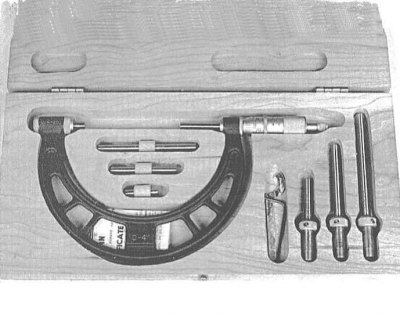
Micrometer with a set of nozzles
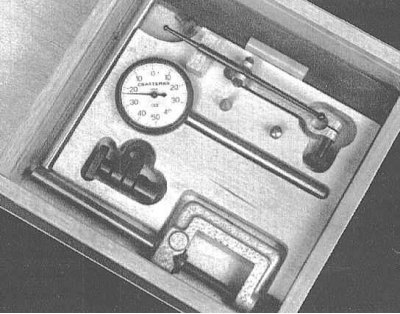
Dial meter with a set of clamps and nozzles
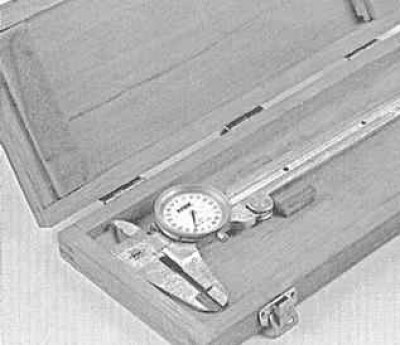
Dial/vernier caliper
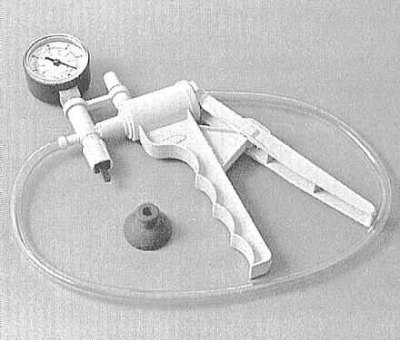
Vacuum pump with manual drive
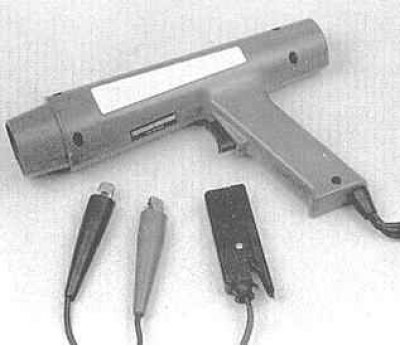
stroboscope
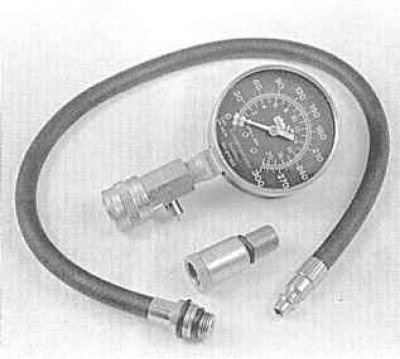
Compression tester with a nozzle for installation in spark plug holes
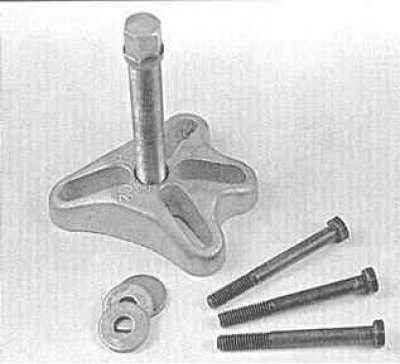
Damper/Steering wheel puller
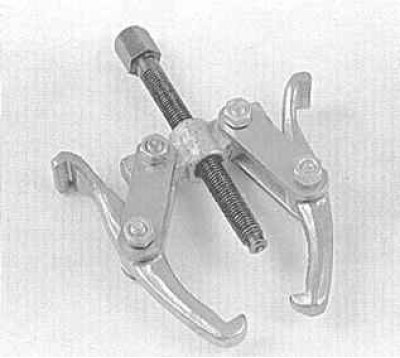
General purpose puller
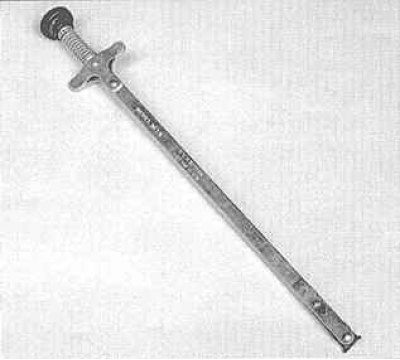
Hydraulic tappet removal tool
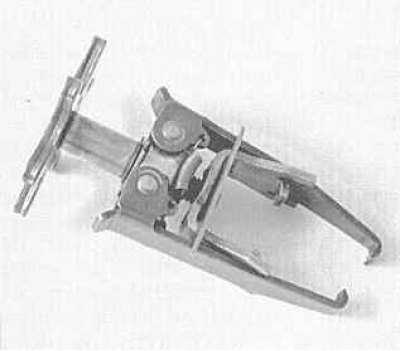
Valve spring compression tool
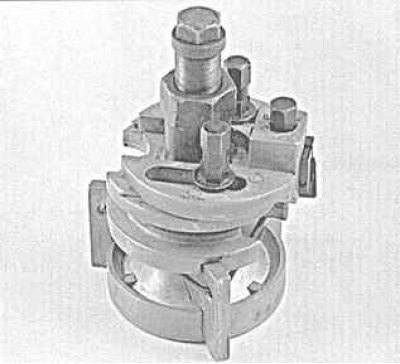
Countersink for removal of stepped wear in the cylinder
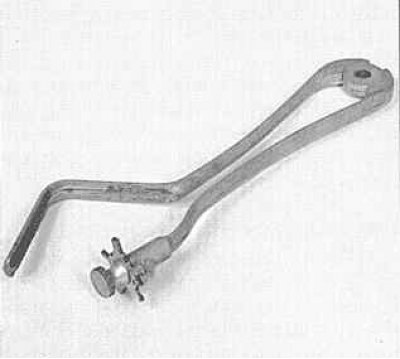
Piston ring cleaner
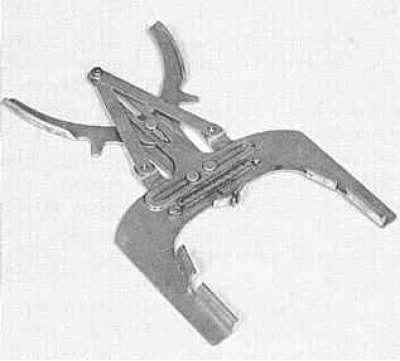
Piston ring removal/installation tool
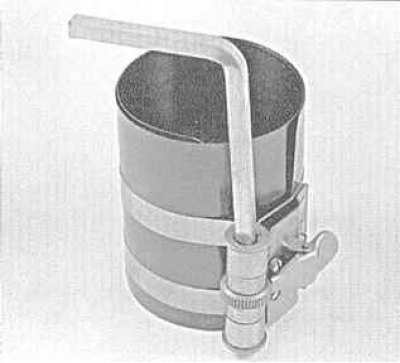
Piston ring crimping tool
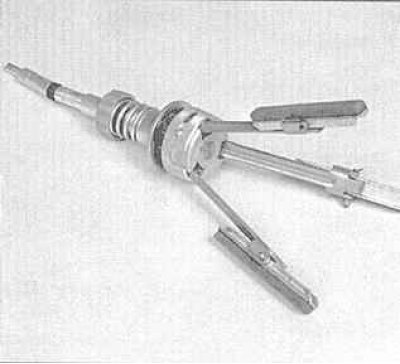
Hone for processing cylinder mirrors
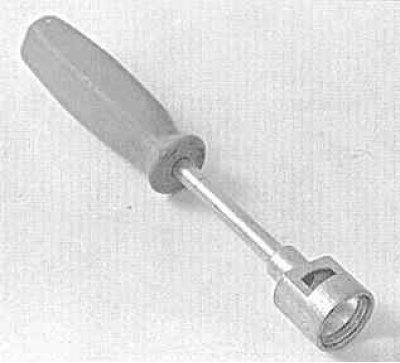
Brake shoe guide spring cup removal tool
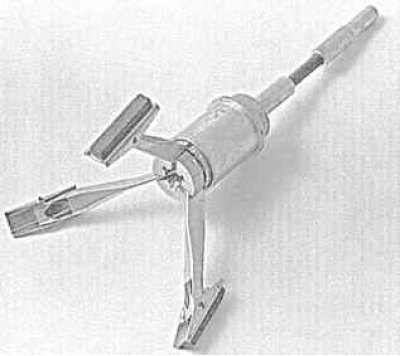
Hone for processing brake cylinders
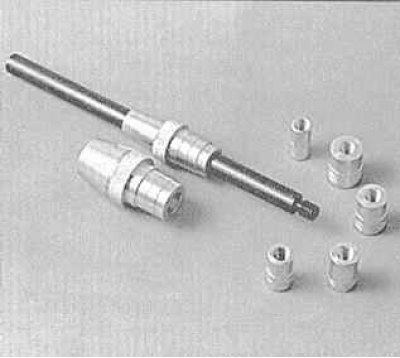
Clutch Alignment Tool
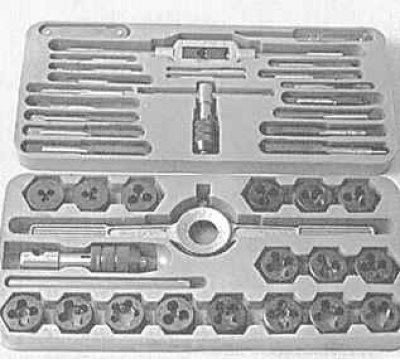
Set of taps and lerok