


2. Relieve the fuel pressure. See chapter "Engine management system".
3. To prevent fuel injection during measurement, remove the fuel pump fuse. See Chapter "Engine management system".
4. Remove the ignition coils and spark plugs from all cylinders. See below.
5. Connect the tachometer (not required when using CONSULT-II tester).
6. Screw the compression gauge into the spark plug hole using an adapter.
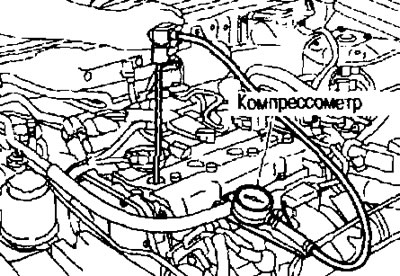
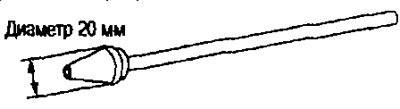
- Use a compression tester adapter with a tip diameter of less than 20 mm. Otherwise, it may get stuck in the cylinder head when unscrewing.
The text is published on the website nissanbook
7. Press the accelerator pedal fully, turn the ignition key to the START position and turn the crankshaft. When the compression gauge needle settles, read the compression pressure and engine speed. Repeat the measurements on all cylinders.
Compression Pressure: See below section "Technical data and specifications"
Caution: Always use a fully charged battery to achieve the required engine speed.
- If the engine speed differs from the norm, check the specific gravity of the electrolyte in the battery. Check the engine speed again with the normal density of the electrolyte.
- If the compression pressure is below the minimum value, check the valve clearances and combustion chamber related components (valve, valve seat, piston, piston ring, cylinder walls, cylinder head, cylinder head gasket). After checking, measure the compression again.
- If some cylinders have low compression, pour a small amount of engine oil into the spark plug hole of that cylinder and recheck the compression.
- If the compression increases after adding engine oil, the piston rings may be worn or damaged. Check the piston rings and replace if necessary.
- If, despite adding engine oil, the compression pressure remains low, the valves may be faulty. Check for damage to the valves. Replace the valve or valve seat accordingly.
- If the compression pressure in two adjacent cylinders is low and remains low even after adding engine oil, there is a gasket leak. In this case, replace the cylinder head gasket.
8. After completing the inspection, install the removed components in the reverse order of removal.
9. Start the engine and make sure it runs normally.