


2. Stop the engine, connect the timing light according to the manufacturer's instructions. Check that the marks on the crankshaft pulley and the timing belt cover are clear.
3. Turn off the electric cooling fan motor.
4. Disconnect the vacuum hose from the ignition distributor and plug it.
5. Start the engine, let it idle for 2 minutes, accelerate to 2000-3000 rpm two or three times, then return to idle.
6. Check the idle speed.
7. Aim the timing light at the crankshaft pulley and check the alignment of the pointer with (or between) the corresponding marks on the pulley (see Specifications and Figure 4.10).
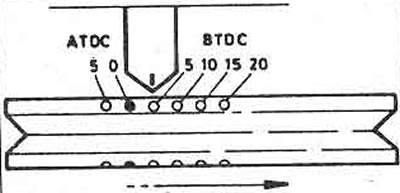
Figure 4.10. Ignition timing marks on the crankshaft pulley
Note: TDC mark is black or orange, other marks are white
8. If adjustment is required, loosen the distributor mounting bolts and turn the housing clockwise to advance or counterclockwise to decrease advance. Tighten the bolts after installation.
9. Increase the engine speed. If the mark moves away from the pointer, this indicates that the centrifugal advance mechanism is working.
10. Connect the vacuum hose. The ignition timing should advance (approximately 8°) after connecting the hose, indicating that the vacuum regulator is functioning.
11. If the centrifugal system or vacuum correction system does not work properly, remove the distributor and rebuild it.
12. After adjustment, stop the engine, turn off the strobe light, connect the cooling fan wiring.
Adjustment for use with Premium Unleaded Petrol
13. On most models (see Specifications) it will be necessary to reduce the ignition timing by 5° to prevent detonation and/or pre-ignition, if the vehicle is fuelled with Premium unleaded petrol (95 RON).
Note: Detonation or pre-ignition cannot always be detected by ear.