


Table of contents: 1. Start of the check ↓ 2. Repair or replace ↓ 3. Check the specified idle speed. ↓ 4. Conduct training in the released…↓ 5. Conduct closed throttle position…↓ 6. Conduct air supply training at…↓ 7. Check the specified idle speed…↓ 8. Determine the faulty moment. ↓ 9. Check the operation of the ECM…↓ 10. Check the ignition timing ↓ 11. Conduct training in the released…↓ 12. Conduct closed throttle position…↓ 13. Conduct training on air supply…↓ 14. Check the specified idle speed…↓ 15. Check the ignition timing again ↓ 16. Check the timing chain…↓ 17. Determine the faulty moment. ↓ 18. Check the operation of the ECM…↓
1. Start of the check
1. Check whether there are any entries in the service log for recently performed repairs that could indicate the corresponding malfunction, and whether the scheduled maintenance is due.
2. Open the hood and check the following:
- are the electrical wiring connectors tightly connected?;
- is the electrical wiring laid correctly, not pinched or cut?;
- are the vacuum hoses tightly connected, are they pinched, are there any cracks?;
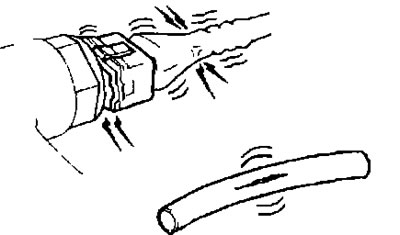
- are there any leaks from the hoses and tubes;
- is the air purifier clogged?;
- gaskets.
3. Make sure that electrical consumers are disconnected and there are no mechanical loads.
- headlights off;
- the air conditioner is off;
- rear window defroster off;
- the steering wheel is in a position corresponding to straight-line movement, etc.
4. Start the engine and warm it up until the engine coolant temperature gauge needle moves to the middle of the scale.
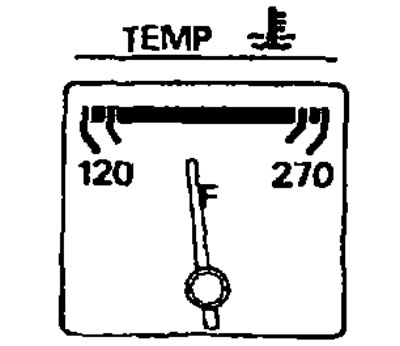
- Make sure the engine speed is below 1000 rpm.
5. Let the engine run at about 2000 rpm for about 2 minutes without load.
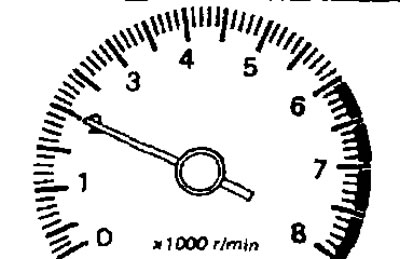
6. Using the CONSULT-III tester or GST scanner, make sure that no DTC codes are displayed on the display.
Is a DTC code displayed?
Yes - Proceed to step 2.
No - Go to step 3.
2. Repair or replace
Repair or replace components according to the appropriate "Diagnostic Procedure".
Proceed to point 3.
3. Check the specified idle speed.
1. Let the engine run at about 2000 rpm for about 2 minutes without load.
2. Increase the engine speed two or three times (from 2000 to 3000 rpm) without load, then let the engine run at idle speed for about 1 minute.
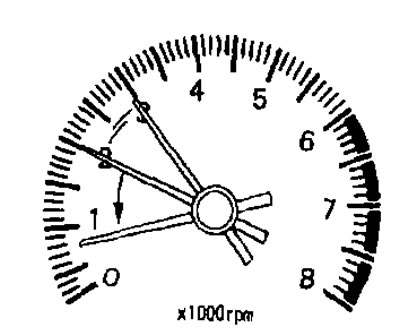
3. Check the idle speed. See the procedure below.
Are the test results normal?
Yes - Proceed to step 10.
No - Go to step 4.
4. Conduct training in the released position of the accelerator pedal.
1. Turn off the engine.
2. Conduct training in the released position of the accelerator pedal. See below.
Proceed to point 5.
5. Conduct closed throttle position training.
See below.
Proceed to point 6.
6. Conduct air supply training at idle speed.
See below.
Was the idle air supply training successful?
Yes - Proceed to step 7.
No - Follow the instructions in p. "Training in air supply at idle speed." below. Then proceed to point 4.
7. Check the specified idle speed again.
1. Start the engine and warm it up to normal operating temperature.
2. Check the idle speed.
Are the test results normal?
Yes - Proceed to step 10.
No - Go to step 8.
8. Determine the faulty moment.
Check the following:
- Camshaft position sensor (PHASE) and chain.
- Crankshaft angle sensor (POS) and target.
Are the test results normal?
Yes - Proceed to step 9.
No - Repair or replace. Then go to step 4.
9. Check the operation of the ECM unit
1. To check the operation of the ECM, replace it with a known good unit. (The ECM may be the cause of the malfunction, although this is unlikely).
2. Initialize the NATS system and register the identification codes of all NATS ignition keys.
Proceed to point 4.
10. Check the ignition timing
1. Let the engine run at idle speed.
2. Check the ignition timing angle using a stroboscope.
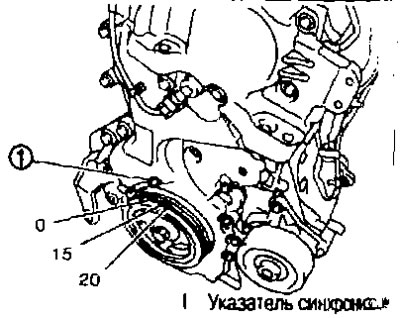
See below for the procedure.
Are the test results normal?
Yes - End of check.
No - Go to step 11.
11. Conduct training in the released position of the accelerator pedal.
1. Turn off the engine.
2. Conduct training in the released position of the accelerator pedal. See below.
Proceed to point 12.
12. Conduct closed throttle position training.
See below.
Proceed to point 13.
13. Conduct training on air supply at idle speed.
See below.
Training for air supply at idle speed. Was this successful?
Yes - Proceed to step 14.
No - Follow the instructions in p. "Training for air supply at idle speed." below. Then proceed to point 4.
14. Check the specified idle speed again.
1. Start the engine and warm it up to normal operating temperature.
2. Check the idle speed. Procedure see below.
Are the test results normal?
Yes - Proceed to step 15.
No - Go to step 17.
15. Check the ignition timing again
1. Let the engine run at idle speed.
2. Check the ignition timing angle using a stroboscope.
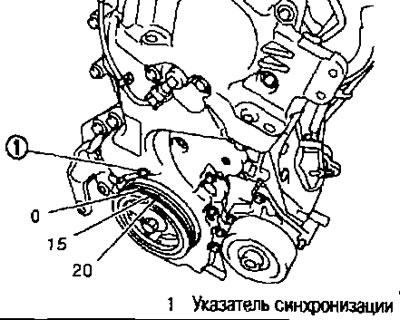
Procedure of execution see below.
Are the test results normal?
Yes - End of check.
No - Go to step 16.
16. Check the timing chain installation
Check the timing chain installation. See chapter "Mechanical part of the engine".
Are the test results normal?
Yes - Proceed to step 17.
No - Correct the timing chain installation faults. Then proceed to step 4.
17. Determine the faulty moment.
Check the following:
- Camshaft Position Angle Sensor (PHASE) and Circuit.
- Crankshaft Position Sensor (POS) and circuit.
Are the test results normal?
Yes - Proceed to step 18.
No - Repair or replace.
Then proceed to step 4.
18. Check the operation of the ECM unit
1. To check the operation of the ECM, replace it with a known good unit. (The ECM may be the cause of the malfunction, although this is unlikely).
2. Initialize the NATS system and register the identification codes of all NATS ignition keys.
Proceed to point 4.