


Table of contents: Engine wash/engine compartment…↓ Anti-corrosion protective composition ↓ Protective underbody coating ↓ Precautions when applying protective…↓
Before the onset of cold weather and after washing the underbody, it is necessary to carefully check the underbody protection and, if necessary, correct any defects.
Dust, clay and sand can accumulate in the body frame area. Accumulated dirt should be removed as it can absorb the salt used to combat ice in the winter.
Engine wash/engine compartment preservation
Before the onset of cold weather, it is necessary to clean the engine compartment and then treat it with a preservative. The engine is washed with the ignition off. Before washing the engine, which can be done using a chemical cleaner and a jet of steam, it is necessary to cover the generator, brake fluid reservoir, ignition distributor and other elements of the ignition system located in the engine compartment with plastic bags.
After each engine wash, it is necessary to treat the brake system parts, suspension and steering parts, as well as body parts and cavities with an effective preservative containing wax. In this case, it is necessary to cover the drive belts so that the preservative does not get on them.
Anti-corrosion protective composition
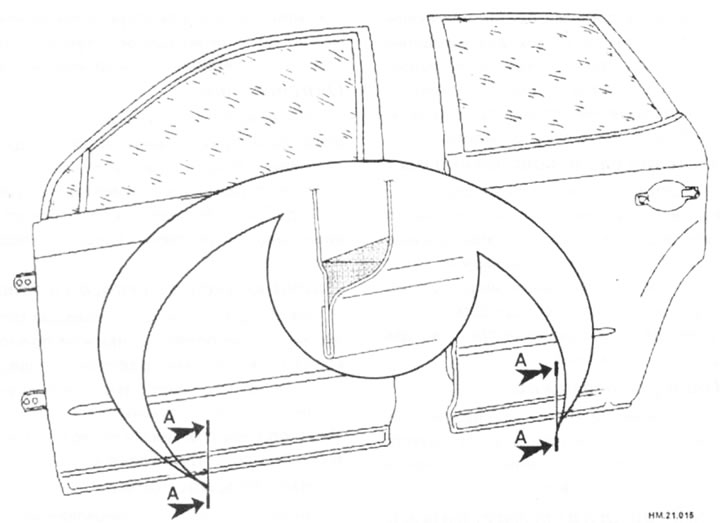
To improve the car body's resistance to corrosion, an anti-corrosion compound is applied to the inside of the sills and other hidden cavities of the car body. Accordingly, when replacing body parts, the areas of the new parts must be coated with an anti-corrosion compound. It is necessary to select a protective composition that penetrates well into all areas of the body parts and has a long service life.
Areas of application of anti-corrosion compound
Protective underbody coating
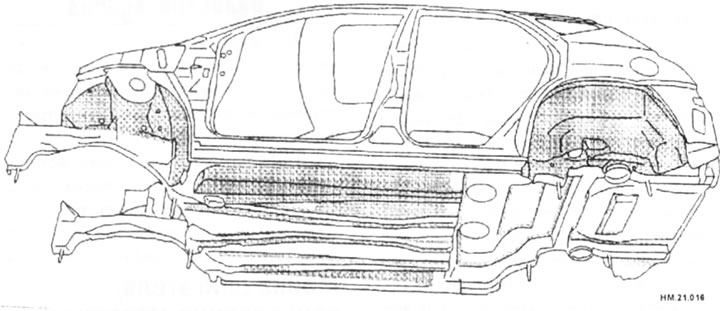
The underbody and wheel arches have a protective coating that prevents rust and stone chips, and reduces vibration and noise. For this reason, when repairing and replacing the relevant parts, it is necessary to apply a protective coating to them. It is necessary to choose a coating that resists rust formation, prevents the spread of noise and vibration, withstands impacts, has good adhesion and a long service life.
Areas of application of protective coating
Precautions when applying protective coating
- Do not apply the protective coating to areas where it is not recommended to apply the coating (for example, on areas of the body located above the muffler and three-stage catalytic converter and exposed to heat).
- Do not apply protective coating to exhaust pipes or other hot parts.
- Do not apply protective coating to rotating parts.
- After applying a layer of protective coating, apply a layer of bitumen wax.
- After applying the sealant to the body parts, apply a protective coating over it.