


Note: In some cases, the direction of coolant circulation is indicated by an arrow on the end of the hose (photo).
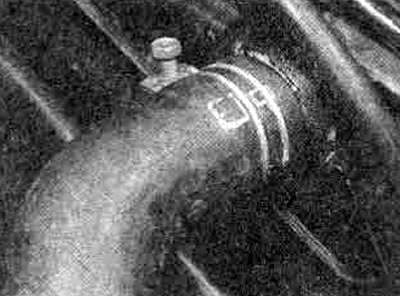
8.0. Connecting the Upper Radiator Hose (vertical flow radiator)
1. Hoses should be checked periodically and replaced if there are any splits or tears. This most often occurs around the clamps that secure each hose to the connections.
2. To disconnect the hoses, use a screwdriver or pliers to loosen the clamps and pull them down the hose from the coupling sleeve. Carefully remove the hose from the sleeve (photo).
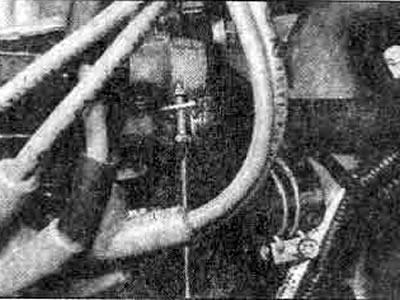
8.2A. Disconnecting the heater supply hose from the metal pipe - 2.0L fuel injection models
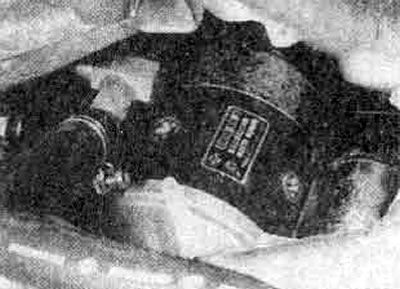
8.2B. Connecting the heater supply hose to the elbow pipe of the cylinder block - early carburetor models
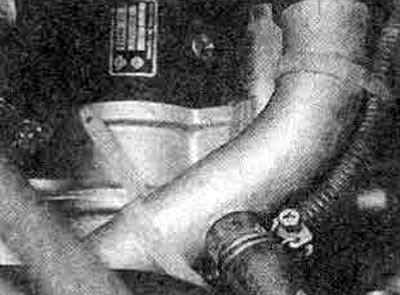
8.2C. Connecting the heater return hose to the cooling return pipe
3. The radiator hose connections are very fragile; do not use excessive force when removing hoses. If the hose does not come off, try rotating it on the connections before removing it.
4. Major leaks will be noticeable, although a small leak may be difficult to stop. The leak will probably only be noticeable when the engine is running and the system is pressurized, and even then the size of the leak may be such that the hot coolant evaporates as soon as it reaches the atmosphere, although in most cases traces of antifreeze should indicate the source of the leak. If not, the cooling system will need to be sealed. You should contact your Nissan dealer or a specialist with the necessary pressure testing equipment.
5. In some cases, the leak may be due to a broken (shifted) cylinder head gasket. To do this, you need to remove the head for inspection (see Section 1).
6. Other possible sources of leakage are the water pump and gasket, thermostat housing gasket or plugs on the cylinder block. These should be replaced if necessary as described in this Section or Section 1.
7. When installing the hose in place, first put the clamps on the hose, then the hose on the joint. Use soap as a lubricant to make the hoses easier to install.
8. Push each end of the hose all the way onto the grommet and check that the hose is seated correctly and routed properly, then pull the clamp down along the hose until it is behind the grommet, then clamp the end securely (photo).
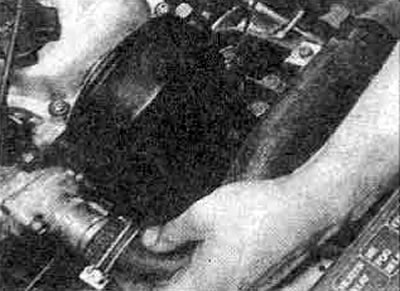
8.8A. Connecting the upper hose to the thermostat housing
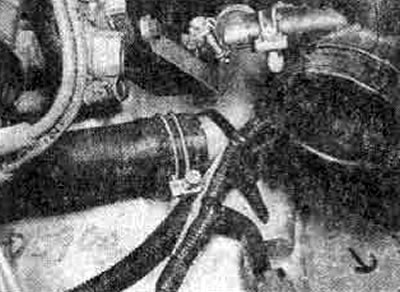
8.8V. Position of the clamp behind the bushing before compression
9. After any part of the cooling system is damaged, check for leaks as soon as possible.
The material is taken from a web resource: nissanbook.ru