


Note: If any of the internal parts such as the waste gate, bearing or seals are faulty, the turbo generator as an assembly will need to be replaced unless a turbo generator repair specialist can be found.
1. If the engine develops insufficient power, check for air leaks around the compressor, inlet/outlet pipes or exhaust manifold.
2. If the engine develops excessive power, the cause may be a disconnected or split rubber hose on the wastegate valve. Replace the hose.
3. If excessive oil consumption or exhaust gases with pale blue smoke are observed, check for oil leaks at the oil rope connections.
4. Further inspection requires removal of the turbo generator.
5. Check the turbine wheels on the removed turbo generator (clogging, deformation or other damage).
6. Rotate the wheels quickly to check that they move freely without any extraneous noise or friction.
Checking the axial clearance
7. Install the indicator through the inlet hole on the compressor pad (Figure 3.51).
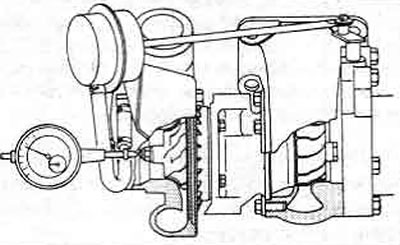
Figure 3.51. Measuring the axial clearance of the turbogenerator shaft
8. Using hand pressure only, move the turbine as far as possible along the axis from the indicator and set "zero". Move the turbine to the indicator, compare the measurement result with the one specified in the Specifications. If the axial clearance is large, the turbo generator must be replaced.