


System Description
System details

1 - buzzer; 2 — tire pressure monitoring system control unit; 3 - display; 4 - antenna; 5 — control lamp (indicator); 6 — transmitter.
The system is based on a transmitter sensor built into the tire inflation valve and mounted on the wheel. It transmits tire pressure information in the form of a radio signal.
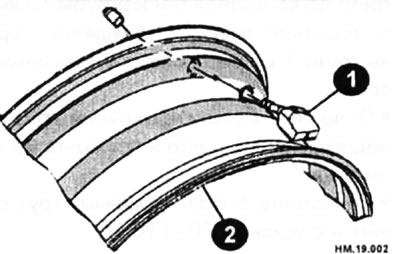
1 - transmitter; 2 - wheel disk.
Removal the transmitter
- Release the air from the tire. Then loosen the transmitter mounting nut and let the transmitter fall inside the tire.
- Gently rock the tire so that the transmitter falls to the bottom of the tire. Place the wheel on a tire changer and break the edges of the tire away from the rim. When doing this, make sure that the transmitter remains at the bottom of the tire.
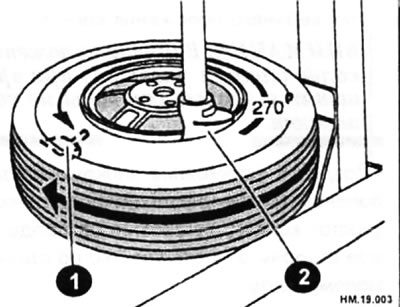
1 - transmitter; 2 - mounting head.
- Turn the tire so that the inflation valve is at the bottom and pump the tire until the transmitter is near the valve hole. After this, carefully lift the tire onto the turntable and position the valve hole (and transmitter) so that they are 270° from the mounting head.
- Lubricate the tire well and remove one of its sides from the rim. Reach inside the tire with your hand and pull out the transmitter. Remove the other side of the tire from the disk.
Installing the transmitter
- Place the first side of the tire on the rim.
- Install the transmitter on the disk and tighten the transmitter mounting nut to a torque of 6.8-8.2 Nm.
- Place the wheel on the tire changer's turntable. When installing the second side of the bus, make sure the transmitter is 270° from the mounting head.
Caution: The transmitter must not come into contact with the mounting head.
- Lubricate the tire well and install its other side on the rim. Make sure that the tire does not rotate relative to the rim.
- Now inflate the tire and install the wheel.
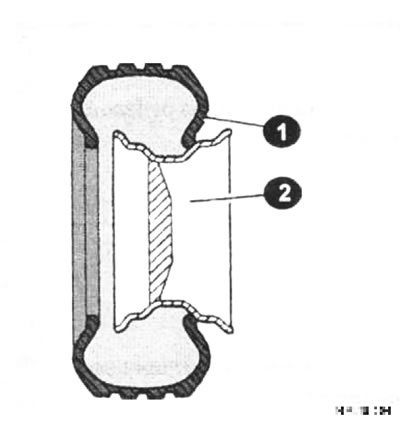
1 - tire; 2 — disk.