


Checking the idle speed and mixture
1. Be guided Chapter 17.
Checking the exhaust system
2. With the car over a pit or supported on axle stands, check the exhaust system and the tightness of the fastenings. Any signs of leaks can be detected by running the engine at idle speed and covering the end of the exhaust pipe with a rag. In the event of leaks, exhaust gases will escape through the holes.
Checking the automatic temperature control in the air filter
3. Check the condition and reliability of the vacuum hoses to the sensor and engine.
4. With the engine cold and not running, disconnect the intake duct and check that the inner flap completely covers the warm air vent.
5. Start the engine and check that the flap lifts, revealing a warm air vent.
6. Increase engine speed momentarily and check that the flap rises slightly as the vacuum increases.
7. As the engine warms up, the flap should gradually lower, covering the warm air vent.
Checking the crankcase ventilation system (PCV)
8. The positive crankcase ventilation (PCV) valve is screwed into the manifold on the carburetor mounting flange.
9. The valve can be checked by disconnecting the feed hose from the oil separator assembly. With the engine idling, a strong suction should be felt when a finger is placed over the end of the valve (figure 3.1). If there is no suction, replace the valve.
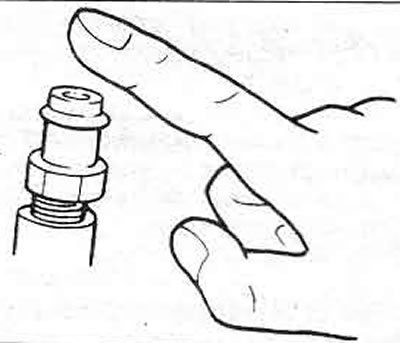
Figure 3.1 Checking the PCV valve operation
10. Check that there is pressure on the supply hose for the vapors flowing out of the crankcase. If not, (and if the idle speed increases or stabilizes when the oil filler cap is removed, the ventilation system components are in the normal position) check that the oil separator is not blocked by burnt oil, etc.
11. Remove the air filter cover (Chapter 4) and remove the small PCV filter. Clean it in a suitable solvent, check the condition; replace the filter if it does not close properly or is damaged. Install the filter and air filter cover.
12. Disconnect the system hoses and check that they are not blocked or split: clean or replace the hose if necessary.
Checking the engine and vacuum hoses for leaks
13. High temperatures in the engine compartment can cause deterioration of rubber and plastic hoses used for engine and emission systems. During routine maintenance, check that the hoses are not cracked, hardened or leaking.
14. Some, but not all, hoses are secured to the joints with clamps. Where clamps are used, check that they have not lost tension. If clamps are not used, check that the hose has not expanded.
Replacing the fuel filter
15. Be guided Chapter 7.
Checking the fuel system
16. Check the condition and reliability of the fuel pump mount.
17. Check all fuel lines with the vehicle over an inspection pit or supported on axle stands.
18. Inspect the fuel tank.
Replacing the air filter element
The source of the article is on the website NissanBook.ru
19. Be guided Chapter 4.
Replacing the PCV filter
20. Following step 11 above, replace the filter regardless of its condition.