


Note: Due to the difficulty of removing and installing clutch components, it is generally considered good practice to replace the clutch friction disc, cover assembly, and release bearing at the same time, even if only one of these components is worn.
1. Remove the clutch assembly.
2. When cleaning clutch components, use a clean, dry cloth and work in a well-ventilated area.
3. Check the wear of the friction disc linings (Figure 5.11), whether there is damage or oil contamination. If the distance from the surface of the linings to any of the rivets is less than 0.3 mm, if the linings are cracked, burned, contaminated with oil or grease, the friction disc must be replaced.
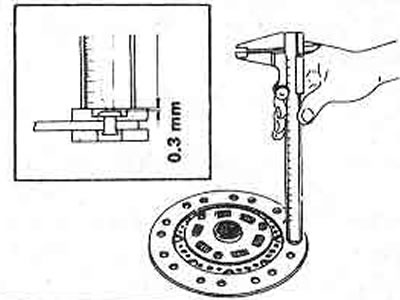
Figure 5.11. Using a caliper to measure the distance from the friction material surface to the rivets
4. If the pads are serviceable, check that the grooves in the center are not worn, the torsion springs are in good condition and securely fastened, and all rivets are securely fastened.
5. If the linings are contaminated with oil, this may be due to an oil leak either from the crankshaft oil seal or from the gearbox input shaft.
6. Check the support cover for obvious signs of wear or damage; shake it to check the rivets for fit or the clutch diaphragm spring support rings for wear or damage. If the spring is worn or damaged, the support cap must be replaced.
7. Check the condition of the working surface of the release bearing, disc and flywheel; they must be clean, flat and free from scratches or wear.
8. Check the release bearing as described in Chapter 14 of this Section.