


Table of contents: The clutch is slipping ↓ Clutch jerks and vibrations occur ↓ Clutch seizure occurs ↓ Clutch does not disengage ↓ There are extraneous noises when the…↓
The clutch is slipping
The clutch pedal does not have enough free travel. Check and make adjustments.
The clutch release mechanism is faulty. Check and make any necessary repairs.
The clutch master or slave cylinder is faulty. Check and overhaul the clutch hydraulic system.
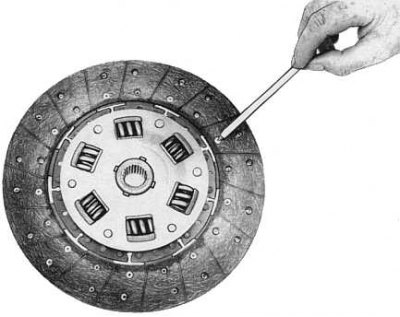
The working surface of the clutch driven disc is worn out. Check and replace the disc if its friction linings are worn to less than 0.3 mm of protrusion above the rivet heads (see accompanying illustration).
The servo drive unit is faulty (4.2L models). Check and replace if necessary.
Note: The first sign of clutch slippage is usually a noticeable increase in engine speed for no apparent reason when climbing steep hills. To check the clutch, firmly apply the parking brake, chock the vehicle's wheels, and shift the transmission into high gear, then slowly release the clutch at medium engine speed. If the engine does not stall, the clutch is slipping. To avoid more serious damage to the clutch, check it immediately and make any necessary repairs or replacements.
Clutch jerks and vibrations occur
The working surfaces of the driven disk are contaminated with oil. Check and replace the disc if necessary. Find the source of the leak and eliminate its cause.
The driven disk hub is loose or damaged. Check, replace the disk.
The friction linings of the driven disk have become loose. Check, replace the disk.
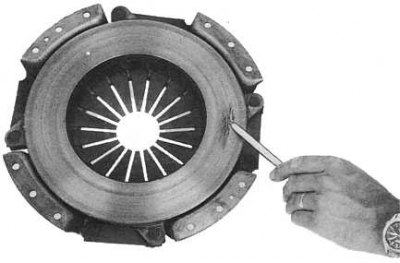
Cracks have appeared in the working surface of the pressure plate (see accompanying illustration). Check, replace the clutch basket assembly.
The surface of the pressure plate or flywheel is scratched. Check, replace the clutch basket or flywheel.
Note: Clutch vibration is usually most noticeable when reversing uphill. Since one cause of vibration is loose powertrain mounts, carefully inspect the rubber pads and mount brackets for proper condition and tightness before removing the clutch for inspection.
Clutch seizure occurs
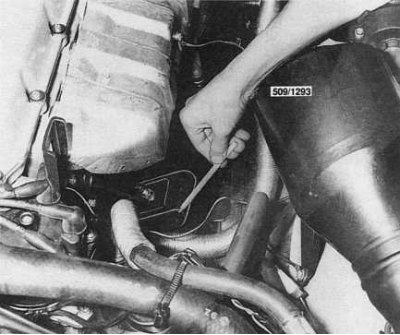
The power unit supports are broken or their fastening has become loose (see accompanying illustration). Tighten the fasteners or replace the defective supports.
The working surface of the driven disk is contaminated with oil. Check, replace the disk. Find the source of the leak and eliminate its cause.
Cracks have appeared on the working surface of the pressure plate. Check and replace the clutch basket assembly.
Clutch does not disengage
Excessive clutch pedal free play. Perform pedal adjustment.
Air has entered the clutch hydraulic system. Bleed the hydraulic system.
The clutch slave cylinder is faulty. Check, overhaul or replace the cylinder.
The clutch master cylinder is faulty. Check, overhaul or replace the cylinder.
The clutch release mechanism is faulty. Check and make any necessary repairs.
The driven disk is bent. Check, replace the disk.
The driven disk hub is jammed on the splines of the gearbox input shaft. Check and replace the disc or input shaft if necessary.
The driven disk "stuck" to the flywheel due to moisture getting into the clutch housing. Check the condition of the clutch, seal the housing.
The servo drive unit is faulty (4.2L models). Check, replace the unit.
Note: Since in most cases the clutch does not fully disengage due to a faulty free travel adjustment or clutch pedal height setting, carefully check the correct settings and bleed the hydraulic system before removing the clutch for inspection.
There are extraneous noises when the clutch is operating
The release bearing is dry or worn out. Check, replace the bearing.
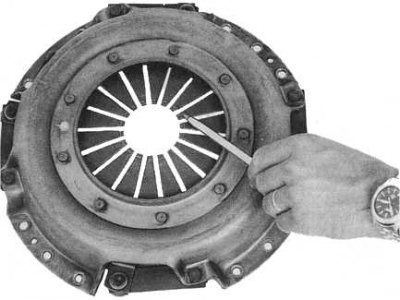
The diaphragm spring of the pressure plate is damaged. Check the spring petals for grooves and other damage (see accompanying illustration), replace the disk if necessary.
The input shaft guide bushing is worn out or not lubricated. Check and replace the bushing if necessary.
Note: To check for noise from the release bearing, lightly depress the clutch pedal while the engine is running. If the release bearing is faulty and requires replacement, be sure to also check the condition of the other clutch components.