


Table of contents: There are noises coming from the…↓ There are noises emitted by the main…↓ The pinion shaft rotates, but the…↓ There is a loss of lubricating fluid ↓
There are noises coming from the front wheels of the car
Tire noise. Check that the tires are the correct size for the vehicle.
The disc mount on the hub has become loose. Check the condition of the rim, wheel hub, studs and wheel nuts. Tighten the fasteners or replace defective components.
The wheel is out of balance or the disc is bent. Balance the wheel or replace the disk.
The front hub bearings are faulty or out of adjustment. Adjust bearing preload or replace bearings.
The steering knuckle assembly bearings are worn or damaged, or their adjustment is incorrect. Check and replace bearings if necessary.
The constant velocity joint (CV joint) of the front wheel drive shaft is worn or damaged. Check and replace the drive shaft if necessary.
Note. Jack up the front of the vehicle and place it on supports. Check that the lug nuts are tight and that the wheels rotate freely, and measure the wheel runout. Noise from the front hub bearing is a rumbling sound when one wheel is rotated separately. When checking the condition of the hub bearings, the transmission should be in the "N" position and the opposite wheel should be locked.
The noises emitted by CV joints are most noticeable when the car is moving with the steering wheel turned all the way. The condition of the CV joint can be assessed by the metallic clicks emitted by the hub part of the wheel when it rotates back and forth. The transmission should be in first gear, the transfer case should be switched to the downshift mode, and the hubs with a disconnectable drive should be locked.
There are noises emitted by the main gear
The driveshaft mount has become loose or the cardan joint is worn out. Tighten the fasteners or replace the hinge.
The lubricating fluid level has dropped. Check for signs of oil leaks, if any are found, eliminate the cause. Top up with the required grade of oil.
The main gear drive pinion flange nut has become loose. Apply sealant to the nut and tighten to the required torque.
Final drive components are worn or damaged. Perform a major overhaul of the final drive.
The pinion shaft rotates, but the front wheel does not
Hubs with disengageable drive are not engaged or are faulty. Check the proper functioning of the hubs with a disconnectable drive, perform the necessary repairs, or replace them.
The drive shaft or CV joint is damaged. Check, replace shaft assembly.
The bolts of the crown (driven) gear of the main transmission are cut off. Remove the final drive assembly and replace the bolts.
The differential gears are damaged. Perform a major overhaul of the final drive.
Note: Remove the drive shafts and inspect them. If necessary, remove the final drive assembly and overhaul it. Ensure that all foreign particles and metal filings are thoroughly removed from the axle housing.
There is a loss of lubricating fluid
[Original publication on the portal NISSANBOOK]
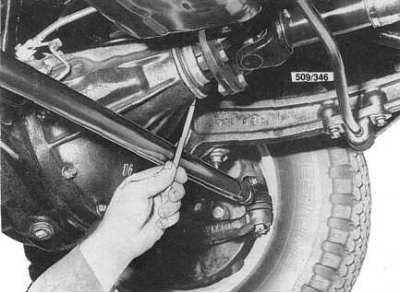
The main gear drive pinion seal is faulty. Check it out (see accompanying illustration). Replace the seal, check the condition of the flange contact surface.
The drive shaft seal is faulty. Remove the drive shaft and replace the seal.
There is a leak through the final drive housing gasket. Remove the final drive assembly and replace the gasket.
The leak occurs through pores or cracks in the main gear housing. Perform the necessary repairs or replace the crankcase.
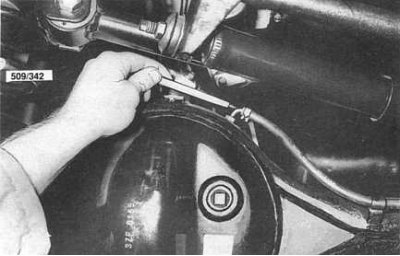
Note: Before cleaning the front axle assembly to check for signs of oil leaks, check the crankcase vent hose for leaks (see accompanying illustration). if leaks do not appear when the bridge is cold, take the car for a drive, warming up the bridge to normal operating temperature, then carefully inspect the crankcase for traces of leaks through the smallest pores and cracks.