


The brake pedal is pressed too hard
Brake pads installed (disc brakes), or friction linings of shoes (drum brakes) not that type. Check, replace.
Violated the patency of the brake line coming from the master brake cylinder (GTZ). Check the lines, remove the cause of the blockage, or replace.
Stuck brake pedal axle. Make any necessary repairs or replace the axle bolt and bushings.
Stuck wheel cylinder/caliper piston. Overhaul the cylinder/caliper.
Functioning of the vacuum amplifier of brakes is broken. Check the amplifier (see chapter Brake system).
Occurs "tacking" brakes
The patency of the GTZ fittings is broken. Check, clean the GTZ and the brake fluid reservoir.
Stuck wheel cylinder/caliper piston. Make any necessary repairs.
Parking brake cable jammed. Replace rope.
Broken or extended drum brake shoe coupling springs. Replace defective springs.
The adjustment of the pushers of the vacuum booster / GTZ is broken. Check and make any necessary adjustments.
Note. To check for signs of sticking brakes, jack up the vehicle and place it on jack stands. Alternately rotating the wheels manually, check if the brakes are stuck. If all wheels turn freely, have an assistant depress and release the foot brake pedal. Make sure the brakes are "let go" wheels without delay. Violation of the patency of the GTZ fitting causes the simultaneous seizure of two wheels, the brake mechanisms of which are included in the corresponding specific hydraulic circuit. Release the bleed valve on one of the stuck wheels, making sure that the cause of the sticking is an increase in pressure in the circuit.
A jammed parking brake cable usually causes the rear propeller shaft to stick. To check, jack up the back of the car and place it on supports, disconnect the drive cable from the actuating lever - the rear propeller shaft should begin to rotate freely.
There are noises from the brakes
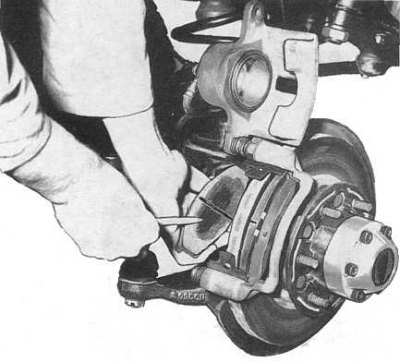
Braking is accompanied by a screech. Friction lining material polished. Remove suspect pads/shoes (see accompanying illustration) and remove the polish from their surface with sandpaper.
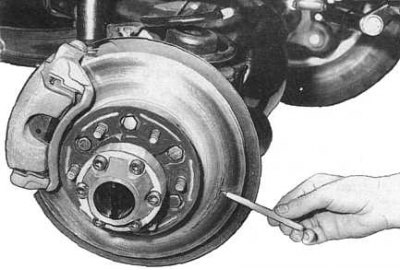
Braking is accompanied by a rattle. Friction lining material worn out. Check the condition of the pads/shoes and discs/drums of suspect brakes. Replace worn pads/shoes, re-groove the damaged disc/drum (see accompanying illustration).
Note. Brake squealing is most commonly caused by polishing the friction lining surfaces of the brake pads to a high gloss, but other possible causes such as the use of the wrong type of pads, as well as the loss of anti-squeal springs or anti-squeak pads, should not be overlooked.
If there is wear of the friction linings of the pads / shoes to the substrate metal, all four pads / shoes must be replaced, even if they are in good condition on the opposite wheel.
If the brake disc/drum is severely scratched, it must be honed or replaced to restore braking performance.
There is a low "softness" brake pedal travel
The automatic regulator of the brake mechanisms of the rear wheels is out of order. Make any necessary repairs or replace the regulator.
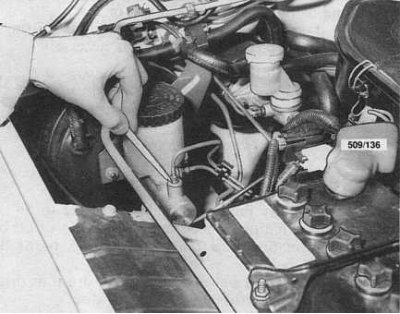
The brake fluid level has dropped. Check the system for signs of leaks - carefully inspect all fittings (see accompanying illustration). Make any necessary repairs, restore the fluid level and bleed the hydraulic system.
Air has entered the hydraulic system. Pump the system.
Note. In most cases "softness" brake pedal travel is associated with air entering the hydraulic system. Be sure to find the source of air penetration and eliminate the existing defect (seal or union connection). Then the system should be pumped.
Defective components of the brake system are easily identified by the presence of traces of brake fluid leaks on their surface. When braking, the wheels lock
There is clogging of the friction linings of the shoes / shoes due to the ingress of oil or brake fluid on them. Find and eliminate the cause of contamination, replace pads / shoes.
Deformed brake drum. Check and make any necessary replacements.
The wrong type of chocks/shoe linings are installed. Check, replace.
Broken or stretched brake shoe return springs. Check and replace defective springs.
Defective pressure control valve. Replace valve.
Note. Remove all wheels and assess friction lining wear and check for signs of oil contamination. Check the condition of the brake shoe return springs by comparing their free length with that of new springs.
A sign of brake drum deformation is the pulsation of the brake pedal during light braking.
If the rear wheels are permanently blocked, the pressure regulator should be checked for proper operation.
Pedal pulsation occurs during braking
Deformed brake drum/disc. Turn the defective component.
Worn front or rear wheel bearings or loose preload. Adjust preload or replace defective bearings.
Note. Deformed brake drums/discs must be turned. This work should be entrusted to the specialists of the car service workshop, who will also help you determine the feasibility of this procedure. You may need to purchase new components.
Occurs "withering" brakes
There was a clogging of the friction linings of the pads / shoes due to the ingress of oil or brake fluid on them. Find and eliminate the cause of contamination, replace pads / shoes.
Deformed brake drum. Check and make any necessary replacements.
The automatic regulator of the back brake mechanism has failed. Make any necessary repairs to the regulator.
The wrong type of pads/shoes are installed. Make a replacement.
The brake fluid is contaminated. Drain the hydraulic system and refill with fresh brake fluid. Pump the brakes.
Note. In most cases, brake fade is due to sudden and frequent braking, leading to heating of the friction linings and brake discs / drums. After cooling the mechanisms, braking should return to normal.
Brakes overheating
The automatic rear wheel brake regulator has failed. Make any necessary repairs.
Broken or stretched brake shoe return springs. Check and replace defective springs.
The adjustment of the pushers of the vacuum booster / GTZ is broken. Check and make any necessary adjustments.
Stuck wheel cylinder/caliper piston. Make any necessary repairs.
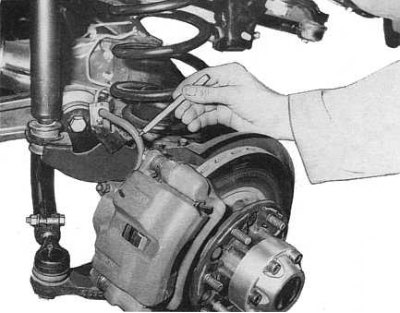
Damaged or blocked hydraulic brake line hose/tube (see accompanying illustration). Remove the cause of the blockage or replace the defective hose/tube.
The GTZ fitting is blocked. Check and clean the cylinder and brake fluid reservoir.
Braking is too harsh. Change your driving style.
Note. To check the brake mechanisms for jamming, jack up the car and place it on props. Rotate each wheel alternately with your hands. If the piston of the wheel ur / caliper of one of the brake mechanisms is jammed, it makes sense to check and recondition all cylinders / calipers, as well as the GTZ.
Brake failure has occurred
The GTS is out of order. Remove the cylinder, rebuild it, bleed the hydraulic system.
The brake fluid level has dropped due to caliper/wheel cylinder leaks. Perform the necessary repairs, bleed the hydraulic system.
The fluid level has dropped due to leaking brake hoses/tubes. Replace defective components, bleed the hydraulic system.
Air has entered the hydraulic system. Find out and eliminate the cause, pump the system.
The brake fluid is contaminated. Empty the system, refill with fresh fluid, bleed the brakes.
Note. To search for sources of leaks, fill the GTZ with brake fluid and ask an assistant to shake the foot brake pedal. At the same time, try to visually register external fluid leaks.