


Table of contents: The engine does not start ↓ Engine stalls when idling ↓ The car's responsiveness has been…↓ There are misfires ↓ Excessive fuel consumption ↓ Fuel injection and engine management…↓ The engine does not start or starts…↓ The engine starts, then stalls ↓ There are misfires in the engine ↓ The engine does not develop full…↓ Excessive fuel consumption ↓
The engine does not start
The fuel level in the float chamber is insufficient. Check the fuel pump supply. Also check the needle valve for patency and signs of sticking.
Cold engine spark plugs are flooded with fuel due to excessive gas pedal operation during starting. Keep the pedal released and repeat the starting procedure until the engine starts.
The spark plugs of a hot engine are flooded due to excessive use of the gas pedal. Keep the pedal released until the engine starts. Make sure the automatic starter choke is fully open.
Note: On models equipped with a sight glass on the carburetor float chamber, visually check the fuel level in the chamber.
On models without a viewing window, pump the throttle lever while observing fuel injection into the carburetor primary chamber.
Check for fuel supply problems by disconnecting the fuel supply line from the carburetor and then cranking the engine. A strong smell of gasoline and traces of fuel leaks along the throttle shafts indicate engine flooding.
Note: See also the tests described in the Power System Test subsection of Section Diagnostics of failures when starting the engine under road conditions.
Engine stalls when idling
The idle speed and/or mixture quality setting is incorrect. Check and, if necessary, adjust the settings using the adjusting screws.
The automatic starter unit is faulty. Check the operation of the choke and fast idle speed adjustment.
The carburetor float chamber is filled. If possible, check the fuel level in the chamber through the inspection window. Clean and blow out the carburetor.
The idle jet or air jet is clogged. Clean and blow out the carburetor.
The bolts securing the carburetor to the intake manifold have become loose. Tighten the bolts and check for air leaks.
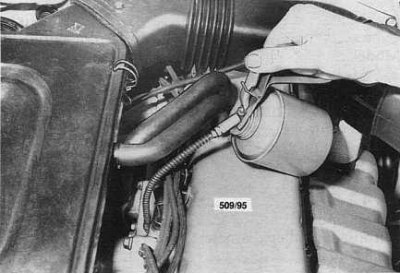
There are leaks through the carburetor flange gaskets or intake manifold. Check and replace defective gaskets. Leaks through the intake manifold gasket can be detected by wetting the suspected joint area with engine oil (see accompanying illustration).
The fuel shut-off solenoid valve is faulty. Check the valve operation, make necessary repairs or replacement.
Insufficient fuel supply to the carburetor. Check the fuel supply through the needle valve. Clean and blow out the carburetor. Check the fuel lines and fuel filter for patency, as well as the fuel pump for proper operation.
The car's responsiveness has been reduced
The accelerator pump is faulty or blocked. Clean and blow out the carburetor, replace defective components.
The accelerator pump drive rod is faulty. Check and make any necessary repairs.
The automatic start unit is faulty. Check the operation of the air damper.
Note: To check the accelerator pump circuit, remove the air cleaner and, while holding the choke open, manually move the throttle lever. You should be able to see a trickle of fuel being injected into the carburetor through the neck.
There are misfires
Note: Before performing the checks and corrections described below, please perform diagnostics of electrical equipment.
The fuel level in the carburetor float chamber has dropped, or the fuel supply to the carburetor has been disrupted. Check the level, serviceability of the fuel pump, and the patency of the fuel lines and fuel filter.
The main or high power jet is clogged. Disassemble the carburetor and blow out the jets.
The fuel pump is faulty. Replace.
Water got into the carburetor. Dry and clean the fuel system, replace the fuel filter.
There is air suction between the fuel pump and the tank. Fix the leaks.
Note: Check the fuel pump supply pressure (head) and flow as described in the appropriate Section.
To check for moisture in the carburetor, remove the top cover. The carburetor removal and disassembly procedures are described in detail in Chapter Fuel and exhaust systems.
Excessive fuel consumption
The fuel level in the float chamber is too high. Check and make adjustments.
The air cleaner filter element is dirty. Make a replacement.
The air damper is partially closed. Check and make any necessary corrections.
Fuel pump pressure is too high. Replace the pump.
There are leaks from the fuel tank, fuel lines or through the filter. Check and make any necessary replacements.
The jets are worn or damaged. Check and replace defective components.
The load on the accelerator pump is excessive. Change your driving style.
Note. In most cases, excessive fuel consumption is associated with a blockage in the air cleaner filter element, which can be easily removed and visually inspected. You should also check the settings and proper functioning of the automatic starter.
Fuel injection and engine management systems
(4.2L models of later years of production)
Note: The following checks are only basic in category and should only be performed after the results of the procedures listed in the Sections on diagnosing the causes of engine failure to start under road conditions allow you to firmly assert that the problem is related to malfunctions of the fuel injection and engine management systems.
If the tests described below do not give a positive result, you should seek help from specialists at the dealership of the car manufacturer, who have special and very expensive diagnostic equipment at their disposal.
Warning! To avoid injury from severe electrical shock, use extreme caution when performing repair and diagnostic procedures on or near electronic ignition system components. Remember that hazardous high voltage is present in the secondary circuit of the system
The engine does not start or starts with great difficulty
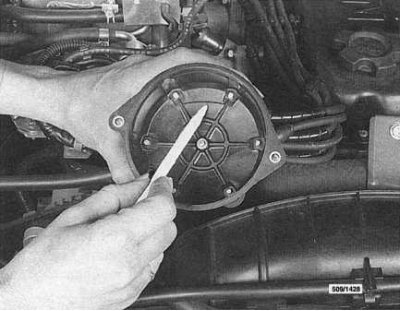
The ignition system is faulty. Check the external condition of the distributor terminals, ignition coil and output stage power key. The terminals must be clean, free of corrosion products and securely fastened. Check the condition of the spark plugs and the setting of the interelectrode gaps. Check the distributor cap and rotor for cracks, carbon tracks of burnt terminals (see accompanying illustration). Check the condition of the high-voltage wire terminals, measure their resistive resistance. Check the condition of the ignition coil and the output stage power key.
The fuel supply is interrupted. Check the fuel pump, fuel pump relay and fuel pressure.
The injectors are faulty. Check the electrical circuit of the injectors. Check the condition of the fuse links.
The control relay (ECCS relay) is faulty. Check the relay, replace if necessary.
The electrical connectors of the engine management system components are faulty. Check the condition of all electrical connectors, clean the terminals, and ensure that the connections are secure.
The engine starts, then stalls
The idle speed or ignition timing setting is incorrect. Check and make any necessary adjustments.
The fuel supply is interrupted. Check the fuel pump electrical circuit and fuel pressure.
The ignition system is faulty. Check the condition of the spark plugs and the correct setting of the interelectrode gap. Check the distributor cap and rotor for cracks and carbon tracks. Check the condition of the high-voltage wire terminals, measure their resistive resistance. Check the condition of all other terminal connections of the ignition system.
There are air leaks or losses of vacuum. Check the condition and reliability of the fastening on the fittings of the corresponding hoses.
The electrical wiring of the fuel management system components is faulty. Check the condition and reliability of all terminal connections.
There are misfires in the engine
The spark plugs are faulty or dirty, or the interelectrode gap is set incorrectly.
The distributor cap is faulty. Check the lid for cracks and moisture.
The high voltage wires are faulty. Check and make any necessary replacements.
The ignition coil is faulty. Check and replace if necessary.
The fuel supply is interrupted. Check fuel pressure. Check fuel filter, lines and injectors for obstructions.
Moisture has entered the fuel. Drain the fuel, replace the fuel filter.
The fuel injectors are faulty. Check the condition of the electrical connectors and the electrical circuit of the injectors.
The engine does not develop full power
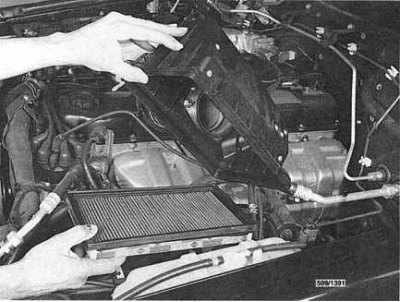
The air cleaner filter element is clogged or the air intake tract is blocked. Replace the element (see accompanying illustration), or eliminate the cause of the blocking.
The throttle cable adjustment is out of adjustment. Make the necessary adjustments, making sure the damper is fully open.
The ignition timing angle setting is incorrect. Check and correct.
The fuel supply is interrupted. Check fuel pressure. Check fuel filter, lines and injectors for leaks. Make sure fuel pressure regulator vacuum hoses are connected and in good condition.
The exhaust system is blocked. Check the system status, eliminate the cause of the blockage.
Excessive fuel consumption
The air cleaner filter element is clogged or the air intake tract is blocked. Replace the element or eliminate the cause of the blockage.
Fuel pressure is not within normal limits. Measure the pressure. Check the fuel return line for patency.
There are external leaks in the fuel supply system. Check fuel system fittings and components for signs of leaks.
There are internal leaks in the fuel supply system. Check the injectors for signs of leaks.
The exhaust system is blocked. Check the system status, eliminate the cause of the blockage.