


Table of contents: Spring type suspension ↓ Coil spring suspension ↓
Spring type suspension
There is noise in the suspension
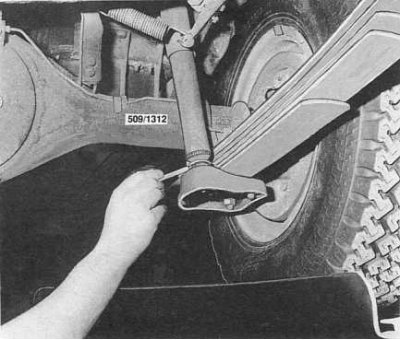
The shock absorber and/or its support units are faulty. Check the condition of the rubber bushings of the shock absorbers (see accompanying illustration). Replace defective components.
The rear wheel hub bearings are damaged or out of adjustment. Adjust preload or replace defective bearings.
The rear spring clevis nuts or bushings are worn out, or the tightening force of the fasteners has weakened. Replace defective components, tighten fasteners.
The anchor pin or bushing is worn out or has become loose. Replace defective components, tighten fasteners.
One or more spring leaves are broken. Replace defective leaves or the entire spring.
The bridge housing is deformed. Replace the crankcase.
The spring clamp is broken or its fastening has become loose. Tighten the fasteners or replace the defective clamp.
The spring stirrup is broken or its fastening has become loose. Tighten the fasteners or replace the defective step ladders.
Note: To assess the degree of wear of the spring shackle bushings and anchor pin, place a lever between the spring loop and the chassis and move the spring up and down with it. The weight of the car should be on the suspension.
Visually inspect the spring sheets for cracks and other damage.
Due to the high power of the suspension springs, it is not practical to check the condition of the suspension shock absorbers on the vehicle. The shock absorbers should be removed and checked as described later in this Section.
The position of the rear wheels of the car in relation to the front wheels is disturbed
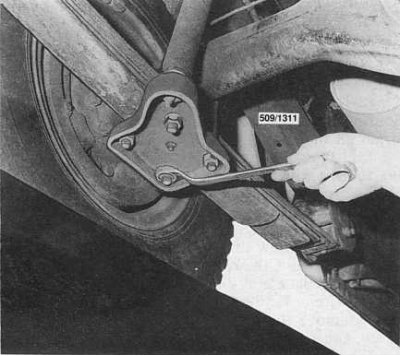
The bolts of the U-bolts of the front or rear springs of the vehicle have become loose. Check the center bolt, tighten the U-bolts of the stirrups (see accompanying illustration).
The central bolt of the front or rear spring is broken. Replace the bolt.
The main leaf of the front or rear spring is broken behind the support plate. Replace the main leaf or spring assembly.
The anchor pin or front spring shackle is broken. Replace defective components.
There is a strong sagging of the spring on one side of the vehicle. Replace the springs on both sides.
The bridge housing is deformed. Replace the crankcase.
Note. To check the correct position of the front axle, measure the distance from the reference point on the crankcase to the reference point on the chassis. Repeat the measurement between equivalent reference points from the other side of the vehicle. The measurement results must match.
The vehicle's directional stability is impaired
Tires are underinflated or unevenly inflated. Adjust tire inflation pressure.
The suspension shock absorber is not functioning properly. Check, replace the defective unit (preferably paired with the second shock absorber of this suspension).
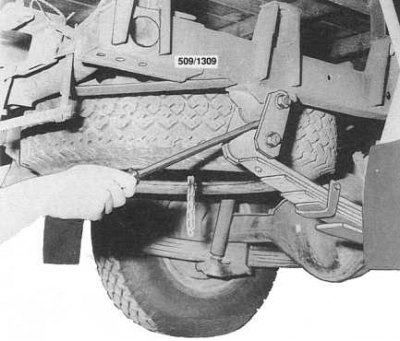
The bushings or nuts of the spring shackle are worn out, or the tightening force of the latter has weakened (see accompanying illustration). Tighten the fasteners or replace the defective components.
Front or rear springs are worn or broken. Replace the defective spring in pairs with the opposite one of the same suspension (front or back).
Note: Due to the high power of the suspension springs, it is not practical to check the condition of the suspension shock absorbers on the vehicle. The shock absorbers should be removed and checked as described later in this Section.
If the rear of the car is tilted to one side or the other, remove the corresponding spring and compare it with a new one. If the spring is found to be unsuitable for further use, it would be reasonable to replace it in a pair with the opposite one. The same applies to the front of the car.
Coil spring suspension
There is noise in the suspension
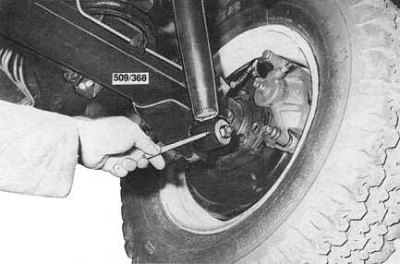
The shock absorber and/or its supports are faulty. Check and inspect the rubber shock absorber mount pads for signs of aging (see accompanying illustration). Replace defective components.
The rear wheel hub bearings are damaged or out of adjustment. Adjust preload or replace defective bearings.
The suspension bushing bolts or nuts have become loose. Loosen the appropriate fastener completely, then tighten it to the required torque using a torque wrench.
The bushings or bolts of the suspension push rods are worn out. Remove components to check their condition. Replace if necessary.
The anti-roll bar bearings or ball joints are worn out or loose.
The coil spring is broken. Replace the spring in pair with the second one.
The steering knuckle assembly bearings are faulty. Check, repair or replace as necessary.
The bridge housing is deformed. Replace the crankcase.
Note. To assess the degree of wear on the cross jet bar bushings, ask the assistant to rotate the steering wheel left and right within a stroke of 30 cm from the center in each direction. Excessive play of the bushings will indicate their wear. The weight of the vehicle during this check must be on the wheels.
The shock absorber bushings can be checked by slowly rocking the front of the car in a vertical plane (use the assistant again). Only very slight play in the bushings is acceptable.
The position of the front wheels of the car in relation to the rear wheels is disturbed
The text was borrowed from here nissanbook.ru
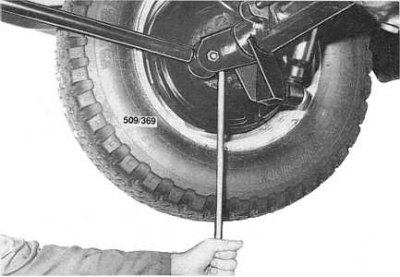
The bushings of the suspension push rods are worn out or their fastening has become loose. Check it out (see accompanying illustration), tighten the fasteners or replace the defective components.
The push rods or their support points are damaged or deformed. Compare the dimensional characteristics of the push rods with a known good part.
A coil spring on one side of the car has sagged significantly. Replace springs in pairs.
The bridge housing is deformed. Replace the crankcase.
Note. To check the correct position of the front axle, measure the distance from the reference point on the crankcase to the reference point on the chassis. Repeat the measurement between equivalent reference points from the other side of the vehicle. The measurement results must match.
The vehicle's directional stability is impaired
Tires are underinflated or unevenly inflated. Adjust tire inflation pressure.
The suspension shock absorber is not functioning properly. Check, replace the defective unit (preferably paired with the second shock absorber of this suspension).
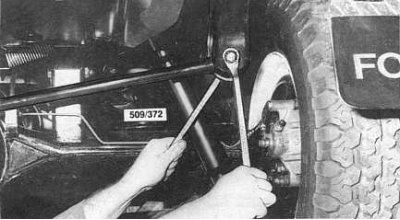
The bushings of the transverse reaction rod are worn out or their fastening has become loose. Replace the bushings or tighten the fasteners (see accompanying illustration).
The bushings of the suspension push rods are worn out or their fastening has become loose. Replace the bushings or tighten the fasteners.
The front or rear coil spring is broken or sagged. Replace the spring in pairs with the second one of the same suspension (front or back respectively).
Note: If the front end drops more on one side than the other, remove the corresponding coil spring and compare its characteristics with a new one. If the spring is found to be unsuitable for further use, replace it in pairs with the second one. The same applies to the rear springs of the car.