


The tires factory-fitted to this brand of vehicle are equipped with half-inch (about 13 mm) wear strips which become visible when the tread is worn down to a depth of 1.6 mm. The degree of tread wear can also be determined using a simple and inexpensive device known as a tread wear indicator - ask at car accessory stores.
Pay attention to any abnormal tread wear. The presence of irregular tread defects such as cavities, flat spots, more severe wear on one side, etc. indicates a violation of the balance or adjustment of the front wheel angles. If you find such characteristic tread defects, take the car to a tire repair shop to correct the violations.
Look closely for cuts, punctures, nails and small stones stuck in the tread pattern on the tires. In some cases, the tire continues to hold pressure after a puncture due to the nail stuck in the tire plugging the hole with its own body. If the tire starts to deflate regularly and slowly, first check the condition and serviceability of the inflation valve (nipple). Then inspect the tread for a nail or other foreign object stuck in the puncture, as well as for broken repair plugs (radial tires are often repaired by installing special repair plugs into the holes). If you suspect a puncture, you can easily check it with a soapy water solution - after wetting the surface of the tire with soapy water, soap bubbles will start to form at the puncture site. If the defect is not too extensive, the wheel can usually be repaired at a tire shop.
Carefully inspect the inside walls of each tire for traces of brake fluid. If any are found, immediately check the condition of the brake lines and mechanisms.
Inflating your tires with the correct pressure will significantly extend their service life and significantly increase driving comfort. The correct tire inflation pressure cannot be reliably determined by eye, especially when it comes to radial tires. A special pressure gauge is needed here. Try to keep one in your car's glove compartment at all times. You should not trust the readings of pressure gauges installed on tire inflation hose nozzles at gas stations.
[The source of the article is on the website Nissanbook.ru]
Always check the tire pressure when the wheels are cold. This means after the last time you used the car (for a run length of more than 1.5 km) at least three hours must pass. An increase in pressure in hot tires by 0.27 - 0.5 atm. is normal.
Remove the protective cap from the inflation valve protruding from the disc/hub and press the pressure gauge nozzle firmly onto it. Read the reading and compare the measurement result with the data on the nameplate attached to the driver's door pillar. Do not forget to screw the protective cap onto the valve to prevent dirt and moisture from getting into the nipple. Check the pressure in all four wheels and adjust if necessary.
Don't forget to also maintain the required pressure in the spare tire (see the vehicle owner's manual or the tire sidewall for details).
This map of typical tread wear patterns will help you determine the condition of your vehicle's tires, presumably determine the cause of wear, and select measures to eliminate them.
State | Possible reason | Corrective Actions |
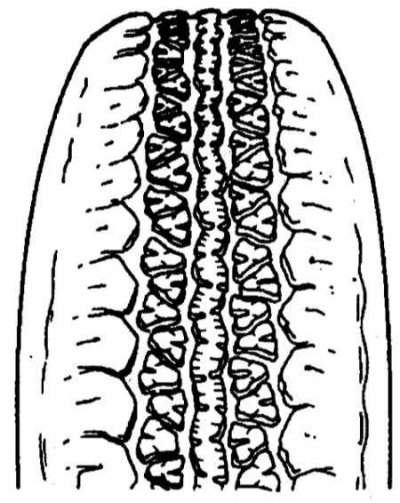 Edge wear | Insufficient tire pressure (wear on both sides of the tread) Incorrect wheel alignment (one-sided wear) Sharp manner of making turns Neglecting to perform wheel rotation | Measure and adjust pressure Repair or replace axle or suspension components Reduce speed on turns Rotate the wheels |
Fraying of the edges of the drawing 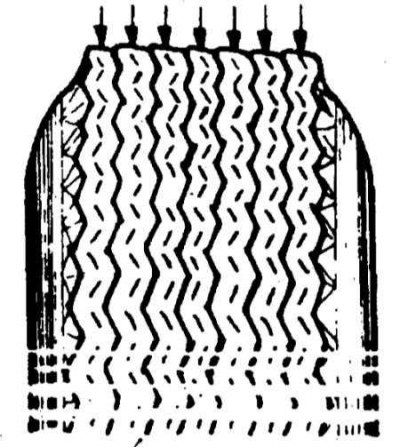 End wear | Incorrect wheel alignment | Adjust convergence |
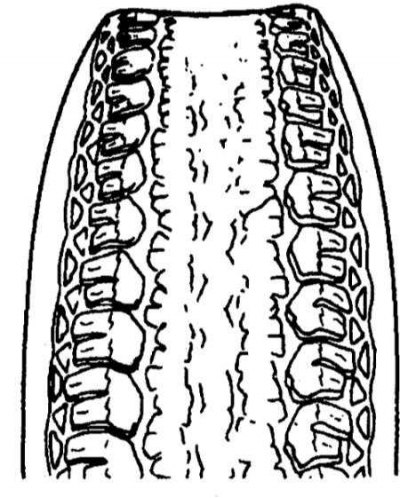 Central wear | Tires are overinflated Neglecting to perform wheel rotation | Measure and adjust pressure Rotate the wheels |
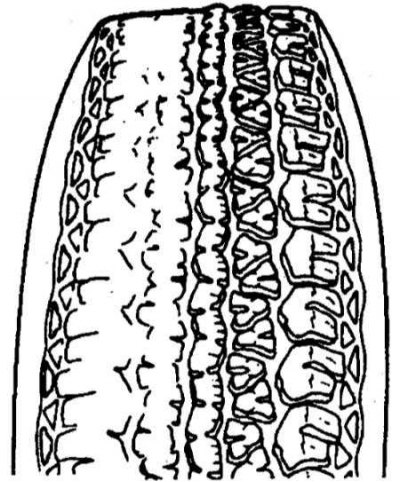 Uneven wear | Incorrect camber or caster angle of the steering axis (run-out) of the wheels The suspension is faulty The wheel is unbalanced Brake drum ovality Neglecting to perform wheel rotation | Repair or replace axle or suspension components Repair or replace its components Balance or replace the wheel Grind or replace the drum Rotate the wheels |