


Regularly checking your tires will help you avoid the hassle of being stopped on the road due to a flat tire. In addition, such checks provide valuable information about possible problems with the steering and suspension before serious damage occurs.
The tires are equipped with built-in tread wear indicator strips, which are exposed when the tread depth decreases to 1.6 mm, after which the tires are considered worn. This value represents the minimum permissible tread depth; in most cases, it is recommended to replace tires with a tread depth of 2 mm or less. Tread depth can also be determined using a simple and inexpensive device known as a tread depth gauge.
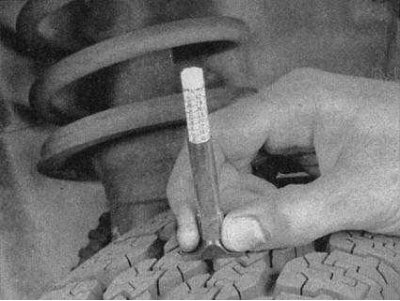
To determine tire wear, use a tread depth gauge - they are sold at auto accessory stores and service stations and are very inexpensive.
Pay attention to any unusual tread wear. Tread defects such as cavities, bulges, flat spots and more severe wear on one side indicate a violation of the front wheel alignment angles and/or wheel balancing. If any of these defects are detected, contact a tire repair shop for adjustment.
Check the tire carefully for cuts, punctures, and stuck nails or tacks. Sometimes, after a tire has been punctured by a nail, it will hold its pressure for a while or deflate very slowly. If you suspect a "slow puncture," first check the valve stem for leaks. Then inspect the tread for any foreign objects stuck in it or previously repaired punctures that have begun to leak air again. If you suspect a puncture, you can confirm its presence by wetting the suspected area with soapy water. If there is a leak, the solution will begin to bubble. If the puncture is not too large, the tire can usually be repaired at any tire shop.
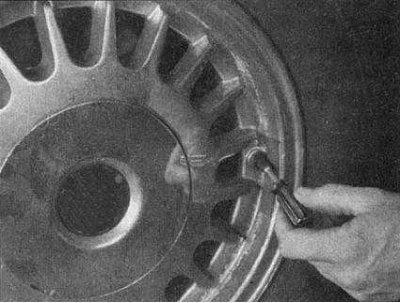
If you suspect you have a "slow puncture", first check the valve for leaks.
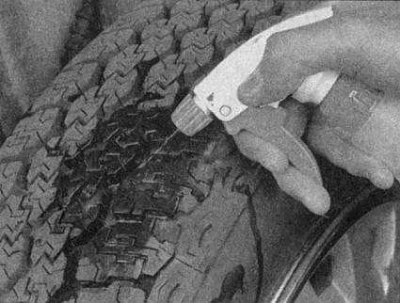
If the valve is sealed, jack up the car and spray soapy water on the tread while slowly turning the wheel - small bubbles will appear at the puncture site.
Carefully inspect the inside sidewalls of the tires for signs of brake fluid leakage. If any, have the brake system checked immediately.
Maintaining the correct tire pressure increases the life of your tires, helps save fuel, and improves overall ride quality. A special pressure gauge is required to check the pressure.
Note: Always keep an accurate pressure gauge in your glove compartment. Gauges built into air hose nozzles at service stations are often inaccurate.
Always check tire pressure when tires are cold (i.e. before traveling by car). If you check the pressure on warm or heated tires, this will lead to overestimation of the pressure gauge readings due to thermal expansion of the tires. In this case, you should never lower the pressure, because after the tire cools down, it will be lower than normal.
Unscrew the protective cap from the inflation valve protruding from the wheel disk or from the hub cap, then press the pressure gauge nozzle firmly onto the valve. Read the readings of the device and compare them with the recommended values Specifications. Remember to replace the protective cap to prevent dirt and moisture from entering the valve mechanism. Check the pressure in all four tires and inflate them to the recommended pressure if necessary.
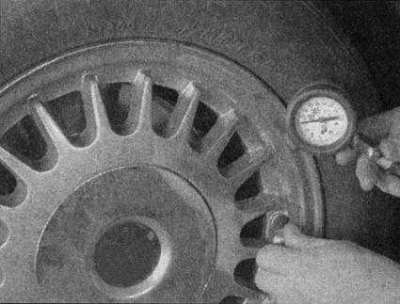
To extend the life of your tires, check your tire pressure at least once a week using an accurate gauge (don't forget about the spare tire!).
Don't forget to maintain the required pressure in the spare tire.
Examples of typical tire tread wear
[Original publication on the portal: NISSANBOOK.RU]
Lateral wear
Insufficient pressure (wear on both sides)
Underinflation causes the tire to overheat while driving due to excessive deflection, which means the tread is not pressed down sufficiently onto the road surface. This results in loss of traction and excessive tread wear, not to mention the risk of tire failure due to overheating.
Check and adjust pressure.
Incorrect wheel alignment (wear on one side)
Repair or replace suspension parts.
Too sharp turns
Slow down!
Central wear
Excessive pressure
Overinflation of the tyre will result in accelerated wear of the centre tread, reduced traction, a harsher ride and an increased risk of fatal tyre damage. Check and adjust the pressure. If you have to inflate your tyres to the recommended pressure for heavy loads, Specifications pressure values, do not forget to release it after this when switching to normal operating mode.
Uneven wear
The tires of the front wheels may wear out unevenly as a result of incorrect adjustment of the wheel alignment angles. You can check and adjust the installation angles for a reasonable fee in most tire repair shops.
Incorrect camber or runout
Repair or replace suspension parts.
Suspension defect
Repair or replace suspension parts.
The wheels are out of balance
Balance the wheels.
Front wheel alignment is incorrectly set
Adjust the front wheel alignment angles.
Note: Frayed edges of the tread pattern, which is a sign of wear, are best detected by touch.