


Caution: Using a transmission fluid other than that specified in Specifications, may lead to transmission malfunction or failure.
The AT fluid level must be carefully maintained. Too little fluid can cause the transmission to jump out of gear or lose power to the drive wheels, while too much fluid can cause fluid loss due to foaming. Both can cause transmission damage.
Because transmission fluid expands when heated, it should be measured when the fluid is warm, i.e. at normal operating temperature. If the vehicle has just driven more than 20 miles, the transmission fluid is warm enough. The transmission fluid level can also be measured when cold. If the vehicle has been parked for more than five hours and the fluid is close to room temperature (i.e. 68°F), the fluid is cold. However, it is better and more accurate to measure the fluid when it is warm.
Caution! Transmission fluid level readings may not be accurate if the vehicle has just been driven a long distance at high speeds, driven in hot weather in heavy city traffic, or towed a trailer. In these cases, wait approximately 30 minutes for the transmission to cool down.
1. Immediately after driving the vehicle, park it on a level surface, set the parking brake and let the engine idle. Depress the brake pedal and move the selector lever through all positions, starting and ending in the "P" (Park) position.
2. The transmission fluid filler tube and dipstick are located in the rear left corner of the engine compartment.
3. With the engine idling, remove the dipstick from the filler tube, wipe it dry with a clean rag, lower it back into the tube to the end, pull it out and determine the fluid level.
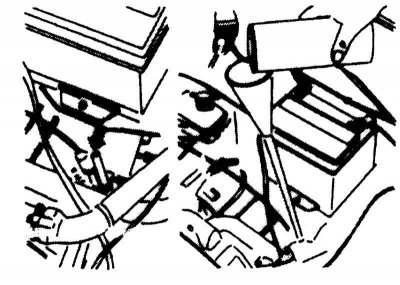
Automatic Transmission Fluid Level Dipstick (indicated by the arrow) located near the bulkhead on the left side of the engine compartment.
4. The fluid level should be between the two marks on the dipstick. If it is lower than it should be, add the fluid specified in Specifications liquids through the filler tube - use a clean funnel, preferably with a fine mesh filter to avoid splashing.
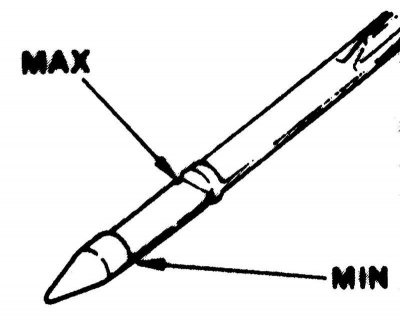
The hot transmission fluid level should be maintained between the two marks on the dipstick, preferably closer to the upper one.
Caution: When adding fluid, be careful not to introduce dirt into the transmission.
5. Add only the amount of fluid needed to reach the specified level. From the bottom to the top mark on the dipstick, approximately 0.5 liters of hot fluid is required, so add it little by little, and check the level each time until the required level is reached.
6. The condition of the fluid is determined simultaneously with the level check. If the fluid is black or dark red-brown in colour or has a burnt smell, it should be replaced (see section Transmission fluid replacement). If you are in doubt about the condition of the fluid, buy new fluid and compare its color and smell with the old one.