


Table of contents: Examination ↓ Restorative repair ↓
The working element of the rear window heater is a horizontal grid of conductive threads glued to the inner surface of the glass. Power is supplied to the heater through a large fuse from the power distribution unit located in the engine compartment of the car. The heater is turned on using a switch located on the instrument panel of the car. Check the proper functioning of the switch (see section Checking the proper functioning and replacing the instrument panel switches).
Minor breaks in the conductive threads of the heater element grid can be repaired without removing the rear window.
Examination
1. Turn on the ignition and rear window defroster.
2. Press the positive probe of the voltmeter to the positive terminal of the heating element grid, press the negative probe to the ground terminal. The device should register battery voltage, otherwise check the condition of the fuse, switch and connecting wiring. If the voltage is normal, however, part of the heater does not work. Proceed to the next step of testing.
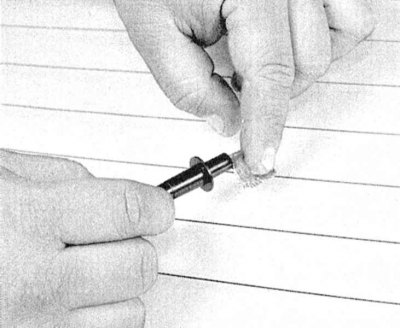
3. To measure voltage during the tests described below, wrap the positive probe of the voltmeter with metal foil, which can then be easily pressed directly to the conductive filament of the heating element grid with your finger. Connect the negative probe of the meter to the ground terminal of the grid.
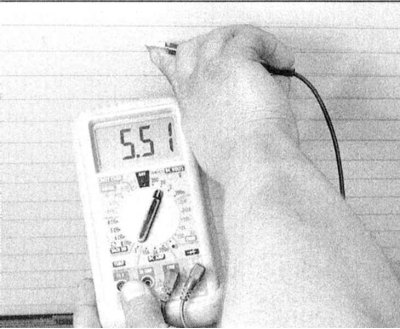
4. Measure the voltage in the central part of each of the grid threads. A reading of 5-6 V indicates that the thread is in good condition. A zero reading indicates a break between the center of the thread and the positive side of the element. A reading that is twice as high (10-12 V) occurs when there is a break between the center of the thread and the negative side of the element. Check each of the grid threads in turn.
5. If there are no breaks, connect the negative probe to the chassis ground and repeat the check - the readings should not change, otherwise there is a violation of the quality of the grid grounding.
6. To locate the break, press the negative probe of the voltmeter to the negative terminal of the heating element grid. Using the positive probe wrapped in foil, begin probing the conductive filaments of the grid, moving from the power supply side to the ground. At the break point, the reading of the device should drop from several volts to zero.
Restorative repair
1. Restoration of the integrity of conductive threads is carried out using a special two-component conductive paste such as Dupont No.4817.
2. Before starting any repair work on the working element grille, turn off the heater and allow the element to cool for a few minutes.
The article was obtained from the portal (nissanbook.ru)
3. Lightly clean the damaged area of the thread with felt, then wipe it thoroughly with alcohol.
4. Apply two strips of tape along the area of the thread to be repaired.
5. Thoroughly mix the epoxy paste with the hardener (follow the instructions included in the kit).
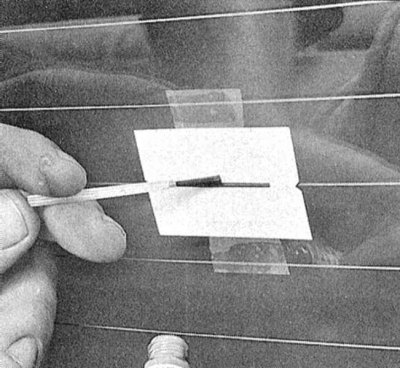
6. Apply the resulting composition to the damaged area (with an overlap of approximately 20 mm on the edges of the undamaged thread).
7. The final polymerization of the compound occurs after 24 hours, after which the protective tape strips can be removed from the glass.