


The window lifters can be controlled from the driver's seat using the main switch or by manipulating individual door switches. Each window is equipped with a separate reversible electric motor. Switching the control key changes the polarity of the motor connection and, as a result, the direction of its rotation. Some systems use a relay to control the power supply to the electric motors.
The circuit is protected by a fuse and a circuit breaker. Some models have individual protection for each of the electric motors with its own circuit breaker, preventing the possibility of the entire system being disabled if a single glass gets jammed.
The electric window lifter operates only when the ignition is on. Additionally, many models have the ability to lock the rear window lifters (and sometimes the front passenger) doors from the main switch. Do not forget about this function when checking for electric drive failures.
The described checks are of a very general nature, so if their implementation does not allow you to clearly identify the cause of the failure, take the car to a service station for a more detailed diagnosis.
In the event of a power window failure, always check the fuse and/or circuit breaker first.
If the rear door windows are controlled only by the main switch, check the continuity of the interlock switch in the released state. Replace the faulty switch.
Check the condition of the wiring in the circuit section between the switches and the fuse box. Make any necessary repairs.
If the main switch of only one of the windows fails to operate, check the proper operation of this window lifter from the individual switch. Note: This does not apply to the driver's door window lifter.
If the window lift is operated by only one of the two switches, check the suspect switch for proper operation (conductivity distribution).
If the switch is OK, check for opens and shorts in the circuit between the corresponding switch and the drive motor of the window lifter in question.
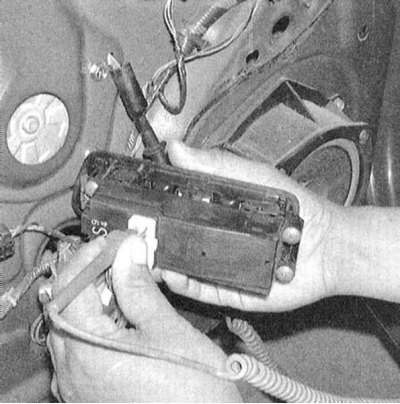
If the window regulator does not operate from both switches, remove the interior trim panel from the door in question and check for proper power supply to both the switch itself and the regulator drive motor (with the corresponding switch position).
 |
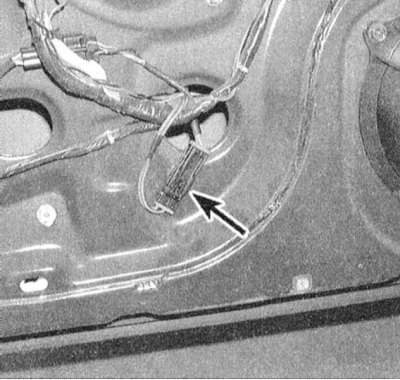 |
With the power supply to the electric motor working properly, separate the glass from the window regulator (see Chapter Body) and move it up and down, checking for freedom of movement. Also check the condition of the regulator. If the regulator is normal and the glass moves freely in both directions, replace the drive motor. If the smooth movement of the components is disrupted, eliminate the detected interference, lubricate the rubbing units and replace the damaged parts.
If there is no power to the motor, check the wiring between the switches and the motors for continuity (if necessary, refer to the electrical connection diagrams at the end of this Chapter). If the circuit is equipped with an executive relay, check the serviceability of the power supply and grounding of the latter. Make sure that the relay properly supplies voltage to the switched-on electric motor, replace the relay if necessary.
After making the necessary corrections, re-test the operation of the window lifts.