


Note: Detailed information on the dimensions required for engine/vehicle repair can be found in the chapter "Control dimensions and adjustment data".
Many major repairs can be performed without removing the engine from the vehicle.
Before carrying out any work, it is necessary to wash the engine compartment and the outer surface of the engine with a suitable degreasing agent. This will make the job easier and help prevent dirt from getting inside the engine.
Depending on what components you intend to remove/repair, it may be helpful to remove the hood to allow easier access to the engine as you perform repairs. The wings should be covered with something to avoid damaging the paintwork. There are special covers available, but old bedspreads or blankets can work just fine for this purpose.
When leaks occur in the vacuum, exhaust, oil, or cooling systems that require gasket or seal replacement, most of the required work can be performed on the engine while it is in the vehicle. The intake and exhaust manifold gaskets, crankcase gasket, crankshaft seals and cylinder head gaskets are relatively easy to access without removing the engine.
(Text duplicated from the website: NISSANBOOK)
Elements and mechanisms requiring maintenance and repair due to wear and tear
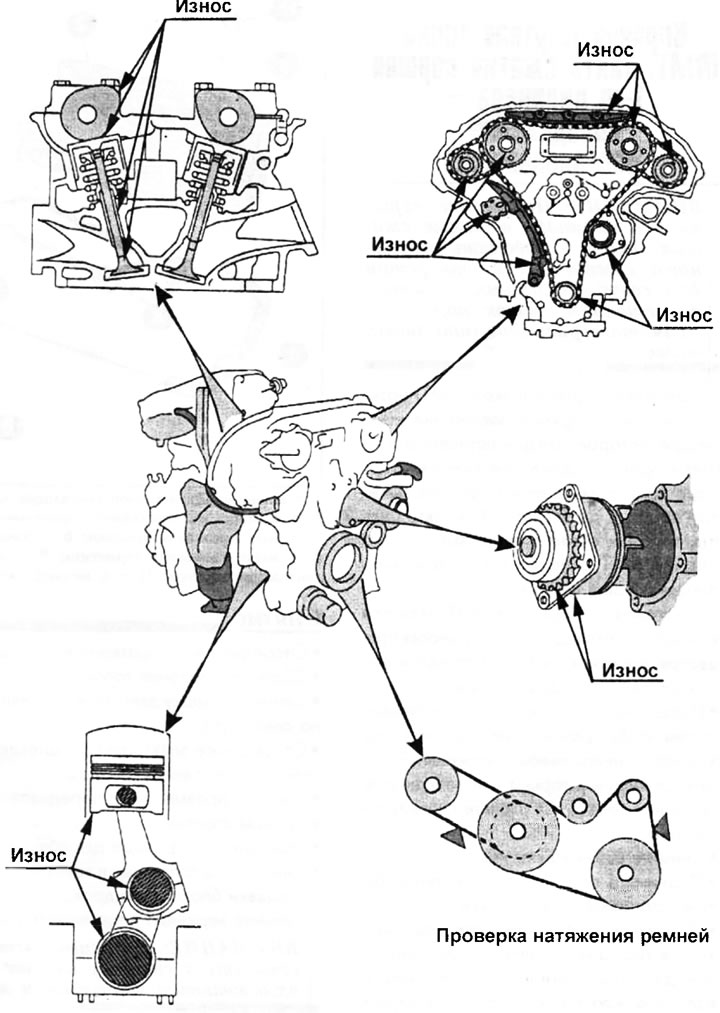
External engine components such as the intake and exhaust manifolds, oil pan, water pump, oil pump, starter motor, alternator and fuel system components can be removed for repairs without removing the engine from the vehicle.
Since the cylinder head can be removed without removing the entire engine, servicing the camshafts and valve train can be performed without removing the engine. The drive chain can also be replaced.
In emergency circumstances caused by a lack of necessary equipment, repair or replacement of piston rings, pistons, connecting rods and bearings can be performed without removing the engine from the vehicle. However, this practice is not recommended, as it requires special work to clean and prepare the parts in question.