


Unfortunately, vacuum measurement results can easily be misinterpreted, so for accurate diagnosis, this method must be used in conjunction with other methods to confirm the diagnostic results.
For correct interpretation, both the absolute vacuum values and the speed of the pointer are very important. Most vacuum gauges measure vacuum in millimeters of mercury (mmHg). The vacuum values provided below assume the test is performed at sea level. As the altitude increases (or a decrease in atmospheric pressure), the vacuum value will decrease. For every 300 m increase in altitude after an altitude of approximately 600 m, the instrument readings will decrease by approximately 25 mmHg.
- Connect the vacuum gauge directly to the exhaust manifold.
- Make sure that no hoses become disconnected during testing, otherwise incorrect results will be obtained.
- Warm up the engine completely before starting any checks. Block the wheels and apply the parking brake. With the CVT in neutral, start the engine and let it run at normal idle speed.
Caution: Carefully check the fan blades for cracks or damage before starting the engine. Keep your hands and vacuum gauge away from the fan, and do not stand in front of the vehicle when the engine is running.
Determine the vacuum value; a normal engine should produce a vacuum of 375 to 500 mm Hg, and the vacuum gauge needle should remain steady. Use the following figures and their corresponding vacuum values to determine engine faults (the vacuum values in the figures are given in mmHg.).
- Nominal value, not less than 450 mmHg.
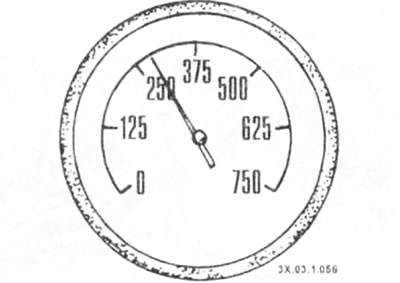
Constant low value
This usually indicates a loose intake manifold to throttle body gasket, a leak in a vacuum hose, retarded ignition timing, or out of camshaft timing. Check the ignition timing with a timing light and eliminate all other possible causes using the testing procedures in this chapter before removing the timing cover to check the alignment of the valve timing marks.
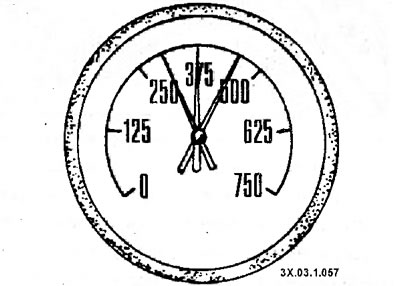
Low changing value
(Original text on the website: «NissanBook.ru»)
If the vacuum gauge needle fluctuates approximately 75-200 mmHg below the normal value, a loose intake manifold gasket with a leak at the intake port is suspected.
Regular recessions
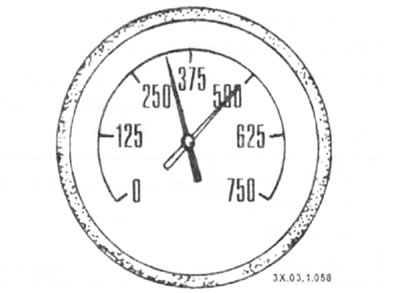
If the vacuum gauge needle drops by 75-100 mmHg at a constant rate, then there is probably no tightness in the valves. To confirm this assumption, perform a compression test and check for leaks.
Irregular declines
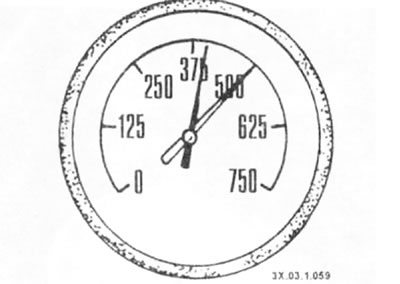
Irregular drops in the vacuum gauge needle can be caused by a stuck valve or misfiring; perform compression and leak checks and inspect the spark plugs.
Fast vibration
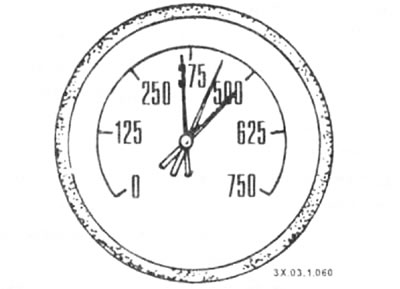
A rapid vibration of the needle within 100 mmHg at idle, combined with exhaust gases, indicates wear of the valve guides. To confirm this assumption, perform a leak test. If rapid vibration occurs when engine speed increases, check for leaks in the intake manifold gasket or cylinder head gasket; whether the valve springs are weak, whether the valves are burnt, and whether there are misfires.
Minor changes
Minor changes (within 25 mmHg.) may indicate problems in the ignition system. Check all adjustments and, if necessary, test the ignition system on a test bench.
Big changes
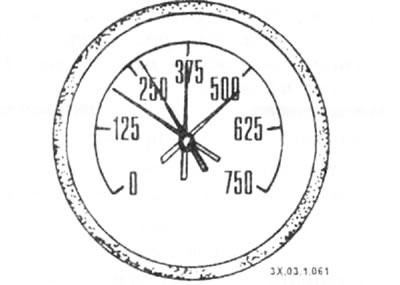
If this occurs, perform a compression or leak test to identify a faulty cylinder or a bad cylinder head gasket.
Slow movement
If the needle moves slowly over a wide range, check to see if the positive crankcase ventilation system is clogged, if the idle mixture is correct, and if there are any leaks in the gaskets between the throttle body and the intake manifold.
Slow recovery after a jump
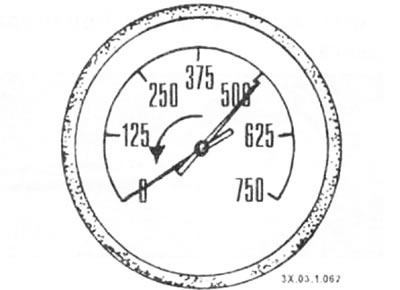
Open the throttle sharply until the engine reaches about 2500 rpm, then let it go. Typically the value should drop to near zero, rise higher to about 125 mmHg above the normal idle value, and then return to the previous idle value. If the vacuum returns slowly and does not jump up when the throttle is released sharply, the piston rings may be worn. If there is a long delay, check to see if the exhaust system is clogged. This can be easily checked by temporarily disconnecting the exhaust system in front of the suspect part and repeating the test.