

Table of contents: Checking wheel alignment ↓ Checking wheel alignment ↓
Correct rear wheel alignment is just as important as the front. If they are not adjusted correctly, the car will slip when turning. Unusual vehicle behavior and excessive tire wear suggest incorrect wheel alignment.
The toe-in and camber are adjusted using eccentric bolts in the suspension arms.
Before adjusting the wheels, perform all checks as recommended for the front wheels. Then adjust the rear wheels. When adjusting, also use the recommendations provided for the front wheels.
Checking wheel alignment
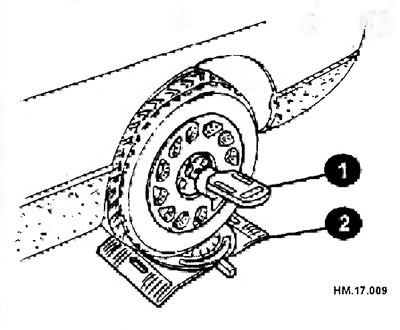
- Using the special tool (1), measure the camber of the right and left rear wheels, using the special measuring device (2) and, if necessary, adjust according to the instructions below.
Wheel alignment:
♦ minimum: (-1°16') (-1.27°);
♦ standard: (-0°46') (-0.77°);
♦ maximum: (-0°16') (-0.27°).
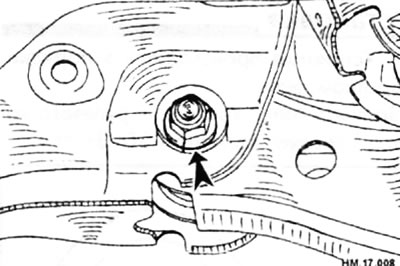
- If the camber value differs from the standard value, adjust it using the adjusting bolt (arrow) located on the lower front suspension link. After adjusting the camber, check the wheel alignment.
Checking wheel alignment
Checking the rear wheel alignment is similar to checking the front wheel alignment, so refer to the section "Front suspension".
Wheel alignment (A-B):
♦ minimum: 1.4 mm;
♦ standard: 3.2 mm;
♦ maximum: 5.0 mm.
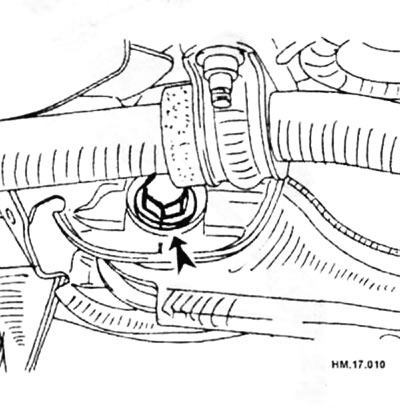
- If the toe-in value differs from the standard values, adjust using the adjusting bolt (arrow) on the lower rear suspension link.
The text was copied from the portal NissanBook.ru
Caution: Adjustment using the adjusting bolts must be made on both sides.