


Table of contents: Rubber/nylon hoses ↓ Metal fuel lines ↓
Caution: Fuel lines are under pressure, so if any fuel lines need to be disconnected, be prepared to collect any spilled fuel.
Caution: Relieve fuel pressure before servicing fuel lines. The procedure for relieving pressure in the fuel system was described earlier.
To remove the fuel lines on the vehicles described, it is necessary to separate the fuel line connections, which requires the use of special tools. Such devices are sold in auto parts stores.
Some fuel system components, such as the fuel tank or parts of the fuel supply and return lines, are located under the vehicle and are easier to inspect or remove by raising the vehicle on a lift. If you don't have a lift, raise the car and support it securely on stands.
Check all hoses and tubes for cracks, kinks, twists, deformation or blockages. Make sure all hose and tube clamps are securely attached to both the hoses they connect and to the underbody of the vehicle. Check that all clamps securing rubber or nylon hoses to metal fuel lines or tubes are tight enough to ensure a tight seal between the hoses and tubes.
Rubber/nylon hoses
Check all hoses for damage and wear. Check for cracks at the bends of the hoses and in areas adjacent to the connections, i.e. where the hose attaches to the fuel pump, fuel filter and fuel rail. To replace the fuel line, you must use a high-quality hose, preferably with a printed designation of compliance with the use of the latter at high pressures and marking the pressure maintained by the hose. If the hose does not have the appropriate markings, you should obtain the seller's guarantee that the hose is suitable for use at high pressures. Never use unbraided vacuum tube, clear plastic tube, or water hose as fuel lines because they are not designed for use with fuel, much less under high pressure.
[The article is located on the website: Nissanbook.ru]
Metal fuel lines
Metal tubes are used as fuel lines in some sections of the fuel line. Carefully inspect the fuel line along its entire length to ensure that it is not bent, broken, flattened, or cracked. Replace metal fuel line sections with seamless steel tubing only. Do not use copper or aluminum tubes because they cannot withstand engine vibration.
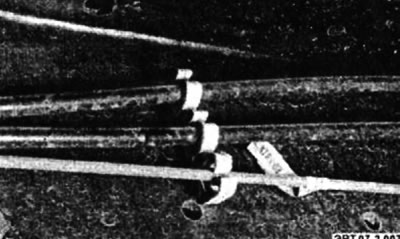
The fuel supply and return lines and the fuel vapor tube extend from the fuel tank to the engine compartment.
These tubes are secured to the bottom with clamps and screws and should be checked for leaks, kinks and dents.
Also check that the connections and fittings securing the metal fuel lines to the fuel injection system and to the filter are tight and free of leaks.
Replacement
Remember to relieve fuel pressure before disconnecting any fuel system component. Also cover the disconnected connections with a rag, which will absorb any fuel that may splash or spill.
Rubber/nylon hose
Remove the fuel line fastening parts from the vehicle body and disconnect the connections that secure the rubber fuel hoses to the metal fuel lines. After removing the clamp-type connections, rotate the hoses back and forth to make them easier to remove.
When attaching the rubber hose to the metal tube, ensure that they are properly overlapped. Use a new clamp to secure.
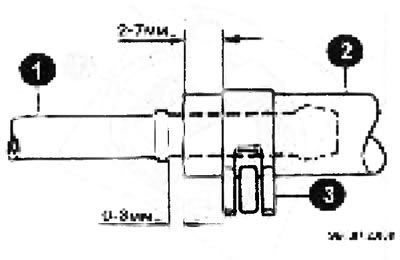
1 - tube; 2 - hose; 3 clamp.
Do not install the hose closer than 100 mm to any part of the exhaust system or closer than 250 mm to the catalytic converter. Metal fuel lines and rubber hoses should never be allowed to rub against the vehicle body. To prevent contact with the body, ensure a gap of at least 6-7 mm around the fuel line or hose.
Steel tubes
When replacing a metal fuel line, always use seamless steel tubing that meets specifications. Do not replace steel tube with copper or aluminum because they cannot withstand normal vehicle vibration. Disconnect the fuel line at both ends, remove the mounting hardware and remove the line from the vehicle. Replacement of tubes is generally carried out in the usual manner. To install the tubes on a car, you need special tools for bending the tubes and cutting threads; when using these devices, follow the manufacturer's instructions. Using the originally installed fuel line as a template, bend the new line over it and securely attach it to the body.