


Attention! The described operations apply to brakes equipped with both single-piston and block brakes (two-piston) cylinders.
1. Remove the pads.
2. Unscrew the hose fitting on the caliper (photo), disconnect and plug the hose.
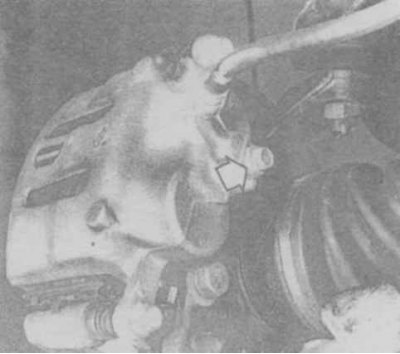
3.2 Loosen the bolt and disconnect the fitting. Copper gaskets are subject to replacement
3. Unscrew the upper caliper bolt and remove the caliper from the disc.
4. Clean the caliper, observing safety regulations.
5. Carefully remove the pistons with compressed air (photo), after wrapping the cylinder with a rag.
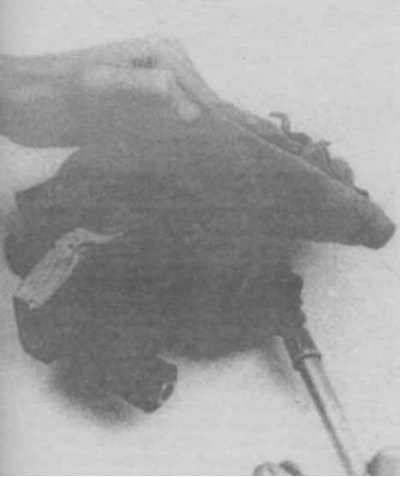
3.5 Removing the piston from the cylinder with compressed air
6. Carefully remove the cuff from the cylinder (photo).
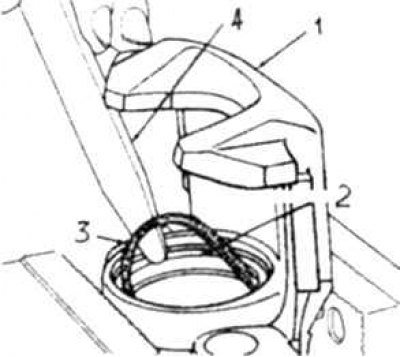
3.6 Removing the cuff
1. Support; 2. Groove in the cylinder; 3. Cuff; 4. Plastic tweezers
7. Unscrew the bleed nipple, remove the pins and covers from the caliper.
8. Wash and dry the parts.
9. Check the condition of the pistons and the inner surface of the cylinder. If noticeable damage or wear of the coating is found, replace the part. If corrosion is found on the bolts, replace the bolts.
10. When assembling, lubricate the piston and cylinder with brake fluid, install a new cuff (photo).
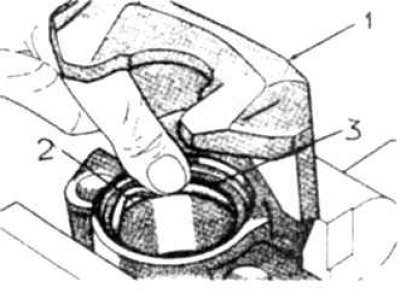
3.10 Installing the cuff
1. Support; 2. Cuff; 3. Groove
11. Place the cover on the piston, placing it in the groove (photo).
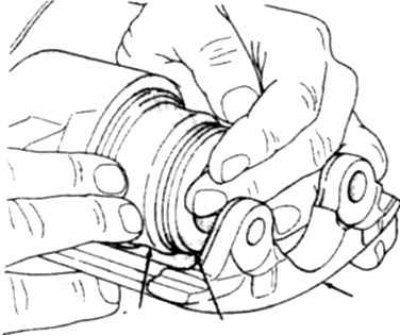
3.11 Installing the piston cover
12. Insert the piston into the cylinder without distorting it, then press down until the piston hits the bottom of the cylinder (photo).
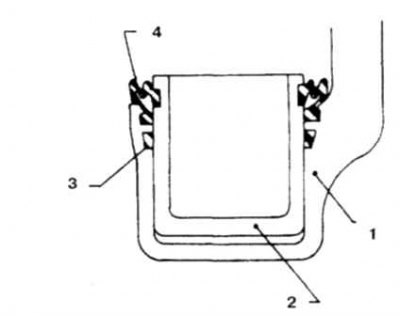
3.12 Installing the piston into the cylinder
1. Cylinder; 2. Piston; 3. Cuff; 4. Cover
13. Install the cover on the cylinder.
14. Screw in the bleed nipple
15. Lubricate the pins with silicone grease and install them with new covers into the caliper.
16. Further operations are performed in reverse order. Remove air from the hydraulic drive of the disassembled brake.