


Attention! The pads are changed only as a set for one axle. When cleaning the pads, remove dust and dirt by wiping with a rag soaked in alcohol; blowing is prohibited.
1. Loosen the wheel nuts, lift the car and place it on stands. Remove the wheels.
2. Unscrew the lower cylinder axle bolt (photo).
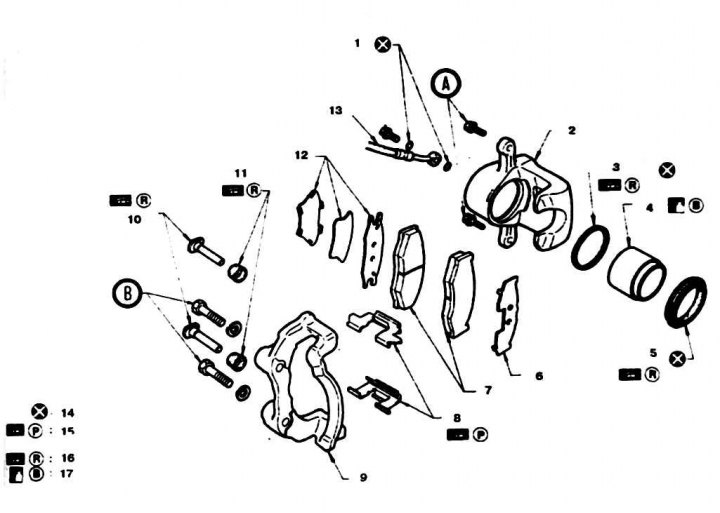
2. 2a Disc brake CL25VA (rear-wheel drive cars with 4-cylinder engines)
1. Copper gaskets; 2. Cylinder; 3. Cuff; 4. Piston; 5. Cover; 6. External gasket; 7. Pads; 8. Holders; 9. Support; 10. Finger. Lubricate the sliding part; 11. Caps
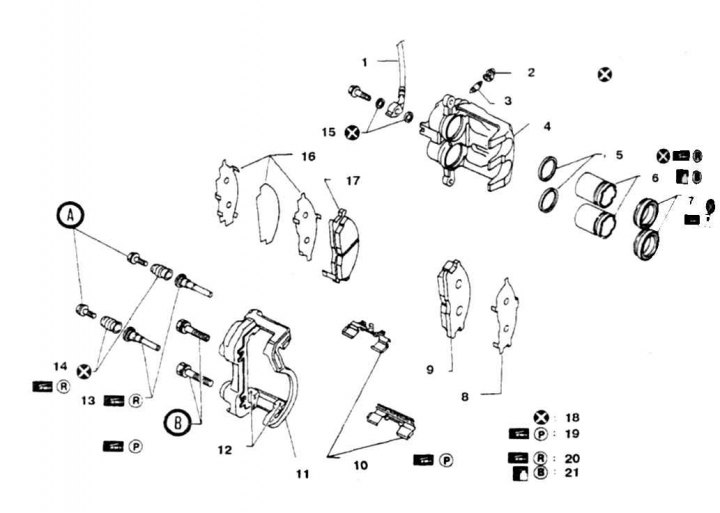
2.2b Disc brake CL25VD (all four-wheel drive vehicles and all vehicles with V6 engines)
1. Hose; 2. Cap; 3. Bleeding nipple; 4. Cylinder; 5. Cuffs; 6. Piston; 7. Cover; 8. External gasket; 9, 17. Block; 10. Holders; 11. Support
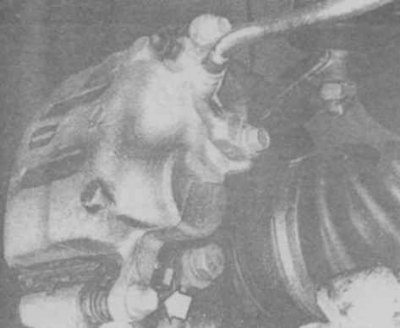
2.2v Lower axle bolt
3. Fold the support upwards (photo).
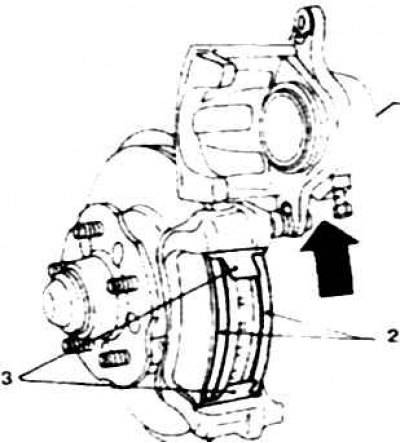
2.3 Folding the caliper back to access the pads
1. Cylinder; 2. Block; 3. Holders
4. Remove the holders, gaskets and pads. Pay attention to the original location of the parts.
5. Lubricate the contact surfaces of the caliper with silicone grease (photo).
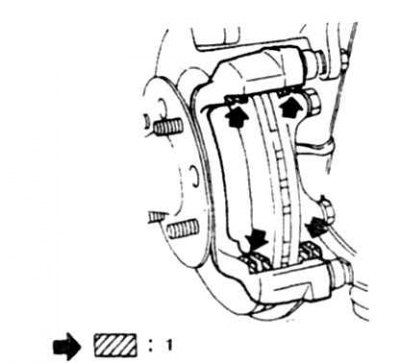
2.5 Silicone lubrication points 1. Lubrication point
6. Install new inner pads and gaskets.
7. Lower the caliper and move it outward (photo).
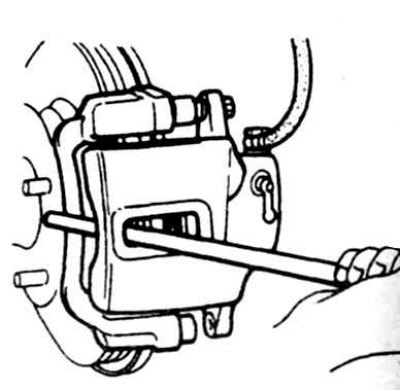
2.7 Offsetting the caliper for installing external gaskets
8. Raise the caliper again and install new outer pads and shims (photo).
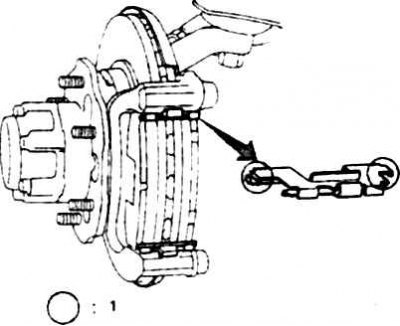
2.8 Lubrication of the brake shoe holders
1. Lubrication point
9. Lower the caliper and tighten the axle bolt to the specified torque.
10. Further operations are performed in reverse order. Check the fluid level, restore if necessary. Check the operation of the brakes.