


Table of contents: Speedometer ↓ Fuel level indicator ↓ Tachometer ↓ Engine coolant temperature gauge ↓
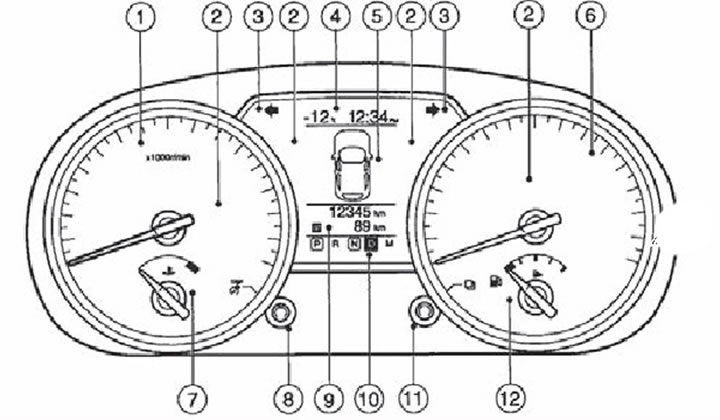
1. Tachometer.
2. Light signaling devices and indicators.
3. Direction indicators and hazard warning lights.
4. Clock/outside temperature display.
5. Information display.
6. Speedometer.
7. Coolant temperature gauge.
8. Brightness regulator and mileage counter settings.
9. Odometer/trip counter.
10. Gear selector lever position indicator (only for models equipped with automatic transmission or CVT).
11. Regulator for setting and controlling the on-board computer.
12. Fuel level indicator.
Speedometer
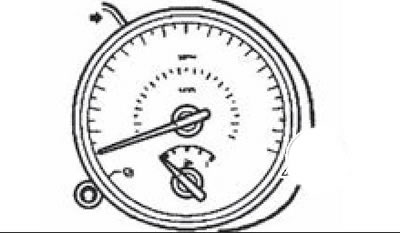
The speedometer shows the speed of the car in km/h (km/h) or MPH (mph). The scale graduation depends on the car version.
Fuel level indicator
The fuel gauge comes on when the ignition switch is in the "ON" position.
The text was borrowed from here nissanbook
The indicator needle may fluctuate slightly during braking, cornering, acceleration, and when driving uphill or downhill.
The icon indicates the location of the fuel filler cap on the right side of the vehicle.
Note: The low fuel warning is displayed on the information display. The low fuel warning light is located on the instrument panel. Both lights come on when the fuel level is low. Refuel the vehicle as soon as possible. The position of the arrow on the "Empty" mark corresponds to a small reserve of fuel in the tank.
Caution: Fill the tank with fuel before it runs out completely.
Tachometer
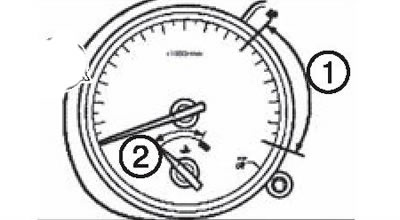
The tachometer shows the engine speed measured in revolutions per minute (rpm). Do not allow the tachometer needle to be in the red zone (1).
The scale graduation depends on the vehicle version.
Caution: If the tachometer needle approaches the red zone of the scale, engage a higher gear. Running the engine when the tachometer needle is in the red zone may cause engine damage.
Engine coolant temperature gauge
This gauge shows the engine coolant temperature. The engine coolant temperature is within the normal operating range (2).
The engine coolant temperature depends on the ambient temperature and the vehicle's driving mode.
Attention.
- If the engine coolant temperature gauge needle is near the upper limit of the operating range, then to cool the engine it is necessary to reduce the vehicle speed.
- If while driving you find that the arrow of this indicator has left the normal temperature zone, stop the car as soon as possible.
- Continuing to drive when the engine is overheated may result in serious engine failure.
- To avoid burns, allow the engine to cool before opening the radiator cap