


Note: The procedure applies equally to both front and rear disc brakes.
Checking the status
1. Loosen the wheel nuts, jack up the car and support it. Remove the wheel in question, then screw the pair of wheel nuts back onto the studs, using 3mm washers underneath to hold the brake disc in place. When checking the rear brake disc, remember to release the parking brake.
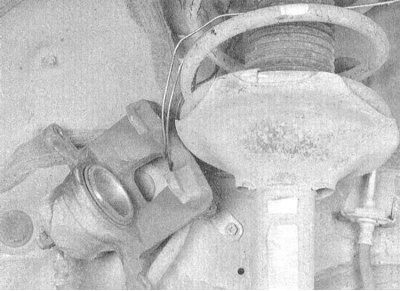
2. Remove the brake caliper (see section Removal and installation of disc brake calipers) and tie it to the side with wire to the suspension element without disconnecting the brake hose.
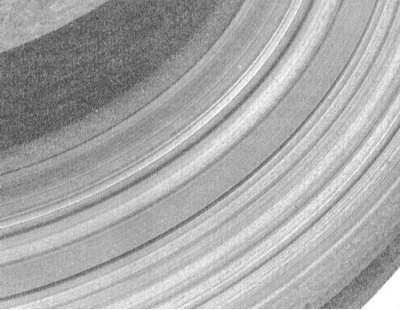
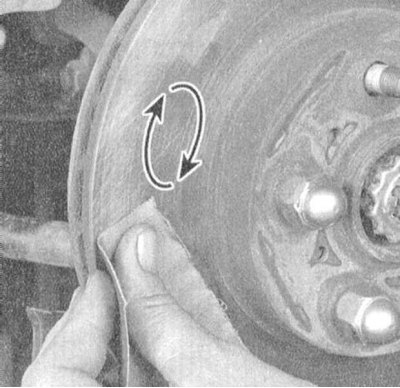
3. Visually inspect the condition of both working surfaces of the disc. Light defects can be removed using fine-grained sandpaper. To remove grooves deeper than 1.0 mm, the disc should be removed and reground. Remember that the disc should be inspected from both sides.
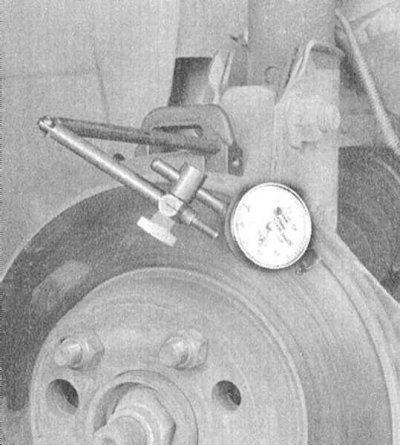
4. If pedal pulsation is observed during braking, the lateral runout of the brake disc should be assessed. Attach a plunger-type dial gauge (DTI) approximately 12.7 mm from the outer edge of the disc. Zero the gauge and begin rotating the disc. The measurement should not exceed the permissible range specified in the Specifications, otherwise the disc must be resurfaced.
Note. The authors of this Manual recommend turning the disks regardless of their condition in order to remove any defects from the working surfaces. In extreme cases, you can limit yourself to processing the disk with fine-grained sandpaper.
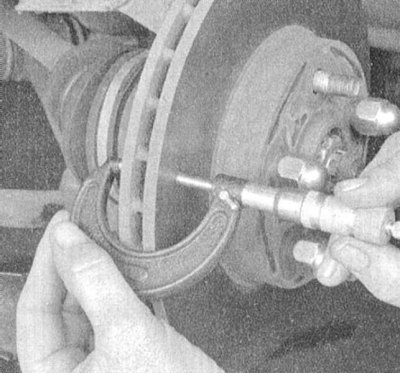
5. When turning the disk, special attention should be paid to compliance with the requirements of the Specifications for its minimum permissible thickness. The corresponding marking is provided on the end surface of the disk. The thickness of the disk is measured using a micrometer.
Removal
1. Remove the two mounting bolts and the brake mechanism anchor bracket.
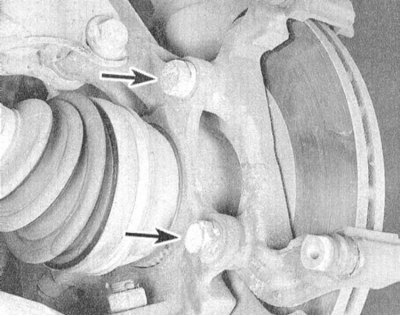
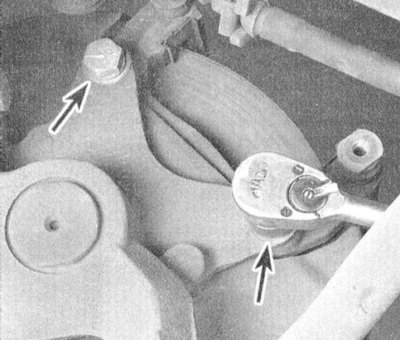
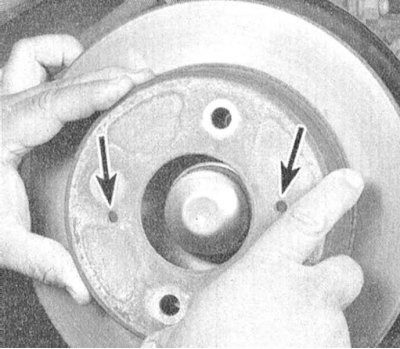
2. Loosen the wheel nuts screwed on to secure the disc and remove the disc assembly from the wheel hub. If the disc is "stuck" and cannot be removed, screw a pair of long bolts of the appropriate size into the threaded holes between the wheel mounting studs and try to move the assembly by gradually tightening them.
Installation
1. Carefully place the disc on the hub (try not to damage the wheel studs).
2. Place the brake mechanism anchor bracket in its regular place. Tighten the bracket mounting bolts with the required force. Install the brake pads.
3. Install the caliper and tighten its mounting bolts to the required torque.
4. Replace the wheel, lower the vehicle to the ground and tighten the wheel nuts to the specified torque (see Specifications in Chapter Settings and ongoing maintenance). Press the brake pedal/cock the parking brake lever several times to seat the pads on the disc. If the brake hoses were not disconnected, there is no need to bleed the hydraulic system. Before operating the vehicle, make sure that the brakes are functioning properly.