


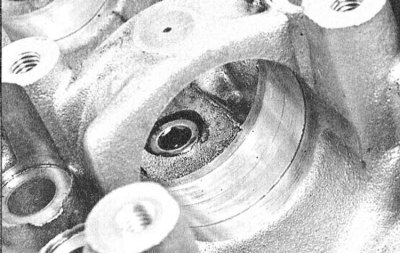
1. Check the bearing surfaces for the camshafts for cavities, scratches, scoring and other signs of excessive wear. If any defects are found, the head should be replaced.
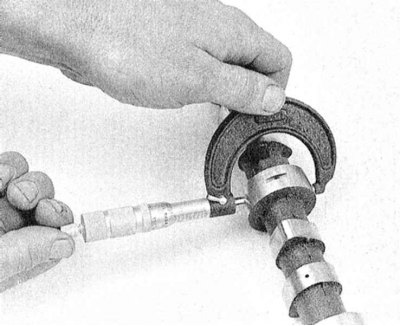
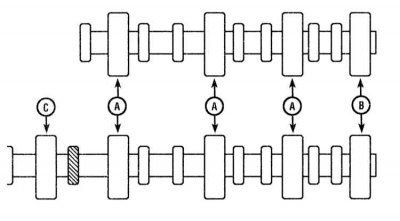
2. Measure the outside diameter of each bearing journal of the shafts. Record the measurement results and compare them with the nominal values given in the Specifications. Measure the inside diameters of the bearings in the cylinder heads and subtract the results of the corresponding first measurements from the results of the last measurements. The resulting difference will be the value of the clearances in the bearings of the shafts. Compare the obtained data with the requirements of the Specifications. If necessary, replace the shafts and/or heads.
 |
 |
3. Estimate the radial runout of the shafts by placing them in V-blocks and using a plunger-type dial gauge. Rotate the shaft in the blocks slowly, record the readings, and compare them with the nominal values (see Specifications). Replace the corresponding shaft if necessary.
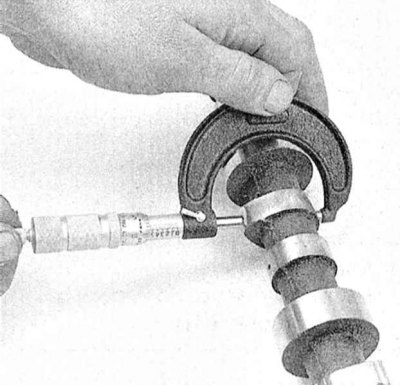
4. Using a micrometer, measure the cam lobe height. Compare the measurement with the Specifications, then subtract it from the Specifications to determine the degree of cam lobe wear. If the wear exceeds the maximum allowable value, (see Specifications), replace the corresponding shaft.
5. Assess the condition of the working surfaces of the valve tappets.
Original publication on the portal NissanBook.ru
Note: If the tappet contact surface is worn, it is also worth assessing the condition of the corresponding camshaft lobe/adjusting shim on DOHC engines.
On SOHC engines, the tappets should be kept vertical to prevent air from entering them (see section SOHC engines of this Chapter).
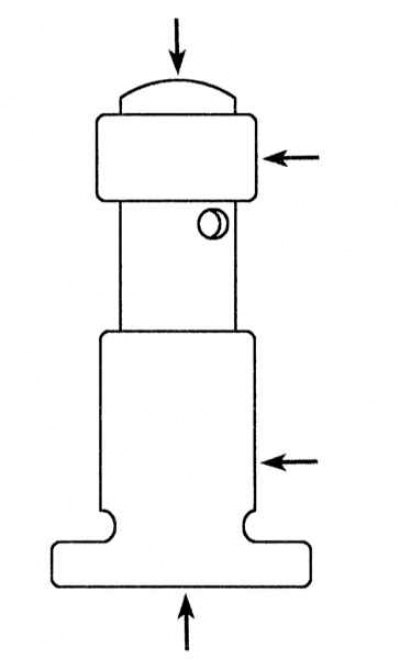
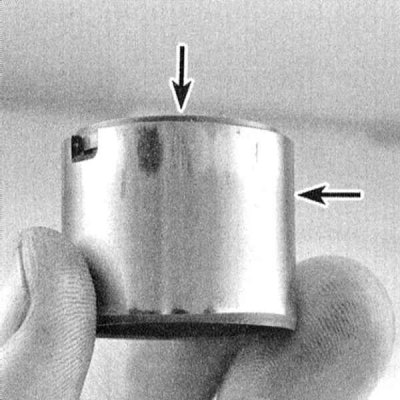
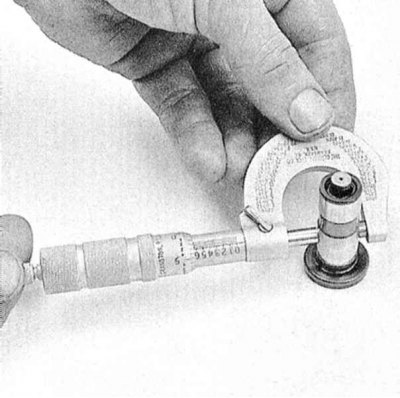
6. Using a micrometer, measure the outside diameter of each tappet. Compare the measurement results with the Specifications. Replace tappets that are worn beyond the permissible limit.
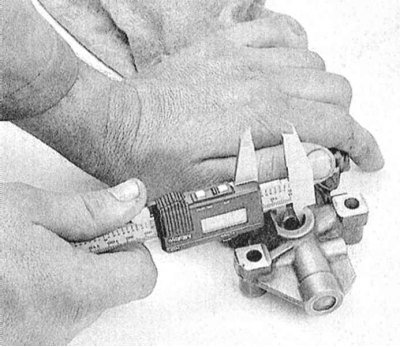
7. Measure the diameter of each tappet and compare the measurement results with the Specifications. Replace the guide assembly if necessary (sOHC engines), or the cylinder head (dOHC engines).
8. Subtract the tappet outside diameters from the inside diameters of the corresponding seats in the guide/head to determine the tappet seat clearance - when installing new components (pushers, guide/head) it is possible that this parameter may go beyond the permissible values.
9. On SOHC engines, assess the degree of wear of the rocker arms and their shafts (see section SOHC engines of this Chapter). If the rocker arm linings are excessively worn, they must be replaced - do not attempt to restore their wear under any circumstances.
10. Remember that the condition of all components, whether new or old and suitable for further use, must be checked before installation.