


2. Carefully check the surface of the shaft journal that contacts the seal for scratches, burrs and other defects that could cause the new seal to fail. Replace the damaged shaft.
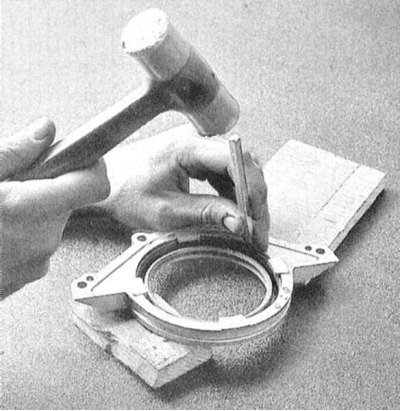
3. Measure the standard seating depth of the old seal in the holder socket, then place the holder plate with its edges on a couple of wooden blocks of equal height, and using a suitable punch and hammer, knock the old seal out of its socket. Try not to damage the walls of the socket.
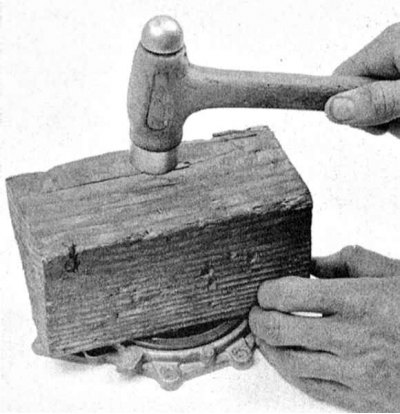
4. Thoroughly wipe the holder, then lubricate the outer edge of the new oil seal with clean engine oil. The oil seal must be seated in the socket strictly perpendicularly, so it is not recommended to tap it into the holder with a hammer. If there is no access to a press, the oil seal can be inserted into the socket using a large vice with soft jaws. The holder with the oil seal must be clamped between two flat wooden blocks, ensuring an even distribution of the load over the entire area of the end surface of the oil seal. In extreme cases, it is permissible to use a hammer, but tapping should be done through a flat wooden block. Act slowly, make sure that there is no distortion.
5. Before installing the retainer assembly with the seal on the crankshaft journal, lubricate the seal lips with a multi-purpose grease. On the engines in question, the retainer is mounted on the engine without a gasket - instead, an even cushion of RTV sealant should be applied to its mating surface. Do not forget to install the guide pins in their regular places.
6. Press the holder tightly against the block, tighten the mounting bolts by hand, make sure the holder is installed correctly, then tighten the bolts to the required force.