


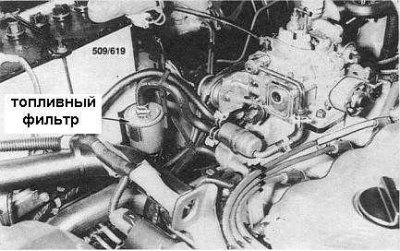
In the engine compartment, inspect the fuel filter for signs of dirt and water ingress (the accompanying illustration shows the location of the fuel filter on 3.0L models). If any of these are detected, or if the scheduled filter change time has come, proceed to replace it.
1. Remove the filter from the mounting clamp and clamp the hose coming from the fuel tank near the filter. When tightening the clamp, be careful not to damage the hose.
2. Place a drain container under the filter. Loosen the hose clamps, disconnect the filter from the fuel line and drain the remaining fuel from the hoses into the prepared container.
3. Place the hoses onto the corresponding fittings of the new filter and tighten the clamps.
Note: When connecting the filter in-line, make sure that the arrow on its body points in the direction of fuel flow.
4. Remove the clamp from the fuel line and install the filter into the mounting clamp.
5. Start the engine and check the installed filter for signs of fuel leaks.
Late-model 4.2 L models equipped with fuel injection (EFI)
1. Release the pressure in the fuel system, for which:
- Loosen the screws and lift up the relay panel located in the engine compartment next to the battery. Remove the cover and take out the 15A fuel pump fuse (see accompanying illustration);
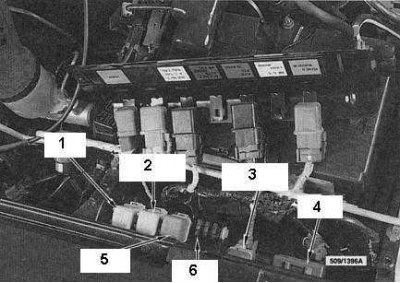
1 - EFI control relay
2 — fuel pump relay
3 - radiator fan relay
4 - Windshield wiper relay
5 — PARKING/NEUTRAL relay
6 - Fuel pump fuse
- Start the engine and let it idle until it stops on its own. To ensure complete pressure relief, turn on the starter for 10 seconds;
- Turn off the ignition.
2. Disconnect the negative cable from the battery.
(The text is published on the website: «NISSANBOOK.RU»)
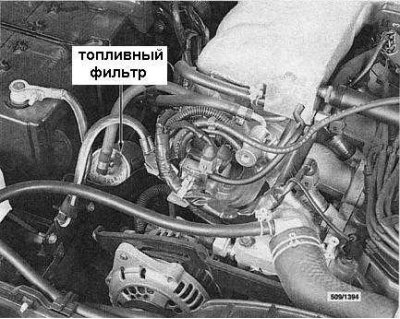
3. Locate the fuel filter in the engine compartment (see accompanying illustration) and install a drain container made of BMS material under it and loosen the clamps securing the fuel hoses to the filter.
4. Disconnect the hoses from the filter and remove the filter, remembering its installation direction.
5. Install the new filter, correctly turning it in relation to the direction of fuel flow. Check the condition of the fuel hoses, replace if necessary.
6. Connect the hoses to the filter and tighten the clamps securely.
7. Replace the fuel pump fuse and start the engine. Check the filter for signs of fuel leaks.