


Before removing the spark plugs, make sure the spark plug recesses are clean to prevent foreign objects and small debris from getting into the cylinders. If necessary, wipe the recesses or blow them with air, using a regular bicycle pump for this purpose.
The working part of the spark plugs removed from an engine in good mechanical condition should be covered with a light powdery coating from light brown to gray-golden color. After performing maintenance, signs of wear and normal burning of the electrodes may appear.
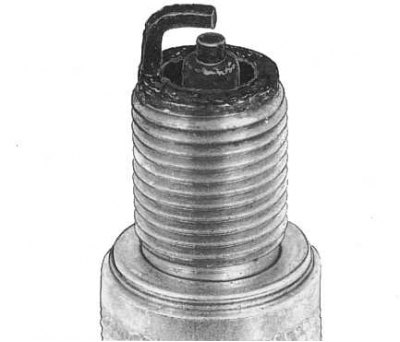
The presence of a thick layer of black oil deposits on the working part of the spark plugs (see accompanying illustration) indicates excessive oil consumption caused by poor mechanical condition of the engine, or that spark plugs with an excessively low heat rating are being used.
[The article is located on the website: www.NissanBook.ru]

If the electrodes are eroded to the extent shown in the accompanying illustration, the spark plug should be considered worn out and must be replaced with a new one of the appropriate type.
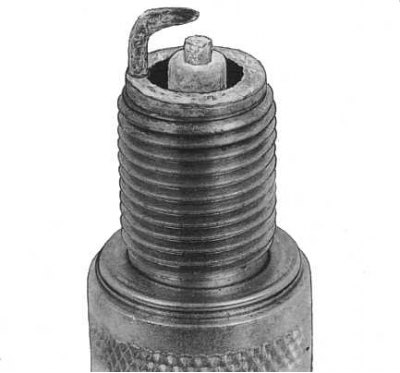
The presence of white or yellowish deposits on the working part indicates that the driver is overly fond of fast driving, accompanied by engine overheating, or that spark plugs with an excessively high heat rating are used, especially when this is accompanied by cracks in the porcelain insulator and burning of the electrodes (see accompanying illustration).
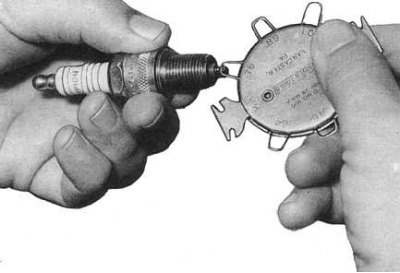
Before installing the spark plugs on the engine, check the interelectrode gaps using a special wire-type measuring probe (see accompanying illustration). in extreme cases, you can use a blade-type feeler gauge. If it is necessary to adjust the gap, bend the side electrode accordingly using the device built into the measuring probe.
Screw the spark plugs into the cylinder head by hand, then use a torque wrench to tighten them to the required torque.
Be careful when adjusting the gaps and screwing in the spark plugs - the accompanying illustration shows a section of the working part of the spark plug, illustrating a defect in the central electrode insulator in the form of cracks, which usually form when applying excessive force when adjusting the interelectrode gap. The cause of cracks in the spark plug tail insulator is most often a skewed spark plug wrench when tightening the spark plug.
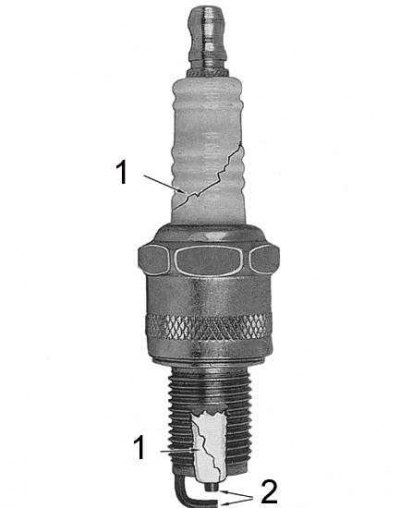
1 - crack
2 - crack
3 - electrodes
Note. If you do not have a torque wrench at hand, tighten the spark plugs with extreme caution, as overtightening can cause the threads in the mounting holes in the body of the cylinder head made of soft aluminum alloy to break. After tightening the spark plugs by hand, it will be enough to tighten them another 1/4 turn with a special spark plug wrench equipped with a soft insert.