


Check all high voltage wires for external insulation defects (abrasions and cracks), replace if necessary. Never attempt to repair a damaged wire. Before checking, clean the wires by wiping them with a rag soaked in kerosene, then dry them thoroughly.
Measuring the resistive resistance of high-voltage wires
Note: If an ohmmeter is available, the resistive resistance of the high-voltage wires can be measured.
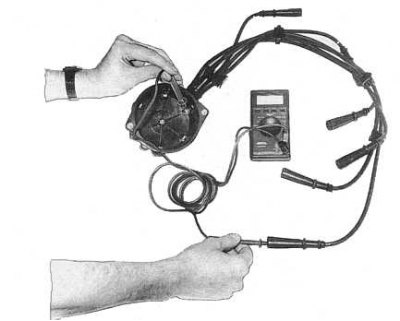
1. After removing the distributor cap together with the high-voltage wires connected to it, begin to measure the resistance of each wire one by one, connecting the ohmmeter probes to the spark plug tip of the wire and the corresponding terminal inside the distributor cap (see accompanying illustration). The resistance should not exceed 30 kOhm.
2. If the measurement result exceeds 30 kOhm, disconnect the corresponding wire from the distributor cap and repeat the measurement separately for the wire. If the result is confirmed, the wire must be replaced.
3. Increased resistance in the distributor cap may be due to oxidation of its terminals. In this case, traces of corrosion should be removed from the terminals using a suitable small scraper or sandpaper.
Original text on the website [NISSANBOOK.RU]
Note: Also inspect the distributor cap from the inside and outside for cracks and carbon tracks between the high-voltage terminals. If such defects are found, the cap should be replaced.
Also check the condition of the carbon brush in the central part of the distributor cap. If you find signs of arcing or other damage, replace it.