


2. Rotate the disc slowly and check the condition of the entire surface on both sides. A small amount of wear is acceptable in the areas where the brake pads catch, but if there is severe wear, the disc should be replaced or reground, but this should not reduce the thickness of the disc below the specified minimum thickness.
3. If the disc is worn at any point to the specified minimum thickness or less, it must be replaced.
4. If it is suspected that the disc is distorted, this can be checked by placing a gauge at any convenient point and slowly rotating the disc, or using feeler gauges, measure the gap between the disc and any mark on the caliper mounting bracket at several points in a circle. Take measurements in the center of the pad coverage area. Secure the disc with wheel nuts (with a tightening force specified in Specification). If the values obtained are close to or exceed the specified maximum, the disc must be replaced. It is worth checking the condition of the hub bearings beforehand (see Chapter 4 of Section 10).
5. Check that there are no cracks on the disc, especially around the holes, or any other wear or damage. Replace the disc if necessary.
6. To remove the front brake disc, jack up the car and remove the wheel as described above. Remove the two bolts securing the caliper mounting bracket to the hub mounting, remove the caliper assembly and secure it to the side. Place a clean block of wood (disc thickness) between the pads to prevent them from shifting. Mark the position of the disc on the hub with chalk or paint, then remove the disc from the wheel struts (photo).
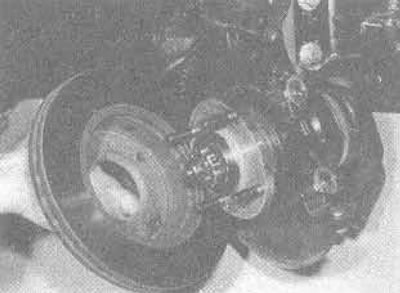
15.6. Removing the front brake disc
7. Installation is carried out in reverse order.
[The full article is available on the resource: NISSANBOOK]