


Table of contents: Examination ↓ Adjustment ↓
Idle speed is the engine speed when the accelerator pedal is released (for example, when stopping at a traffic light). This parameter is critical in terms of engine efficiency and the operation of many of its subsystems. Before measuring the speed, perform the following checks:
- a) Check the air cleaner filter element for patency;
- b) Check the air intake tract for signs of leaks;
- c) Check that there are no signs of vacuum loss through the vacuum hoses;
- d) Check the battery condition and the proper functioning of the ignition system, including the ignition timing (see Chapter Settings and ongoing maintenance);
- e) Check the fuel pressure (see section Checking the proper functioning of the fuel pump, measuring the fuel pressure);
- f) Check the compression pressure in the cylinders (see section General engine overhaul Chapters Engine);
- g) Check the condition of the EGR and EVAP systems (see Chapter Engine management systems);
- h) Check the TPS adjustment (see Chapter Engine management systems);
- i) Check the on-board self-diagnosis system for fault codes stored in the memory (see Chapter Engine management systems).
Examination
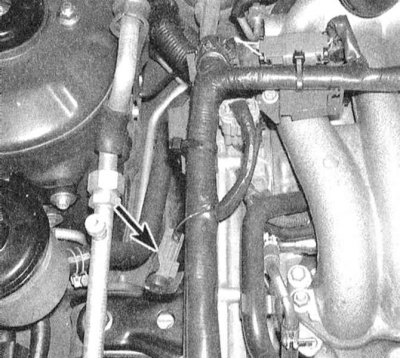
1. Connect a hand tachometer to the engine according to the manufacturer's instructions.
Note: On 1995 and later models that use a distributorless ignition system, a special connector is provided for connecting the tachometer, which is included in the wiring harness on the right side of the engine compartment.
2. Set the parking brake securely and chock the rear wheels. Shift the transmission into "P" or "N". Turn off all electrical loads. On 1993 and 1994 models, remove the PCM access panel (see Chapter Engine management systems).
3. Start the engine and warm it up to normal operating temperature. With the engine speed at 2000 rpm, quickly increase it to 3000 rpm three times, then let the engine idle for about a minute.
4. On 1993 and 1994 models, turn the mode selector on the PCM wall fully clockwise (see Chapter Engine management systems).
5. On 1995 and later models, stop the engine and disconnect the electrical harness from the throttle position sensor (TPS) (see Chapter Engine management systems). Restart the engine and rev it up to over 3000 rpm three times, finally returning to idle.
6. Read the idle speed value from the tachometer and compare the measurement result with the Specifications or VECI label data.
Note: In case of discrepancies, VECI data shall prevail.
Adjustment
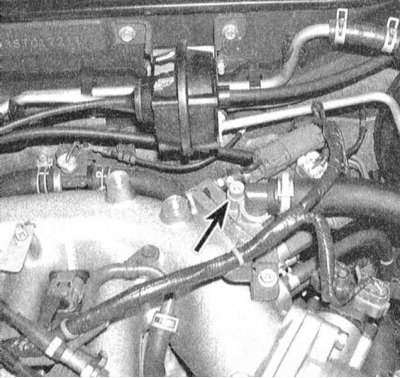
1. If the idle speed is excessively low or high, it should be adjusted using a special adjusting screw.
Caution: Do not attempt to adjust the idle speed using the factory-installed stop screw located on the throttle body.
(The article was obtained from the portal: «Nissanbook.ru»)
2. On 1993 and 1994 models, turn the PCM mode selector fully counterclockwise, then stop the engine.
3. On 1995 and later models, stop the engine and connect the wiring to the TPS.
4. Disconnect the tachometer.