


Warning! See warnings at the beginning of the Section Relieving pressure in the fuel system.
First, make sure that the fuel pump and fuel pressure regulator are functioning properly (see section Checking the proper functioning of the fuel pump, measuring the fuel pressure).
1. Check the reliability of the electrical connections, especially the ground terminals of the injection system circuit. Carefully inspect all electrical connectors related to the operation of the system. Poor electrical connections cause many problems and are the cause of more than half of engine failures.
2. Check the battery charge level. The accuracy of the air-fuel mixture control largely depends on the proper functioning of the RCM and information sensors, which is determined, among other things, by the level of their supply voltage.
3. Check the condition of the air cleaner filter element - even partial obstruction of the air filter has a significant impact on fuel economy and engine efficiency (see Chapter Settings and ongoing maintenance).
4. Check the condition of the relevant fuses. If the pump fuse blows, replace it with a new one. If the new fuse also blows immediately, check the circuit wiring for signs of a short circuit (see Chapter On-board electrical equipment).
5. Check the condition of the vacuum hoses connected to the intake manifold.
6. Disconnect the air hose from the throttle body and check the latter for carbon deposits and other deposits (especially in areas near the throttle valve). If signs of throttle body contamination are detected, refer to Chapter 6 and diagnose PCV and EGR system faults.
(Data posted on the website: «nissanbook.ru»)
Attention! On the models in question, the throttle body is treated with a special protective compound, which is washed off when using various types of solvents and liquids for cleaning carburetors - the use of such products can lead to a decrease in the efficiency of the engine.
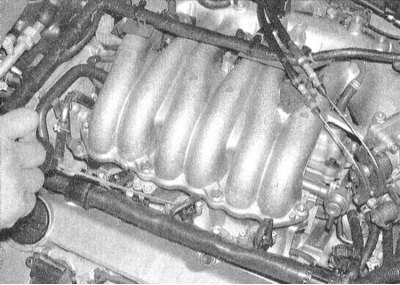
7. With the engine running, listen to each of the injection injectors one by one using a stethoscope - a uniform clicking sound indicates that the injector is functioning properly. If you don't have a stethoscope at hand, use a long screwdriver, simply pressing the tip of its tip to the injector body and focusing on the vibrations transmitted through the handle.
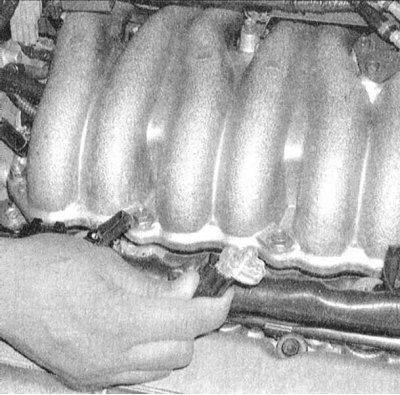
8. If you detect any malfunctions in the injector, you should use a special test lamp (ask in car accessories stores). The lamp is connected to the electrical connector of the suspected injector. Start the engine and check all injectors with the lamp. Uniform flashing of the lamp confirms the correct functioning of the injector. Otherwise, the car should be driven to a service station for more detailed diagnostics.
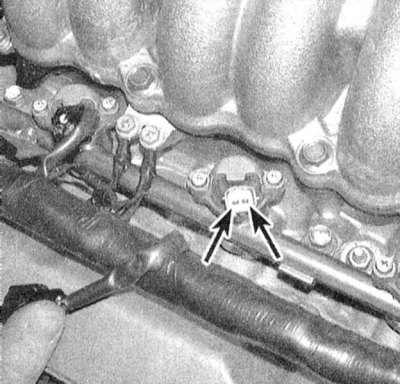
9. Turn off the engine, disconnect the electrical connectors of the injectors and measure the electrical resistance of each of them). Compare the measurement results with the requirements of the Specifications. If necessary, replace the failed node.
10. Additional information on diagnosing the condition of the injection system is contained in Chapter Engine management systems.