


Table of contents: Symptoms of brake system failure ↓ Checking the operation of the brake…↓
Caution: Dust generated by wear of brake linings and other components may contain asbestos, which is hazardous to health. Do not blow it off with compressed air, do not inhale it, and do not wash it off with gasoline or solvent. Use only brake parts cleaner to flush dust into the drain pan. After wiping the brake system parts with a damp cloth, collect and place it in a sealed, labeled container. Where possible, try to install asbestos-free components.
In addition to the specified inspection frequency, the brake system must be checked each time any wheel is removed and each time there is a malfunction in its operation. For obvious safety reasons, the following brake system checks are the most important maintenance procedures on your vehicle.
Examination
- First, brake at low speed.
- Check the tire tracks on the road. whether the lengths of the tracks are the same, which indicates uniform operation of the brakes.
- Check the parking brake in a similar manner.
- To test the brakes at higher speeds, a level section of road is required.
- At a speed of approximately 50 km/h, with your hands ready to grab the steering wheel and your hands released, brake lightly, then sharply to a stop.
- If the car pulls to the left, it means that one of the brakes on the right wheels is not working properly. The car pulls to the side more strongly than the braked wheels.
- Let the car roll down a slight slope to make sure the wheels roll easily.
- After a test drive, check with your hand if there is a difference in the temperature of the wheel rims on different sides of the car. If so, the cause may be stuck brake calipers or faulty wheel bearings.
Symptoms of brake system failure
- Disc brakes have built-in wear indicators that make an unpleasant squealing or squeaking noise when the brake pads are worn enough to need replacing. When you hear this sound, replace the brake pads immediately, otherwise the brake discs may be severely damaged.
- Any of the following symptoms may indicate a potential brake system problem:
♦ when you press the brake pedal the car pulls to the side;
♦ extraneous noise when pressing the pedal;
♦ excessive braking distance;
♦ There are visible signs of brake fluid leakage, especially on the inside of the tires or wheels.
(The article was obtained from the portal NissanBook.ru)
- If any of these signs are noticed, have your brake system checked immediately.
Checking the operation of the brake booster
- Run the engine for one or two minutes and turn it off. If the first time you press the brake pedal, it is pressed all the way down, and with subsequent presses, its travel gradually decreases, then the vacuum booster is working normally. If, after successive pressings of the pedal, its travel remains unchanged, then the brake booster is faulty.
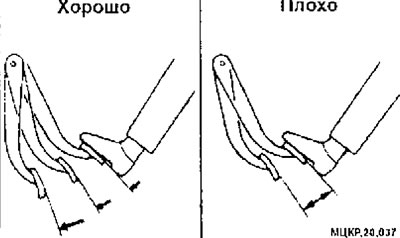
- With the engine off (A), press the brake pedal several times. Then, without releasing the pedal, start the engine. If the brake pedal drops slightly (B), then the vacuum booster is working properly. If the pedal remains in place after starting the engine, then the vacuum booster is faulty.
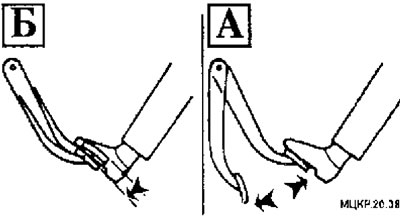
- With the engine running, press the brake pedal and turn off the engine. Hold the pedal down for 30 seconds. If the pedal position does not change, the vacuum booster is working properly. If the pedal rises, then the amplifier is faulty.
- If all three tests performed give satisfactory results, the amplifier can be considered to be working well. If the results of one of the tests performed are unsatisfactory, then the fault should be looked for in the vacuum hose, check valve or brake booster.